TL;DR: Clean around a dental bridge once a day with the right mix of bridge flossers, a floss threader or stiff-ended floss, and properly sized interdental brushes. Work gently under the pontic, along both abutment teeth, and at the gumline. Replace disposable flossers after one use, swap brushes when bristles bend, and stop forcing any tool that catches or frays.
Dental bridges create a cleaning problem that ordinary string floss does not solve well: the connected crowns block you from snapping floss straight down between every tooth. The practical fix is to use bridge flossers and interdental tools in a sequence—first loosen trapped food, then clean under the false tooth, then sweep the gumline and contacts around the supporting teeth.
If you are still choosing a daily tool, our vetted guide to the best dental floss picks explains the main pick, handle, and floss designs. This guide focuses on maintenance: what to use, how to angle each tool, how often to clean, and when to throw worn parts away.
Tools You’ll Need
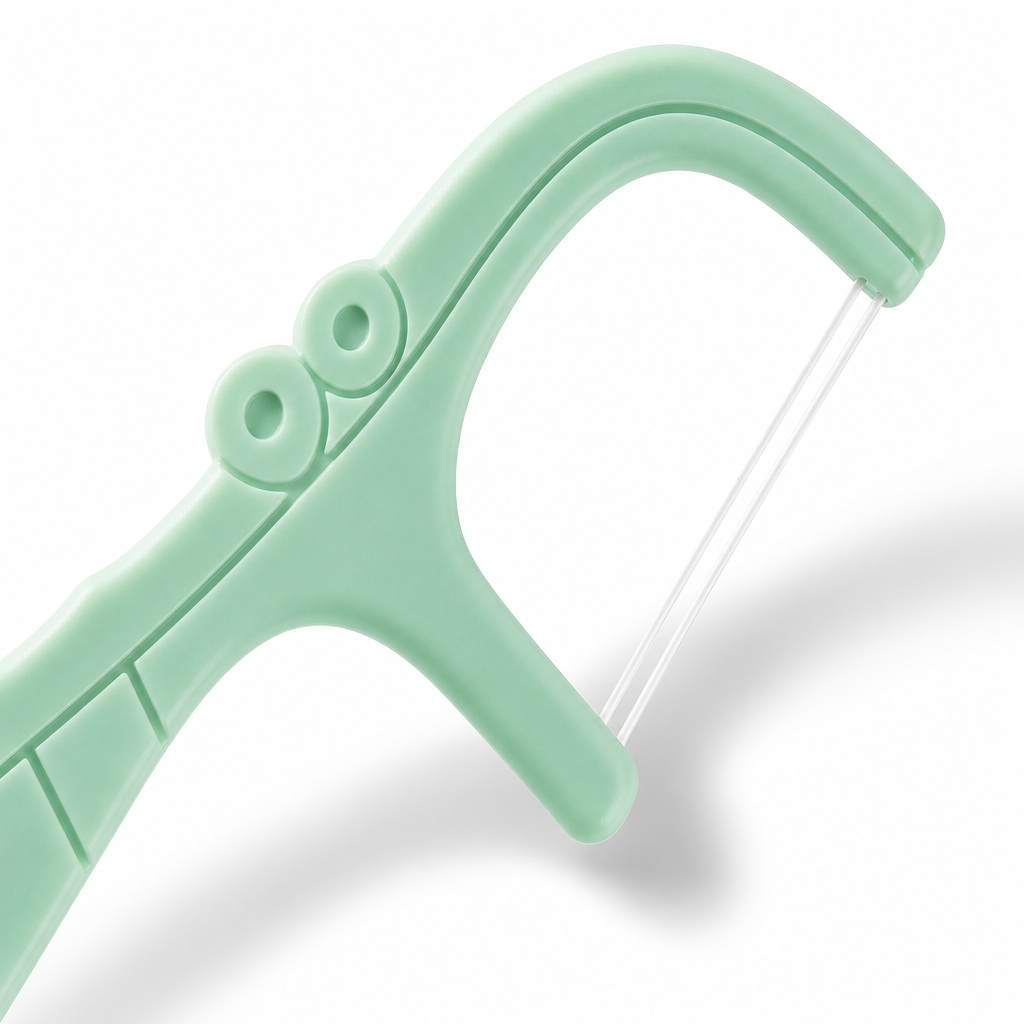
- Bridge flossers, floss threaders, or stiff-ended bridge floss
- Interdental brushes in a size that slides without force
- Disposable floss picks for accessible contacts and gumline edges
- Soft toothbrush or electric toothbrush head
- Clean water for rinsing
- Mirror and good lighting
- Optional: alcohol-free mouth rinse or a powered water flosser for flushing loose debris
Step 1: Rinse and Check Where Food Is Trapped
Start with a thorough rinse. Swish water firmly around the bridge for 20 to 30 seconds, focusing on the cheek side, tongue side, and the space under the pontic—the replacement tooth that sits above the gum. This loosens soft debris before you bring in floss or a brush.
Use a mirror to identify the exact trouble spots. Food often packs at three places: under the pontic, against the gumline of the abutment teeth, and in the small triangular spaces near the bridge margins. If meat, seeds, or fibrous food is wedged tightly, avoid digging hard with a sharp object. Pressure should come from the tool’s cleaning surface, not from stabbing at the gum.
This first look also helps you choose the right tool. A wide open space may accept an interdental brush. A tight space under a bridge usually needs a threader or stiff-ended bridge floss. A standard floss pick can help at accessible contacts next to the bridge, but it usually cannot pass underneath a connected bridge on its own.
Step 2: Clean Accessible Contacts with a Flosser
Use a floss pick or similar flosser on any normal tooth-to-tooth contacts around the bridge that are not blocked by connected crowns. Hold the handle firmly, guide the floss through the contact with a controlled rocking motion, and curve the floss into a C shape against the side of the tooth. Slide up and down below the gumline lightly, then repeat on the neighboring tooth surface.
Do not snap the floss down. Snapping can bruise the gum and may shred the floss against rough margins. If the floss catches repeatedly in the same area, back out slowly rather than yanking upward. A catch point can be a tight contact, a rough restoration edge, or packed debris that needs a different tool.
For awkward rear bridges, a handle with enough stiffness is easier to steer than loose string floss. That matters when you are trying to reach molars without putting your fingers deep in your mouth. If you are comparing store options such as amazon flossers, dental flossers amazon listings, target flossers, or travel packs, prioritize a handle you can control and floss that does not immediately flatten, fray, or stretch.
Step 3: Thread Floss Under the Bridge
To clean under the pontic, use a floss threader or stiff-ended bridge floss. Insert the stiff end from the cheek side or tongue side—whichever gives you the straighter path—then pull the floss through until the cleaning section sits under the bridge.
Once the floss is under the pontic, hold one end in each hand and draw it gently side to side. The goal is to wipe the underside of the pontic and the gum-facing surface, not to saw into the tissue. Use short strokes and keep the floss broad against the surface. Then move the floss toward one abutment tooth and curve it slightly so it wipes the inner side of that support tooth. Repeat on the other side.
If the floss becomes fuzzy, flattened, or stringy, remove it and start with a fresh section. Frayed floss does not clean as precisely and can leave fibers behind. Never force a thick floss section through a narrow passage. If the entry point is too tight, switch to a thinner threader setup or ask your dental professional to show the safest path under that specific bridge.
Step 4: Use an Interdental Brush for Open Spaces
Interdental brushes—sometimes called brush flossers—are best for open embrasures and wider spaces around bridgework. Choose the smallest brush that contacts the sides of the space without bending the wire. It should slide in with light resistance. If you have to push hard, it is too large for that opening.
Insert the brush at the gumline and keep it level with the space. Move it in and out a few times, then rinse the brush. For a bridge, clean from both the cheek side and the tongue side when the space allows it. This two-sided approach reaches areas that a single straight pass may miss.
Do not twist aggressively once the brush is between teeth. Twisting can bend the wire core and irritate the gum. If the bristles collapse after a few uses, the brush is no longer doing its job. A fresh brush should spring lightly against the surfaces; a worn brush mostly pushes debris around.
Step 5: Sweep the Gumline Around the Abutment Teeth
The abutment teeth carry the bridge, so their gumline needs careful daily attention. With a soft toothbrush, angle the bristles about 45 degrees toward the gumline and make small, controlled strokes along the crown margins. Clean the cheek side, tongue side, and biting surface. Spend extra time where the bridge meets natural tooth structure or crown edges.
After brushing, use a flosser on any reachable side contacts and a threader under the pontic. This order—brush, floss, then detail clean—works well at night because it removes plaque before it sits undisturbed for hours. If you prefer flossing before brushing, that is also workable; the important part is completing the under-bridge cleaning every day.
If your gums bleed slightly when you restart a proper routine, use lighter pressure and keep the habit consistent. Bleeding that continues, swelling, bad taste, or tenderness around the bridge deserves professional attention. Cleaning tools should reduce irritation over time, not create a sore spot that gets worse.
Step 6: Flush Loosened Debris
After flossing and brushing, rinse again to clear out loosened plaque and food. A powered water flosser can help flush debris from under a bridge, but it should supplement mechanical cleaning rather than replace it. Water flow is useful for rinsing; floss and brushes are better for wiping sticky plaque from surfaces.
If you are comparing a powered oral b flosser or quip flossers with manual bridge flossers, think of them as different categories. Powered water tools flush; manual floss, threaders, and interdental brushes physically contact the bridge margins and under-surface. For most bridge maintenance routines, the best result comes from combining the categories rather than relying on only one.
Finish by checking your work with your tongue. The area should feel smooth, not bulky or fuzzy. If you still feel something lodged under the pontic, repeat the threader pass gently instead of scraping with a fingernail or hard toothpick.
How Often to Clean Around a Bridge
Clean under and around a fixed bridge at least once a day. Night is the most practical time because it removes food and plaque before sleep. Brush twice a day as usual, and add a quick rinse after meals when food tends to pack under the bridge.
If meat or fibrous vegetables often wedge around the bridge, carry a hygienic disposable flosser or interdental brush case for after meals. This is less awkward than trying to clean with bare string floss in a public restroom, and it keeps used tools separate from clean ones. For packing help, see our travel buyer’s guide for dental flossers.
Use interdental brushes only where they fit easily. Some people need more than one brush size because the space under a pontic can be wider than the contact next to an abutment tooth. A brush that is perfect for one gap may be too large for another.
When to Replace Flossers, Brushes, and Other Parts
Replace disposable bridge flossers and floss picks after one use. Once floss has passed through plaque and food debris, it should not go back into a pocket, case, or bag. Reusing disposable floss also increases the chance of fraying or dragging debris into another space.
Replace an interdental brush when the bristles are bent, splayed, dirty after rinsing, or no longer spring against the tooth surfaces. Also replace it if the wire bends, because a kinked wire is harder to control and more likely to poke the gum.
Replace toothbrush heads or manual toothbrushes when the bristles flare outward. Fanned bristles do not clean bridge margins well because they lose the crisp edge needed to reach the gumline. Replace threaders when they kink, roughen, or stop feeding smoothly under the bridge.
Stop using any tool that repeatedly catches on the same bridge edge. Do not keep pulling until it breaks free. A tool that shreds in one spot may be signaling a rough margin, excess cement, or a tight contour that needs professional adjustment.
Common Mistakes to Avoid
Do not rely only on toothpick dental floss ends to clean a bridge. A toothpick-style end can dislodge visible food from open spaces, but it cannot wipe plaque from the underside of a pontic the way threaded floss can. Use it gently and only where you can see the angle.
Do not force large interdental brushes into tight contacts. Bigger is not better if the wire scrapes tissue or bends. The correct brush size should contact both sides of the space while still moving smoothly.
Do not skip the tongue side. Many people clean the cheek side because it is easier to see, then leave plaque behind on the inside of the bridge. Thread from the side that gives you access, but clean both sides when possible.
Do not keep using floss that shreds. High-friction edges can turn weak floss into fuzz, and fuzz is less effective. Switch tools, change the angle, or use a fresh section.
Related Tools We’ve Vetted
For a disposable option that stores cleanly in a bag, the 60-Count Double-Line Mint Dental Floss Picks use individually wrapped picks, double-line high-molecular polyethylene floss, a firm high-impact polystyrene handle, a mint finish, and a toothpick-style end. The pack includes 60 disposable picks and is best used for accessible contacts, travel cleaning, and gumline detailing around bridge areas—not as the only tool for threading underneath a connected bridge.
Related Guides & Products
- dental floss picks — Top Picks
- Dental Flossers Amazon: Travel Buyer’s Guide
- 60-Count Double-Line Mint Dental Floss Picks
Frequently Asked Questions
Can floss picks clean under bridges?
A standard floss pick can clean accessible contacts near a bridge, but it usually cannot pass under a connected pontic. Use a floss threader or stiff-ended bridge floss for the under-bridge space.
How often should I use bridge flossers?
Use bridge flossers or threaded floss once a day, preferably at night. Rinse after meals if food regularly packs around the bridge.
Are interdental brushes safe for bridges?
Yes, when the brush fits without force. Choose a size that slides in with light resistance and replace it when the bristles bend or the wire kinks.
Why does floss shred around my bridge?
Floss can shred on tight contacts, rough margins, trapped debris, or excess cement. Back it out slowly and use a fresh section instead of yanking.
Should I use a water flosser only?
A water flosser helps rinse loose debris, but floss and interdental brushes physically wipe plaque from bridge surfaces. Use water flow as a supplement.
When should I replace disposable flossers?
Replace disposable flossers after one use. Reusing them can spread debris, reduce cleaning performance, and increase the chance of frayed floss.
This article is for general information only and is not medical or dental advice. Consult a licensed dentist or doctor for any health concern.