TL;DR: Use lukewarm water, start on the lowest pressure, and trace slowly along the gumline, brackets, wires, and tight spaces. Keep the tip slightly away from the gums, lean over the sink, and pause between sections to let water drain. Rinse and air-dry the tank after every use, deep-clean weekly, and replace worn tips before they loosen or spray unevenly.
A water flosser for braces works best when you use it as a controlled rinse, not a pressure washer. The goal is to flush food from around brackets, wires, gum pockets, and tight dental spaces without irritating the gums. This guide applies to most water flosser, Waterpik, Waterpik water flosser, burst flosser, dental flosser, dental irrigator, and oral irrigator designs, including cordless and countertop models.
If you are comparing tools before setting a routine, our oral-care gear guide explains where water flossers fit alongside brushing, interdental brushes, and standard floss. The technique below is the part that matters most: correct pressure, correct angle, and consistent cleaning.
Tool List
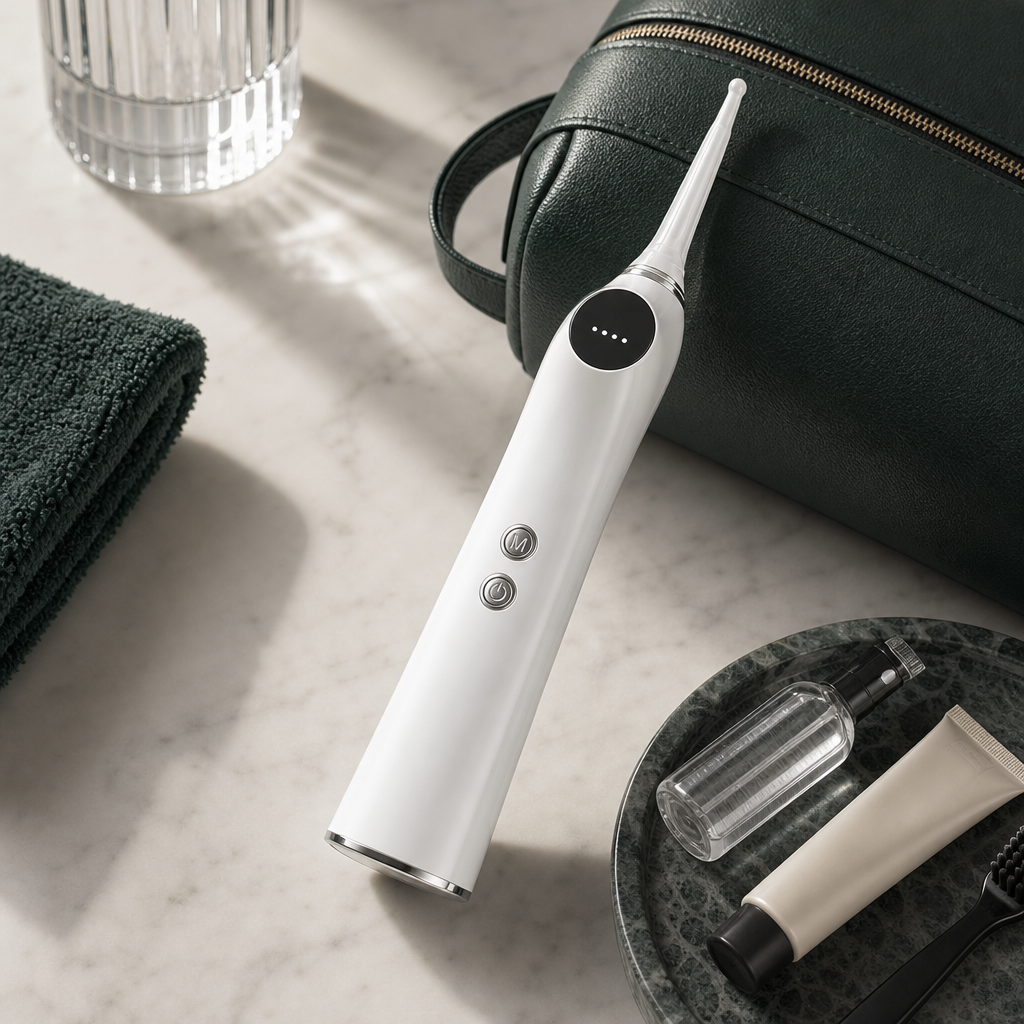
- Water flosser or oral irrigator with a clean nozzle tip
- Lukewarm water
- Sink and mirror
- Soft toothbrush for cleaning around the nozzle port
- White vinegar for occasional descaling
- Clean towel for drying the handle and tank
- Interdental brush or orthodontic floss threader for spots the water stream does not fully clear
Step 1: Fill the Tank With Lukewarm Water
Remove the tank, rinse it, and fill it with lukewarm water. Avoid very cold water if your teeth are sensitive, and avoid hot water because it can feel harsh on gum tissue and may stress plastic parts over time.
Seat the tank firmly before turning the machine on. A small gap between the tank and the handle is one of the most common causes of leaking, sputtering, or weak flow. If your water flosser has a smaller tank, expect to refill during a full braces cleaning. If it has a larger tank, use the extra capacity to slow down rather than rushing through the brackets.
Step 2: Attach the Tip Until It Locks
Push the nozzle straight into the handle until it clicks or feels fully seated. Tug gently upward to confirm that it does not lift out. A loose tip can wobble, leak at the handle, spray sideways, or pop out during use.
For braces, a standard jet tip can work, but many people get better control with an orthodontic-style tip if their device includes one. The important point is not the name of the tip; it is whether the stream can be aimed precisely along the gumline and around each bracket. If the tip rotates, set it so you can keep your wrist relaxed while following the arch of your teeth.
Step 3: Start on the Lowest Pressure
Place the tip in your mouth before turning the unit on. Lean over the sink, keep your lips mostly closed around the tip, and let water drain out naturally. Start at the lowest pressure or gentlest cleaning mode, especially if your gums are inflamed from food trapped around braces.
If the pressure feels too strong, do not force yourself to adapt. Back off, change to a gentler mode, or increase the distance between the tip and gumline. If the stream feels too weak and leaves visible food around brackets, increase one level at a time. The right setting should move debris without stinging, cutting into the gums, or causing you to flinch.
Step 4: Clean the Gumline First
Begin at the back molars, where food is easiest to miss. Hold the tip at roughly a right angle to the tooth surface, then trace the gumline slowly. Pause briefly between teeth so the stream can flush the space where the teeth meet.
Do not drag the nozzle hard against the gums. Keep it just off the surface and let the pulsing water do the work. If your gums bleed slightly when you are new to water picking, use gentler pressure and focus on consistency. Aggressive pressure is not a substitute for better aim.
Step 5: Trace Around Every Bracket and Wire
After the gumline, move to the orthodontic hardware. Aim above each bracket, below each bracket, and along the wire where food fibers and plaque collect. Spend extra time around hooks, bands, springs, and molar brackets because they create more hiding places than the front brackets.
A practical pattern is: outside upper teeth, inside upper teeth, outside lower teeth, inside lower teeth. Then make a second pass directly around the braces. This two-pass method is slower, but it solves the main braces problem: food can look gone from the front while still sitting under the wire or near the gumline.
Step 6: Flush Tight Dental Spaces Slowly
For tight dental spaces, pause between teeth for one to two pulses before moving on. Do not saw the nozzle back and forth like string floss. A water stream cleans best when it is held steady long enough to break up trapped debris and carry it away.
If one contact point always traps food, use the water flosser first, then follow with an interdental brush or floss threader. A water flosser is excellent for rinsing around braces and gum margins, but very tight contacts may still need mechanical contact to scrape plaque from the tooth surface.
Step 7: Use Extra Care Around Tonsils and the Back of the Mouth
If you use a water flosser for tonsil stones, switch to the gentlest setting and aim indirectly. Do not drive a strong jet straight into tonsil tissue. Instead, let the water wash across the area and dislodge loose debris. The same caution applies when people use a Waterpik for tonsil stones or search for Waterpik and tonsil stones tips: low pressure and careful aim matter more than force.
Keep your head tilted forward so water drains out instead of running toward the throat. Stop if you gag, cough, or feel sharp discomfort. Tonsil tissue is softer than gums and does not tolerate the same pressure you might use on molars or braces.
Step 8: Empty, Rinse, and Air-Dry After Every Use
When you finish, empty any remaining water from the tank. Run the unit for a few seconds with the tank empty or nearly empty to clear water from the internal pathway. Then remove the tank if the design allows it, rinse it, and leave it open to air-dry.
This habit helps prevent stale water, odors, and visible buildup. It also reduces the chance of mildew forming in corners of the tank or around the fill cap. Wipe the handle dry before storing it, especially on cordless water flosser models that live near the sink or travel in a toiletry bag.
Step 9: Clean the Nozzle and Tank Weekly
Once a week, remove the tip and rinse the nozzle socket under running water. Use a soft toothbrush to clean around the opening if residue has collected there. Wash the tank with warm water and mild dish soap, rinse thoroughly, and let it dry fully before reinstalling.
For mineral buildup, run a brief cleaning cycle with a diluted white-vinegar solution, then flush with clean water until the vinegar smell is gone. Do not store vinegar in the tank. Do not use abrasive powders, bleach, or harsh bathroom cleaners on parts that contact your mouth.
If you travel often, dry the tank and tip before packing. Our portable water flosser travel guide covers packing considerations for compact devices, but the maintenance rule is simple: never zip a damp tank into a sealed bag for days.
Step 10: Troubleshoot Leaks, Weak Flow, and Noise
If the Machine Leaks
Reseat the tank, check that the fill cap is closed, and confirm the nozzle is locked in place. Look for water around the tank gasket or where the tip enters the handle. Most leaks during normal use come from an unseated tank, a loose cap, or a tip that is not fully inserted.
If the Flow Feels Weak
Refill the tank, check that the intake tube is submerged, and make sure the selected mode is not the gentlest setting. Remove the tip and rinse it in case debris or mineral scale is narrowing the opening. If the unit has been stored dry for a long time, fill it and run a short cycle to re-prime the water path.
If the Spray Pattern Looks Uneven
Replace the tip if it sprays sideways, pulses inconsistently, or no longer fits snugly. A worn nozzle can make a strong unit feel sloppy and can miss the tight spaces you are trying to clean.
If the Unit Sounds Rougher Than Usual
Check for an empty tank, air in the water line, or a tip that is not seated. A dental irrigator will naturally make some operating noise, but a sudden change in pitch usually means the pump is pulling air, the tank is not seated, or the nozzle connection is loose.
How Often to Use a Water Flosser for Braces
Use it once daily at minimum, preferably at night before brushing or before your final brush-and-rinse routine. Night use is especially helpful with braces because food can sit around brackets for hours if you only rinse casually after meals.
Use it after meals when food is visibly stuck in wires or around brackets. A quick targeted pass does not need to be as long as your full evening session. For tight dental spaces, use a slow full pass daily and add string floss, orthodontic floss, or interdental brushes several times a week where your dental professional has shown you plaque collects.
If your gums feel tender, use a lower setting more often rather than a high setting less often. Consistent gentle cleaning is usually more comfortable than occasional aggressive cleaning.
When to Replace Parts
Replace Nozzle Tips When They Loosen or Spray Poorly
Replace the nozzle tip when it no longer locks firmly, wobbles during use, shows cracks, or produces an uneven stream. Also replace tips that have been shared, dropped in an unsanitary place, or discolored in a way cleaning does not resolve.
Replace the Tank or Gasket When Leaks Persist
If water leaks after you reseat the tank and clean the gasket area, inspect the tank, cap, and seal for warping or cracks. Replace the affected part when the seal no longer holds. Continuing to use a leaking tank can make the handle slippery and can send water into areas that should stay dry.
Replace the Device When Charging or Pump Performance Declines
For rechargeable cordless models, replace the unit when it no longer holds a practical charge for your routine, shuts off unexpectedly, or cannot maintain a steady stream after cleaning and charging. For any waterpik water flosser, cordless water flosser Waterpik alternative, or portable water flosser, a failing pump or battery turns a useful habit into an inconsistent one.
Related
- Portable Cordless Water Flosser with IPX7 Waterproofing — $29.99. A portable adult water flosser with an IPX7 waterproof body, built-in rechargeable battery, piston pump water jet, three cleaning modes or three-level adjustment depending on variant, and large-tank variants over 400 mL.
- A8 Portable Cordless Water Flosser with IPX6 Waterproofing — $24.99. A lighter home-use cordless oral irrigator with a piston pump, IPX6 waterproof protection, built-in rechargeable battery, under-300 mL tank, and multiple nozzle bundle options.
- T956 Portable Oral Irrigator for Tonsil Stone Cleaning — $36.99. A handheld adult oral irrigator focused on targeted cleaning, including tonsil-stone-focused use and cleaning around braces.
Related Guides & Products
- oral-care — Top Picks
- Best Portable Water Flosser Guide for Travel
- Portable Cordless Water Flosser with IPX7 Waterproofing
- T956 Portable Oral Irrigator for Tonsil Stone Cleaning
- A8 Portable Cordless Water Flosser with IPX6 Waterproofing
Frequently Asked Questions
Can I use a water flosser with braces?
Yes. Aim along the gumline, then around each bracket and wire. Start on low pressure and increase only if debris remains and your gums feel comfortable.
Should I water floss before or after brushing?
Most people should water floss before brushing at night. It loosens food around braces so brushing can clean the tooth surfaces more effectively.
What pressure is best for braces?
Start with the lowest setting. Increase gradually until food moves out from brackets and tight spaces without gum stinging, sharp discomfort, or excessive bleeding.
Can a water flosser remove tonsil stones?
It can help rinse loose tonsil debris, but use the gentlest setting and indirect aim. Tonsil tissue is delicate and should not be hit with a strong jet.
Why does my water flosser leak?
Common causes are an unseated tank, loose fill cap, worn gasket, or nozzle that is not fully locked. Reseat and clean parts before replacing them.
How do I prevent mold in the tank?
Empty the tank after every use, run out remaining water, rinse it, and leave it open to air-dry before storage.
This article is for general information only and is not medical or dental advice. Consult a licensed dentist or doctor for any health concern.