TL;DR: For sensitive gums, start with the lowest pressure, use a soft standard jet tip, aim along the gumline instead of directly into the gums, and keep the tank, nozzle, and seals clean. A cordless water flosser is convenient for travel and braces, but comfort depends more on pressure control, tip fit, angle, and maintenance than on brand name alone.
A water flosser for sensitive gums should feel controlled, not aggressive. Whether you call it a water flosser, Waterpik, dental flosser, oral irrigator, dental irrigator, or water picking device, the routine is the same: choose a gentle setting, use the right tip, keep the jet moving, and maintain the parts that touch water. This guide focuses on practical setup, use, cleaning, and part replacement so you can remove food around tight teeth, braces, and gumlines without making tender gums feel worse.
Tools and supplies
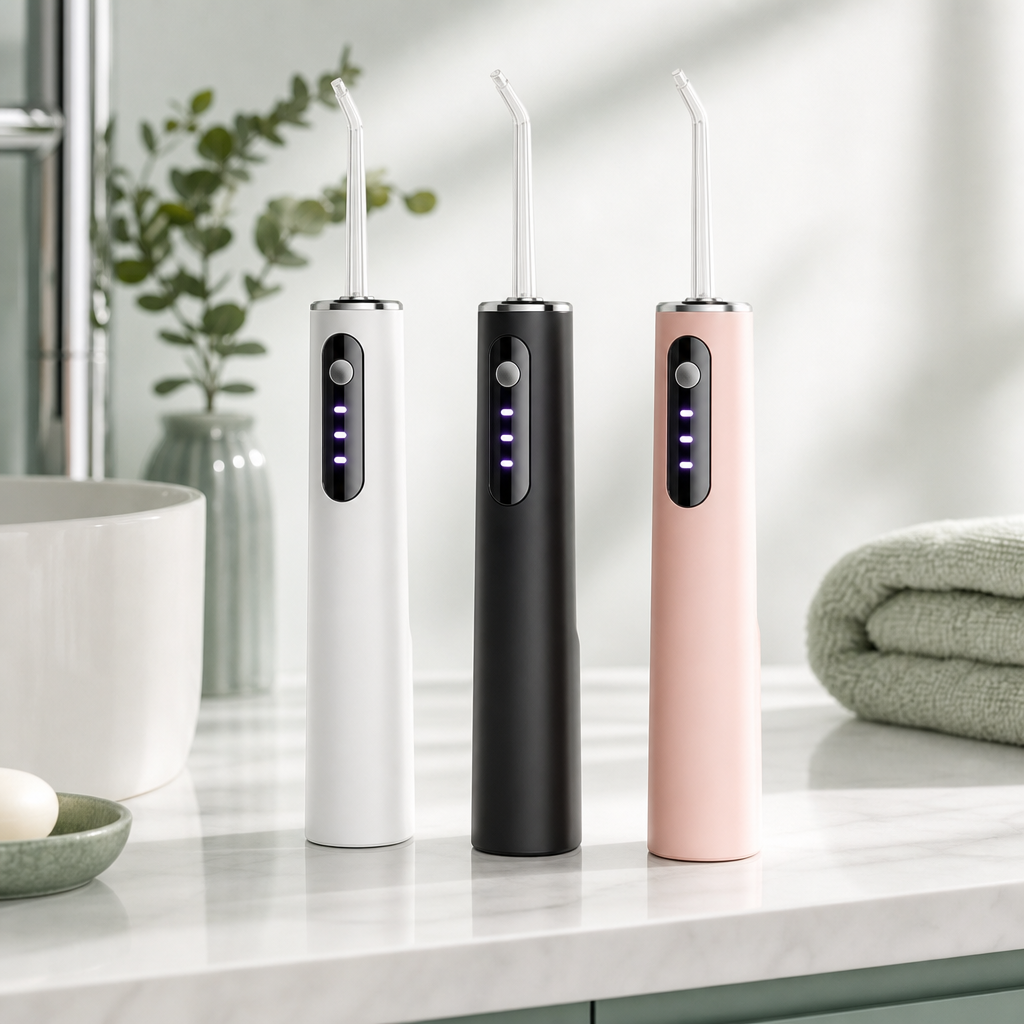
- Water flosser or cordless water flosser with adjustable pressure
- Standard jet tip or soft gumline tip
- Lukewarm water
- Clean towel
- Small cup for soaking tips
- White vinegar for periodic descaling
- Cotton swab or soft brush for tank edges and tip socket
Step 1: Choose gentle pressure before choosing power
For sensitive gums, pressure control matters more than maximum force. Start on the lowest mode every time you use a new device, a new tip, or a fresh dental routine. If the stream feels sharp, causes stinging, or makes you pull away, the pressure is too high for that session. Stay low for several days before increasing. The goal is a steady rinse between teeth and along the gumline, not a pressure-washer effect.
Three-level and three-mode designs are useful because they give you a clear way to step up gradually. If food remains between molars or around orthodontic brackets, increase only one level and shorten the pass rather than jumping to the strongest setting. A Waterpik water flosser, Waterpik Aquarius water flosser, Burst flosser, or cordless water flosser Waterpik-style device can all irritate gums if the jet is held still or aimed straight into the tissue. Technique is the comfort control.
Step 2: Match the tip to your mouth
Use a standard jet tip for everyday cleaning between teeth. Use a gentler gumline-style tip when your gums are tender, when you are restarting oral care after a break, or when a dental professional has told you to be careful around inflamed areas. For braces, bridges, retainers, and tight spaces, a targeted orthodontic-style tip can help direct the stream around hardware and trapped food. If you wear braces and need a more detailed angle routine, use this step-by-step guide on how to use a water flosser for braces.
Before filling the tank, press the tip firmly into the handle until it seats securely. Tug gently upward. It should not wobble or lift out. A loose tip wastes pressure, sprays unpredictably, and can make a gentle setting feel harsher because the stream pulses unevenly. If the tip has a release button, avoid pressing it while flossing.
Step 3: Fill the tank for comfort and consistency
Use lukewarm water. Cold water can make sensitive teeth and gums feel worse, while hot water can be uncomfortable and may stress plastic parts over time. Fill only to the intended level and close the cap fully. Wipe moisture from the outside before turning the unit on so you can tell whether the device is leaking or simply wet from filling.
Tank size affects how calmly you can clean. A very small tank may force you to refill mid-session, which interrupts your pattern and can lead to rushed passes. If you have braces, closely spaced teeth, or multiple areas that trap food, fill the tank completely before starting. If your device has a smaller reservoir, clean in zones: upper outside, upper inside, lower outside, lower inside. Refill between zones instead of trying to race through the whole mouth.
Step 4: Use the right angle at the gumline
Lean over the sink, place the tip in your mouth before turning the unit on, and keep your lips partly closed around the tip to reduce splashing. Aim the stream at roughly a right angle to the tooth surface, then trace the gumline slowly. Do not point the jet directly down into the gum pocket or hold it on one spot. Pause briefly between teeth, then move on.
For sensitive gums, motion is safer than force. Think of the stream as a rinse that lifts debris away. Work from back to front so you do not miss the molars, where food often packs tightly. Around braces, guide the stream above and below the wire, then around each bracket. Around crowns or bridgework, slow down at the edges where plaque and food collect. If your gums bleed lightly when restarting, stay on the lowest pressure and keep the pass gentle rather than scrubbing with the stream.
Step 5: Use a tonsil stone water flosser carefully
A water flosser for tonsil stones should be handled differently from one used between teeth. Tonsil tissue is delicate, and a strong stream can cause gagging or soreness. Use the lowest setting, keep the nozzle at a distance, and aim beside the tonsil crypt rather than driving the jet straight into tissue. Short pulses are easier to control than a long continuous blast.
If you are comparing Waterpik and tonsil stones routines, or considering a Waterpik for tonsil stones, the same rule applies to any oral irrigator: control the pressure first. Stop if the area hurts, bleeds, or feels scraped. Rinse the tip immediately after this use, and do not share that tip with another person.
Step 6: Prevent leaks and loose-spray problems
Most leak complaints come from four areas: the tank cap, the tank-to-body joint, the nozzle socket, and water left inside the handle after use. Before each session, check that the cap is flat and fully closed. Press the tank into place evenly. Seat the tip until it locks. If spray comes from the top of the handle instead of the nozzle, remove the tip, rinse the socket, and reinsert it.
After use, empty the tank and run the device briefly over the sink to clear leftover water from the pump path. Wipe the body dry, especially around charging covers, seams, and buttons. Waterproofing helps protect a device from bathroom use, but it does not replace drying and storage. Do not store a wet unit in a sealed toiletry bag, drawer, or travel case.
Step 7: Clean the tank, nozzle, and handle
Daily cleaning is simple: empty the tank, rinse it with clean water, detach the tip, and let all parts air-dry. Leave caps or tank openings uncovered while drying when the design allows it. This prevents stale water odor and reduces the chance of mildew inside the tank.
Weekly, wash the tank with warm water and a small amount of mild dish soap, then rinse thoroughly. Use a cotton swab or soft brush around the tank rim, cap channel, and nozzle socket. Monthly, descale the water path if flow feels weaker or uneven. Fill the tank with a mix of clean water and a small amount of white vinegar, run part of it through the unit over the sink, let it sit briefly, then run the rest through. Follow with at least one full tank of clean water so no vinegar taste remains.
Step 8: Manage battery life and travel use
For a portable water flosser, charge before a trip and dry the unit fully before packing. Empty the tank, remove the nozzle if the case is tight, and keep the tip in a clean pouch or covered compartment. If your device uses a charging-port cover, press it closed before packing. A wet charging area can corrode or collect residue.
When traveling, keep the pressure lower for the first session after flying or changing climates because gums can feel drier than usual. If you need a compact setup for a toiletry kit, prioritize a secure tank cap, a firm nozzle connection, and enough runtime for the trip. For broader oral-care comparisons, see our best oral-care guide.
Frequency guide
Daily
- Use once per day, preferably before brushing at night, or as directed by your dental professional.
- Start on low pressure if gums feel tender that day.
- Empty the tank after every use.
- Remove the tip and let it air-dry.
Weekly
- Wash the tank and cap area with mild soap and warm water.
- Inspect the nozzle for cracks, clogging, or mineral buildup.
- Check the tank seal and tip socket for trapped debris.
- Wipe the handle seams and buttons dry.
Monthly
- Descale the internal water path if the stream weakens or becomes irregular.
- Deep-clean the tip socket with a cotton swab.
- Check that the charging cover still closes securely.
- Review whether your current pressure setting still feels comfortable.
When to replace parts
Replace a nozzle when the stream becomes crooked, the tip feels loose, the plastic is cracked, or buildup does not rinse away. Also replace a tip after illness, after using it for tonsil-stone cleaning, or when it has been stored wet long enough to smell stale. A worn tip can make the stream less predictable, which is exactly what sensitive gums do not need.
Replace or retire the device when the tank no longer seals, the pump output becomes inconsistent after cleaning, the charging cover will not close, or the unit leaks from the body rather than from a removable tank part. If runtime drops sharply even after a full charge, plan for replacement instead of relying on it for travel.
Related products
The Portable Cordless Water Flosser with IPX7 Waterproofing costs $29.99 and fits adults who want a rechargeable cordless water flosser with three cleaning modes or three-level adjustment, a piston pump, and large-tank variants over 400 mL. It weighs 347 g, includes IPX7 waterproofing, and tankless three-mode variants include four nozzle tips.
The A8 Portable Cordless Water Flosser with IPX6 Waterproofing costs $24.99 and is the lighter option at 250 g net weight. It uses a piston pump, has IPX6 waterproof protection, a built-in rechargeable battery, more than 15 days of runtime, and an under-300 mL tank for adults who want a compact home-use oral irrigator.
The T956 Portable Oral Irrigator for Tonsil Stone Cleaning costs $36.99 and is built around targeted adult oral cleaning, including tonsil-stone-focused use and cleaning around braces. Its handheld white English-version configuration is fragrance-free and weighs 500 g.
Related Guides & Products
- oral-care — Top Picks
- Best Portable Water Flosser Guide for Travel
- How to Use a Water Flosser for Braces
- Portable Cordless Water Flosser with IPX7 Waterproofing
- T956 Portable Oral Irrigator for Tonsil Stone Cleaning
- A8 Portable Cordless Water Flosser with IPX6 Waterproofing
Frequently Asked Questions
What pressure is best for sensitive gums?
Start on the lowest pressure. Increase only one level after several comfortable uses, and reduce pressure immediately if the stream stings or makes gums feel sore.
Can a water flosser replace string floss?
It can help flush food and plaque from difficult areas, especially around braces, but many people still use string floss where teeth contact tightly.
Why does my water flosser leak?
Check the tank cap, tank seating, nozzle socket, and leftover water in the handle. Rinse debris from seals and dry the unit after every use.
How do I prevent mold in the tank?
Empty the tank after use, rinse it, leave openings exposed for air-drying, and wash the tank and cap area weekly with mild soap.
Is a water flosser safe for tonsil stones?
Use the lowest setting, keep distance from the tissue, and use short controlled pulses. Do not aim a strong jet directly into the tonsil.
When should I replace the nozzle?
Replace it when it cracks, clogs, sprays unevenly, feels loose, smells stale, or after illness or tonsil-stone cleaning use.
This article is for general information only and is not medical or dental advice. Consult a licensed dentist or doctor for any health concern.