TL;DR: A good cat flower water fountain filter is mostly about fit, carbon media, and replacement discipline. Match the cartridge shape before you buy, check that the filter uses activated carbon for odor control, and budget for frequent replacements if you have multiple pets. For a low-risk single replacement, our $7.99 individually wrapped carbon cartridge is best when its available shape matches your fountain.
A cat flower water fountain filter looks like a small purchase, but it can become surprisingly frustrating: original cartridges cost more than expected, copycat packs do not always fit, and a fountain that should smell fresh can start collecting hair or stale-water odor. The right replacement is not just a cat drinking fountain filter with a similar name. It has to match the fountain’s filter bay, seal properly, and use the right media for the job.
This guide focuses on square, round, mini flower, track, triangle, long, shovel, cotton, desiccant, and other common replacement-filter shapes. If you are comparing broader options, start with our researched cat fountain filter roundup to understand the main cartridge types, then use the factors below to narrow down the exact water fountain filter cat owners should reorder. If your search started with a Catit fountain filter or Catmate filter, use the same measurement-first process below rather than relying on the flower name alone.
Quick-reference table
| What to check | How to judge it | Best choice for most homes |
|---|---|---|
| Shape | Compare the old cartridge’s outline, corners, tabs, and center opening. | Buy the same silhouette, not just the same product description. |
| Filtration media | Look for activated carbon when odor and taste are the main complaints. | Activated carbon cartridge for routine fountain maintenance. |
| Fit and sealing | The filter should sit flat without bending, floating, or leaving a bypass gap. | A removable cartridge matched to the fountain’s filter tray. |
| Replacement cadence | Plan around water quality, pet count, hair, and visible debris. | Every 2 to 4 weeks for typical use; sooner for heavy use. |
| Packaging | Check whether each cartridge is protected until use. | Individually wrapped filters for cleaner storage. |
| Price | Compare cost per cartridge, not just pack price. | $5 to $15 for budget replacements; $15 to $30 for mid-tier packs. |
1. Shape compatibility matters more than the word flower
The most common mistake is buying a cat flower water fountain filter because the fountain has a flower spout. The flower on top tells you almost nothing about the cartridge underneath. Some fountains use square pads, some use round discs, some use mini circular cartridges, and others rely on long, V-shaped, cotton, shovel, track, or two-compartment filters.
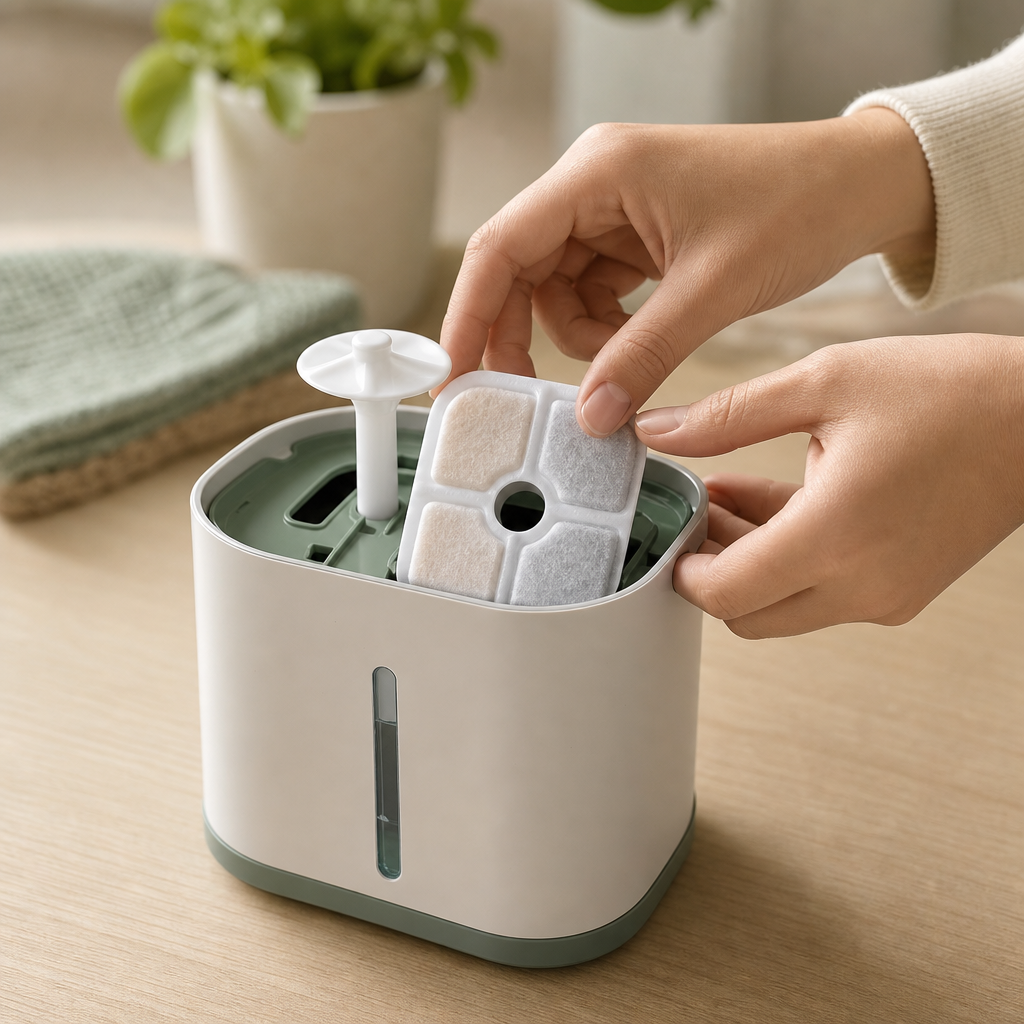
Start by removing the old filter and setting it on a flat surface. Check the outline first: square, round, mini round, long rectangle, triangle, or irregular. Then look at the details that make or break fit: rounded corners, notches, a center hole, tab placement, and thickness. A cat water fountain filter square design will not seal correctly in a rounded tray just because the length looks close, and a mini flower fountain may reject a standard round filter if the center opening is wrong.
Our Individually Wrapped Cat Fountain Carbon Filter Cartridge is useful for this kind of shape-first shopping because it comes in multiple fit silhouettes, including AK, desiccant, universal, stainless-fountain, long two-compartment, track 7.6 x 4.3 cm, D60-compatible, V-shaped triangle, cotton 14 cm, and shovel 9.7 x 8.7 cm variants. The point is not to force one cartridge into every fountain; it is to choose the version that mirrors the filter you are replacing.
2. Activated carbon is the key odor-control feature
When owners complain that a fountain smells stale, tastes off to a picky cat, or develops a faint waterline odor, the filter media matters. Activated carbon is the practical baseline for a cat fountain water filter because it helps reduce odor and improve the taste of circulating water. It does not replace washing the fountain, but it makes routine use more pleasant between cleanings.
The G2 replacement cartridge we recommend uses activated carbon filtration in a removable cartridge. That combination is exactly what most homes need: a disposable filter media inside a cartridge that can be swapped without changing the fountain itself. It is also suitable for both cats and dogs, which matters if one fountain is shared across species.
Do not judge a water filter cat fountain cartridge by color alone. Many filters look similar when dry, but the useful question is whether the media is doing the job you care about. For hair-heavy homes, the cartridge should also sit firmly in the water path so floating fur and fine debris are directed through the filter instead of around it.
3. Fit quality determines whether water actually gets filtered
A replacement can be the right general shape and still perform poorly if it does not seat correctly. When a cartridge is too small, water can bypass it. When it is too large, it may curl, lift, or prevent the fountain cover from closing. In both cases, the fountain may run, but filtration is compromised.
After installing a new cat filter fountain cartridge, watch the first few minutes of water flow. The filter should stay put as the pump circulates water. It should not bob up, tilt, or shift toward the intake. If your fountain has a tray or recessed pocket, the filter should sit flush inside it. If it uses a vertical channel or long compartment, the cartridge should fill the path without bunching.
This is where removable replacement design helps. The 15 g individually wrapped carbon cartridge is light, simple, and does not require app support or smart setup. That is a strength for replacement filters: there is no pairing, software, or calibration step. You remove the spent cartridge, rinse or prep the new one as appropriate for your fountain routine, seat it, and restart the fountain.
4. Replacement timing depends on use, not just the calendar
Most households should think in a 2- to 4-week replacement rhythm, then adjust based on real use. A single short-haired cat drinking from a frequently cleaned fountain may land toward the longer end. A multi-pet home, a long-haired cat, hard water, or a fountain near a food bowl can push replacement sooner.
There are clear signs a cat fountain water filter is done. Water develops odor shortly after cleaning. Hair collects faster than usual. The fountain’s flow slows even after the pump is cleaned. The cartridge feels slimy, clogged, or visibly discolored. If you notice those signs, replace the filter instead of trying to stretch it another week.
Individually wrapped packaging is a real advantage here. A single-piece cartridge sealed until use is cleaner to store in a kitchen drawer, utility bin, or pet-supply cabinet, especially compared with loose filters exposed to dust and humidity. For owners who reorder only a few at a time, individual wrapping also makes it easier to keep one spare without wondering whether it has been sitting open too long.
5. Multi-pet homes should budget by consumption rate
The ongoing cost is where many owners feel the pain. Original filters can be expensive, and a household with two cats and a dog may burn through cartridges much faster than expected. The smart way to compare replacements is cost per usable filter, not the headline pack price.
More pets mean more saliva, more hair, more kibble dust, and more water turnover. If several animals share one fountain, assume the filter is working harder every day. A budget cartridge that fits well and uses activated carbon can be a better long-term choice than an expensive original filter if it keeps replacement affordable enough that you actually change it on schedule.
The $7.99 single individually wrapped carbon cartridge is a practical option when you need one correct replacement now, want to verify shape compatibility before buying more, or maintain several different fountains that use different silhouettes. It is not a bulk-only bet; it is a low-commitment way to solve the immediate fit and odor problem.
6. Packaging and storage affect repeat-buy convenience
Replacement filters are consumables, so storage matters more than many buyers expect. Loose multipacks can be economical, but they can also get bent, dusty, damp, or mixed with the wrong fountain parts. Individually wrapped filters reduce that hassle. Each cartridge stays separate until it is time to install it, which is especially helpful if you keep pet supplies in a laundry room, pantry, or under-sink bin.
Shape variety also matters for repeat ordering. If you maintain more than one fountain, label the remaining wrapper or storage bag by fountain location: kitchen, bedroom, office, or dog area. That small habit prevents the classic reorder mistake of mixing up a square cartridge with a round mini flower cartridge.
For a straightforward carbon replacement, the single individually wrapped filter cartridge keeps the buying decision simple: one removable activated carbon cartridge in the chosen compatible shape. That is enough for a cat drinking fountain filter when you do not need a smart device, subscription system, or accessory bundle.
Common mistakes to avoid
Buying by fountain appearance. A flower spout, clear tank, stainless bowl, or compact footprint does not identify the filter. Always match the cartridge underneath.
Assuming near-fit is good enough. Filters work only when water passes through them. A small bypass gap can let odor, hair, and debris circulate around the media.
Waiting until the fountain smells bad. By the time odor is obvious, the cartridge has likely been overdue. Keep at least one spare so replacement does not depend on a last-minute order.
Ignoring multi-pet load. Two or three animals can turn a normal 4-week filter into a 2-week filter. If you have several pets, plan your reorder quantity around actual use.
Comparing pack price instead of per-filter cost. A $24 pack can be a bargain or a ripoff depending on how many usable cartridges it contains and whether all of them fit your fountain.
Storing loose filters carelessly. Filters left open near humidity, dust, or food debris are less pleasant to handle. Wrapped cartridges are easier to keep clean until installation.
Price expectations: budget, mid-tier, and premium
For most cat flower water fountain filter replacements, realistic prices fall into three tiers. Budget replacements generally run about $5 to $15 per small pack or single-filter order. This is where simple carbon cartridges and off-the-shelf replacement shapes usually sit. Our $7.99 cartridge fits squarely in this budget range while still offering activated carbon filtration, removable design, and individual wrapping.
Mid-tier replacements typically cost $15 to $30 per pack. These are often larger multipacks, more specialized shapes, or cartridges sold for popular fountain lines. They can be a better value if every filter in the pack fits your fountain and you are confident you will use them before reordering.
Premium or branded replacement packs often land around $30 to $60, especially when sold in larger quantities or tied to a specific fountain ecosystem. Premium pricing can make sense when the fit is exact and the fountain depends on a proprietary design, but it becomes costly in multi-pet homes. If a compatible activated carbon cartridge seats correctly and keeps odor under control, the lower ongoing cost is often the better buy.
Bottom line: the best water filter for cats is the one that fits precisely, uses appropriate filtration media, and is affordable enough to replace on time. For many owners dealing with odor, floating hair, or high original-filter costs, a shape-matched activated carbon replacement is the most practical move.
Related Guides & Products
Frequently Asked Questions
How often should I replace the filter?
Most homes should replace a cat fountain filter every 2 to 4 weeks. Replace sooner if you have multiple pets, long-haired cats, visible debris, reduced flow, or odor returning soon after cleaning.
Are square and round filters interchangeable?
No. A square filter, round filter, and mini flower filter usually seat differently. Match the old cartridge’s outline, opening, tabs, and thickness before buying a replacement.
Does activated carbon help with water smell?
Yes. Activated carbon is the key media for reducing odor and improving the taste of circulating fountain water. It should be paired with routine fountain and pump cleaning.
Is one filter enough for multiple pets?
One filter can work in a shared fountain, but it will clog and lose freshness faster. Multi-pet homes should keep spares and expect shorter replacement intervals.
Why buy individually wrapped filters?
Individual wrapping keeps each cartridge cleaner in storage and reduces mix-ups between different fountain shapes. It is especially useful if you keep backup filters in a pantry or utility drawer.
What should a replacement filter cost?
Budget replacements commonly run $5 to $15, mid-tier packs $15 to $30, and premium branded packs $30 to $60. Compare the cost per usable cartridge, not just the pack price.