TL;DR: A cat water fountain carbon filter mainly improves taste and odor by adsorbing dissolved compounds; any hair control comes from the filter’s physical pad or mesh layers. Rinse a new cartridge, seat it in the correct direction, clean the basin and pump regularly, and replace the cartridge on a predictable schedule—sooner in multi-pet homes, with heavy shedding, or whenever odor and slow flow return.
A cat water fountain carbon filter is a small maintenance part, but it has an outsized effect on whether the fountain stays appealing to pets. The important distinction is simple: carbon helps with taste and odor, while the filter’s physical material helps trap fur, crumbs, and visible debris. In everyday shopping language, a cat drinking fountain filter, cat fountain water filter, cat water fountain filter, water filter for a cat fountain, and water fountain filter for a cat usually refer to the same replaceable cartridge.
“Carbon” and “charcoal” are often used interchangeably because activated carbon is commonly made from carbon-rich materials that have been processed to create a highly porous surface. For fountain care, the practical point is not the label. What matters is whether the cartridge fits the fountain, sits firmly in the water path, and gets replaced before it becomes clogged or saturated.
Tools and supplies
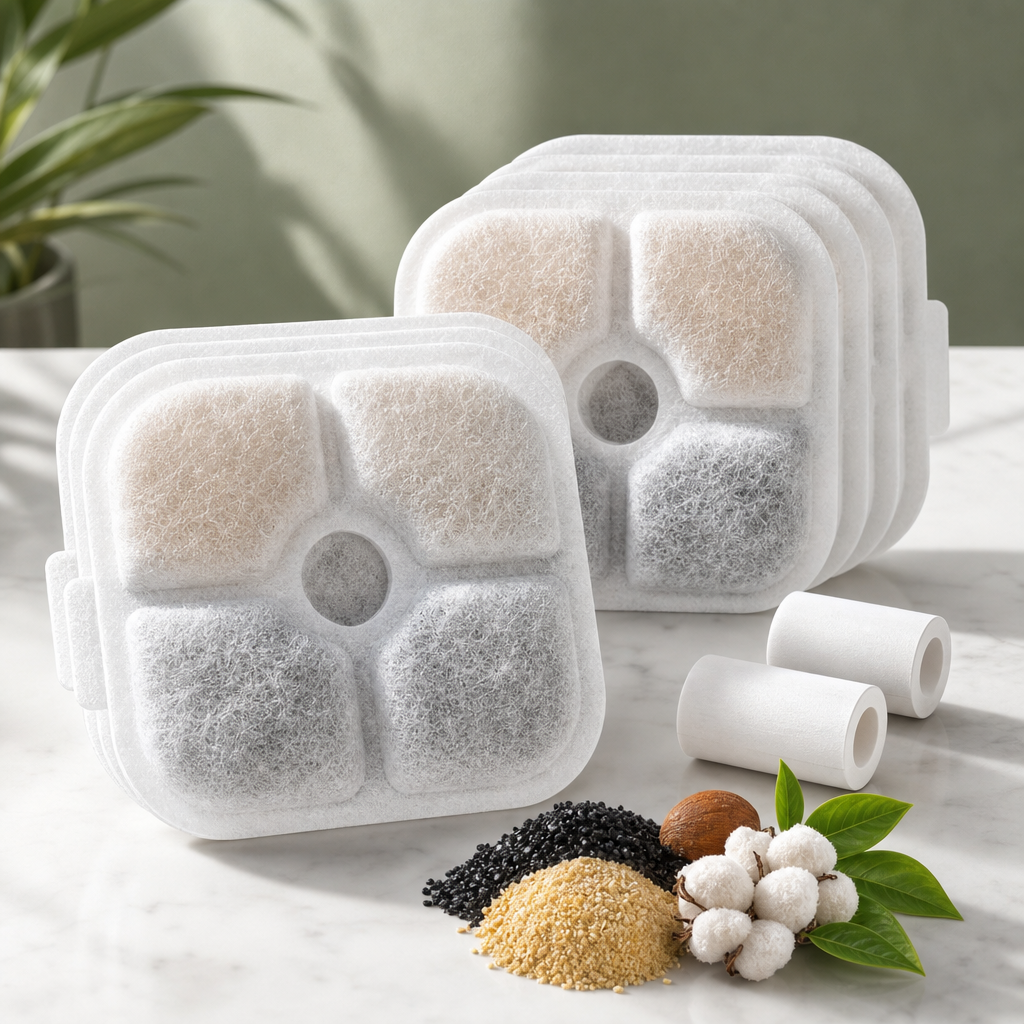
- Fresh replacement filter cartridge in the correct shape and size
- Clean bowl or cup for rinsing the new filter
- Mild dish soap for the fountain basin and non-filter parts
- Small bottle brush, straw brush, or soft toothbrush
- Clean towel or drying mat
- Measuring tape or ruler for checking cartridge dimensions
- Phone reminder, calendar label, or marker for tracking replacement dates
Step 1: Identify what the filter actually does
Start by separating three jobs that often get lumped together. Activated carbon helps reduce stale taste and common water odors. A fabric, cotton, sponge, or mesh layer catches larger particles such as hair and food dust. The pump and fountain design control water movement and aeration.
If the water smells off but flow is still strong, the carbon may be spent. If flow slows, the cartridge, pump intake, or prefilter may be clogged with hair. If the water looks cloudy or slimy, the whole fountain needs cleaning rather than just a new cartridge. A clean cartridge cannot make up for biofilm inside the pump housing or under the bowl rim.
The best water filter for cats is the one that fits correctly, routes water through the filter media instead of around it, and is changed before odor returns. A loose filter can leave gaps that let hair and debris bypass the media, even if the cartridge itself is new.
Step 2: Confirm the cartridge shape before opening it
Before you unwrap a replacement, remove the old cartridge and compare the shape, length, width, thickness, notches, tabs, and center openings. Fountain filters are not universal. A square cat water fountain filter will not necessarily replace a round, crescent, triangle, flower, or two-compartment cartridge. Even cartridges that look similar online can differ enough to rattle, block the lid, or leave bypass gaps.
Measure the old filter and note how it sits in the tray: flat, vertical, curved, V-shaped, or slotted into a track. Also check whether the cartridge has a front and back. Some designs have a denser pad on one side and carbon media behind it; installing it backward can reduce debris capture or cause water to spill around the filter.
If your manual names a proprietary cartridge, such as a Catit fountain filter or Cat Mate filter, use that name only to confirm the exact fountain generation and cartridge geometry. Do not assume a similar-looking third-party filter will fit until the shape, dimensions, and water path match.
For flower-style fountains, cartridge shape can be especially confusing because multiple round and petal-like filters exist. Use a model-specific reference, such as our cat flower water fountain filter guide, to compare the cartridge layout before you buy or open a new pack.
Step 3: Rinse the new filter before installation
Rinse every new carbon or charcoal-style cartridge under cool running water before it goes into the fountain. Do not use soap on the filter. Hold it under the tap until loose carbon dust and packing residue are flushed away. If the filter has a soft pad, rinse from both sides without twisting, wringing, or crushing it.
Some carbon dust is normal, especially with activated carbon media. Rinsing prevents dark specks from clouding the first bowl of water and keeps fine particles from being pulled straight into the pump. If the filter is individually wrapped, open it only when you are ready to use it so the cartridge stays clean and dry in storage.
After rinsing, gently shake off excess water. The filter should be wet but not dripping heavily. A pre-wetted cartridge usually seats more easily and starts filtering faster once the pump is running.
Step 4: Clean the basin before inserting the filter
Do not place a fresh filter into a dirty fountain. Unplug the unit, empty the basin, and remove the lid, spout, pump cover, and any removable tray. Wash the hard parts with warm water and mild dish soap, then rinse thoroughly. Use a small brush around seams, corners, intake slots, and the pump cavity, where slick biofilm tends to collect.
Clean the pump separately if the design allows it. Remove the cover and impeller, then brush away hair and mineral buildup. A clogged pump can make a new cat filter fountain cartridge seem ineffective because water is moving too slowly to circulate through the media.
For routine fountain upkeep beyond the filter itself, follow a consistent cleaning rhythm; our vetted guide to the best cat fountain filters also covers the common cartridge styles you are likely to encounter when comparing replacements.
Step 5: Seat the filter in the correct water path
Install the cartridge only after the fountain parts are clean and rinsed. Slide, press, or lay the filter into the tray exactly where the old one sat. The fit should be snug without bending the plastic frame, compressing the media, or forcing the lid out of place.
Look for the water path. In many fountains, water drops or flows through the filter before entering the drinking area. In others, water passes through the cartridge on the way back to the pump chamber. Either way, the cartridge should cover the intended opening so water moves through the filter rather than around it.
If the lid rocks, the filter floats, or water spills over an edge, remove the cartridge and recheck orientation. A backward or oversized cartridge can create noise, poor flow, and leaks. A cartridge that is too small may appear to work while letting unfiltered water bypass the media.
Step 6: Refill, prime, and check flow
Fill the reservoir to the fountain’s recommended level before plugging it in. Running a pump with too little water can cause rattling, heat, and premature pump wear. After plugging in the fountain, watch the flow for one full minute. Water should move steadily without sputtering, surging, or draining below the pump intake.
If you see dark flecks after startup, unplug the fountain, remove the cartridge, and rinse it again. If the fountain is noisy, check water level first, then inspect the pump intake for trapped hair. If the flow is weak even with a new filter and clean basin, disassemble the pump and clean the impeller cavity again.
After the fountain runs properly, wipe the outside dry and place it where pets cannot push it against a wall or tip the cord into water. Keep the reservoir topped up, especially in warm rooms and multi-pet households.
Step 7: Set a replacement schedule
For most single-cat homes, replace the fountain filter about every 3 to 4 weeks. For two or more pets, heavy shedders, cats that drop food into the bowl, or fountains used by both dogs and cats, plan on every 1 to 2 weeks. If your water has a strong mineral taste or the fountain develops odor quickly, shorten the schedule.
Clean the basin more often than you replace the filter. A good routine is to rinse or refresh the drinking area every couple of days and do a full wash of the basin, lid, and pump parts weekly. The filter is a consumable; it is not a substitute for cleaning.
Use a date label, phone reminder, or recurring calendar alert. Replacement cycles become hard to track in homes with multiple fountains or multiple pets because cartridges can look clean on the outside even after the carbon media is no longer doing much for taste and odor.
Step 8: Replace the filter early when performance changes
Replace the cartridge immediately if water develops a stale smell, visible slime appears on or around the media, the filter pad turns heavily discolored, the cartridge becomes misshapen, or carbon granules leak out. Also replace it if flow drops and does not recover after cleaning the pump and rinsing the cartridge.
Hair floating in the bowl usually means the debris layer is clogged, poorly seated, or overwhelmed. A carbon cartridge can reduce odor, but it will not dissolve hair. In shedding season, wipe loose fur from the fountain area daily and consider replacing the cartridge sooner than the calendar says.
Do not try to extend a disposable filter by washing it with soap, boiling it, microwaving it, or soaking it in harsh cleaners. Those methods can damage the media, leave residues, or deform the cartridge frame. Once a disposable carbon cartridge is spent or dirty, replacement is the reliable fix.
Step 9: Know when to replace other fountain parts
If a new filter and a clean pump do not restore normal flow, inspect the other consumable parts. Replace a foam prefilter if it tears, stays slimy after cleaning, or no longer springs back. Replace silicone seals or gaskets when they crack, flatten, or leak. Replace tubing if it becomes stiff, cloudy, or difficult to rinse clean.
Watch the pump closely. A pump that rattles after cleaning, stalls, runs hot, or needs frequent tapping to restart may be near the end of its service life. Do not ignore cord damage, bite marks, exposed wire, or a plug that gets wet; remove the fountain from service until the electrical issue is resolved by replacement.
Replace the bowl or lid if deep scratches, cracks, or warped areas trap grime. Plastic parts with rough scratches can hold biofilm even after washing. Stainless parts usually resist odor better, but they still need replacement if seams fail or sharp edges develop.
Related vetted resources
If you are comparing replacement options, the Individually Wrapped Cat Fountain Carbon Filter Cartridge is a $7.99 removable G2 activated-carbon replacement cartridge for pet drinking fountains used by cats and dogs. Each single 15 g cartridge is individually wrapped, requires no app or smart setup, and comes in multiple fit styles, including AK style, desiccant filter, universal-style, stainless-fountain style, long two-compartment style, track 7.6 x 4.3 cm, V-shaped triangle style, cotton 14 cm, shovel 9.7 x 8.7 cm, and several shape-conscious compatibility formats.
For broader comparison, use our cat fountain filter roundup to match cartridge shape, filtration type, and replacement routine before stocking up. The right buying decision is the one that lowers repeat-order frustration without risking a poor fit.
Related Guides & Products
- cat fountain filters — Top Picks
- Cat Flower Water Fountain Filter Buyer’s Guide
- Individually Wrapped Cat Fountain Carbon Filter Cartridge
Frequently Asked Questions
Is carbon the same as charcoal?
In fountain filters, the terms often overlap. Activated carbon is a processed carbon material with a porous surface that helps reduce taste and odor in pet water.
How often should I replace the filter?
Most single-cat homes can replace it every 3 to 4 weeks. Multi-pet homes, heavy shedding, odors, or slow flow usually call for replacement every 1 to 2 weeks.
Does carbon remove cat hair?
Carbon mainly targets taste and odor. Hair is caught by the cartridge’s physical pad, mesh, cotton, sponge, or prefilter layer, if the design includes one.
Can I wash and reuse the filter?
Rinse a new filter before use, but do not soap, boil, or deep-clean a disposable carbon cartridge. Replace it once it smells, clogs, deforms, or leaks media.
Why does water smell after a new filter?
The basin, pump, or tubing may have biofilm. Clean all removable parts, rinse the new filter again, refill with fresh water, and check that flow passes through the cartridge.
Are cat fountain filters universal?
No. Match the old cartridge by shape, dimensions, thickness, tabs, openings, and water path. Similar-looking filters can still fit poorly or let water bypass the media.