TL;DR: For dependable cat water fountain filter replacement, inspect the filter weekly, replace it when flow slows, odor appears, debris remains, or the manual’s interval arrives, and clean the basin and pump on a steady schedule. Rinse new filters before use, keep the pump submerged, descale hard-water buildup, and replace worn pumps, seals, or nozzles when cleaning no longer restores performance.
Tools and supplies
- Replacement filter element or filter chip made for your fountain
- Clean bowl or cup for rinsing the new filter
- Small cleaning brush or bottle brush
- Soft sponge or microfiber cloth
- Mild, unscented dish soap
- White vinegar for mineral scale
- Clean towel for drying parts
- Fresh drinking water
Step 1: Unplug, power down, and empty the fountain
Before any cat water fountain filter replacement, stop the pump. Unplug a corded fountain, or turn off the control module on a cordless cat pet water fountain. If the unit has been running low on water, let the pump rest for a few minutes before handling it; a dry or partially dry pump can feel warm and may trap debris around the rotor.
Lift off the lid, nozzle, flower spout, or bubbler attachment, depending on the design. Pour out the old water. Do not reuse water from the reservoir, even if it looks clear. Cat hair, saliva, food crumbs, and fine dust collect in the basin and around the filter housing. Starting with an empty basin makes it easier to see slime, scale, and debris before you install the new filter.
Step 2: Remove the old filter without squeezing it into the water path
Pull the used filter straight out of its tray, cartridge slot, or filter well. Avoid squeezing a saturated charcoal-style filter over the clean side of the fountain, because trapped particles can wash back into the water path. Put the old filter directly in the trash.
If your feline water fountain uses a flat filter chip, note its orientation before removal. If it uses a thicker filter element, check which side faces the pump or outlet. Reinstalling the new filter in the same direction helps maintain steady flow through the media instead of around it.
Step 3: Rinse the new filter until loose dust is gone
Place the new filter in a clean bowl or hold it under cool running water. Rinse until the water runs clear and loose carbon dust or packing residue is gone. Do not use soap on a disposable filter element. Soap can remain in the media and change the taste or smell of the water, which may make a cat avoid the fountain.
After rinsing, gently shake off excess water. Some filters benefit from a short soak in clean water before installation because it helps the media saturate evenly. Once wet, keep the filter clean; do not set it on a counter where lint, food residue, or cleaner overspray can stick to it.
Step 4: Wash the basin, lid, and filter tray before installing the new filter
A new filter cannot fix a dirty fountain. Wash the basin, lid, filter tray, and removable spouts with warm water, a soft sponge, and a small amount of mild dish soap. Focus on corners, seams, underside lips, and the area where the water returns to the reservoir. Those spots are where sticky biofilm and food particles collect first.
For a more detailed part-by-part routine, use our cat water fountain parts cleaning guide alongside this filter replacement process. The key habit is simple: clean the hard parts before installing the new filter, not after. Otherwise, the new filter immediately starts trapping residue that should have been scrubbed away.
Rinse every washed part thoroughly. If the fountain uses a stainless steel basin, wipe with the grain when possible and avoid abrasive pads that can scratch the surface. If it uses plastic parts, be extra careful around molded corners and seams, where slime can cling even when the open surfaces look clean.
Step 5: Clean the pump intake and rotor area
Most flow problems that look like filter problems start at the pump. Remove the pump cover or intake screen if your fountain allows it. Use the small brush to clear hair, grit, and mineral flakes from the intake slots. If the pump has a removable impeller or rotor cover, lift it carefully, rinse the rotor area, and brush around the cavity.
Do not force small pump parts. If a cover resists, check the manual for the release point. Reassemble the pump only after the rotor spins freely and no hair is wrapped around the shaft. A clean pump helps keep the cat bubbler fountain moving water evenly and can reduce rattling, pulsing, or grinding caused by debris.
Step 6: Descale hard-water buildup when flow looks weak
White crust, cloudy film, or gritty deposits are mineral scale. Scale narrows the pump intake, clogs nozzle openings, and makes the basin feel rough. To descale, soak affected hard parts in a mixture of white vinegar and water, then brush gently. Rinse thoroughly until the vinegar smell is gone.
Do not soak disposable filters in vinegar. Replace the filter separately, and descale only the washable parts: basin, lid, spout, nozzle, filter tray, and pump cover. For pump bodies, avoid submerging any control module or charging contact that is not designed to be soaked. Wipe around electrical contacts with a damp cloth instead of flooding them.
Step 7: Install the new filter and reassemble the water path
Place the rinsed filter into its slot so water must pass through it before returning to the drinking area. The filter should sit flat and snug. If it bows, floats, or leaves a gap, remove it and reseat it. A poorly seated filter lets water bypass the media, which defeats the purpose of cat water fountain filter replacement.
Reattach the pump, intake screen, nozzle, lid, and any drinking attachment. Make sure hoses or short outlet tubes are fully seated. A half-connected outlet can make the water stream weak or noisy, and a loose nozzle can splash water outside the basin.
Step 8: Refill, prime, and test the flow
Fill the reservoir with fresh drinking water to the operating level. The pump should be fully submerged before it starts. Running the pump with too little water is one of the fastest ways to create noise and shorten pump life. If the fountain has a minimum fill mark, stay above it.
Power the fountain on and watch the flow for a full minute. A proper setup should produce a steady stream, bubbling outlet, or circulating surface movement, depending on the design. If the water sputters, turn the fountain off, reseat the pump outlet, check the filter position, add water, and restart. For a cordless fountain, keep the battery charged so the water source remains dependable during short outages or when you move the fountain away from an outlet.
Step 9: Put the fountain back where your cat will drink
Place the clean fountain on a level surface away from litter boxes and food bowls if your cat prefers separation. Some cats drink more from moving water when the fountain is in a quiet traffic lane rather than a busy kitchen corner. If your cat is cautious, leave a familiar water bowl nearby while the fountain returns to its usual rhythm.
A water drinking fountain cats can approach comfortably should not wobble, splash, or buzz against the floor. If you hear vibration, place the unit flat, confirm the pump is locked into position, and make sure the basin is filled. When choosing a water fountain for a cat with noise sensitivity, the pump layout, water level, and ease of cleaning matter as much as the fountain style; our cat water fountain buying guide explains those design tradeoffs.
Cleaning frequency guidance
Daily checks
Top off the water, check that the pump is covered, and remove visible hair or food crumbs. If the fountain water cat drinks from looks cloudy, smells stale, or has floating debris, empty and wash it instead of simply adding more water.
Every few days
For most homes, rinse the drinking surface, lid, and exposed nozzle every few days. This is especially useful for long-haired cats, multi-pet households, and fountains placed near food. A quick rinse prevents hair mats from reaching the pump intake.
Weekly cleaning
Give the basin, lid, pump intake, and filter tray a full wash every week. Inspect the filter at the same time. Weekly inspection catches the problems owners notice most: sticky walls, scale in the water path, weak circulation, and a cats fountain drinker that suddenly seems less interesting.
Monthly deep cleaning
Do a deeper descaling session when you see mineral deposits or feel a rough film. Hard water may require more frequent descaling. A cat stainless steel drinking fountain can be easier to wipe clean because the basin surface is firm and nonporous, but stainless parts still need routine washing and scale removal. For material-specific care, see our guide to stainless steel versus plastic cat fountains.
When to replace the filter
Replace the filter whenever it is discolored, slimy, torn, misshapen, clogged with hair, or still smells after rinsing the fountain parts. Also replace it when the water flow drops and cleaning the pump does not restore circulation. A filter that restricts flow can make the pump work harder and may cause sputtering at the nozzle.
Use the interval in your fountain’s manual as the default schedule, then adjust based on real conditions. Multiple pets, heavy shedding, food crumbs near the fountain, hard water, and warm rooms all push a filter to load up faster. If your cat stops using the kitty water fountain right after a filter change, rinse the new filter again and wash the tray; residual dust or trapped odor can make sensitive cats hesitate.
Do not try to extend a disposable filter by scrubbing it with soap. Once the media is loaded with debris, washing the outside does not restore the inside. Reusing a worn filter can leave the fountain looking clean while the water path stays stale.
When to replace other fountain parts
Pump
Replace the pump when cleaning no longer restores a steady flow, the rotor repeatedly stalls, the pump rattles after debris is removed, or the unit cannot keep water moving at the proper fill level. Before replacing it, confirm that the intake is clear, the outlet tube is seated, and the filter is not blocking flow.
Nozzles, spouts, and outlet tubes
Replace removable nozzles or outlet tubes when they crack, no longer fit tightly, or retain slime in seams after scrubbing. A loose nozzle can cause splash, weak flow, or water loss around the lid.
Seals, lids, and trays
Replace seals, filter trays, or lids when warping prevents a snug fit. Any gap that lets unfiltered water bypass the filter reduces filtration and can make the drinking surface collect debris faster.
Basin
Replace a basin if it is deeply cracked, heavily scratched, or cannot be cleaned smooth. Deep scratches can trap biofilm. Stainless water fountain for cats models resist that kind of wear better than soft plastic, but any basin should be retired when damage prevents sanitary cleaning.
Troubleshooting after a filter change
If the fountain is noisy, first add water. Then reseat the pump and check that it is not touching the basin wall in a way that vibrates. If flow is weak, remove the new filter and briefly test circulation with clean water during inspection; if flow improves, rinse and reseat the filter. If flow stays weak, clean the pump intake again.
If your cat avoids the fountain after maintenance, dump the first fill, rinse the basin and filter tray again, and refill. Some cats dislike the smell of new filter media or soap residue. Keep the water cool and fresh, and avoid heavily scented cleaners around the fountain.
Related fountains and filter options
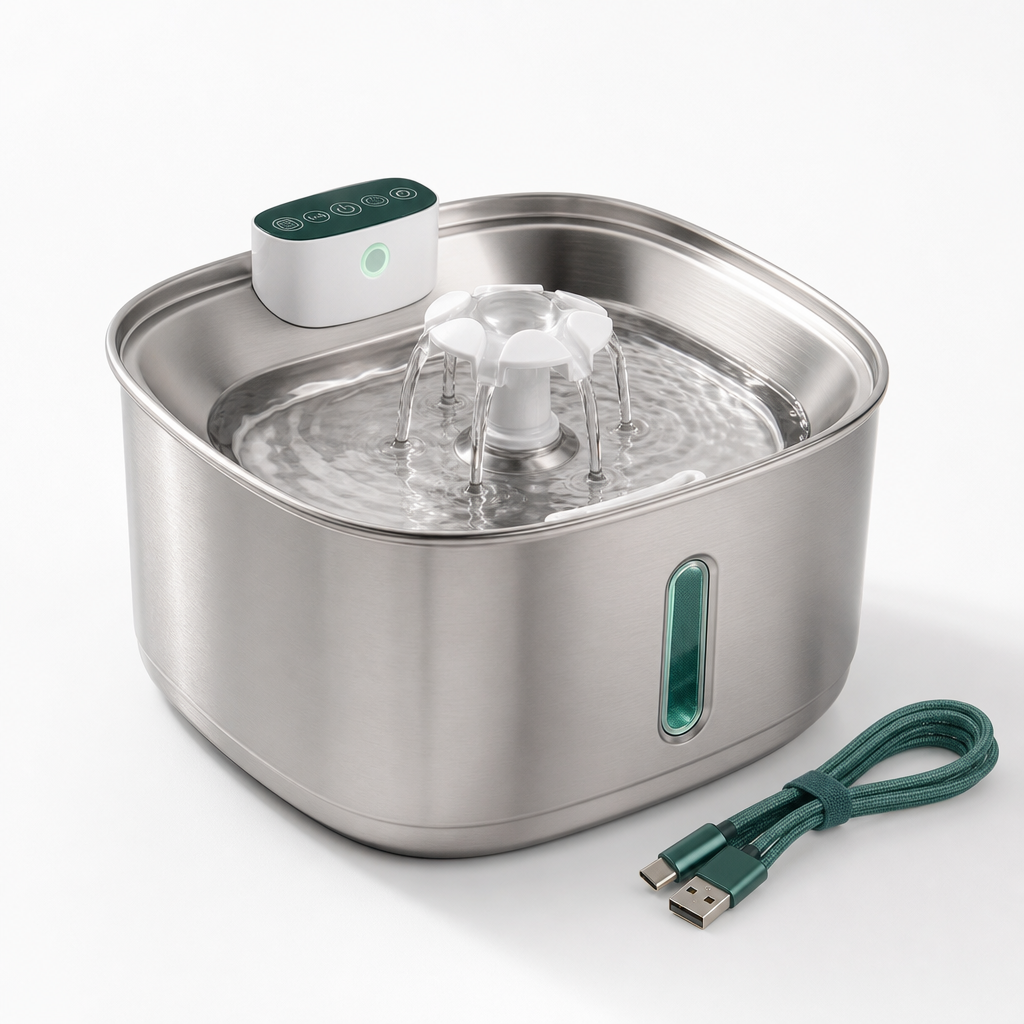
If you are choosing a new stainless steel cat water fountain, the 3.2L Stainless Steel Cordless Cat Water Fountain is $66.99 and uses a stainless steel basin, a rechargeable cordless design with Type-C charging, a removable body, two nozzle options, and an included filter element. It also has 2-box and 5-box filter cartridge options, which is useful if you want replacement filters on hand.
For a lower-cost automatic filtered setup, the 3L Automatic Filtered Cat & Dog Water Fountain is $31.99 and has a removable design, automatic circulating flow, and automatic filtration, with a 6-piece replacement filter chip option. For broader comparisons across capacities and materials, start with our best cat water fountains guide.
Related Guides & Products
- Best Cat Water Fountains (Our Picks)
- How to Choose a Cat Water Fountain
- How to Clean Cat Water Fountain Parts
- Stainless Steel Cat Water Fountain vs Plastic
- 3.2L Stainless Steel Cat Water Fountain Review
- 3L Automatic Cat Water Fountain Review
- Are Cat Water Fountains Worth It? Maintenance Guide
- Best Quiet Cat Water Fountain Buying Guide
- 3.2L Stainless Steel Cordless Cat Water Fountain
- 3L Automatic Filtered Cat & Dog Water Fountain
Frequently Asked Questions
How often should I inspect the filter?
Inspect the filter weekly. Replace it when it is slimy, clogged, discolored, torn, misshapen, smelly, or when flow stays weak after pump cleaning.
Should I rinse a new filter first?
Yes. Rinse the new filter under cool water until loose dust is gone. Do not use soap on disposable filter media.
Can I wash and reuse old filters?
Do not scrub disposable filters with soap or reuse them indefinitely. Once the media is loaded, replace it rather than trying to clean the inside.
Why is my fountain noisy after replacement?
Add water, reseat the pump, check that the pump is fully submerged, and confirm the filter is not blocking the outlet or intake.
When should I replace the pump?
Replace the pump when cleaning no longer restores steady flow, the rotor repeatedly stalls, or rattling continues after debris and scale are removed.
Does stainless steel change maintenance?
Stainless steel is easy to wipe clean and resists deep scratching, but it still needs weekly washing and descaling when mineral buildup appears.