TL;DR: Match the toy to how your dog chews: soft mouth, teething puppy, moderate gnawer, or enthusiastic destroyer. Plush squeaky toys are best for supervised indoor play and toy rotation, while firm PP chew sticks are better for gnawing, teething support, and dogs that need a simple chew outlet. Expect $5-$12 for budget chews, $13-$25 for midrange toys, and $26-$45+ for premium options.
Choosing dog chewable toys is less about finding the toughest-looking toy and more about matching the toy to your dog’s chewing style. A puppy that chews chair legs because new teeth are coming in needs a different texture than an adult dog that just wants to carry, squeak, and toss something around the living room. And a dog that methodically shreds soft toys needs a more focused chew design than a plush character toy can provide.
We evaluate dog chew toys by looking at material, weight, shape, intended play style, engagement features, and price. For shoppers dealing with dogs that chew furniture or destroy ordinary toys, the goal is not one miracle toy. It is a small rotation of the right toys: something firm for gnawing, something engaging for interactive play, and options you can swap before your dog gets bored. For broader comparisons, our vetted roundup of durable dog chew toys is a useful next stop after you understand the buying criteria below.
Quick-reference table: match the toy to the chewer
| Dog chewing style | What to look for | Best toy type | Price expectation |
|---|---|---|---|
| Teething puppy | Lightweight toy, chew-focused shape, easy-to-grip size | Firm chew stick or small chew toy | $5-$18 |
| Gentle indoor player | Soft feel, squeaker, low weight, fun character design | Plush-style squeaky chew toy | $8-$20 |
| Moderate daily gnawer | Durable material, natural shape, simple construction | PP, nylon, rubber, or similar chew-focused toy | $10-$25 |
| Bored furniture chewer | Multiple textures or shapes, rotation-friendly options | Chew stick plus interactive toy | $15-$35 for a small rotation |
| Heavy destroyer | Harder chew material, fewer seams, larger size | Heavy-duty chew toy | $20-$45+ |
Chewing style is the first factor to judge
Start by watching what your dog actually does. Does your dog nibble corners, clamp down hard, shred fabric, chase squeaks, or settle in for long gnawing sessions? The right dog chew toys depend on that behavior. Soft-mouth dogs often enjoy plush toys because the reward is sound, carrying, and playful interaction. Strong gnawers usually need a firmer chew surface because they are not just playing; they are working their jaws.
If you have been asking, “why does my puppy chew everything,” the answer is usually a mix of teething, exploration, energy, and boredom. Puppies learn with their mouths, and they need legal targets before shoes, table legs, and baseboards become the default. A chew-focused toy gives that instinct somewhere to go. For that use, a light, simple chew with a defined shape is often more effective than a decorative toy that is fun to look at but awkward to bite.
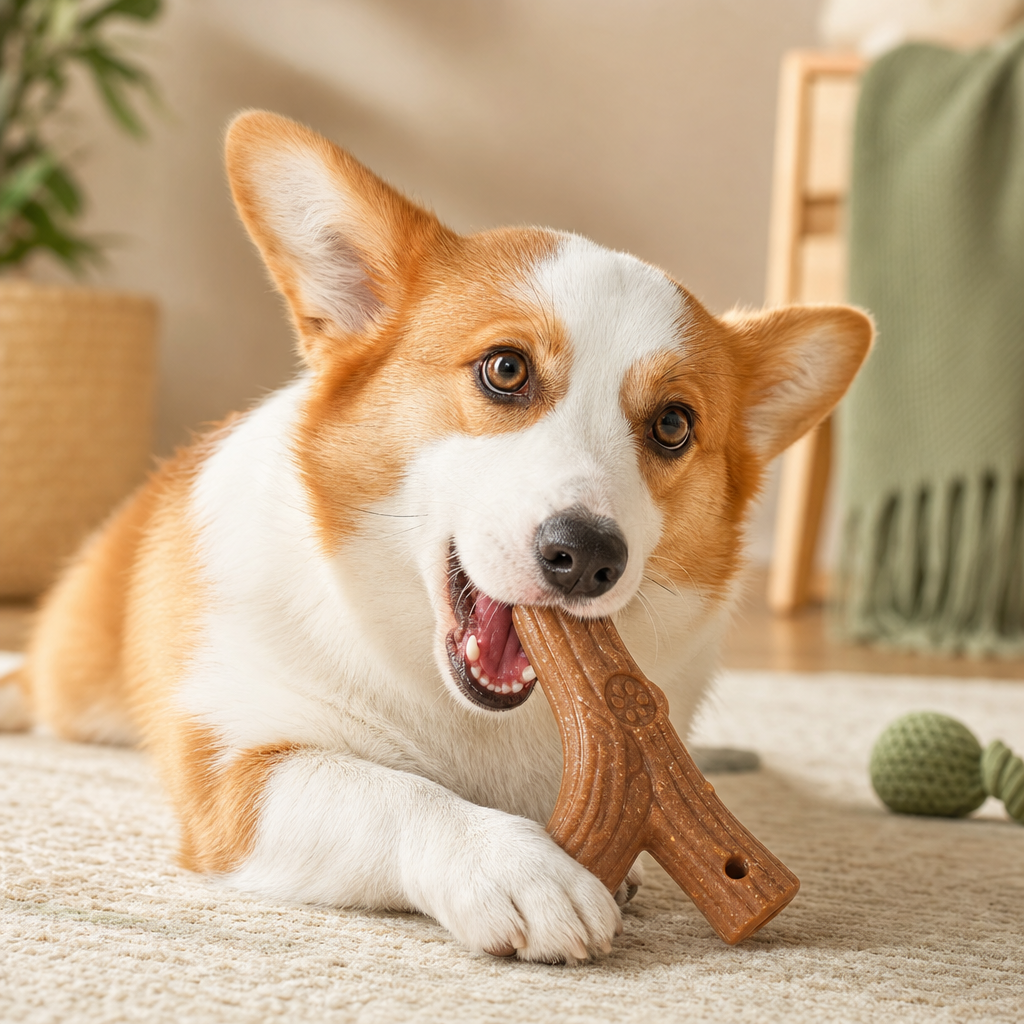
The PP Dog Chew Toy for Teething is the more purposeful option for puppies and dogs that want to gnaw. Its PP construction, 50 g weight, small and large size options, and natural shapes—antler, bone, bamboo, and tree branch—make it easy to match the toy to the dog’s mouth and chewing preference. The branch and bamboo shapes are especially sensible for dogs that are attracted to household wood or outdoor sticks, because the shape feels familiar while giving you a designated chew item indoors.
Material determines how the toy behaves under teeth
Material is the biggest difference between a toy for chewing and a toy that merely survives a little mouthing. Plush toys compress, squeak, and feel satisfying for dogs that like soft prey-style play. Firm plastic or rubber-like chews hold their shape better during gnawing and are usually better for repetitive jaw work. Neither category is automatically better; they serve different jobs.
For a dog that destroys ordinary plush toys in minutes, a firm chew is usually the smarter baseline. PP construction, as used in the PP Dog Chew Toy for Teething, gives a simple, no-fuss chew surface without stuffing, fabric limbs, or delicate sewn details. That matters when the main problem is repeated gnawing rather than fetch or cuddling.
For a dog that is gentle, social, or motivated by sound, plush can be the better choice. The Squeaky Plush-Style Dog Chew Toy is a 100 g indoor interactive toy with squeaky engagement and playful character options such as a yellow squeaky dog, small green dinosaur, pouty duck, blue bear, monkey, gray elephant, pink strawberry, and novelty styles. Its value is not in being a hard-core chew block; it is in keeping a dog engaged through sound, softness, and variety during supervised play.
Size and weight affect safety, interest, and control
A chew toy should be large enough that your dog cannot treat it like a snack, but not so big or heavy that the dog gives up. Weight also changes how the toy plays. A 50 g chew stick has a different feel than a 100 g plush toy. The lighter, firmer PP chew is easy for many dogs to reposition with their paws while gnawing. The 100 g plush-style squeaky toy has more presence for tossing, carrying, and interactive indoor play.
Size options are useful when you have a puppy, small dog, or a growing dog. The PP Dog Chew Toy for Teething comes in small and large size options, which makes it easier to avoid the common mistake of buying one generic chew for every dog in the house. The natural shape options also help: a bone shape offers a classic grip, while antler, bamboo, and tree-branch shapes create different angles for dogs that like to rotate the toy as they chew.
With plush-style toys, character shape matters too. A compact 10 cm paw-print bear option has a different mouth feel than a big-head dinosaur or dolphin shape. For smaller dogs and puppies, compact plush shapes are easier to carry. For dogs that like animated play, larger character shapes can be more exciting because there is more toy to grab, shake, and squeak.
Engagement features keep dogs from returning to furniture
Durability matters, but engagement is what keeps a dog coming back to the toy instead of the couch leg. A boring chew can sit untouched, even if it is technically strong. Look for features that match your dog’s motivation: squeaks for sound-driven dogs, natural shapes for gnawers, and toy rotation options for dogs that lose interest quickly.
The Squeaky Plush-Style Dog Chew Toy is strongest for dogs that respond to sound and social play. Its squeaky engagement makes it useful for indoor games, quick play breaks, and puppy chewing support when you are actively redirecting your dog. The lightweight 100 g feel also makes it easy to toss gently indoors without turning playtime into a full fetch session.
The PP chew stick takes a different route. It offers engagement through shape and gnawing action rather than sound. The antler, bone, bamboo, and branch options give dogs defined surfaces to bite and rotate. That is useful for dogs that are tempted by wooden furniture or random sticks because the toy gives them a more appropriate object with a chew-specific design.
For dogs that get bored and start chewing household items, plan on owning more than one toy. Keep a firm chew available for solo gnawing, then bring out a plush squeaky toy for interactive play. Rotating toys every few days often works better than leaving every toy on the floor all the time.
Play setting should guide plush versus firm chews
Where your dog plays matters. Indoor toys should be light, easy to pick up, and unlikely to create chaos when tossed across a room. Outdoor and high-energy toys can be larger and more rugged, but they also get dirtier and need a different cleaning routine. For apartment living, puppies, and short play sessions, a lighter indoor interactive toy is often the most practical choice.
The Squeaky Plush-Style Dog Chew Toy is clearly geared toward indoor interactive play. Its plush-style design, squeaker, 100 g weight, and playful characters make sense for supervised living-room use. It is the better pick if your dog likes to bring you a toy, squeak it for attention, or carry it around as part of play.
The PP Dog Chew Toy for Teething is the better pick when the setting is quieter and the dog is settling into a chew session. It has a simple no-fuss design with no squeaker or plush styling, so the appeal comes from chewing. That makes it useful near a dog bed, crate area, or calm corner where you want to redirect gnawing away from furniture.
Whichever type you buy, inspect chew toys regularly and clean them as part of your normal pet-care routine. Plush toys and firm chews age differently: plush can show fabric wear, while hard chews can develop tooth marks and rough spots. Replace toys when their condition no longer matches safe, comfortable play.
Dental gnawing support is helpful, but not a substitute for care
Many dog chewable toys promote chewing activity that can help satisfy the urge to gnaw. Some shapes also encourage scraping and chewing motions as the dog works the toy around the mouth. That is useful, especially for teething puppies and dogs that need a regular chewing outlet.
The PP Dog Chew Toy for Teething is the stronger choice here because its features focus on teething support and dental gnawing action. The natural shapes create edges and contours that dogs can work against. For puppies, that can be more satisfying than a flat object because the toy gives them different bite points as their mouth changes.
Plush toys play a different role. A squeaky plush toy can support puppy chewing and redirect mouthy behavior, but it is not the best tool for extended gnawing. Choose plush when the goal is interaction, comfort, squeaky fun, and variety. Choose a firm chew when the goal is sustained chewing, teething relief, and redirecting furniture-damaging behavior.
Toy rotation and replacement cost matter long term
Dog chew toys are consumable household items. Even good ones wear out, and dogs can get bored if the same toy is always available. Budget with rotation in mind: one firm chew, one interactive plush, and one backup chew is often more useful than one expensive toy expected to do everything.
At $10.99, the PP Dog Chew Toy for Teething is a practical budget chew for owners dealing with teething, gnawing, or furniture chewing. Because it comes in small and large sizes and several natural shapes, it is also easy to buy a second version without changing the basic toy category.
At $17.99, the Squeaky Plush-Style Dog Chew Toy sits in the midrange for plush interactive toys. The character variety is the appeal: yellow dog, dinosaur, duck, bear, monkey, elephant, dolphin, strawberry, and novelty styles make it easy to refresh your dog’s toy bin without switching to an entirely different play pattern. For a dog that loves squeakers, that variety can be more valuable than another plain chew.
Concrete price expectations for dog chewable toys
Budget tier: $5-$12. Expect simple chew sticks, small puppy chews, basic rubber or plastic-style toys, and minimal-feature designs. This is the right tier for teething support, starter toys, and replacement chews. The PP Dog Chew Toy for Teething at $10.99 fits this tier well because it focuses on core chewing value: PP construction, lightweight 50 g feel, natural shapes, and size options.
Midrange tier: $13-$25. This is where you usually find better plush character toys, squeaky indoor toys, multi-texture designs, and more engaging shapes. The Squeaky Plush-Style Dog Chew Toy at $17.99 is a good example: you are paying for squeaky engagement, a 100 g plush-style build, indoor interactive play value, and multiple character choices.
Premium tier: $26-$45+. Premium dog chewable toys typically make sense for large dogs, aggressive chewers, multi-toy sets, specialty materials, or enrichment-focused designs. Spend here when your dog consistently destroys cheaper toys or when you need larger, heavier, or more complex options. If your dog is still a puppy or a gentle chewer, starting with one budget chew and one midrange interactive toy is usually more efficient.
Common mistakes when buying dog chew toys
Buying only plush for a serious gnawer. Plush toys can be excellent for indoor engagement, but a dog that wants to grind and chew needs a firmer outlet. Pair plush with a chew stick instead of expecting fabric to do every job.
Choosing by cuteness instead of chewing behavior. A cute dinosaur or duck is great if your dog likes squeaks and carrying toys. If the dog is chewing table legs, prioritize material, shape, and gnawing function first.
Ignoring weight and size. A toy that is too small can be a poor match for a large dog, while a toy that is too bulky can frustrate a puppy. Use small and large size options when available, and pay attention to how easily your dog can grip the toy.
Leaving every toy out all the time. Dogs often lose interest in toys that are constantly available. Rotate a firm chew, a squeaky plush, and a backup option to make old toys feel new again.
Expecting one toy to solve destructive chewing. Chewing is normal dog behavior. The better goal is redirection: give your dog appropriate chewable toys, use supervised play, and provide enough variety that furniture is less tempting.
Not replacing worn toys. Any chew toy can wear down. Inspect fabric, seams, squeakers, and chew surfaces regularly, especially if your dog is a determined chewer.
Our practical recommendation
For puppies, teething dogs, and dogs that chew household objects, start with the PP Dog Chew Toy for Teething. Its $10.99 price, PP construction, 50 g weight, two size options, and natural chew shapes make it the more targeted choice for gnawing and redirection.
For gentle chewers, squeaker fans, and dogs that enjoy indoor interactive play, add the Squeaky Plush-Style Dog Chew Toy. At $17.99, it brings sound, softness, playful characters, and toy-rotation value. It is the better entertainment toy, while the PP chew is the better chew-focused tool.
If you are trying to stop destructive chewing, buy for behavior rather than labels. A two-toy setup—a firm chew for gnawing plus a plush squeaky toy for engagement—covers far more real-life needs than either toy alone.
Related Guides & Products
- Best Durable Dog Chew Toys — Top Picks
- Squeaky Plush-Style Dog Chew Toy
- PP Dog Chew Toy for Teething, Natural Shape Options
Frequently Asked Questions
What are dog chewable toys for?
They give dogs an appropriate outlet for chewing, play, teething, and boredom. The best choice depends on whether your dog likes soft squeaky play, firm gnawing, or both.
Why does my puppy chew everything?
Puppies chew because they are teething, exploring, burning energy, and learning with their mouths. A firm, lightweight chew toy can redirect that behavior away from shoes and furniture.
Are plush chew toys good for heavy chewers?
Plush toys are better for gentle chewers, squeaker fans, and supervised indoor play. Heavy gnawers usually need a firmer chew toy with fewer soft parts.
Which toy is better for teething puppies?
A firm chew stick is usually better for teething support. The PP Dog Chew Toy for Teething has a lightweight design, PP construction, and natural shapes for gnawing.
How much should dog chew toys cost?
Budget chews usually run $5-$12, midrange toys $13-$25, and premium options $26-$45 or more. Most homes benefit from one firm chew and one interactive toy.
Should I rotate my dog’s chew toys?
Yes. Rotation helps keep toys interesting and can reduce boredom chewing. Keep a firm chew available and bring out squeaky or plush toys for interactive play.