TL;DR: Puppy chewing is normal, but it needs structure. Reduce damage by puppy-proofing the room, interrupting calmly, redirecting to safe chew items, rotating toys, and giving your puppy enough sleep, meals, play, and training. Inspect chew toys daily during heavy teething and replace anything with torn fabric, exposed stuffing, sharp edges, loose pieces, or a size that has become unsafe.
If you are asking, why does my puppy chew everything, the short answer is that chewing is how puppies explore, relieve teething pressure, burn energy, and cope with boredom or stress. The fix is not to punish the chewing urge. The fix is to control access, redirect fast, and make the right things more available than shoes, table legs, baseboards, remotes, and couch corners.
Short Tool List
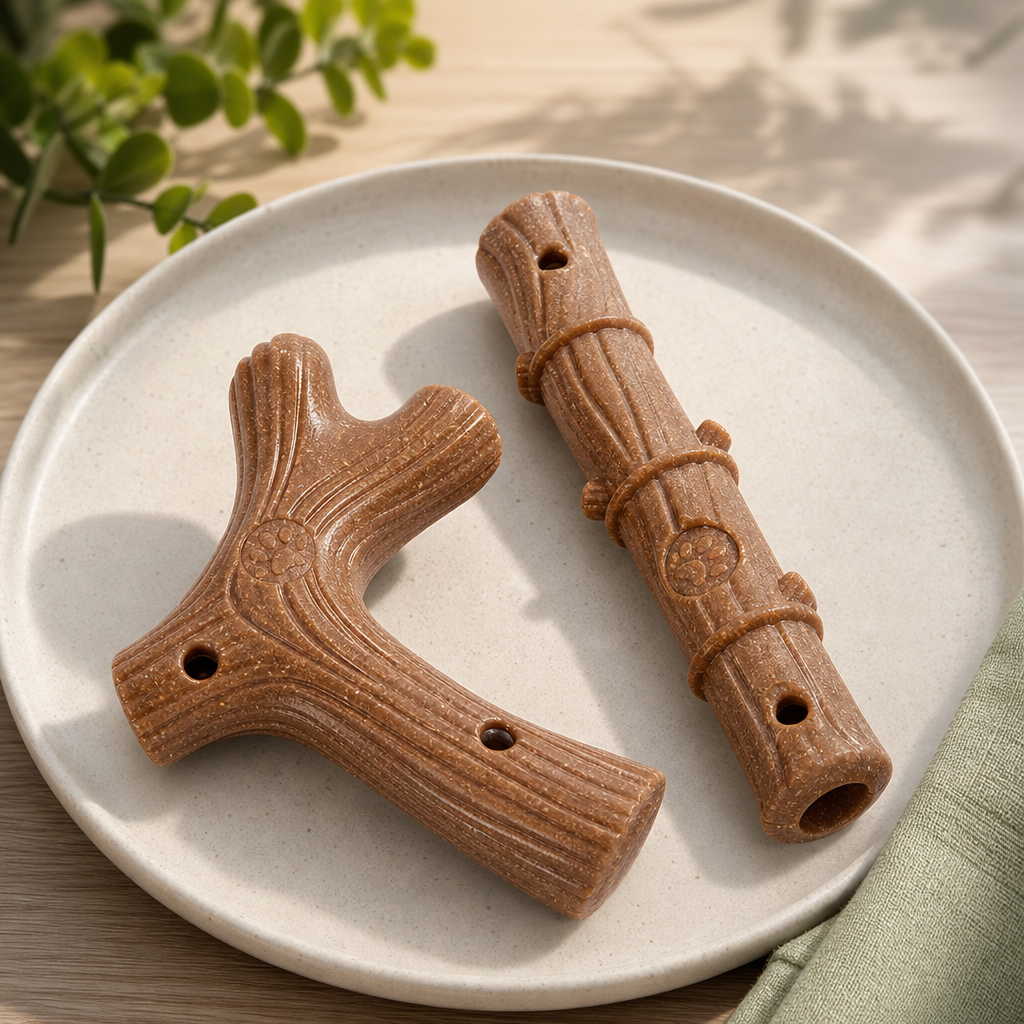
- Several safe dog chew toys in different textures
- One soft toy for interactive play
- One firmer chewable toy for gnawing
- Baby gates, a crate, or a puppy pen
- Storage bin for toy rotation
- Bitter chew deterrent for furniture, if needed
- High-value treats for trade-and-reward practice
- Trash bag for worn, torn, or unsafe toys
Step 1: Identify the Chewing Trigger
Watch when the chewing happens for two or three days. Most puppies chew hardest during predictable windows: after waking, after meals, during evening energy spikes, when left alone, or when adult teeth are moving in. Write down the time, the object, and what happened right before it.
If your puppy targets chair legs, corners, and baseboards, the trigger is often access plus boredom. If the puppy grabs socks, sleeves, and hands, the trigger is usually attention, play drive, or teething. If the puppy shreds soft objects immediately, the texture may be too rewarding and the toy may not match the dog’s chew strength.
Use this observation to choose the next action. A teething puppy needs legal gnawing outlets. A bored puppy needs shorter confinement periods and more training games. A puppy that destroys regular toys needs tougher supervision rules and a smarter rotation of dog chewable toys, not unlimited access to anything soft.
Step 2: Puppy-Proof the Chewing Zone
Set up one main area where your puppy spends unsupervised or lightly supervised time. Remove shoes, bags, charging cords, children’s toys, throw pillows, laundry, and anything small enough to swallow. Push furniture tight against walls where possible, block access to low shelves, and cover or route cords out of reach.
Use a pen, crate, gate, or closed doors to make the environment boring in the right way. The goal is not to create an empty space; it is to create a space where every available chew option is allowed. If the puppy cannot rehearse chewing the rug fringe every afternoon, that habit weakens. If the puppy gets a legal chew every time, that habit strengthens.
For furniture legs and trim that have already become targets, clean the surface first so it does not carry saliva scent, then apply a chew deterrent according to the label. Do not rely on deterrent alone. It works best when the puppy also has a better item within reach.
Step 3: Redirect Within Two Seconds
When your puppy grabs the wrong object, interrupt with a calm cue such as “drop” or “leave it.” Avoid yelling, chasing, or prying the mouth open unless there is an immediate safety risk. Chasing often turns the stolen item into a game, especially with socks, towels, and paper.
Place an appropriate chew directly in front of the puppy’s mouth. The replacement should be easy to grip, safe for the puppy’s size, and different enough from the forbidden item to be interesting. When the puppy takes the legal chew, praise softly and let the puppy settle into gnawing. If the puppy goes back to the furniture, reduce freedom and move to a pen or gated area.
Timing matters. Redirect while the puppy is thinking about chewing, not five minutes after the damage. If you find shredded cardboard later, clean it up without scolding. Puppies do not connect delayed punishment with the old action, but they do learn from repeated, immediate redirection.
Step 4: Match the Chew to the Job
Use different chew categories for different needs. A soft toy is useful for gentle mouthing, carrying, and interactive play. A firmer chewable toy is better for gnawing pressure during teething. A food-stuffed puzzle can help a puppy settle in a pen. A training treat is best for trade practice, not long chewing.
Choose size carefully. A chew should not be so small that the puppy can lodge it far back in the mouth, and it should not be so large or heavy that the puppy cannot hold it comfortably. Texture matters too. Some puppies want a little give; others want a firm surface for steady pressure. If regular toys are getting destroyed quickly, compare construction, shape, and intended use before buying more of the same. Our researched guide to durable dog chew toys is a helpful reference when your main problem is shredded toys and repeated replacements.
Do not give old shoes, socks, or household fabric as “allowed” chew items. Puppies learn categories poorly at first. If one shoe is legal, another shoe on the floor is likely to look legal too.
Step 5: Build a Daily Chew Routine
Give your puppy planned chew sessions instead of waiting for trouble. Offer a chew after breakfast, after a potty break, after a short training session, and during the evening witching-hour period when many puppies become mouthy and restless. Keep sessions supervised until you know how your puppy handles each toy.
A useful rhythm is exercise, potty, short training, chew, nap. Puppies that are overtired often chew harder and listen less. If your puppy is biting hands, grabbing clothing, and bouncing from object to object, the answer may be a nap in a quiet crate or pen, not more stimulation.
Rotate toys instead of leaving every item on the floor. Keep three or four available and store the rest. Swap them every day or two so the puppy does not get bored. For a deeper buying checklist, use this guide on how to choose dog chewable toys before adding more options to the rotation.
Step 6: Teach Trade, Drop, and Settle
Practice “trade” when your puppy has a boring legal toy, not when the puppy has stolen something valuable. Offer a treat at the puppy’s nose. When the puppy releases the toy, mark the behavior with “yes,” give the treat, then return the toy. Returning the toy teaches that giving things up does not always end the fun.
Practice “drop” with two toys. Move one toy, let the puppy engage, then make the second toy more exciting. When the puppy releases the first, say “drop,” reward, and continue play. Keep it short and upbeat.
Teach settle by rewarding calm chewing on a mat or bed. Place the puppy in the chosen spot with a legal chew. Drop a treat between the paws when the puppy lies down or chews calmly. Over time, the mat becomes a cue for quiet chewing instead of roaming the room looking for furniture to sample.
Step 7: Manage Teething Without Encouraging Destruction
Teething can make chewing feel urgent. During this stage, offer legal chews more often, keep sessions supervised, and inspect toys after each heavy gnawing period. If your puppy is chewing hard, switch between textures rather than letting the puppy focus on one weakening seam or edge for too long.
You can also offer chilled puppy-safe options when appropriate, such as a damp cloth that is supervised and removed before shredding. The key is supervision. Fabric, stuffing, plastic fragments, and loose squeakers can become hazards when a puppy moves from mouthing to tearing.
Expect teething behavior to come in waves. A puppy may seem calm for a week, then start chewing chair legs again. When that happens, return to tighter management: smaller area, more planned chews, more naps, and faster redirection.
Frequency Guidance: How Often to Do Each Task
Daily
- Pick up household items before the puppy enters the room.
- Offer planned chew sessions after meals, play, training, and potty breaks.
- Inspect every toy your puppy used that day.
- Rotate at least one item if interest is fading.
- Practice one short trade or drop session.
Weekly
- Wash washable toys according to their care needs.
- Check furniture, baseboards, and rugs for new chew marks.
- Refresh the puppy-proof setup as your puppy grows taller and more curious.
- Review which toys are being ignored, damaged, or used appropriately.
During Heavy Teething
- Inspect toys after each intense chew session.
- Use shorter, more frequent chew sessions rather than one long unsupervised period.
- Increase nap opportunities if chewing escalates with overtired behavior.
When to Replace Chew Toys and Parts
Replace a soft toy when seams open, stuffing shows, the squeaker becomes exposed, fabric strips loosen, or the toy changes shape enough that the puppy can work pieces free. Do not keep a damaged plush toy because it is a favorite. A favorite toy can become a swallowing risk once the structure fails.
Replace a firmer chew toy when it develops sharp edges, deep cracks, loose flakes, missing chunks, or a size that is no longer safe for your dog’s mouth. If the toy is meant to be one solid piece, treat any separating section as a reason to remove it.
Replace toys that are too small for your growing puppy. A chew that worked at 10 weeks may be inappropriate later. As the puppy’s jaw gets stronger, also reassess durability. The right chew is not the one that lasts forever; it is the one that stays intact under appropriate use and can be removed before it becomes risky.
Related Dog Chew Options
For puppies that need a light, interactive option, the Squeaky Plush-Style Dog Chew Toy is a 100 g plush-style dog chew toy with squeaky engagement, indoor play use, and multiple character options such as a yellow squeaky dog, green dinosaur, duck, bear, monkey, elephant, and dolphin. At $17.99, it fits best as a supervised soft toy for play, carrying, and toy rotation.
For puppies that need a firmer gnawing outlet, the PP Dog Chew Toy for Teething uses PP construction in natural shape options such as antler, bone, bamboo, and tree branch, with small and large size options. At $10.99 and 50 g, it is a lightweight chewable choice for teething support and dental-style gnawing action under supervision.
If your puppy destroys ordinary toys quickly, compare both soft and firmer options instead of buying only one texture. A mixed rotation gives your puppy legal choices while helping you see which shapes, materials, and sizes hold up best to your dog’s chewing style.
Related Guides & Products
- Best Durable Dog Chew Toys — Top Picks
- How to Choose Dog Chewable Toys for Your Dog
- Squeaky Plush-Style Dog Chew Toy
- PP Dog Chew Toy for Teething, Natural Shape Options
Frequently Asked Questions
Why does my puppy chew everything suddenly?
Sudden chewing often comes from teething, boredom, extra energy, stress, or a new freedom level in the home. Tighten supervision, add planned chew sessions, and remove tempting household items.
How do I stop my puppy chewing furniture?
Block access, clean chewed spots, use a chew deterrent if needed, and redirect immediately to a legal chew. Reward calm chewing and reduce freedom when the puppy repeats the behavior.
Should I punish my puppy for chewing?
No. Interrupt calmly, trade for an appropriate chew, and manage the environment better. Punishment after the fact does not teach the puppy which items are allowed.
How many chew toys should a puppy have out?
Keep a few out at a time and rotate the rest. Too many choices can become clutter, while rotation keeps familiar toys more interesting.
When should I throw away a puppy chew toy?
Discard it when seams split, stuffing or squeakers show, chunks are missing, edges become sharp, cracks deepen, or the toy becomes small enough to swallow.
Are soft toys okay for teething puppies?
Soft toys can be useful for gentle play and carrying, but they need supervision. Remove them if your puppy starts shredding fabric, opening seams, or exposing inner parts.