TL;DR: For spill-prone cats, the best upgrade is usually a heavier stainless steel bowl with a floating drinking plate, not a shallow open dish. Look for enough capacity, a stable base, easy cleaning, and a surface that does not hold odor. The $32.99 Stainless Steel Floating Cat & Dog Water Bowl is a strong midrange pick for cats that splash, paw, or tip standard bowls.
A metal cat water bowl sounds simple until you live with a cat that paws at water, flips lightweight dishes, refuses stale water, or leaves splash marks across the floor. The right alternative is not just “metal instead of plastic.” It is a better drinking setup: stable enough to resist tipping, deep enough to reduce sloshing, clean enough to avoid odors, and inviting enough that a picky cat actually drinks from it.
For most spill-prone homes, we like stainless steel over plastic because it has a smoother, less odor-holding surface and a more substantial feel. Among the options we’ve vetted and compared, the Stainless Steel Floating Cat & Dog Water Bowl is especially practical because it combines a stainless steel basin with a floating drinking plate. At $32.99, it sits in the midrange, but it solves several common problems at once: splashy drinking, shallow bowl mess, plastic odor concerns, and low capacity for multi-pet households.
If you are still comparing bowl types, our broader guide to the best cat water bowls is a useful place to see how open bowls, fountains, ceramic dishes, and no-spill designs fit different homes. This guide focuses on how to choose a metal or stainless steel cat water bowl alternative when spills are the main headache.
Quick-reference table
| Buying factor | What to look for | Best fit |
|---|---|---|
| Spill control | Floating plate, heavier body, less exposed water surface | Cats that paw, splash, or knock bowls over |
| Material | Stainless steel basin rather than odor-holding plastic | Owners concerned about smell, grime, and frequent cleaning |
| Capacity | About 1 L or more for most homes; larger for multiple pets | Multi-cat homes or cat-and-dog households |
| Drinking appeal | Accessible opening, stable water level, quiet non-electric design | Cats that avoid noisy fountains or shallow dishes |
| Cleaning | Simple parts, smooth basin, easy refill process | Busy owners and homes with hard-water marks |
| Price | $8–$18 budget, $20–$45 midrange, $50–$120 premium | Match cost to spill control and capacity needs |
1. Spill control: judge the drinking surface, not just the bowl
The biggest mistake with spill-prone pets is buying another open bowl that is simply heavier. Weight helps, but it does not solve splashing from the top. A shallow open cat water bowl leaves the whole water surface exposed, so a curious cat can pat it, scoop it, or create waves with every drink. A better no-spill design limits how much water is available at the surface at one time.
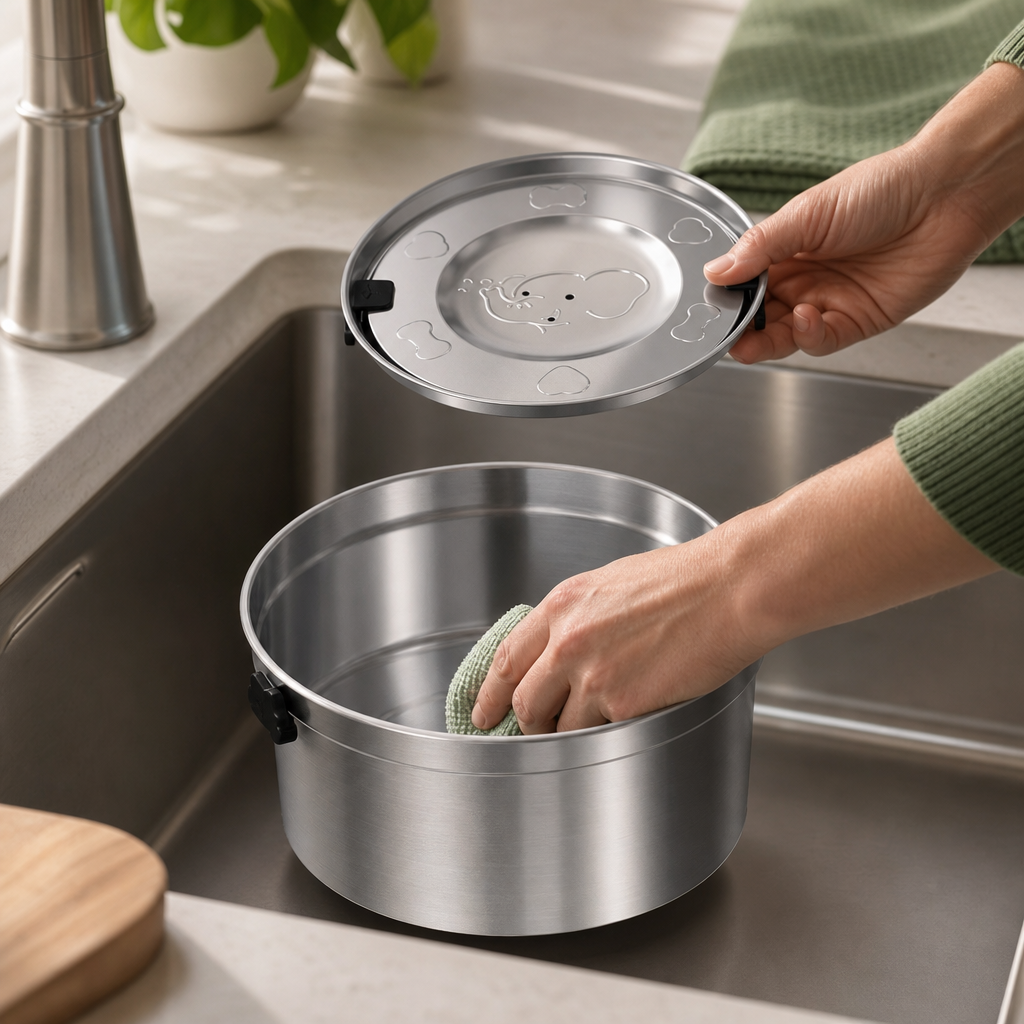
That is where a floating drinking plate has a real advantage. The Stainless Steel Floating Cat & Dog Water Bowl uses a floating plate over the stainless steel basin, so your cat drinks from a controlled opening rather than a fully open pool. This kind of design is especially useful if your cat dips paws into water, pushes the bowl around, or leaves a wet ring around the feeding station.
When comparing alternatives, look at three things: how much water surface is exposed, whether the bowl has enough mass to resist sliding, and whether the drinking plate or top insert sits securely. The 760 g weight of the Stainless Steel Floating Cat & Dog Water Bowl gives it a more substantial feel than many lightweight plastic dishes, and the non-electric design avoids cords, pump noise, or moving fountain parts.
2. Material: choose stainless steel for odor resistance and durability
If your concern is that plastic bowls smell odd or trap grime, a cat water bowl stainless steel design is the safer everyday choice. Stainless steel does not have the same porous feel as cheap plastic, and it is less likely to hang on to food smells, cleaning residue, or stale-water odor. It also handles routine scrubbing better than plastic, which can develop scratches that collect residue over time.
A stainless steel cat water bowl also tends to look cleaner longer than clear plastic, though water spots can still show after washing. If visible spots bother you, choose a natural stainless finish and dry the basin after cleaning. The Stainless Steel Floating Cat & Dog Water Bowl comes in natural stainless, blue, white, and black finishes, so you can choose either the classic metal look or a color that blends with your feeding area.
For cats with sensitive whiskers or strong preferences, stainless steel also has the advantage of being neutral. It does not add fragrance, and it does not depend on filters or flower-shaped plastic fountain parts to make water appealing. A flower water bowl for cats or flower water for cats setup can attract cats that like moving water, but it also adds parts to clean. For owners who want a quieter and simpler alternative, stainless steel plus a floating plate is easier to live with.
3. Capacity: size the bowl for the number of pets
Capacity matters more than many people expect. A tiny bowl may look tidy on the floor, but it can run low quickly, concentrate hair or dust faster, and encourage more frequent refilling. In a multi-cat household, too little capacity can turn the water station into a bottleneck. It also leaves less margin if you are away for the workday.
The Stainless Steel Floating Cat & Dog Water Bowl comes in 1.2 L and 3.2 L capacity options. The 1.2 L size makes sense for one cat or a small space where you refill daily. The 3.2 L size is the better choice for multiple cats, a cat-and-dog household, or owners who are tired of constantly filling cat water bowl after cat water bowl throughout the day.
As a rule of thumb, choose the smallest capacity that still supports your routine comfortably. Oversizing can make water sit longer than necessary if you have one small cat that drinks lightly. Undersizing is worse for busy homes, because an empty or low bowl can discourage drinking. If your cat already does not love drinking water, a larger and more stable station is often worth the floor space.
4. Drinking appeal: make water easy, calm, and familiar
Some cats avoid water because the station feels wrong: the bowl is too shallow, the surface reflects strangely, the fountain hums, or the water sits too close to food. A good bowl should reduce friction. It should be easy to approach, easy to drink from, and stable enough that it does not move when whiskers or paws touch it.
A floating-plate bowl can help cats that dislike deep open water because it presents a controlled top surface. It can also help cats that splash because it makes pawing less rewarding. The decorative top motif options on the Stainless Steel Floating Cat & Dog Water Bowl—elephant, bone, and dolphin—are mostly aesthetic, but the covered-top concept is functionally important because it changes how your pet interacts with the water.
If your cat is attracted to fountains, a flower-style fountain may be worth considering, especially for cats that prefer visible movement. But a flower water bowl for cats is not automatically better. Pumps need cleaning, some cats dislike the sound, and plastic flower parts can collect residue. For many households, the most reliable drinking appeal comes from clean water, a stable location, and a bowl that does not create puddles.
5. Cleaning and water spots: favor simple parts and smooth surfaces
A water bowl only works if you are willing to clean it often. Look for smooth surfaces, removable top parts, and a basin you can rinse and wipe without fighting tight corners. Stainless steel is a strong choice here because it tolerates regular washing and does not retain odors the way lower-grade plastic can.
Water spots are common on metal, especially in hard-water areas. They are not a reason to avoid a metal bowl, but they do affect how the bowl looks after drying. If visible spotting bothers you, rinse thoroughly and wipe the stainless surface dry instead of letting droplets evaporate. A natural stainless finish usually hides everyday wear better than glossy dark finishes, while blue, white, or black can better match a kitchen or feeding mat.
The simpler the design, the more likely you are to maintain it. Non-electric bowls avoid pump disassembly, filter changes, and cord routing. That makes the Stainless Steel Floating Cat & Dog Water Bowl a good fit for owners who want better spill control without turning the water station into an appliance. For broader comparisons of simple bowls versus fountains, check our researched cat water bowl roundup.
6. Fit for your home: consider placement, pets, and finish
Before buying, think about where the bowl will live. A spill-prone cat needs more than a good bowl; it needs a stable station. Place the bowl on a flat surface, away from high-traffic corners where people kick it, and not so close to food that kibble drops into the water. A feeding mat can help contain small drips, but it should not be the main spill-control strategy.
Households with both cats and dogs should be especially careful with size and access. A bowl suitable for cats and dogs can reduce the number of water stations you need, but only if the top opening works for the smallest pet and the capacity works for the largest. The 1.2 L and 3.2 L choices on the stainless steel no-spill cat water bowl make it easier to match the same design to different homes.
Finish is not just decoration. Natural stainless is the most classic choice for a metal cat water bowl and tends to suit owners who prioritize a clean utility look. Blue, white, and black can help the bowl blend into modern kitchens, laundry rooms, or pet corners. Decorative motifs such as elephant, bone, and dolphin tops can make the bowl feel less clinical without changing the core function.
Concrete price expectations
Budget: $8–$18. Expect basic open stainless steel bowls in this range. They can be durable and easy to wash, but they usually do not solve splashing, pawing, or tipping on their own. This tier is best for calm drinkers or as a secondary bowl in another room.
Midrange: $20–$45. This is the sweet spot for no-spill and upgraded stainless designs. You can find heavier bowls, floating plates, better capacity, and more thoughtful shapes. At $32.99, the Stainless Steel Floating Cat & Dog Water Bowl lands squarely in this tier and offers more spill control than a basic open dish while staying simpler than an electric fountain.
Premium: $50–$120. Premium options usually include electric fountains, larger multi-pet systems, ceramic fountain bodies, filter systems, or design-forward materials. These can be worthwhile for cats that strongly prefer moving water, but they require more maintenance. If your main problem is water on the floor rather than lack of water movement, a midrange floating stainless bowl is often the better value.
Common mistakes to avoid
Buying only for looks. A cute bowl that is shallow, light, or fully open can make spills worse. Prioritize surface control, weight, and capacity first; choose color and motif after the functional needs are met.
Assuming all metal bowls are the same. A plain metal dish and a floating-plate stainless bowl behave differently. If your cat paws at water, exposed surface area matters as much as material.
Choosing too little capacity for multiple cats. Multi-cat homes need more water volume and more convenient access. A 3.2 L option is more practical than repeatedly refilling a small dish.
Switching too abruptly. Cats can be suspicious of new water stations. Place the new bowl where the old one sat, keep the water fresh, and let your cat investigate without pressure.
Ignoring cleaning habits. If a bowl is annoying to clean, it will not stay fresh. Simple stainless designs are easier to maintain than complex pump systems, especially for owners already frustrated by plastic odor or residue.
Expecting a bowl to fix bad placement. Even a good no-spill design can struggle on uneven floors or in a busy walkway. Put the bowl on a level surface where your cat can drink calmly.
Bottom line
For a cat that does not drink enough, spills water, or makes a mess with shallow bowls, the best metal cat water bowl alternative is usually a stainless steel basin with a controlled drinking surface. It gives you the odor resistance and durability of metal while reducing the splash zone that makes ordinary bowls frustrating.
The Stainless Steel Floating Cat & Dog Water Bowl is a clear midrange recommendation for spill-prone pets because it combines a stainless steel basin, floating drinking plate, 1.2 L and 3.2 L size choices, cat-and-dog suitability, and a more substantial 760 g build. Choose the smaller size for one cat and the larger size for multi-pet homes. If you want better floor protection without moving to a powered fountain, this is the category to shop first.
Related Guides & Products
Frequently Asked Questions
Are metal cat water bowls better than plastic?
For most homes, yes. Stainless steel resists odor, cleans easily, and is less likely to hold grime in scratches than lower-grade plastic bowls.
What bowl is best for cats that spill water?
Choose a heavier stainless bowl with a floating drinking plate or reduced exposed water surface. It limits splashing better than a shallow open dish.
What size water bowl should one cat use?
A 1.2 L bowl is a practical size for one cat when you refresh water daily. Larger sizes make sense for multiple pets.
Do cats like flower water bowls?
Some cats like flower-style fountains because they show moving water. Others prefer quiet, non-electric bowls that are easier to clean and less distracting.
How much should I spend on a cat water bowl?
Basic stainless bowls run about $8–$18. Better no-spill midrange bowls cost $20–$45. Premium fountains and large systems often cost $50–$120.
Is stainless steel good for multi-cat homes?
Yes, especially in larger capacities. A 3.2 L stainless floating bowl is better suited to multiple cats than a small shallow dish.