TL;DR: For a cleaner cat water station, use a stable, odor-resistant bowl, place it away from food and litter, fill it to a controlled depth instead of the rim, and refresh the water daily. Stainless steel and floating-plate designs help reduce smells, splashing, and tip-overs. Clean mineral marks before they build up, and replace scratched, warped, or loose parts promptly.
Filling a cat water bowl sounds simple until the bowl is tipped over, the floor is wet, the water smells stale, or your cat ignores it completely. The fix is a mix of bowl choice, location, water depth, and cleaning rhythm. If you are comparing bowl styles before setting up a new station, start with our broader guide to the best cat water bowls, then use the steps below to make the bowl you choose easier to live with day to day.
Tools and supplies
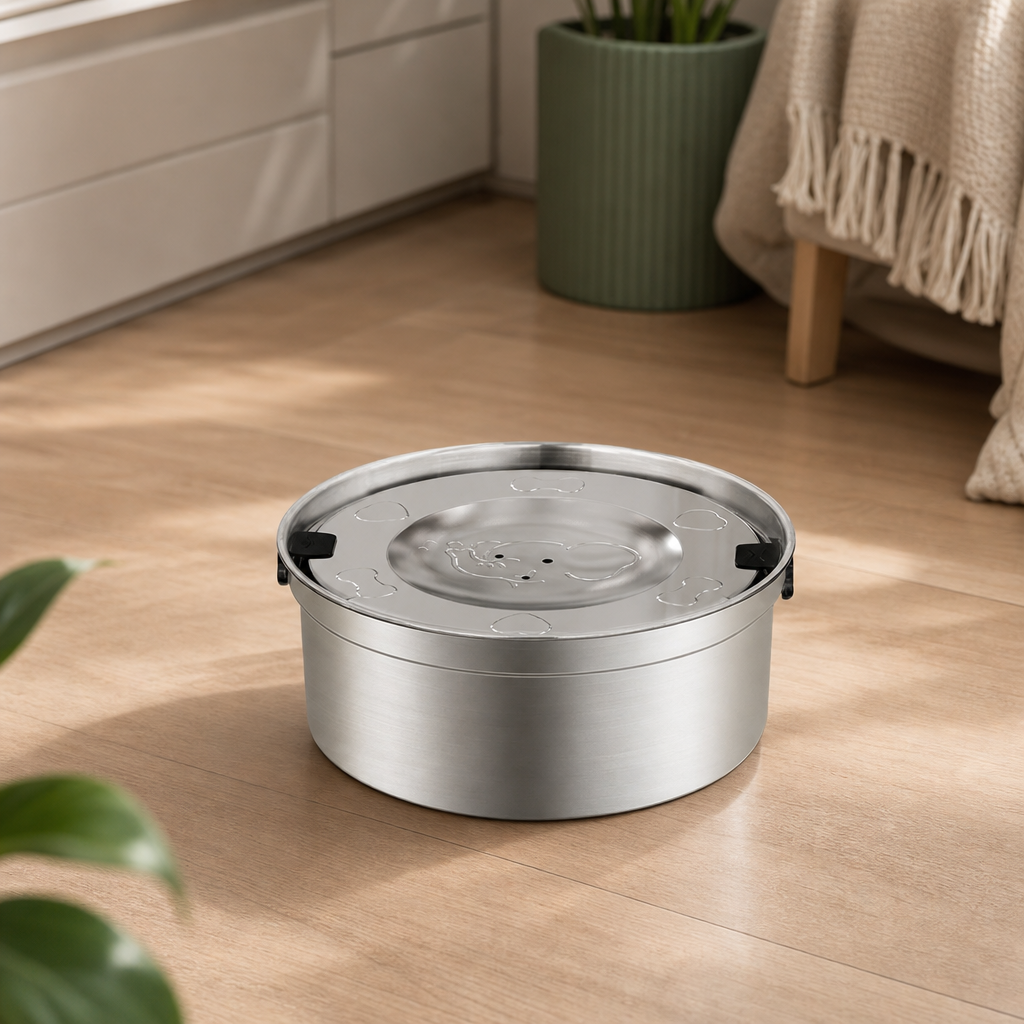
- A clean cat water bowl with enough capacity for your household
- Fresh, cool drinking water
- Mild dish soap
- Soft sponge or nonabrasive brush
- Microfiber towel for drying and water spots
- White vinegar for mineral buildup
- Waterproof mat or tray
- Measuring cup, optional, for consistent fill level
Step 1: Choose a bowl that solves the mess you actually have
Before filling cat water bowl setups the same way every day, identify the main problem. A cat that paws water across the floor needs a different setup from a cat that refuses to drink from a plastic bowl. For tipping, choose a bowl with a broader base and a more substantial feel. For odors, a stainless steel cat water bowl is usually a better everyday choice than plastic because stainless steel does not hold smells as readily and is easier to scrub clean. For splashing, avoid very shallow bowls that let water slosh over the lip with a small paw tap.
If you have searched for a cat water bowl stainless steel option because plastic smells odd or gets cloudy, prioritize smooth metal surfaces and simple shapes that are easy to wash. A metal cat water bowl also makes mineral residue easier to see, which is useful: visible water spots are a reminder to clean before a film develops. For cats that play with the surface of the water, a floating drinking plate can reduce the open water area and slow down splashing without using electricity.
Step 2: Pick the right location before you add water
Set the bowl where your cat can drink without feeling trapped. Corners look tidy to people, but some cats dislike putting their back to the room. A better spot is along a quiet wall with a clear exit path. Keep the bowl away from the litter box and several feet from food if possible; many cats drink more willingly when water does not smell like meals or litter.
For spill-prone homes, place the bowl on a flat, hard surface rather than a thick rug. Use a waterproof mat with a raised edge if your cat paws at the bowl. If you have a kitten, senior cat, or short-legged cat, make sure the rim height lets the cat drink with a relaxed neck. If you are still comparing stable bowl shapes for pets that knock water around, our guide to metal cat water bowl alternatives for spill-prone pets explains which design features help most.
Step 3: Rinse the bowl before every refill
Do not just top off yesterday’s water. Empty the bowl first, then rinse away hair, food crumbs, dust, and saliva film. Cats are sensitive to smell, and a thin film can make clean-looking water unappealing. This step matters even more in multi-cat homes because several mouths add residue faster.
Use cool or lukewarm water for the rinse. If the bowl feels slippery, wash it with mild dish soap before refilling. Rinse thoroughly so no soap scent remains. With stainless steel, dry the outside and underside before putting the bowl back down; this keeps the station from looking spotted and prevents trapped moisture under the bowl.
Step 4: Fill to a controlled level, not to the rim
The best fill level is high enough that your cat can drink comfortably but low enough that walking, bumping, or pawing does not send water over the side. As a practical starting point, fill a standard open bowl to about two-thirds full. If your cat dips a paw, reduce the level slightly for a few days and watch whether splashing improves.
For a floating-plate bowl, add water slowly so the plate rises evenly and sits flat. Stop when the drinking opening has stable water access but the bowl still has headroom above the water line. This style works best when the plate can move freely, so do not overfill it or wedge the insert down. After filling, press the bowl lightly on the counter or floor to confirm it sits flat and does not rock.
In a multi-cat household, do not rely on one small station unless your cats naturally share without blocking each other. More water stations are often cleaner and calmer than one oversized bowl in a busy spot. If one cat guards the bowl, place a second bowl in another room rather than simply filling the first one higher.
Step 5: Make the water more appealing without adding gimmicks
If your cat does not drink enough, start with freshness, placement, and bowl material before adding anything to the water. Refresh the bowl daily, move it away from food, and try a quieter location. Some cats prefer a wide opening because their whiskers do not brush the sides. Others prefer a smaller drinking area because it feels less splashy.
A flower water bowl for cats usually refers to a fountain-style top that creates a small drinking stream. That can interest cats that like movement, but flower water for cats should still mean plain drinking water. Do not add flowers, floral extracts, essential oils, sweeteners, or flavor drops unless your veterinarian specifically tells you to. Cats are safer with simple, clean water and a bowl that is easy to maintain.
Step 6: Control splashes after filling
After you fill the bowl, watch one drinking session. If water splashes when your cat laps normally, the bowl may be too shallow, too full, or too narrow. Lower the water level first. If that does not help, switch to a wider or deeper bowl so the water surface is less likely to break over the rim.
If your cat hooks a paw under the edge and flips the bowl, use a heavier bowl, a wider base, or a tray that limits sliding. Avoid placing the bowl where a cat can launch into it during play, such as at the end of a hallway. For cats that drag bowls, a mat with grip can help, but the bowl itself still needs enough weight and stability to resist tipping.
Step 7: Clean water spots and mineral marks
Hard water leaves chalky white marks, especially on metal. These spots are not a reason to abandon a stainless steel cat water bowl; they are a sign to clean more deliberately. Wash with mild soap first, then apply a small amount of white vinegar to the marked area, let it sit briefly, and wipe with a soft sponge. Rinse very thoroughly and dry with a microfiber towel.
Do not use steel wool or harsh scouring pads on stainless steel because scratches can trap residue and make the bowl harder to keep clean. If you want the bowl to look better after each wash, dry it right away instead of air-drying. That one habit dramatically reduces visible water spots.
Frequency guidance
Refresh the water every day, even if the bowl still looks full. Empty, rinse, and refill rather than topping off. Wash the bowl with soap daily if you see slime, hair, food crumbs, or paw dirt. In most homes, a full soap wash every day or every other day keeps odors down and encourages drinking.
Deep-clean mineral marks weekly if you have hard water. In multi-cat households, clean more often because shared bowls collect saliva film faster. If your cat eats wet food, drinks after meals, or drops kibble into the water, treat that bowl as a daily wash item. For floating-plate designs, remove the plate during cleaning so residue does not collect around the drinking opening or underside.
When to replace bowls and parts
Replace plastic bowls when they are scratched, cloudy, warped, or smell bad after washing. Scratches are not just cosmetic; they create places where residue can cling. Replace metal bowls when they are dented enough to rock, have rough damaged edges, or show corrosion. A bowl that no longer sits flat is much easier to tip.
For bowls with a floating drinking plate, replace the plate or the whole unit if the plate no longer floats level, sticks, traps grime you cannot remove, or has cracks along the drinking opening. If a decorative top, insert, or removable piece becomes loose enough for a cat to lift or chew, take it out of service. The safest water bowl is stable, smooth, clean, and boring enough that your cat drinks from it instead of wrestling with it.
Related
For homes dealing with tipping, splashing, plastic odor, and limited capacity, the Stainless Steel Floating Cat & Dog Water Bowl is a practical non-electric option at $32.99. It uses a stainless steel basin with a floating drinking plate, comes in 1.2 L and 3.2 L capacities, and has a 760 g product weight for a more substantial feel than lightweight plastic bowls. The finish options are natural stainless, blue, white, and black, with elephant, bone, or dolphin top motifs. It works for cats and dogs, so it is especially sensible for mixed-pet homes or multi-cat households that need more water available between refills.
Related Guides & Products
- cat water bowls — Top Picks
- Metal Cat Water Bowl Alternatives for Spills
- Stainless Steel Floating Cat & Dog Water Bowl
Frequently Asked Questions
How full should a cat water bowl be?
For an open bowl, start around two-thirds full so your cat can drink comfortably without easy sloshing. If your cat paws at water, lower the level slightly. For a floating-plate bowl, fill slowly until the plate floats level and water is accessible through the drinking opening.
Why does my cat tip over the water bowl?
Cats tip bowls because they are playing, checking water depth, disliking the location, or using a bowl that is too light. Move the bowl to a calmer spot, use a wider and heavier base, reduce overfilling, and place it on a grippy waterproof mat.
Is stainless steel better than plastic for cat water?
Stainless steel is generally easier to clean and less likely to hold odors than plastic. It also shows mineral residue clearly, which helps you clean on time. Replace any bowl, including stainless steel, if it becomes damaged, rough, unstable, or hard to clean.
How often should I wash a cat water bowl?
Refresh water daily and wash the bowl whenever you see slime, hair, food crumbs, or paw dirt. In many homes, daily or every-other-day washing works well. Multi-cat homes and hard-water households usually need more frequent cleaning.
Can cats drink flower water?
Cats should drink plain, clean water. A flower-shaped fountain top is fine if it is kept clean, but do not add real flowers, floral extracts, essential oils, sweeteners, or flavoring to the water unless your veterinarian specifically recommends it.
How do I remove water spots from stainless steel?
Wash the bowl with mild dish soap, then wipe mineral marks with a little white vinegar and a soft sponge. Rinse thoroughly and dry with a microfiber towel. Avoid steel wool because scratches make residue harder to remove.