TL;DR: The best compression packing cubes make a suitcase easier to organize and can help bulky clothing take up less space, but not every cube compresses. Prioritize durable fabric, smooth zippers, sizes that match your luggage, and a set configuration you will actually use. For most travelers, a $25 to $50 midrange set offers the best balance of organization, weight, and value.
Compression packing cubes solve two common suitcase problems: messy luggage and wasted space. They separate clothing by category, stop small items from migrating into corners, and, when they use a secondary compression zipper, can squeeze soft garments into a slimmer bundle. But the phrase gets used loosely. Some packing cubes for travel are true packing cubes that compress; others are lightweight organizer cubes that improve order without mechanical compression.
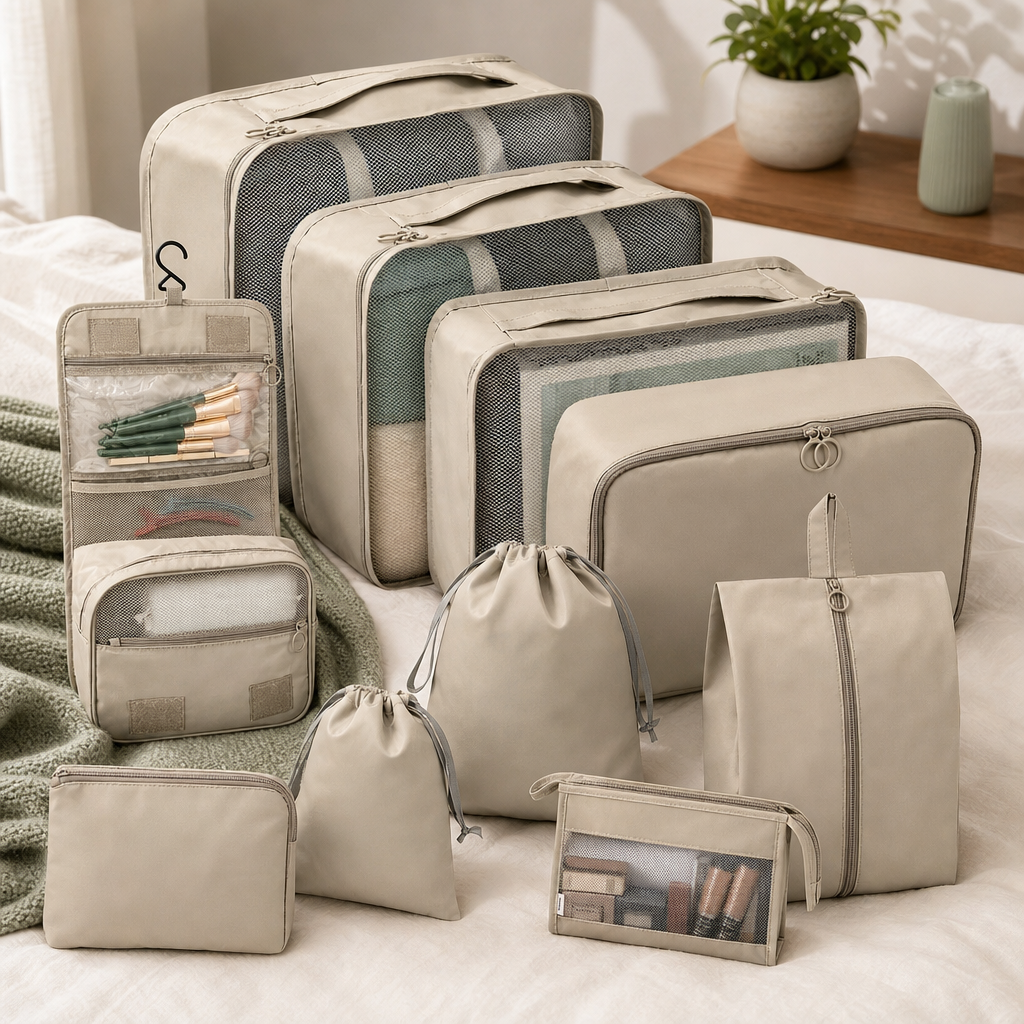
This guide explains how to judge compression packing cubes before you buy, including fabric, zipper layout, cube size, set configuration, weight, and price. If you want to compare specific picks beyond this buyer’s guide, start with our broader guide to the best packing cubes for different travel styles. For a simple organizer set that focuses on suitcase order rather than aggressive compression, the Foldable Polyester Travel Packing Cube Set is a practical reference point: it uses polyester twill-style fabric, comes in 7-piece through 11-piece configurations, weighs about 0.3 kg to 0.5 kg depending on the set, and costs $33.99.
Quick-reference table
| Factor | What to look for | Best choice for most travelers |
|---|---|---|
| Compression design | A secondary zipper or structured panel that visibly reduces cube depth | True compression for sweaters, pants, and longer trips; standard cubes for daily organization |
| Fabric | Lightweight but tightly woven polyester, nylon, or ripstop-style material | Polyester or nylon that folds flat and resists snagging |
| Set size | Enough cubes for clothing categories without overfilling the suitcase | 4 to 8 useful pieces for carry-on travel; larger sets for families or checked bags |
| Cube shapes | Rectangles and cube-style formats that tile neatly inside luggage | One large, two medium, and several small pouches |
| Weight | Low empty weight so the cubes do not eat into baggage limits | Light organizer sets under about a pound for most solo trips |
| Price | Durability and useful sizes rather than the highest piece count | $25 to $50 for most travelers |
1. Compression mechanism: real compression vs. simple organization
The first question is whether you need true compression packing cubes or simply good packing cubes. A true compression cube usually has two zipper tracks: one opens the compartment, and the other cinches the cube thinner after it is packed. That design is most useful for soft, compressible clothing such as T-shirts, leggings, underwear, pajamas, sweaters, and lightweight pants. It is less useful for stiff jeans, structured jackets, shoes, toiletry bottles, or anything with hard edges.
Standard luggage packing cubes, by contrast, do not necessarily reduce volume. Their advantage is control. They keep shirts with shirts, underwear with underwear, and toiletries away from clothing. That matters because a messy suitcase often feels full before it actually is. A cube-style packing format can make the space easier to use even without a compression zipper.
The Foldable Polyester Travel Packing Cube Set is best understood as an organizer set rather than a maximum-compression system. Its foldable, cube-style pieces are designed for travel storage and for separating underwear, sanitary items, cosmetics, bras, clothing, and toiletries. If your main pain point is suitcase clutter, that is exactly the job. If your goal is to pack a winter wardrobe into a small carry-on, prioritize packing cubes that compress with a dedicated compression zipper.
2. Fabric: durability without unnecessary bulk
Fabric determines how a cube behaves when packed tightly. Cheap, flimsy cubes can balloon, snag, or feel unstable when you pull them from a suitcase. Heavy fabric can be durable but adds weight before you pack a single shirt. For most travelers, the sweet spot is a tightly woven polyester or nylon that bends easily, holds its shape, and folds flat when empty.
Polyester is common in budget and midrange packing cubes because it is light, flexible, and easy to keep clean during travel. The Foldable Polyester Travel Packing Cube Set uses polyester fiber with a twill-style fabric, which gives it a more structured look than very thin mesh-only cubes while staying travel-friendly. Its modern minimalist styling and color options—beige, gray, pink, black, navy, and lake blue—also make it easier to assign colors by traveler or item category.
For rugged adventure travel, premium cubes may use stronger nylon or ripstop-style fabrics. Those can be worth paying for if cubes are going into backpacks, duffels, and overhead bins every week. For vacations, family trips, campus moves, or business travel, a well-made polyester set is usually enough.
3. Zippers, seams, and access: the parts that fail first
Zippers and seams matter more than piece count. Compression creates tension, and that tension goes directly to zipper tracks, pull tabs, and stitched corners. When comparing best compression packing cubes, look for smooth zipper paths around the perimeter, reinforced corners, and fabric that does not catch easily in the zipper. A compression cube should close with steady pressure, not a wrestling match.
Access style also matters. Clamshell-style openings make it easier to fold or roll clothes into neat stacks. Top-opening cubes can work well for pouches, toiletries, and small accessories, but they are not always as efficient for garments. A garment packing cube should let you place shirts or pants flat enough that you can remove one item without unpacking the whole cube.
Do not overpack any cube to the point that the zipper is straining. Even top rated packing cubes can fail early if used like a vacuum bag. Compression cubes are meant to refine soft volume, not force hard-sided contents into a smaller shape.
4. Size mix: match the cubes to your luggage, not the other way around
The best packing cubes compression setup depends on your suitcase. A carry-on roller usually works best with one large or medium cube for tops, one medium cube for bottoms, and small cubes or pouches for underwear, socks, swimwear, electronics cords, cosmetics, and toiletries. Checked luggage can handle more pieces, but too many cubes can create wasted gaps.
Cube-style shapes are useful because they tile predictably in rectangular luggage. The Foldable Polyester Travel Packing Cube Set comes in 7-piece, 8-piece, 9-piece, 10-piece, and 11-piece configurations, giving you more flexibility than a fixed three-cube set. The smaller pieces are especially useful for items that usually cause suitcase clutter: underwear, sanitary items, cosmetics, bras, and toiletries. The larger pieces work for folded clothing.
For most solo carry-on travelers, a 7-piece or 8-piece set is enough. Families, overpackers, and travelers sharing a checked suitcase may appreciate a 10-piece or 11-piece configuration. More pieces are not automatically better, though. If every item is in its own cube, you may spend more time opening pouches than actually getting dressed.
5. Weight and packability: don’t waste your baggage allowance
Good luggage cubes for packing should disappear when empty. They should fold flat in a drawer at home, tuck into an outer pocket on the return trip, and add very little weight to the suitcase. This is one reason fabric organizer sets remain popular even as premium compression cubes get more attention.
The Foldable Polyester Travel Packing Cube Set weighs approximately 0.3 kg to 0.5 kg depending on the selected configuration. That is a sensible range for a multi-piece organizer set, especially for carry-on friendly use. Because the pieces are foldable, they are also useful on trips where you expect to come home with souvenirs: use the cubes outbound for organization, then repack dirty laundry or small purchases on the return.
If you travel internationally with strict carry-on limits, avoid thick, overbuilt cubes unless you truly need the extra durability. A premium cube that weighs more may be worth it for frequent business travel or backpacking, but casual travelers are often better served by lighter packing cubes in luggage.
6. Use case: choose cubes around what you actually pack
The right cube set depends on your packing habits. If you pack mostly clothing, true compression packing cubes can be excellent. They reduce the thickness of soft stacks and keep outfits grouped. If you pack a mix of clothing, toiletries, cosmetics, undergarments, and sanitary items, a multi-piece organizer set may solve more problems than a small set of aggressive compression cubes.
For business travel, use one cube for shirts, one for gym clothes or sleepwear, and a small pouch for socks and underwear. For family travel, assign each traveler a color or cube size. For beach trips, separate swimwear, dry clothes, and toiletries. For long trips, reserve one cube for dirty laundry so clean clothing stays protected.
If your search started with Peak Design packing cubes or Eagle Creek packing cubes, use those as benchmarks for premium travel design and compression features, then decide whether you need that level of structure. Many travelers simply need reliable package cubes that keep a suitcase from turning chaotic. That is where a $33.99 set like the Foldable Polyester option can make more sense than paying premium prices for every trip.
7. Cleanability and color: small details that make travel easier
Packing cubes live close to shoes, toiletries, hotel drawers, and laundry, so easy care matters. Smooth polyester and nylon fabrics are generally easier to wipe down than heavily textured materials. Dark colors hide scuffs better, while light colors make it easier to see what is inside a dim hotel room or suitcase.
Color coding is underrated. A black cube for electronics, a navy cube for shirts, a beige cube for underwear, and a pink or lake blue pouch for toiletries can save time every morning. The Foldable Polyester set’s six color options make that approach practical whether you are packing alone or separating items for multiple travelers.
Mesh panels can improve visibility and airflow, but they are not mandatory. Solid fabric offers more privacy for underwear, bras, and sanitary items. For shared hotel rooms, family trips, or gym use, that privacy may matter more than being able to see every item through the cube.
Common mistakes when buying compression packing cubes
Buying the biggest set just because it has more pieces. Large sets can be useful, but only if the sizes match your suitcase and routine. A 10-piece or 11-piece configuration is great for families or checked luggage; it can be excessive for a minimalist weekend carry-on.
Expecting cubes to replace smart packing. Compression packing cubes help with soft goods, but they do not eliminate weight or make rigid items smaller. Roll or fold clothing neatly before packing, and avoid stuffing cubes until seams and zippers are under stress.
Ignoring toiletries and small items. Many suitcase messes come from small loose items, not shirts. A set that includes smaller organizers for cosmetics, sanitary items, underwear, and toiletries can make your luggage feel dramatically calmer.
Using compression for wrinkle-prone clothing. Compression can press creases into dress shirts, linen, and delicate garments. For wrinkle-sensitive clothing, use a roomier garment packing cube or fold with tissue-style layering rather than cinching tightly.
Choosing style over function. A modern minimalist look is nice, but the real priorities are fabric, shape, zippers, and sizes. Color should support organization, not be the only reason to buy.
Concrete price expectations
Budget: $10 to $25. Budget packing cubes usually focus on basic organization. Expect simple polyester or mesh-heavy designs, fewer refined details, and limited compression. They can work well for occasional trips, college packing, or keeping kids’ clothing sorted, but zipper durability varies widely.
Midrange: $25 to $50. This is the best value zone for most travelers. You can find good packing cubes with better fabric, smoother access, more useful size mixes, and some true compression options. The $33.99 Foldable Polyester Travel Packing Cube Set sits squarely in this range and is especially appealing if your priority is organized travel storage across multiple categories rather than maximum compression.
Premium: $50 to $100+. Premium compression packing cubes often use stronger fabrics, more refined zipper systems, lighter technical materials, and better-shaped compartments. They make the most sense for frequent flyers, one-bag travelers, and people who regularly pack dense clothing into carry-ons. If you travel a few times a year and mainly want luggage packing cubes to keep things neat, premium prices are not always necessary.
How to choose the best set for your suitcase
Start with your main problem. If your suitcase is chaotic, prioritize a multi-piece organizer set. If your suitcase is organized but too bulky, choose true compression cubes with a dedicated compression zipper. If you need both, combine two compression cubes for clothing with smaller organizer pouches for underwear, toiletries, cosmetics, and accessories.
For most travelers, the best rated packing cubes are not the fanciest ones; they are the ones that fit the suitcase, separate the right categories, and survive repeated zipping. A foldable polyester set with several cube sizes is a smart first buy because it teaches you what sizes you actually use. From there, you can add one or two premium compression cubes if you regularly need more space.
Bottom line: choose compression packing cubes when you pack soft clothing and need to reduce bulk. Choose standard packing cubes when your bigger issue is order. And if your luggage is both crowded and disorganized, a mixed system—compression for garments, smaller cubes for essentials—is the most reliable path to a neater suitcase.
Related Guides & Products
Frequently Asked Questions
Are compression packing cubes worth it?
Yes, if you pack soft clothing and need to reduce bulk. They are less useful for shoes, bottles, structured jackets, or rigid items.
Do packing cubes actually save space?
Standard packing cubes mainly improve organization. Compression packing cubes can save space by squeezing soft garments into a thinner shape.
How many packing cubes do I need?
Most solo carry-on travelers do well with 4 to 8 useful pieces. Families and checked-bag travelers may prefer larger sets.
What is the best material for packing cubes?
Polyester and nylon are the most practical choices because they are lightweight, flexible, and easy to pack flat when empty.
Can I use packing cubes for toiletries?
Yes. Smaller organizer cubes or pouches are useful for toiletries, cosmetics, sanitary items, socks, and underwear.
Should I buy budget or premium cubes?
Budget cubes work for occasional trips. Midrange sets around $25 to $50 are the best value for most travelers.