TL;DR: Use packing cubes to group clothing by category, outfit, or day, then place the heaviest and least-used cubes near the wheel end of your carry-on. Roll casual clothes, fold structured garments, keep toiletries isolated, and reserve one cube or pouch for laundry. Do a quick reset during the trip, clean cubes after travel, and replace them when zippers, seams, mesh, or coatings fail.
Packing cubes for carry on luggage work best when you treat them as a simple drawer system inside your suitcase. Instead of letting shirts, underwear, toiletries, and chargers slide into one messy layer, each cube gets a job. Good packing cubes make it easier to see what you packed, repack quickly, and use the limited volume of a carry-on without crushing everything.
This guide focuses on practical packing and maintenance, not buying hype. If you are still choosing between standard packing cubes, compression packing cubes, garment packing cube options, and luggage packing cubes in different sizes, our researched best packing cubes guide compares the main formats and use cases.
Tools and supplies
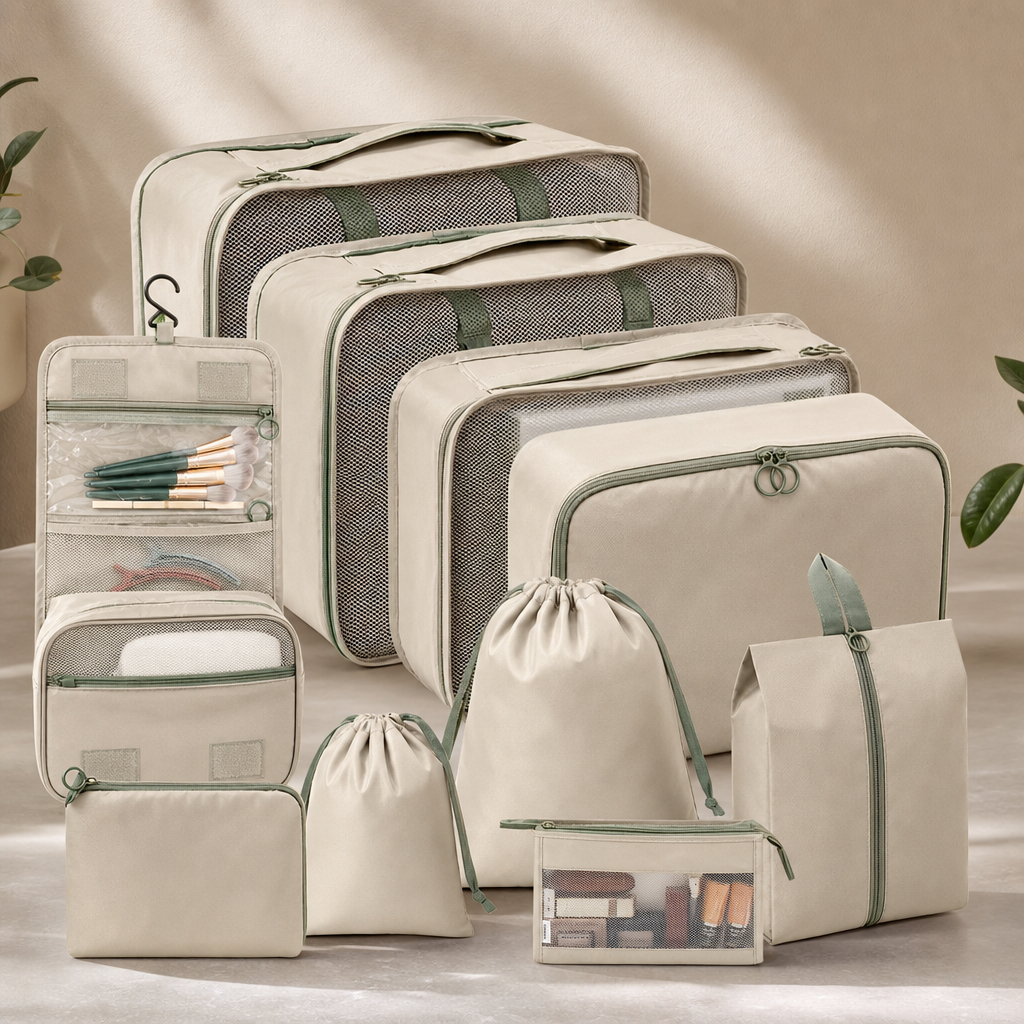
- Packing cubes in at least three sizes: small, medium, and large
- One slim pouch or small cube for underwear and socks
- One water-resistant pouch for toiletries or damp items
- Laundry bag, spare cube, or lightweight drawstring bag
- Flat surface such as a bed or table
- Optional: compression packing cubes for bulky soft items
- Optional: small luggage scale for strict airline weight limits
Step 1: Empty the carry-on and plan by trip length
Start with an empty carry-on, not a half-packed suitcase. Open every pocket and remove old receipts, adapters, loose toiletries, and clothing from previous trips. Packing cubes in luggage work only when the base layout is clean and predictable.
Next, count the actual days and situations you need to dress for: travel days, work meetings, dinners, workouts, beach time, or cold-weather layers. Pull only the clothing that matches those uses. This prevents the most common cube-packing mistake: filling every cube because the cube has room. Packing cubes are organization tools, not permission to overpack.
For a typical carry-on trip, use one large cube for main clothing, one medium cube for tops or outfits, one small cube for underwear and socks, and one flat pouch for toiletries or sanitary items. If you use package cubes, or what most travelers call packing cubes, assign each one before you begin loading it.
Step 2: Sort items by category, outfit, or day
Choose one system and stick with it for the whole trip. Category packing works well for longer trips: shirts in one cube, bottoms in another, underwear and socks in a small cube. Outfit packing works better for short business trips, weddings, or events where each day has a defined look. Day-by-day packing is useful for family travel because each person can grab one cube without digging through the suitcase.
For most solo carry-on travel, category packing is the easiest to maintain. Put lightweight tops together, heavier bottoms together, undergarments in a small cube, and sleepwear or workout gear in a separate cube if space allows. Toiletries should stay out of clothing cubes unless they are sealed in their own pouch.
If you are comparing packing cubes for travel with compression options, use compression only where it helps. Compression packing cubes are best for soft, flexible items such as T-shirts, underwear, pajamas, leggings, and casual layers. They are less useful for blazers, structured dresses, stiff denim, or anything you do not want wrinkled. For a deeper look at packing cubes that compress, see our best compression packing cubes buyer’s guide.
Step 3: Roll soft clothing and fold structured garments
Rolling is efficient for casual clothing because it creates tight, visible rows inside the cube. Roll T-shirts, athletic wear, pajamas, leggings, and soft sweaters. Place each roll seam-side down so the roll stays compact when you unzip the cube.
Fold structured items instead. Button-down shirts, trousers, skirts, and dresses usually pack better as flat folds because rolling can create diagonal creases. For a garment packing cube, lay the largest item flat, fold sleeves inward, then stack similar pieces with the smoothest surfaces facing out. Do not force the cube closed; pressure is what turns neat folds into hard wrinkles.
Use the file-folder method for medium cubes: stand folded or rolled items vertically so you can see each piece when the cube opens. This is one reason good packing cubes feel more useful than loose stacks. You can remove one shirt without disturbing the rest of the cube.
Step 4: Fill cubes firmly, not tightly
A packing cube should feel full enough to hold its shape but not so full that the zipper strains. Close the zipper slowly while pressing down evenly with your free hand. If the zipper curves sharply, catches fabric, or requires tugging, remove one item. A strained zipper is the first part of many luggage cubes for packing that fails.
Leave a little flexibility in every cube. Soft corners make the cubes fit together inside a carry-on like building blocks. Overfilled cubes become hard bricks that waste space around the edges of the suitcase.
For compression packing cubes, zip the main compartment first, then close the compression zipper gradually around the cube. Pause at corners and flatten the fabric before continuing. The best packing cubes compression method is controlled pressure, not maximum force. Compression should reduce bulk, not bend zipper teeth or trap clothing in the zipper track.
Step 5: Load the carry-on in layers
Place the heaviest and least-used cube near the wheel end of the suitcase. This usually means pants, sweaters, or shoes if they are in a separate bag. Keeping weight near the wheels helps the carry-on roll more steadily and reduces top-heaviness when the suitcase is upright.
Put the main clothing cube in the base, then fit smaller cubes around it. Small gaps near the handle rails are useful for socks, belts, chargers, or a slim pouch. If your carry-on has a clamshell design, use one side for clean clothing cubes and the other for shoes, toiletries, and laundry. If it has a lid compartment, reserve that space for flatter cubes or items you may need soon after arrival.
Keep your liquids pouch, medications, travel documents, and one extra layer accessible. Do not bury security-screening items under multiple cubes. The goal is not only to save space; it is to reduce the amount of unpacking you have to do in public areas.
Step 6: Use a color, size, or label system
A simple identification system prevents the suitcase from becoming a stack of mystery cubes. Use color by category if your set includes multiple colors: one color for tops, one for underwear, one for sleepwear, and one for laundry. If all cubes are the same color, use size instead: large for clothing, medium for tops, small for undergarments.
Labels can help on family trips. A strip of painter’s tape on the zipper pull or a small luggage tag works well. For children, label by day or activity rather than clothing type. That makes it easier for them to get dressed without emptying the carry-on.
Travelers comparing top rated packing cubes or best rated packing cubes often focus on materials and zippers, but the organization system matters just as much. Even premium cubes from travel brands such as Peak Design or Eagle Creek will become cluttered if every cube holds a random mix of items.
Step 7: Keep clean, dirty, and damp items separate
Assign a laundry cube or bag before the trip starts. Once clothing is worn, do not put it back into the clean cube unless you have no alternative. A separate laundry space keeps odors and grit from spreading through the suitcase.
Damp items need even more separation. Swimwear, gym clothes, and wet washcloths should go in a water-resistant pouch or breathable laundry bag until they can dry. Do not seal damp clothing in a standard packing cube for long periods, especially in warm climates. Moisture trapped inside luggage encourages odor and mildew.
Toiletries should stay upright when possible and inside their own pouch. Even a small leak can stain clothing or leave residue on cube fabric. If a spill happens, remove the affected cube as soon as you can and clean it before repacking.
Step 8: Reset the cubes during the trip
Do a 60-second reset whenever you change hotels or repack after laundry. Move clean clothes back into their assigned cubes, shift worn items to the laundry cube, and check the toiletry pouch for leaks. This quick habit is what keeps packing cubes for carry on luggage useful beyond the first travel day.
If you shop during the trip, resist mixing new items into random cubes. Use one designated overflow cube or repurpose the laundry bag after washing clothes. If the carry-on is becoming difficult to close, remove bulky packaging, flatten shopping bags, and wear the heaviest layer on the travel day.
When packing cubes in luggage start to bulge unevenly, redistribute the contents rather than forcing the suitcase shut. A balanced carry-on protects zippers on both the cubes and the luggage.
Cleaning and drying after travel
After every trip, empty each cube completely and shake out lint, sand, and crumbs. Turn cubes inside out if the construction allows it, then wipe the interior with a damp cloth and mild soap. Spot-clean stains instead of soaking unless the care instructions for that cube allow full washing.
Let cubes air-dry fully before storing them. Open every zipper and stand the cubes so air can move through the fabric. Storing damp packing cubes can create odor that transfers to clothing on the next trip.
For toiletry spills, clean the cube immediately. Remove solid residue first, blot liquids with a towel, then wipe with mild soap and water. Avoid high heat from dryers or hair dryers because heat can warp synthetic fabric, damage coatings, or shrink trim.
Frequency guidance
Before every trip: Empty the cubes, check zipper movement, assign each cube a role, and make sure your clean-laundry and dirty-laundry plan is clear.
During travel: Reset cubes whenever you move lodging, finish laundry, or notice clean and worn clothing mixing together. For active or humid trips, air out laundry and damp-item pouches daily.
After every trip: Shake out debris, wipe down cubes that held shoes, toiletries, or laundry, and let everything dry before storage.
Every few trips: Inspect seams, zipper pulls, mesh panels, and compression zippers. Look for fraying, bent zipper teeth, holes, lingering odors, or delamination on coated fabric.
When to replace packing cubes or parts
Replace a packing cube when the zipper no longer closes smoothly, teeth separate after closing, or the zipper pull breaks in a way that cannot be fixed with a simple replacement pull. Zipper failure matters because a cube that opens inside your luggage defeats its main purpose.
Replace cubes with torn seams, stretched mesh, persistent odor, or fabric that has become thin enough to snag easily. Compression packing cubes should also be replaced when the compression zipper warps, the fabric puckers permanently, or the cube no longer compresses evenly.
If only a cord pull breaks, you can usually attach a small replacement pull, key ring, or loop of cord. If the slider, teeth, or stitched zipper tape fails, replacement is usually more reliable than repair for travel use.
Related
For a carry-on friendly organizer set with a simple cube-style layout, the Foldable Polyester Travel Packing Cube Set is a practical option at $33.99. It uses polyester fiber with a twill-style fabric, folds down between trips, and comes in 7-piece, 8-piece, 9-piece, 10-piece, and 11-piece configurations. The set is designed for travel storage and can separate underwear, sanitary items, cosmetics, bras, clothing, and toiletries. Color choices include beige, gray, pink, black, navy, and lake blue, with an approximate set weight range of 0.3 kg to 0.5 kg depending on configuration.
If you are still narrowing your options, compare standard luggage packing cubes, compression packing cubes best suited for soft clothing, and good packing cubes with sturdy zippers and useful size mixes in our researched roundup of the best packing cubes.
Related Guides & Products
- Best Packing Cubes — Top Picks
- Best Compression Packing Cubes Buyer’s Guide
- Foldable Polyester Travel Packing Cube Set
Frequently Asked Questions
Do packing cubes save space?
They save usable space by controlling clutter and creating flat, stackable sections. Compression packing cubes can reduce bulk in soft clothing, but standard cubes mainly improve organization and repacking speed.
Should I roll or fold clothes?
Roll soft casual clothing such as T-shirts, pajamas, leggings, and athletic wear. Fold structured garments such as button-down shirts, trousers, dresses, and blazers to reduce sharp creases.
How many cubes fit in a carry-on?
Most carry-ons work well with one large cube, one or two medium cubes, and one small cube or pouch. The exact mix depends on suitcase layout and trip length.
Are compression cubes better?
Compression cubes are better for bulky soft items, especially casual layers and knitwear. They are not always better for structured clothing because pressure can increase wrinkling.
How do I pack dirty clothes?
Use a dedicated laundry cube, drawstring bag, or pouch. Keep damp items separate and let them dry as soon as possible to prevent odor from spreading through the suitcase.
Can toiletries go in packing cubes?
Toiletries should go in a separate pouch, ideally one that resists leaks. Avoid placing liquids directly inside clothing cubes because spills can stain fabric and clothing.