TL;DR: The simplest way to reduce everyday snoring is to build a repeatable bedtime routine: open the nose, improve sleep position, reduce irritants, and keep the conversation calm. Start with low-cost physical aids like nasal strips or a silicone nasal dilator, then upgrade only if comfort, fit, or the snoring pattern calls for it.
Figuring out how to prevent someone from snoring is usually less about one dramatic fix and more about a routine that removes the most common triggers before sleep. For many couples, the pain point is simple: snoring wakes one person up, the snorer feels criticized, and both people start bedtime already tense. A good buying decision should make the routine easier, not more complicated.
For everyday nasal-congestion or restricted-nasal-airflow snoring, we like starting with simple, non-electric options because they are inexpensive, quiet, and easy to abandon if the fit is wrong. Our broader anti-snoring solutions roundup compares the main product types, but this guide focuses on what to judge before you buy and how to build a calm nighttime system around it.
| Factor | What to look for | Best fit |
|---|---|---|
| Nasal airflow | External lift from strips or internal support from a silicone dilator | Snoring that gets worse with stuffiness or mouth breathing |
| Comfort | Soft materials, low weight, and a shape the sleeper can tolerate all night | Light sleepers and first-time users |
| Routine | Easy application, consistent timing, and minimal bedside clutter | Couples who need a repeatable habit |
| Sleep position | Side-sleeping support and pillow height that keeps the airway aligned | Back sleepers who snore more loudly |
| Value | Start around $5 to $15 before moving into $15 to $40 or $40-plus options | Most households trying to solve snoring affordably |
1. Match the aid to the snoring pattern
The first factor is not the product; it is the pattern. If the person snores mostly when congested, after lying on their back, or when breathing through the mouth, start with the least intrusive change that targets that trigger. This is the practical answer to questions like how do you stop someone from snoring or how can you stop someone from snoring without turning bedtime into an argument.
Nasal aids are a sensible first step when the sleeper feels blocked through the nose. External nasal strips gently lift the outside of the nose, while internal nasal dilators sit at the nostrils to help keep the nasal passage more open. Neither type is electric, and neither requires a bedside machine. That simplicity matters because the best anti-snoring routine is the one the snorer will actually use after a long day.
If the snoring is paired with choking, gasping, or extreme daytime fatigue, the routine should include professional evaluation. But for ordinary partner-disturbing snoring, especially when nasal airflow seems involved, start with fit, comfort, and consistency before spending more money.
2. Choose external strips when you want the lowest-friction start
External strips are usually the easiest way to begin because they do not go inside the nose. The Nonwoven Anti-Snoring Nasal Breathing Strips cost $8.99 and use a nonwoven fabric build in a minimalist design. Each strip is very light at 1 g, which is exactly what you want for a product that sits on the face all night. The size options include 60 × 22 mm oval, 66 × 19 mm wave, 66 × 20 mm pointed wave, and 55 × 17 mm wave shapes, so the buyer can pick a profile that suits the nose bridge and preferred coverage.
The color range is unusually broad for a basic snoring aid: transparent, black, white, light skin tone, deep skin tone, purple, rose red, and blue. That sounds cosmetic, but it can affect compliance. Some sleepers prefer a discreet strip; others are more likely to use a product that feels less clinical. If your goal is how to stop a person from snoring without nagging, comfort and willingness matter as much as the mechanism.
Judge strips by skin feel, edge lift, and whether the wearer can fall asleep without noticing them. They are also easy to keep in a toiletry bag, which helps if travel is when snoring becomes most disruptive.
3. Consider a silicone nasal dilator for reusable internal support
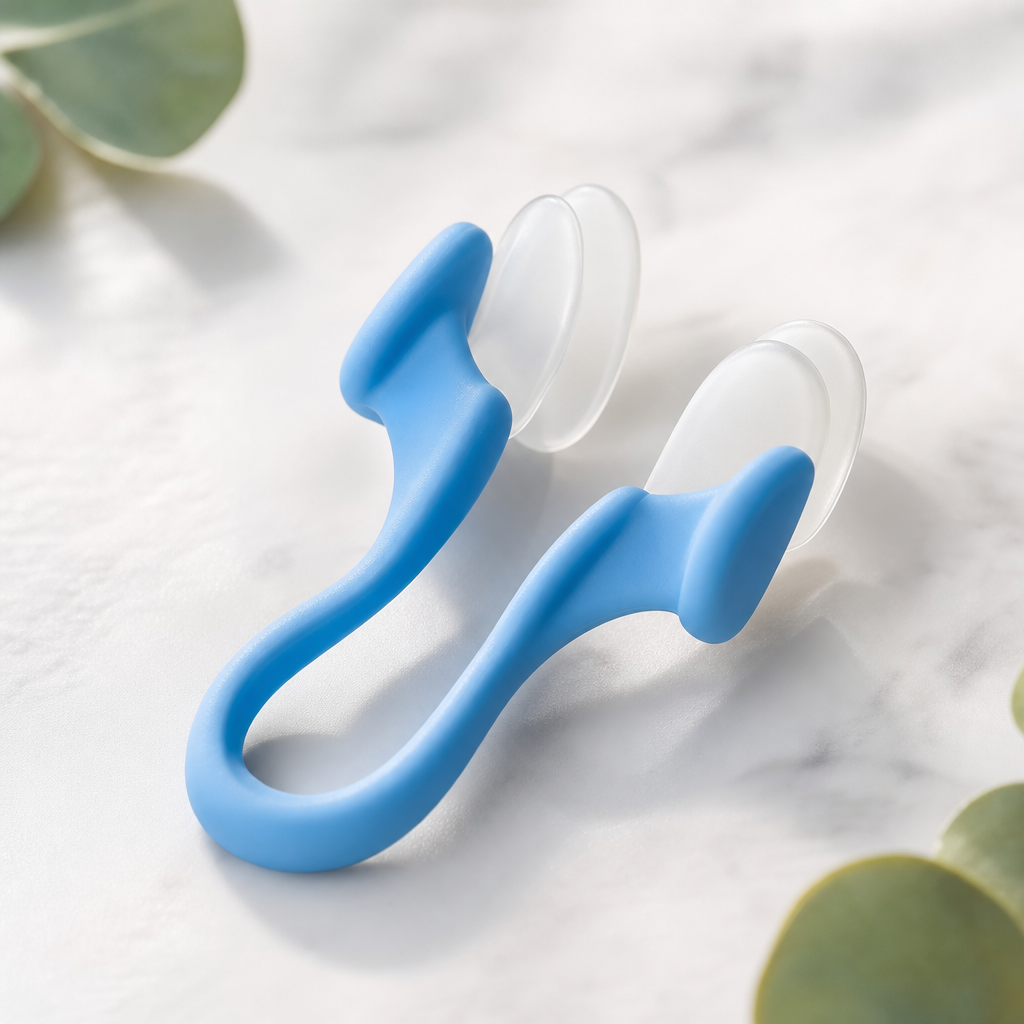
A silicone nasal clip or dilator is the next simple option when the sleeper wants physical nasal support without adhesive on the skin. The Silicone Anti-Snore Nasal Clip Nasal Dilator costs $8.99 and uses a soft silicone build with a non-electric, minimalist design. It comes in white, orange, and blue, and the box includes the silicone anti-snore nasal clip.
The product format is straightforward: silicone support, no charging, no app, and no bedside noise. At 52 g, it is still a small personal-care item, but it is much heavier than a 1 g strip, so the comfort question is different. With a strip, you judge skin adhesion and facial feel. With a silicone dilator, you judge nostril pressure, insertion comfort, and whether it stays comfortable while turning side to side.
This style is often the better buy for someone who dislikes adhesive or wants a reusable-feeling option. It is not the right personality fit for everyone; some sleepers simply do not like anything inside the nose. If you are asking how do I stop someone from snoring, do not buy the more intrusive option first just because it looks more serious. Buy the product the snorer will tolerate.
4. Prioritize fit, material, and all-night comfort
Anti-snoring products fail most often because they are annoying, not because the concept is complicated. A strip that pulls too tightly, a dilator that feels too firm, or a routine that takes too much effort will be skipped by night three. When comparing options, ask three practical questions: Can the person fall asleep with it on? Can they turn over without adjusting it? Will they agree to use it again tomorrow?
Nonwoven fabric strips have the advantage of a flat, lightweight feel. Multiple shapes are useful because nose size and bridge shape vary. Silicone dilators have the advantage of a soft, washable material and no skin adhesive. Color options are secondary, but they can make the product feel more personal and less embarrassing.
For couples, comfort also includes emotional comfort. If the non-snoring partner presents the product as a punishment, the routine will fail. If it is framed as a shared sleep upgrade, the odds improve. That is the same principle behind our guide on getting someone to stop snoring calmly: solve the sleep problem without making the person feel attacked.
5. Build the routine before bedtime, not after the snoring starts
Most people search how to stop someone from snoring at 2 a.m., when they are already frustrated. That is the worst time to introduce a product. The better routine starts 20 to 30 minutes before sleep: clear the nose, apply the strip or place the dilator, set the sleep position, and reduce last-minute friction. If the snorer waits until the partner complains, the product becomes part of the conflict.
A simple routine might look like this: wash and dry the nose area if using a strip, put the strip on before getting into bed, choose a side-sleeping position, and keep water nearby. For a silicone dilator, rinse it as part of the bedtime routine, place it before lights out, and store it in a clean, consistent spot in the morning. The goal is automatic behavior.
This is also how to keep someone from snoring without hovering over them. You are not trying to wake them repeatedly or police their breathing. You are helping remove likely triggers before sleep begins.
6. Use position and pillow height as part of the system
Products work better when the sleeping setup supports the same goal. Back sleeping often makes snoring more noticeable because the jaw and tongue can relax backward. Side sleeping may reduce that effect for many people, especially when paired with better nasal airflow. You do not need an elaborate device to start; a supportive pillow and a consistent side-sleeping cue can be enough to judge whether position is a major factor.
Pillow height matters too. A pillow that pushes the chin toward the chest can make breathing feel more restricted. A pillow that is too flat may let the head drop out of alignment. Look for a position where the neck feels neutral and the person can breathe comfortably through the nose before falling asleep.
If you are wondering how do you stop a person from snoring without buying several gadgets, start by combining one nasal aid with one position change. That gives you a cleaner read on what helps.
7. Judge convenience, cleaning, and replacement habits
Convenience decides long-term value. Disposable strips are easy because each night starts fresh. They are also simple for travel and guest rooms. The tradeoff is replenishment; you need to keep enough on hand. Silicone dilators require a cleaning habit, but they avoid nightly adhesive application and may appeal to people who prefer one small item on the nightstand.
Packaging can matter if you are buying for two people or keeping backups. The silicone nasal dilator comes with sealed bag, two-piece plastic bag, four-piece round box, and four-piece color box packaging options, which makes multi-pack organization easier. The strip option offers multiple shapes and colors, making it easier to match different wearers or preferences in one household.
When people ask how to stop people from snoring or how to get people to stop snoring, the answer is often household logistics: make the right thing easy to use every night.
Common mistakes to avoid
Buying the most aggressive product first. Start with the least intrusive option that matches the pattern. A low-cost strip or silicone dilator is a better first move than an expensive gadget if nasal airflow is the obvious issue.
Introducing it during a fight. If the partner has been awake for an hour, the conversation will sound like blame. Discuss the routine earlier in the day, then make the product part of bedtime.
Changing five things at once. If you add a strip, new pillow, side-sleeping device, humidifier, and noise machine on the same night, you will not know what helped. Change one or two variables at a time.
Ignoring comfort feedback. A product that feels irritating will not last. If a strip shape bothers the skin, try another shape. If a silicone dilator feels intrusive, switch to an external strip.
Assuming one night proves everything. Snoring varies with congestion, alcohol, fatigue, and sleep position. Compare several nights before deciding whether the routine deserves to stay.
Concrete price expectations
Budget: $5 to $15. This is the best starting tier for most couples. Basic nasal strips and simple silicone nasal dilators commonly sit here, and both of our featured anti-snoring aids are $8.99. At this price, you are paying for physical support, simple materials, and a low-risk trial.
Mid-range: $15 to $40. This tier often includes larger multi-packs, more specialized reusable nasal devices, chin-support accessories, basic sleep-position helpers, or bundled kits. Move here when the snorer already knows which product type they tolerate and you want better convenience or supply.
Premium: $40 to $150-plus. Premium spending usually goes toward adjustable pillows, more structured positional systems, white-noise support for the non-snoring partner, or more complex sleep accessories. This tier can make sense when snoring has multiple triggers, but it should not be the first purchase if a simple nasal-airflow aid has not been tried.
Our recommendation: begin in the $5 to $15 range with either external strips or a soft silicone dilator, then upgrade only after you know the snorer will use the routine consistently. That is the most practical path for anyone asking how to get someone to stop snoring, how to stop somebody from snoring, or how to get someone to quit snoring without overspending.
Bottom line
The most reliable buyer strategy is simple: identify the pattern, choose the least intrusive nasal-airflow aid, make it comfortable, and pair it with a calm routine and better sleep position. For a first purchase, the $8.99 nonwoven nasal strips are the easiest low-friction starting point, especially for adhesive-friendly sleepers who want multiple sizes and colors. The $8.99 silicone nasal dilator is the better alternative for someone who wants soft silicone support without face adhesive. Either way, the routine matters more than the object. If the product is easy to use before lights out, you have a much better chance of protecting both people’s sleep.
Related Guides & Products
- Best Anti-Snoring Solutions — Top Picks
- How Do I Get Someone to Stop Snoring Calmly
- Nonwoven Anti-Snoring Nasal Breathing Strips
- Silicone Anti-Snore Nasal Clip Nasal Dilator
Frequently Asked Questions
What is the easiest first step?
Start with a simple nasal-airflow aid, such as an external nasal strip, plus a side-sleeping position. It is inexpensive, non-electric, and easy to add to bedtime.
Are nasal strips or dilators better?
Nasal strips are less intrusive and sit outside the nose. Silicone dilators avoid adhesive and provide internal support. The better choice is the one the snorer will comfortably use all night.
How much should I spend first?
Most people should start in the $5 to $15 range. That covers basic nasal strips and simple silicone nasal dilators before moving into larger kits or premium sleep accessories.
How do I bring it up calmly?
Talk before bedtime, not during a sleepless moment. Frame it as a shared sleep routine rather than a personal flaw, and offer a simple product to try together.
Can position changes help snoring?
Yes. Snoring often gets worse on the back. Side sleeping with a supportive pillow can pair well with nasal strips or a silicone dilator.
This article is for general information only and is not medical advice. Consult a licensed healthcare professional for any health concern.