TL;DR: A water flosser can help rinse loose tonsil debris, but it should be used gently, indirectly, and only on the lowest comfortable setting. Aim across the tonsil area rather than jabbing into it, use lukewarm water, clean the tank and tip after each session, and replace worn nozzles or leaking seals promptly.
Tools and supplies
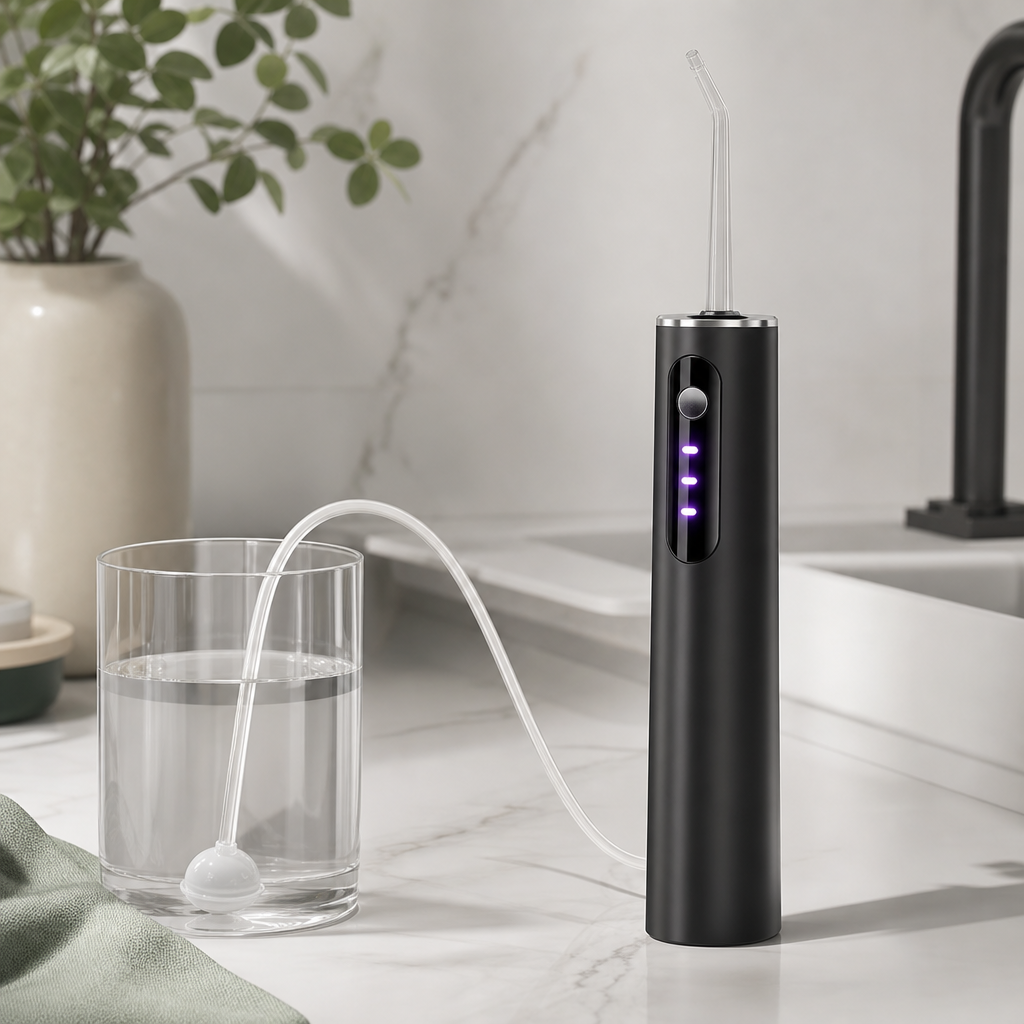
- Water flosser, dental irrigator, or oral irrigator with an adjustable low-pressure setting
- Clean lukewarm water
- Standard jet tip or other smooth, non-sharp irrigator tip
- Mirror and good bathroom lighting
- Clean towel
- Mild dish soap for exterior and tank cleaning
- Small cup for rinsing removable tips
- Soft toothbrush or small cleaning brush for the tank opening and tip socket
Step 1: Decide whether a water flosser is the right tool
A water flosser for tonsil stones is best treated as a gentle rinsing tool, not a digging tool. Tonsil stones often sit in small folds of the tonsils, and a controlled stream of water can loosen superficial debris. The goal is to flush around the area and let the stone release on its own.
Do not use a waterpik, waterpik water flosser, burst flosser, cordless water flosser waterpik, or any other dental flosser like a pressure washer for the throat. Tonsil tissue is softer than teeth and gums. Direct, high-pressure water picking can irritate the area and may make gagging, soreness, or minor bleeding more likely.
Use the device for light rinsing when you can see or feel small debris near the tonsil surface. If you mainly need to clean food from tight tooth gaps or around orthodontic hardware, use the same device for the teeth first and follow a dedicated technique such as our water flosser method for braces.
Step 2: Set up the flosser before it goes near your mouth
Start with a clean tank. Fill it with lukewarm water, not hot water. Cold water can feel sharp against sensitive gums and throat tissue, while hot water can irritate the tonsils. Seat the tank fully, close the cap firmly, and press the nozzle into the handle until it locks. A loose tip can wobble, leak, or send the stream in the wrong direction.
Choose the lowest mode or lowest level available. Many portable water flosser designs use multiple modes or a three-level adjustment; begin at the gentlest option every time you work near the tonsils. If the stream feels too weak for teeth, that does not mean it is too weak for tonsils. Tonsil cleaning requires control more than force.
Before aiming into your mouth, run the flosser briefly over the sink. Confirm that water flows smoothly from the tip, the tank is not leaking, and the nozzle does not pop out under pressure. If the stream sputters, refill the tank, reseat the tip, and make sure the intake tube or tank connection is covered with water.
Step 3: Clean your teeth and gumline first
Use the water flosser on your teeth before you try the tonsil area. This removes food residue from between teeth, along the gumline, and around braces so it does not wash backward toward the throat. Keep your lips slightly closed around the tip and let water drain into the sink.
Trace the gumline slowly. Pause briefly between teeth. Around braces, guide the stream above and below brackets and under wires without forcing the tip against the hardware. If your gums sting, switch to a lower setting or move the tip farther away. For a broader buying and care overview, see our oral-care guide hub.
This first pass also helps you judge the pressure. If the setting feels aggressive on the gums, it is too aggressive for the tonsils. A waterpik aquarius water flosser, a compact dental irrigator, and a portable cordless model all require the same rule: use the lowest comfortable pressure for soft tissue.
Step 4: Position yourself to reduce gagging and splashing
Stand at the sink with your head slightly forward. Keep your mouth open, breathe through your nose, and let water fall out instead of swallowing it. Use the mirror to locate the tonsil area, but do not chase deep pockets you cannot clearly see.
Hold the tip several millimeters away from the tonsil surface. The stream should skim across the tonsil area from the side, not stab straight into the folds. Think of it as rinsing debris loose rather than excavating a stone.
If you gag easily, start by rinsing the back molars and the side of the tongue for a few seconds to get used to the sensation. Then briefly sweep near the tonsil. Short passes are easier to control than one long blast.
Step 5: Use short, gentle passes around the tonsil
Turn the flosser on only after the tip is positioned safely in your mouth and aimed away from the airway. Use the lowest setting. Sweep across the tonsil area for one to two seconds, then stop and let water drain. Repeat only if the tissue feels comfortable.
Do not press the nozzle into the tonsil crypt. Do not use a sharp attachment. Do not keep increasing pressure because a stone has not moved. If a tonsil stone is ready to release, gentle water flow is often enough. If it does not release, stop and try again another day after normal oral hygiene.
When comparing waterpik and tonsil stones advice online, ignore techniques that rely on strong pressure or direct contact. The safe technique is indirect rinsing. Whether you call it a tonsil stone water flosser, waterpik for tonsil stones, or an oral irrigator, the device should never be used forcefully against the throat.
Step 6: Rinse, drain, and inspect afterward
After the tonsil pass, rinse the mouth with plain water and spit. Check how the tissue feels. Mild awareness of the area can happen after rinsing, but pain, bleeding, sharp stinging, or swelling means the session was too aggressive. Do not repeat the process that day.
Empty the remaining tank water immediately. Leaving water in the tank encourages stale odor and residue buildup. Run the device for a few seconds with the tank empty or nearly empty to clear water from the internal path. Remove the tip and shake excess water from both the tip and handle.
Set the unit and nozzle on a clean towel in an open, ventilated spot. Do not store a wet tip inside a closed travel case. A damp, sealed case is one of the easiest ways to create musty odor and visible grime around the nozzle base.
Step 7: Clean the tank and nozzle after use
After each tonsil-cleaning session, rinse the tank with warm water and leave it open to air-dry. If the tank has a cap or removable section, keep it open until dry. Wipe the exterior dry, especially around the charging area, buttons, and tank seam.
Wash the removable tip with warm water. If residue collects near the base, use mild dish soap, rinse thoroughly, and air-dry. A small cleaning brush can help around the tip socket, but avoid forcing bristles into internal parts.
Once a week, give the tank a more careful cleaning. Use mild soap and warm water, rinse until no slippery feel remains, and dry with the tank open. This matters most for compact tanks because they are refilled more often and handled more frequently. If your main concern is tender gums, follow a gentler routine like our comfort guide for sensitive gums.
Step 8: Manage pressure, tank size, leaks, and noise
If pressure feels too strong
Drop to the lowest mode, move the tip farther from the tissue, and use shorter bursts. For tonsils, distance is part of the pressure adjustment. A setting that feels fine between teeth can still be too intense near the throat.
If pressure feels too weak
Check the tank level, confirm the tip is fully seated, and make sure the device is charged. Weak flow is often caused by low battery, a loose nozzle, or an intake path that is drawing air. Do not solve weak flow by jumping straight to the highest mode near the tonsils.
If the tank feels too small
Use the water in stages. Clean teeth first, refill, then do a brief tonsil rinse. A smaller tank is workable if you pause deliberately instead of rushing. For travel, a compact cordless water flosser is easier to pack, but it may require refilling during longer cleaning sessions; our portable water flosser travel guide covers that trade-off.
If the device leaks or the nozzle feels loose
Stop using it and reseat the tank, cap, and tip. Look for trapped debris around the gasket or tip socket. Wipe the connection points dry and test over the sink. A leaking flosser is harder to aim accurately, and poor aim is a real problem when working near tonsils.
If the unit sounds unusually loud
Confirm that water is feeding continuously and the tank is properly attached. A harsher sound can come from air entering the pump path. Refill, reseat the tank, and run the stream into the sink until it stabilizes. If the sound changes suddenly during use, stop and inspect the setup.
Frequency guidance
For teeth and braces, many people use a water flosser once daily as part of normal oral hygiene. For tonsil stones, use it more selectively. Start with one gentle session when you notice debris, then wait and see how the tissue responds. Avoid repeated sessions in the same day.
If you are prone to tonsil stones, focus on prevention habits: brush thoroughly, clean between teeth, rinse after meals when food gets trapped, and keep the flosser clean. Food debris around braces, tight contacts, and the back molars can contribute to odor and buildup, so the dental cleaning pass matters as much as the tonsil pass.
Use the tonsil technique only when you can stay relaxed and see what you are doing. Do not attempt it in a hurry, in a moving vehicle, or when the battery is almost dead and the stream is sputtering. Controlled water flow is the whole point.
When to replace tips, tanks, or the whole flosser
Replace a nozzle when the stream becomes uneven, the tip is cracked, the base no longer locks firmly, or the tip has visible buildup that does not wash away. A worn nozzle can spray sideways or loosen during use, both of which make tonsil rinsing less controlled.
Replace a tank seal, cap, or removable tank part when leaks continue after cleaning and reseating. Persistent leaking is not just annoying; it can reduce pressure consistency and make the handle slippery.
Replace the device when it can no longer hold a practical charge, the pump output becomes inconsistent after cleaning, the buttons stick, the charging area is damaged, or moldy odor remains after thorough cleaning and drying. A water flosser used near the throat should be easy to clean, easy to aim, and predictable every time.
Related
- T956 Portable Oral Irrigator for Tonsil Stone Cleaning — $36.99; a 500 g adult handheld oral irrigator configured for targeted oral cleaning.
- Portable Cordless Water Flosser with IPX7 Waterproofing — $29.99; an adult cordless water flosser with a rechargeable battery, piston pump, and multiple cleaning modes or three-level adjustment depending on variant.
- A8 Portable Cordless Water Flosser with IPX6 Waterproofing — $24.99; a light 250 g adult portable water flosser with a built-in rechargeable battery and under-300 mL tank.
Related Guides & Products
- oral-care — Top Picks
- Best Portable Water Flosser Guide for Travel
- How to Use a Water Flosser for Braces
- Water Flosser for Sensitive Gums: Comfort Guide
- Portable Cordless Water Flosser with IPX7 Waterproofing
- T956 Portable Oral Irrigator for Tonsil Stone Cleaning
- A8 Portable Cordless Water Flosser with IPX6 Waterproofing
Frequently Asked Questions
Can a water flosser remove tonsil stones?
It can help loosen small, superficial tonsil stones with gentle rinsing. Use the lowest setting and aim across the tonsil area, not into the tissue.
Is a Waterpik safe for tonsil stones?
A Waterpik-style irrigator can be used cautiously on the lowest pressure. Do not press the tip into the tonsil or use a strong direct jet.
How often should I rinse tonsil stones?
Use it only when needed at first. Avoid repeated sessions in one day, and stop if the area feels sore, stings, or bleeds.
What water temperature should I use?
Use clean lukewarm water. Cold water can feel harsh, and hot water can irritate soft throat tissue.
Why does my flosser leak?
Common causes are an unseated tank, loose cap, worn seal, or nozzle not locked in place. Reseat parts and test over the sink.
When should I replace a flosser tip?
Replace it when it cracks, sprays unevenly, loosens in the handle, or retains buildup after washing and drying.
This article is for general information only and is not medical or dental advice. Consult a licensed dentist or doctor for any health concern.