TL;DR: Match the filter by shape first, then measure the cartridge and check the flow path before buying replacements. A square filter will not fit a round, flower, track, V-shaped, or long two-compartment tray unless the fountain was designed for that geometry. Rinse carbon filters before use, seat them flat, and replace them every 2 to 4 weeks—or sooner when odor, slime, hair, or slow flow appears.
Buying the wrong cat water fountain filter usually happens for one simple reason: the cartridge looks close enough online, but the tray shape, tab position, thickness, or water path is different. A cat water fountain filter square needs to match the fountain’s filter pocket, not just the general size of the bowl. Use this guide to identify the shape, measure the cartridge, replace it cleanly, and set a practical schedule for one-cat and multi-pet homes.
If you are comparing filter types before you reorder, our cat fountain filter comparison guide explains how carbon, cotton, and multi-layer cartridges differ. For the maintenance process itself, the steps below keep the focus on avoiding wrong-shape purchases and keeping water fresher between changes.
Tools and supplies
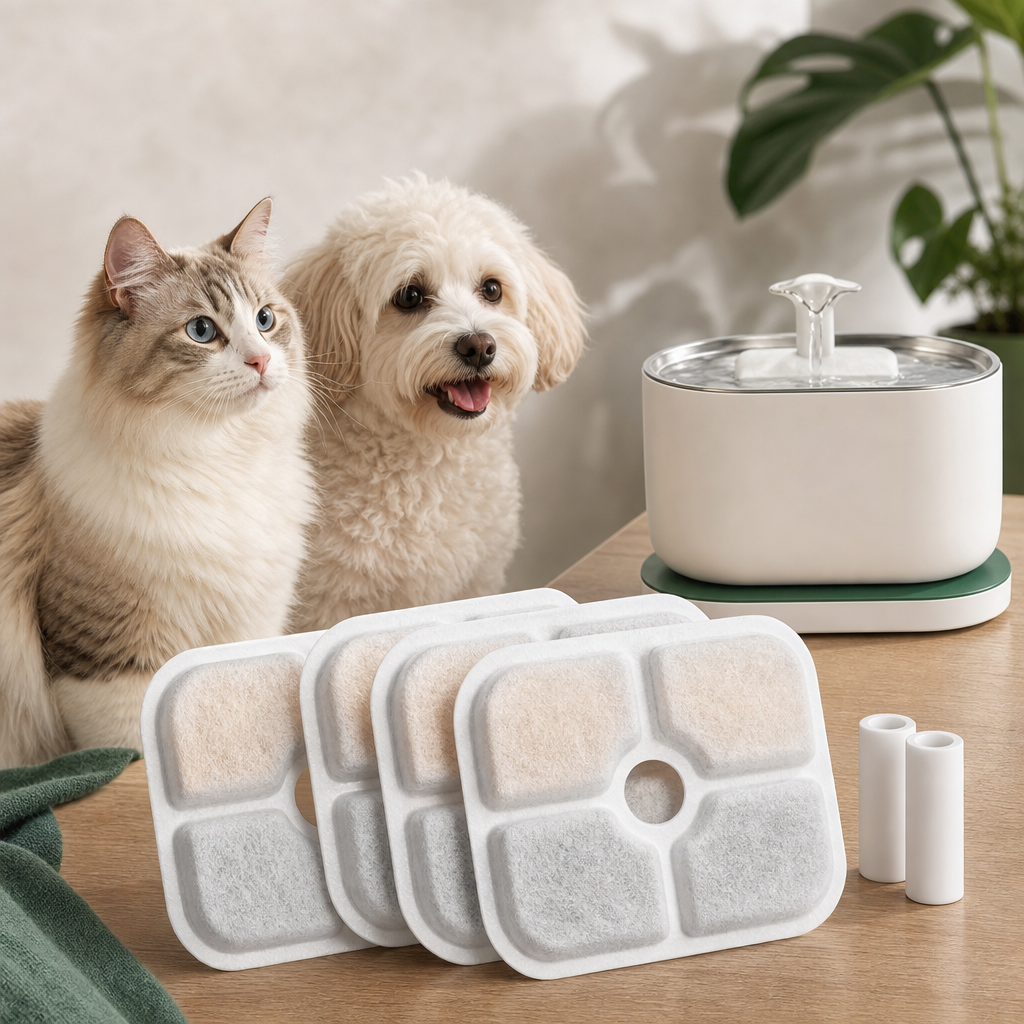
- Current used filter cartridge
- Clean ruler or tape measure with centimeters and millimeters
- Phone camera for top, side, and tray photos
- Small bowl of clean water for rinsing the new filter
- Soft brush or sponge for the fountain tray
- Mild dish soap for washable fountain parts
- Clean towel or paper towel
Step 1: Remove the old filter and identify the exact shape
Unplug the fountain before opening it. Lift out the reservoir cover or top tray, then remove the old cat drinking fountain filter without tearing it apart. Keep the used cartridge until the new one is installed and flowing correctly. The old filter is your best template.
Start with the silhouette. A square cartridge has four mostly even sides and sits in a square or near-square pocket. Do not substitute it for a round disc, half-moon, flower-shaped, V-shaped triangle, shovel-shaped, track-shaped, or long two-compartment filter. These shapes are not cosmetic. They control where water enters, where it passes through the carbon, and how it exits toward the pump or drinking surface.
Look for orientation details. Some filters have a notch, tab, raised edge, dense cotton side, carbon side, or plastic frame that only fits one way. If your square water fountain filter cat cartridge has a corner cutout or a raised lip, photograph that feature before throwing the old one away.
Step 2: Measure the cartridge, not just the fountain opening
Measure the old filter itself while it is dry enough to handle. Record the width, length, and thickness. For a square filter, measure side to side across the filter face and then measure the depth from front to back. If the filter is slightly rectangular, write down both dimensions; many wrong orders come from assuming a nearly square cat fountain water filter is perfectly square.
Next, measure the filter pocket in the fountain. The pocket should be slightly larger than the cartridge so water can pass without crushing the filter. If the cartridge must bend, buckle, or be forced under a lid, it is the wrong fit. A compressed carbon filter can restrict flow, make the pump work harder, and allow water to bypass the media around the edges.
Take three photos: the old filter by itself, the empty tray, and the filter sitting in the tray. Keep these photos in a phone album named for your fountain. This is especially helpful in multi-pet homes where several fountains may use different cat water fountain filter shapes.
Step 3: Match the water path and filter layers
Shape and size are only the first checks. The cartridge also has to match how water moves through the fountain. In many fountains, water drops from the drinking surface through the filter before returning to the reservoir. In others, the pump pushes water through or past a cartridge before it reaches the spout.
Look at the old filter’s dirty areas. Hair and debris usually collect on the pre-filter side, while the carbon layer handles odor and taste. When you install a new water filter cat fountain cartridge, the same side should face the incoming water. If you reverse a layered filter, it may still fit physically but collect debris poorly.
For flower-style fountains, the filter pocket and flow path are often different from a basic square tray. If your fountain has a flower spout or petal top, compare the cartridge shape against the examples in our cat flower water fountain filter guide before you reorder. A flower fountain may use a round, petal-compatible, or specialty cartridge rather than a square one.
Step 4: Check brand-specific shapes without relying on the name alone
Brand names can help narrow the search, but they should not be the only matching method. Some fountains change filter shape across generations, and some replacement listings use broad compatibility language. If you use a branded cartridge, such as a Catit fountain filter, confirm the exact shape, dimensions, and tab layout; a catit water fountain filter, catit filter, catit water filter, filter catit, fountain filter catit, catit triple action fountain filter, or catit pixi cat drinking fountain filter should still be matched by the cartridge in your hand, not by the name alone.
The same rule applies to a catmate filter or any other branded replacement. A square-looking cartridge may not seat correctly if the corners are rounded differently or if the fountain requires a center hole, edge notch, or raised rim. When in doubt, place the old cartridge over the product image on your phone screen at a similar angle and compare the outline, but make the final decision from measured dimensions.
Step 5: Rinse the new carbon filter before installation
Activated carbon filters often release fine black carbon dust when first opened. Rinse the new cat water fountain filter under cool running water until the water runs clear. Do not scrub the filter media, wring it out, or use soap on the cartridge. The goal is to flush loose dust while keeping the filter layers intact.
While the new filter is soaking or rinsing, wash the fountain parts that contact water. Hair, biofilm, and mineral residue can cause odor even when the filter is new. For a deeper cleaning sequence, including pump and intake care, follow our carbon filter care guide for cat water fountains. A clean tray helps the new filter work normally from the first refill.
Step 6: Seat the filter flat and confirm there is no bypass
Place the rinsed filter into the tray in the same orientation as the old one. It should sit flat, with no curled corners, gaps, or lifted edges. If the lid presses the cartridge down lightly, that is normal. If the lid has to be forced shut, stop and recheck the shape and thickness.
Look for bypass gaps. Water takes the easiest route. If there is an open channel around the side of the cartridge, hair and debris can avoid the filter and return to the reservoir. A good cat filter fountain setup sends water through the media, not around it.
Refill the fountain with clean water before plugging it back in. Running the pump dry can damage it. Once powered, watch the water for one full cycle. A properly installed cat fountain water filter should allow steady flow without sputtering caused by trapped air. A few tiny carbon specks after the first start are common; heavy black dust means the filter needs more rinsing.
Step 7: Set a replacement schedule by household use
For most homes, replace the filter every 2 to 4 weeks. Use the shorter end of that range if you have multiple cats, a dog sharing the fountain, long-haired pets, heavy shedding, warm room temperatures, or a cat that drops food into the water. Multi-pet households go through filters faster because more hair, saliva, and debris move through the fountain each day.
Replace sooner if you notice odor, floating hair that returns quickly after cleaning, cloudy water, slime on the tray, reduced flow, or a filter that feels slick and loaded with debris. A cat water fountain filter is a consumable part; rinsing can remove surface debris, but it does not reset used activated carbon indefinitely.
Use a simple reminder system. Write the install date on a calendar, tape a small note inside the cabinet where filters are stored, or set a recurring phone reminder. If you are unsure whether your schedule is too long, shorten it by one week and compare odor, flow, and visible hair.
Step 8: Store replacements so they stay clean
Keep unopened filters dry and away from litter dust, cleaning sprays, and strong household odors. Carbon can absorb odors before it ever reaches the fountain if the cartridge is stored open in a utility closet or under a sink. Individually wrapped filters are useful because each cartridge stays clean until the day it is installed.
Do not pre-rinse a stack of filters for later. Rinse only the cartridge you are about to install. Once wet, a filter should go into service promptly rather than sit damp in a drawer or container.
When to replace the filter instead of rinsing it
Replace the filter when it no longer lies flat, the outer material has frayed, the cartridge smells sour after rinsing, carbon dust continues to shed heavily, or water flow drops even after the pump and tray are cleaned. Also replace it after any illness-related contamination in a pet household, or if the fountain was left stagnant for several days.
Replace the entire cartridge rather than trying to open it and refill the carbon. Most small pet fountain cartridges are sealed to keep media distributed across the water path. Cutting them open can create leaks, uneven filtration, and loose granules in the pump area.
Related
For a removable activated carbon replacement option, see the Individually Wrapped Cat Fountain Carbon Filter Cartridge. It is a G2 pet drinking fountain replacement filter cartridge for dogs and cats, weighs 15 g, and comes as one individually wrapped piece. The available fit styles cover multiple common cartridge geometries, including AK style, desiccant filter, universal-style fountain cartridges, stainless-fountain style, long two-compartment style, track 7.6 x 4.3 cm, D60-compatible style, V-shaped triangle style, cotton 14 cm, and shovel 9.7 x 8.7 cm.
If you are still choosing between cartridge formats, compare shapes and maintenance needs in our researched guide to cat fountain filters before restocking.
Related Guides & Products
- cat fountain filters — Top Picks
- Cat Flower Water Fountain Filter Buyer’s Guide
- Cat Water Fountain Carbon Filter Care Guide
- Individually Wrapped Cat Fountain Carbon Filter Cartridge
Frequently Asked Questions
How do I identify a square fountain filter?
Remove the old cartridge and check the outline, corners, tabs, thickness, and tray fit. A square filter should sit flat in a square or near-square pocket without bending or leaving large bypass gaps around the edges.
How often should I replace it?
Most cat water fountain filters should be replaced every 2 to 4 weeks. Replace sooner in multi-pet homes, for long-haired pets, or when you notice odor, slime, floating hair, cloudy water, or reduced flow.
Can I rinse and reuse carbon filters?
You can rinse loose debris from the surface, but rinsing does not fully restore used activated carbon. If odor remains, flow slows, or the cartridge feels slimy, replace it instead of trying to keep reusing it.
Why does my new filter release black dust?
Activated carbon can shed fine dust when first opened. Rinse the cartridge under cool running water until the water runs clear, then install it. Do not use soap or scrub the filter media.
Will any square filter fit my fountain?
No. Square filters can still differ in size, thickness, corner shape, notches, tabs, and water path. Match the old cartridge and tray measurements before buying replacements.
What causes odor after a filter change?
Odor can come from the pump, tray, trapped hair, biofilm, or stagnant water rather than the new filter. Clean the fountain parts and pump area, then replace the filter if the smell persists.