TL;DR: To slow a dog that eats too fast, switch from a flat bowl to a shallow, stable slow feeder, split meals into smaller portions, and keep the bowl clean so food does not build up in the grooves. Choose a maze depth your dog can reach, stop using damaged plastic or sharp metal, and replace bowls that slip, crack, smell, or trap residue.
Fast eating can turn a normal meal into coughing, gagging, vomiting, and uncomfortable gas. The fix is not just buying the slowest dog feeder bowl you can find. The better goal is a safe, repeatable feeding routine: the right bowl depth, a non-slip setup, smaller portions, and consistent cleaning. Dog bowls for fast eaters work best when they slow your dog without frustrating them or making food impossible to reach.
If you are still choosing between bowl styles, compare maze shapes, materials, and sizes in our guide to the best dog slow feeder bowls. For small dogs, puppies, and short-nosed breeds, also review our small slow feeder dog bowl buyer’s guide before you commit to a deeper puzzle pattern.
Tools and Supplies
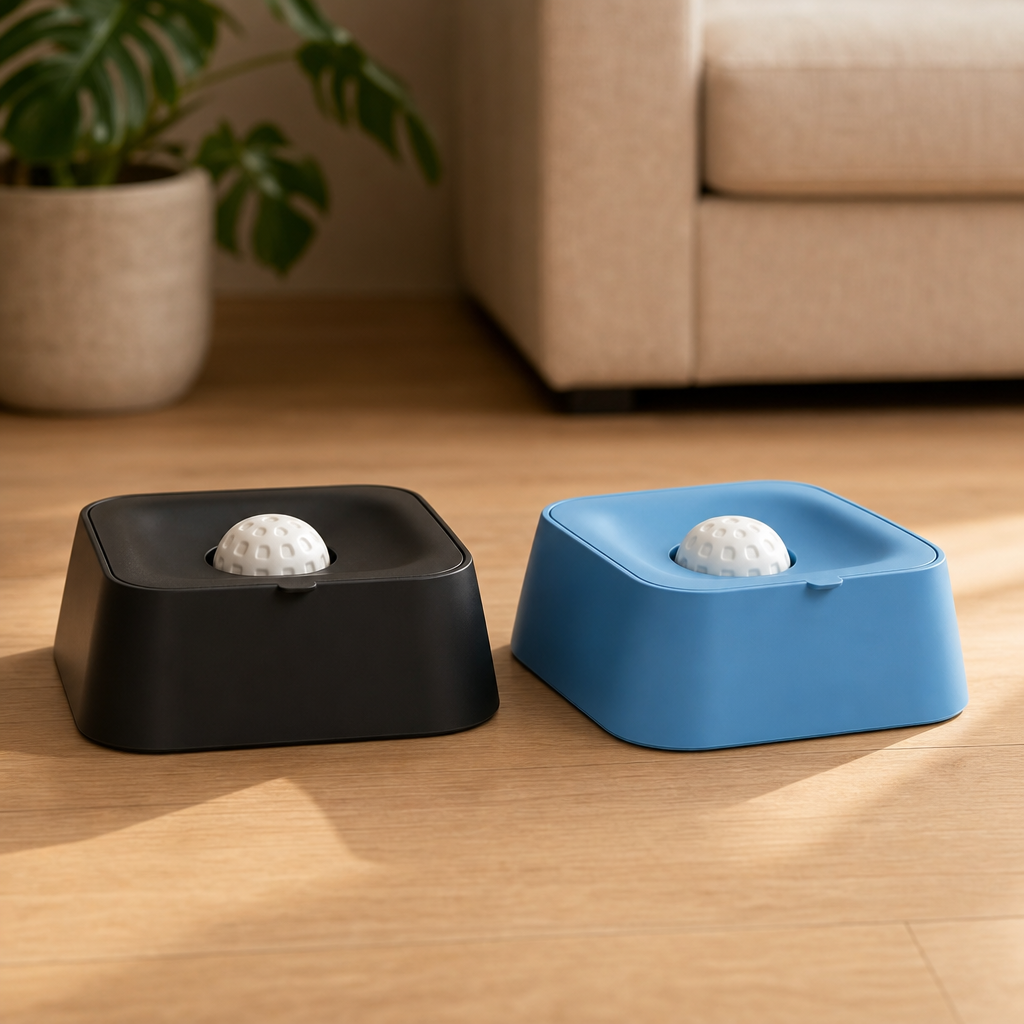
- Slow feeder dog bowl or puzzle feeder sized for your dog
- Measuring cup or kitchen scale for portions
- Non-slip mat if the bowl moves on the floor
- Mild dish soap
- Soft sponge
- Small brush or old toothbrush for grooves
- Clean towel or drying rack
- Warm water for soaking oily residue
Step 1: Watch One Normal Meal First
Before changing the bowl, watch how your dog eats from their current setup. Look for gulping without chewing, coughing, gagging, repeated burping, food scattering, vomiting soon after meals, or a hard, gassy belly. Also watch the bowl itself. If your dog pushes it across the room, pins it with a paw, or tips it over, speed is only part of the problem; stability matters too.
Time is useful, but do not make the stopwatch the only measure. A dog eating bowl slow enough for one dog may be too difficult for another. The goal is a calmer meal with fewer huge mouthfuls, not a battle where the dog paws, barks, or gives up. If your dog has a deep chest, a history of bloat, repeated vomiting, or sudden abdominal swelling, treat that as a veterinary issue rather than a bowl problem.
Step 2: Choose a Shallow, Reachable Slow Feeder
Pick a slow feeder bowl with ridges your dog can work around using their normal muzzle shape. Very deep maze structures can backfire for puppies, small dogs, senior dogs, and short-nosed breeds because they may not be able to reach the kibble at the bottom. When the channels are too narrow or too deep, the dog may become frantic, flip the bowl, or swallow air while trying to dig food out.
For most dogs, start with a moderate bowl slow feeder rather than the most complicated puzzle. A shallow slow eating dog bowl still breaks up large mouthfuls, but it lets the dog reach food without scraping their nose or forcing their jaw into awkward angles. If your dog eats wet food, choose wider grooves that can be cleaned fully. If your dog eats dry kibble, make sure the kibble pieces do not wedge tightly into the corners.
Material matters. A dog bowl to slow eating stainless steel is often easier to scrub free of oily residue and less likely to hold odor than soft, chewed-up plastic. Plastic slow feeder bowls can still work well when they are rigid, smooth, and intact, but stop using one that smells strongly after washing, has bite marks, or has rough gouges that trap food.
Step 3: Set the Bowl So It Cannot Slide
A slow feeder for dog bowl use should stay put while your dog eats. Place it on a flat, dry floor, away from wall corners where the dog can pin and tip it. If the bowl bottom slides, put a washable non-slip mat underneath. Do not use a towel that bunches up, because it can make the bowl wobble and encourage pawing.
For energetic dogs, stand nearby for the first few meals. If the dog tries to flip the feeder, calmly reset it and reduce the difficulty by adding less food at a time. A bowl that skids across tile can make fast eating worse because the dog starts chasing food instead of settling into a rhythm. The best dog feeding bowls to slow eating combine a stable base with a pattern that interrupts gulping without turning dinner into a wrestling match.
Step 4: Split the Meal Into Smaller Portions
Do not fill a new slow feeder to the brim on the first day. Put in part of the meal, let your dog finish, then add the next portion. Smaller refills reduce crowding in the grooves and make it easier to see whether your dog is chewing, licking, and breathing normally. This is especially helpful for dogs that vomit after inhaling a full bowl.
If your dog eats twice a day and still gulps, split each meal into two mini-servings a few minutes apart. For dry food, scatter a small amount across the ridges instead of dumping it in one pile. For wet food, press it lightly into the channels but do not pack it so firmly that your dog has to scrape hard. A dog feeding bowl slow routine should feel predictable: food appears, the dog works through it, and the meal ends without coughing or frantic licking.
Keep the total daily food amount the same unless your veterinarian has told you otherwise. The slow feed method changes pace, not calories. A feeder for dogs should not become an excuse for extra snacks simply because the meal takes longer.
Step 5: Introduce the Slow Feeder Gradually
Some dogs understand a slow feeder immediately. Others need a short transition. For the first meal, mix easy access with mild challenge: place a few pieces on top of the ridges and a few inside the channels. Praise calm licking and chewing. If your dog paws, whines, or walks away, simplify the pattern by using less food and spreading it more loosely.
For nervous dogs, alternate between the old bowl and the slow eating bowl dog setup for a day or two. You can also use the slow feeder for only half the meal at first. The point is to build a habit, not to make the dog feel trapped. Puzzle feeders for dogs are useful only when they reduce gulping while keeping mealtime low-stress.
Watch short-nosed dogs closely. If they cannot reach food without pressing their face hard into the maze, choose a shallower design. Watch puppies as well; they may chew the bowl after the food is gone. Remove the feeder when the meal ends so it does not become a toy.
Step 6: Wash the Bowl After Every Meal
Slow feeder grooves hold saliva, oil, wet food, and crumbs more readily than a flat bowl. Wash the bowl after every meal, especially if you use wet food, raw-coated kibble, fish-based food, or toppers. Rinse loose debris first, add mild dish soap, then scrub the channels with a sponge and a small brush. Pay attention to inside corners, raised ridges, and any anti-slip ring or base edge.
For greasy residue, soak the bowl in warm, soapy water before scrubbing. Do not rely on a quick rinse if the surface still feels slick. That slick layer can hold odor and make the next meal less sanitary. For more detailed cleaning routines by material and food type, use our slow feeder cleaning and sizing guidance for small bowls when you are dealing with narrow grooves or compact feeders.
Dry the bowl completely before putting it away. Moisture trapped under a base or inside tight grooves can create stale smells. If a plastic bowl keeps an odor after a thorough wash and dry, replace it rather than trying to mask the smell.
Step 7: Adjust the Difficulty If Problems Continue
If your dog still finishes too fast, make one change at a time. Use smaller portions, spread kibble more evenly, or move to a slightly more complex maze. If your dog coughs, paws aggressively, flips the bowl, or leaves food behind, reduce difficulty. The slowest dog feeder bowl is not the best choice if it causes stress or makes your dog swallow extra air.
For dogs that push food out of the grooves and onto the floor, try a wider feeder with a more contained rim or put the bowl on a mat with a raised edge. For dogs that chew plastic, switch to a more chew-resistant material and remove the bowl as soon as the meal is over. For dogs that cannot reach the bottom of the maze, use a shallower slow feeder bowl or a flatter lick-style feeding surface for wet food.
If vomiting continues even after slower feeding, smaller portions, and a stable bowl, change the feeding schedule and speak with your veterinarian. A slow feeder can reduce gulping, but it cannot diagnose food intolerance, reflux, dental pain, or gastrointestinal disease.
How Often to Use and Clean a Slow Feeder
Use a slow feeder at every meal if your dog routinely gulps, coughs, vomits after eating, or becomes gassy after meals. If your dog eats calmly after training, you can still keep the slow feeder for larger meals and use a standard bowl for small snacks. Dogs that relapse into gulping should go back to the slow feeder full time.
Clean the bowl after every meal. Deep-clean it weekly by soaking, brushing every groove, rinsing thoroughly, and drying fully. Inspect it during that weekly cleaning. Run your fingers over the ridges and corners to feel for cracks, burrs, chew marks, rough plastic, loosened anti-slip parts, or dents that create sharp edges.
Wash non-slip mats regularly too. Food and saliva often collect underneath the bowl, and that residue can make the floor slippery. A clean mat also helps solve the common problem of a bowl sliding while the pet eats.
When to Replace the Bowl or Parts
Replace a plastic slow feeder when it has deep scratches, chew damage, cracks, warping, a persistent odor, or an oily feel that remains after washing. Damaged plastic grooves can trap food and bacteria, and chewed edges can irritate your dog’s mouth. If your dog bites the bowl after meals, remove it immediately after feeding and move to a tougher material if the chewing continues.
Replace a stainless slow feeder when it develops sharp dents, rough edges, loose seams, or corrosion spots that do not clean away. Stainless steel is a strong choice for a slow eating dog bowl stainless setup, but any metal bowl with a damaged feeding surface should be taken out of rotation. Also replace any anti-slip ring, rubber foot, or base insert that loosens, cracks, or falls off; once the bowl slides, your dog may start pushing, pawing, and gulping again.
Replace the bowl sooner if your dog’s size changes. Puppies can outgrow an 18 cm small bowl, and a muzzle that once fit comfortably may later crowd the pattern. A feeder that was appropriate for a puppy may become too small for a medium dog’s adult bite.
Related Slow Feeder Options
For small dogs, puppies, cats, and some small to medium dogs, the 18 cm Stainless Steel Slow Feeder Dog Bowl uses a stainless steel feeding surface, an 18 cm small format, anti-slip and anti-tip design details, and raised puzzle patterns such as bone, dog paw, bear paw, and fishbone. It has no power or automation, which keeps the routine simple: portion food, feed, wash, and dry.
For a lightweight square option for dogs or cats, the Square PP Slow Feeder Dog & Cat Bowl uses PP plastic, a compact 19 × 19 × 7 cm packaged format, an anti-spill square shape, and a no-electronics design. Choose this type of slow feed bowl when the shape fits your pet’s muzzle and you can keep the grooves clean after each meal.
Simple Feeding Routine to Keep
Measure the meal, place the slow feeder on a dry non-slip surface, add food in a thin layer, and watch the first few minutes. After the meal, pick up the bowl, wash every groove, rinse, and dry. Once a week, inspect the surface and base. That simple routine solves the main problems that make fast eating worse: giant mouthfuls, sliding bowls, unreachable maze channels, lingering odors, and dirty grooves that hold oil.
Related Guides & Products
- dog slow feeder bowls — Top Picks
- Small Slow Feeder Dog Bowl Buyer’s Guide
- 18 cm Stainless Steel Slow Feeder Dog Bowl
- Square PP Slow Feeder Dog & Cat Bowl
Frequently Asked Questions
Do slow feeders stop vomiting?
They can reduce vomiting caused by gulping by forcing smaller bites and slower swallowing. If vomiting continues despite slower meals and smaller portions, change the feeding plan and contact your veterinarian.
Are deep maze bowls better?
Not always. Deep mazes can be too difficult for puppies, small dogs, senior dogs, and short-nosed breeds. Choose a pattern your dog can reach without scraping or pawing.
How often should I wash it?
Wash a slow feeder after every meal. Scrub the grooves with soap and a small brush, then dry it fully so food oil and odor do not build up.
Can puppies use slow feeders?
Yes, if the bowl is shallow, stable, and sized for the puppy’s muzzle. Supervise meals and remove the bowl afterward if the puppy tries to chew it.
When should I replace plastic bowls?
Replace plastic bowls with cracks, chew marks, deep scratches, warping, persistent odor, or greasy residue that remains after washing. Damaged grooves trap food and are harder to clean.
What if my dog flips the bowl?
Use smaller portions, place the bowl on a non-slip mat, and choose a lower-difficulty pattern. If flipping continues, switch to a heavier or more stable slow feeder.