TL;DR: Destructive chewing is best handled by prevention, calm interruption, and immediate redirection to appropriate dog chew toys. Puppy teething, boredom, stress, and normal exploration can all drive chewing, so make the wrong targets unavailable, make the right targets easy to choose, rotate toys often, inspect them daily, and replace anything with loosened pieces, exposed stuffing, sharp edges, or heavy wear.
Tools and Supplies
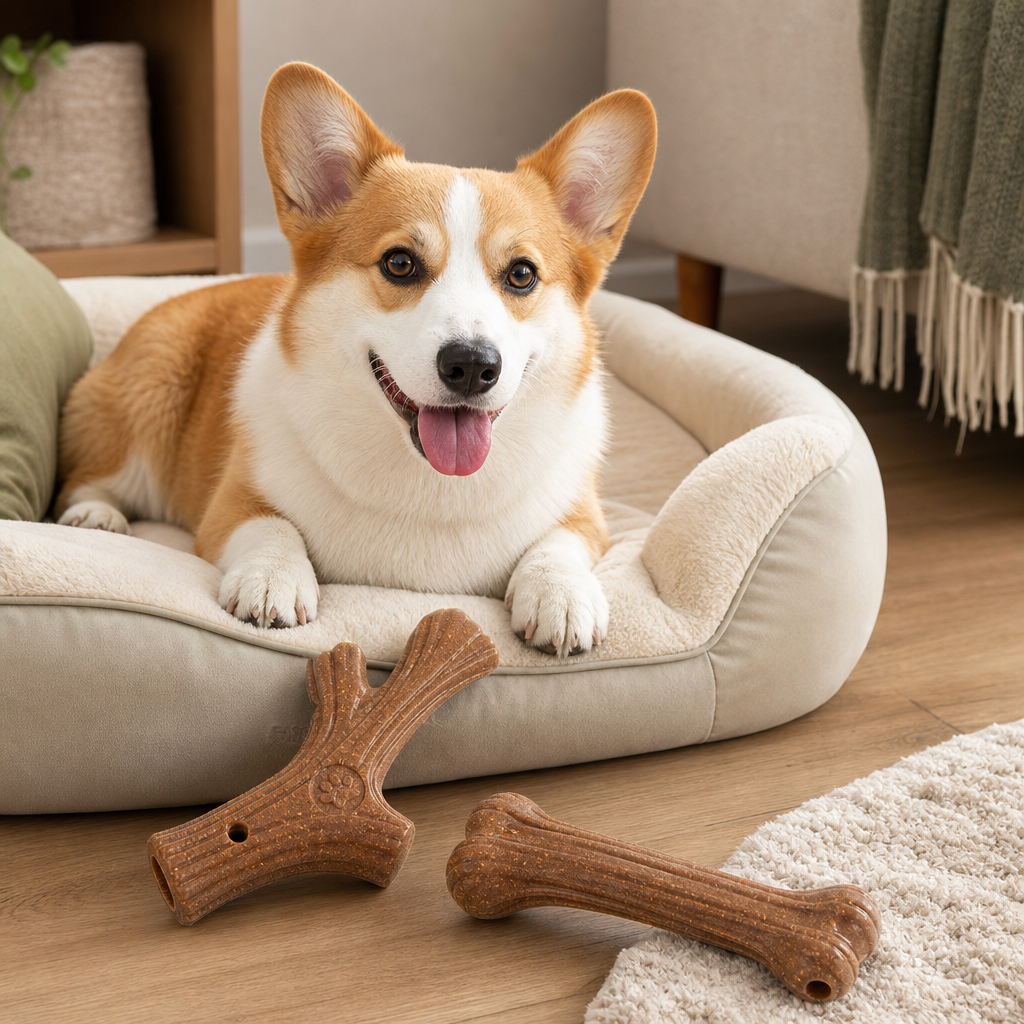
- Two to four safe dog chew toys with different textures or shapes
- A storage bin or basket for toy rotation
- Baby gates, crate, exercise pen, or closed doors for room control
- Bitter deterrent spray for furniture legs or baseboards, if needed
- Leash or house line for supervised indoor redirection
- Mild dish soap, warm water, and a clean towel for toy cleaning
- Small treats or kibble for rewarding the correct choice
Step 1: Control the Room Before Chewing Starts
If you are asking, why does my puppy chew everything, start with the environment instead of the puppy. Puppies chew because their mouths are how they investigate the world, and teething makes that urge stronger. Adult dogs may chew from boredom, anxiety, habit, or excess energy. In every case, the fastest improvement comes from making furniture, shoes, cords, rugs, and trash harder to reach while making dog chew toys easier to reach.
Pick one supervised room for training. Remove shoes, laundry, bags, pillows, remote controls, children’s toys, and anything with dangling straps. Block cords behind furniture or cord covers. Close doors to bedrooms and bathrooms. Use baby gates or an exercise pen when you cannot watch your dog closely. This is not punishment; it prevents rehearsing the wrong behavior. Every time a dog chews a chair leg or tears up a slipper, that object becomes more interesting the next time.
Place two acceptable chew options in the room before your dog enters. Keep them visible but not scattered everywhere. Too many items on the floor can make the whole room feel like a chew buffet. Your goal is simple: the dog walks in, sees an appropriate object first, and gets rewarded for choosing it.
Step 2: Match the Toy to the Chewing Problem
Choose the chew based on what your dog is trying to do. A puppy that mouths hands, sleeves, and soft bedding often needs a soft toy for redirection during interactive play. A puppy that targets table legs, baseboards, and hard plastic objects often needs a firmer chewable toy with a shape that is easy to hold between the paws. A dog that destroys ordinary toys quickly needs closer supervision, shorter sessions, and a more durable texture.
Texture matters. Soft plush can satisfy carrying, pouncing, and gentle chewing. Squeakers can help shift attention away from forbidden objects because the toy gives feedback when the dog bites it. Firmer PP chew toys can work better for steady gnawing, especially when a dog keeps returning to hard surfaces. If you are unsure which format fits your dog, our guide to choosing dog chewable toys breaks down size, texture, chew style, and supervision level.
Do not rely on one toy for every situation. A single chew may become boring, or it may be the wrong feel for the moment. Keep at least two categories available: one interactive toy for redirection and one gnawing toy for calm chewing. For puppies, choose shapes that are easy to grip and not so heavy that the dog gives up. For stronger chewers, prioritize simple designs without extra pieces that invite picking and tearing.
Step 3: Interrupt Calmly, Then Redirect Immediately
When your dog starts chewing the wrong object, do not chase, yell, or pry the mouth open unless there is an immediate safety risk. Chasing can turn the behavior into a game. Loud correction can create anxiety, which may increase chewing later. Instead, use a short neutral interrupter such as “uh-oh” or “leave it,” then guide the dog toward an appropriate chew.
If the dog is chewing a movable item, trade rather than grab. Hold the chew toy near the dog’s nose, make it move slightly, or squeak it if the toy has that feature. When the dog releases the forbidden item and takes the toy, praise calmly. If the dog has something unsafe, use a small treat to trade, then remove the unsafe object from the room.
Timing is the maintenance piece most owners miss. Redirect within one or two seconds of the wrong chew, and reward the first bite on the correct toy. The dog is learning a pattern: furniture does not continue, the chew toy does. If you wait until the dog has chewed for several minutes, the destructive behavior has already paid off.
Step 4: Make the Correct Toy More Rewarding
A chew toy should not appear only after the dog gets in trouble. Build value into the toy during calm moments. Sit on the floor for a brief play session, wiggle the toy, let your dog grab it, and praise the bite. For a firmer chew, hold one end for a few seconds so the dog can settle into gnawing. Then release it and let the dog continue independently.
Use short sessions. Two to five minutes of enthusiastic redirection is often enough for a puppy. End while the toy is still interesting, then put it away or leave it in the dog’s supervised area depending on how safely your dog chews. This keeps the toy from becoming background clutter.
If your dog repeatedly leaves the toy and returns to the same table leg or rug corner, change the setup. Move the dog farther from the target, block the target, spray an appropriate bitter deterrent on the target surface, or switch to a different chew texture. The dog is giving you information: the current toy is not competing well enough with the forbidden object.
Step 5: Use Rotation to Prevent Boredom
Dog chew toys last longer and stay more interesting when they are rotated. Keep a small group available and store the rest out of sight. Rotate daily for puppies and every few days for adult dogs with steadier chewing habits. When an old toy reappears after a break, many dogs treat it like a new option.
A simple rotation system works well. Put three labeled spots in a bin: “today,” “clean,” and “resting.” The “today” toys are available during supervised windows. The “clean” toys have been washed and dried. The “resting” toys are out of circulation. This prevents the floor from filling up with half-chewed options and helps you inspect each toy before it comes back into use.
Use rotation to match your dog’s energy. After a nap, a puppy may need a soft interactive toy to start play without biting hands. After a walk or meal, the same puppy may be ready for a firmer gnawing toy and a quiet settle period. If your dog is a heavy gnawer, compare plush and firmer builds in our guide to plush vs PP dog chew toys for heavy gnawing before deciding what belongs in the daily rotation.
Step 6: Inspect Toys Before and After Chew Sessions
Inspection is the main safety habit in any chew-toy routine. Before giving a toy to your dog, look for split seams, loose stitching, exposed stuffing, weakened squeakers, cracked plastic, sharp edges, thin spots, or pieces that flex more than they did when new. After the session, check again. Damage often appears at the corners, tips, ears, tails, or raised details because dogs focus pressure on those spots.
For plush toys, squeeze the body and check whether any internal part has shifted toward a seam. If a squeaker is close to coming out, remove the toy from use. For firmer chewable toys, run your fingers along the surface. The texture should not have sharp flakes, jagged chew marks, or fragments that can be pulled off. If your fingernail catches on a rough edge, the dog’s mouth can catch there too.
Keep inspection unemotional. A damaged toy did its job by absorbing chewing that might otherwise have gone into furniture. Do not wait for a toy to fully fail before retiring it. Replacing worn chew items is part of normal maintenance, especially for puppies and strong chewers.
Step 7: Clean Toys and the Chewing Area
Clean chew toys often enough that dirt, saliva, and food residue do not build up. For most household routines, wash frequently used toys with warm water and mild dish soap, rinse thoroughly, and air-dry completely before returning them to the bin. Do not put a damp plush toy into storage; trapped moisture can create odor and make the toy less pleasant for both the dog and the room.
Clean the chewing zone too. Vacuum fabric surfaces and rugs where toy fibers, crumbs, or stuffing can collect. Wipe baseboards and furniture legs that have been targeted so scent and saliva do not keep drawing the dog back. If you use a bitter deterrent on safe household surfaces, reapply it according to the product directions and keep pairing it with a better chew option. Deterrent alone rarely teaches the dog what to do instead.
Separate outdoor and indoor toys when possible. Grit and small debris picked up outside can grind against teeth and gums during chewing. If an outdoor toy comes inside, clean it before it joins the indoor rotation.
Step 8: Follow a Practical Frequency Schedule
For puppies, offer a supervised chew opportunity after waking, after meals, after active play, and during evening settling time. These are common chewing windows because the puppy is either energized, tired, or seeking relief from teething discomfort. Short, repeated sessions work better than one long session that ends in overstimulation.
For adult dogs, schedule chew time around predictable problem periods. If your dog chews the couch when you answer emails, set up a chew station before you sit down. If your dog targets shoes after walks, put shoes away before entering and offer a chew toy as part of the post-walk routine. If your dog chews when guests arrive, use a leash, mat, or gated area and give the chew before the doorbell excitement peaks.
Inspect toys daily for puppies and heavy chewers. Inspect at least several times a week for gentle adult chewers. Wash high-use toys weekly or sooner if they smell, feel sticky, or touch food. Rotate toys daily for young puppies, every two to three days for moderate chewers, and as needed for dogs that remain highly interested without constant changes.
Step 9: Replace Worn Toys and Loose Parts Promptly
Replace a plush chew toy when seams open, stuffing shows, the squeaker loosens, fabric becomes thin, or any small part can be chewed free. Do not sew a heavily shredded plush toy back together and return it to a determined chewer; the repaired area usually becomes the next target. A minor loose thread can be trimmed, but structural damage means retirement.
Replace a firm chew toy when it develops sharp edges, cracks, deep gouges, missing chunks, or ends that are small enough for your dog to work loose. Also replace it if the size no longer fits your puppy’s mouth and chewing strength. A chew that was appropriate for an eight-week puppy may be too small or too easy to destroy as the dog grows.
Watch the floor after each session. If you find bits of plastic, stuffing, fabric, or squeaker material, the toy is no longer suitable for unsupervised access. Move it to the trash or a repair-only bin that the dog cannot reach. The replacement rule is simple: if the toy can no longer stay intact under your dog’s normal chewing, it should not stay in the rotation.
Related Chew-Toy Options We’ve Vetted
For a soft, attention-grabbing redirect toy, the Squeaky Plush-Style Dog Chew Toy costs $17.99 and has a lightweight 100 g feel that is easy for many puppies to carry during indoor interactive play. Its squeaky engagement and character options make it useful for redirecting mouthy play away from sleeves, hands, and household items.
For firmer gnawing, the PP Dog Chew Toy for Teething costs $10.99, weighs 50 g, and comes in natural shape options including antler, bone, bamboo, and tree branch styles. The PP construction and small or large size options make it a practical choice for teething support and steady dental gnawing action.
If your dog destroys ordinary toys quickly, compare more options in our vetted roundup of durable dog chew toys. Use the same inspection and replacement rules above no matter which toy you choose.
Related Guides & Products
- Best Durable Dog Chew Toys — Top Picks
- How to Choose Dog Chewable Toys for Your Dog
- Why does my puppy chew everything? What to Do
- Best Dog Chew Toys for Heavy Gnawing: Plush vs PP
- Squeaky Plush-Style Dog Chew Toy
- PP Dog Chew Toy for Teething, Natural Shape Options
Frequently Asked Questions
Why does my puppy chew everything?
Puppies chew to explore, relieve teething discomfort, burn energy, and get attention. The fix is prevention plus redirection: remove tempting objects, supervise closely, and reward your puppy for choosing safe chew toys instead.
How many chew toys should my dog have out?
Keep two or three appropriate options available during supervised time. Store the rest and rotate them. Too many toys can blur the line between acceptable chew items and household objects.
Should I scold my dog for chewing furniture?
No. Interrupt calmly, guide your dog to an approved chew toy, and reward the correct choice. Scolding can create anxiety or turn the interaction into attention, which may make chewing worse.
Are plush chew toys okay for puppies?
Yes, for supervised play and gentle chewing. Remove plush toys if seams split, stuffing appears, or a squeaker loosens. Strong chewers often need firmer options for gnawing sessions.
When should I replace a chew toy?
Replace it when it has sharp edges, cracks, missing chunks, exposed stuffing, open seams, loose squeakers, or pieces your dog can pull off. Inspect before and after chew sessions.
How often should I rotate dog chew toys?
Rotate daily for puppies and every few days for many adult dogs. Rotation keeps toys interesting and gives you a regular chance to clean and inspect them.