TL;DR: A good mag safe phone setup should solve three everyday problems: fewer worn-out charging ports, steadier magnetic alignment, and a cleaner desk. Prioritize a charger with firm magnetic centering, honest power claims, PD-compatible input, and case-friendly contact. The 15W Magnetic Wireless Charger for iPhone is a strong budget pick at $10.99 if you want simple magnetic wireless charging without a display or bulky stand.
A mag safe phone setup is appealing because it removes the most annoying part of ordinary charging cables: plugging and unplugging a tiny connector every day. That matters if your phone port is already loose, dusty, or wearing out. A magnetic phone charger also keeps your desk cleaner because the charging surface snaps to the back of the phone instead of leaving a loose connector dangling.
The catch is that not all magnetic chargers behave the same. Weak magnets can slip when you text while charging. Thick cases can reduce grip and slow wireless transfer. Overstated power claims can make a magnetic charging phone feel no faster than an old pad. We compare these products by looking at the power design, charging protocol, magnet layout, case tolerance, and physical usability—not by chasing the biggest number on the box.
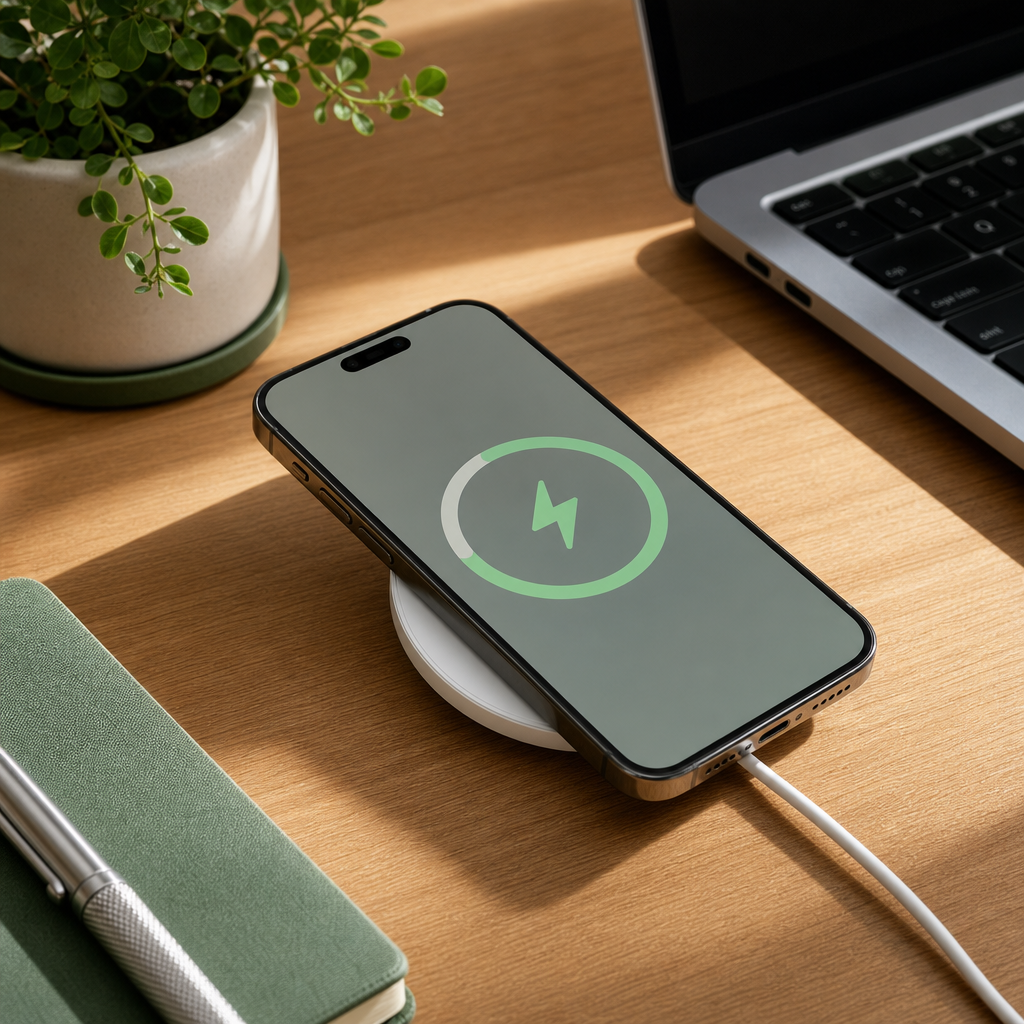
For shoppers building a simple iPhone-ready setup, the 15W Magnetic Wireless Charger for iPhone is the clearest budget choice in this group. It is a neutral, unbranded magnetic wireless phone charger with 15W maximum output, PD charging protocol support, 2A output current, a lightweight 50 g body, and a minimal no-display design. It is not an Apple MagSafe charger for iPhone; it is a low-cost magnetic wireless charger designed for iPhone-style magnetic alignment.
Quick-reference table
| Factor | What to look for | Why it matters | Our read on the 15W charger |
|---|---|---|---|
| Magnetic alignment | Centered snap-on positioning | Reduces misalignment and charging dropouts | Built for magnetic wireless alignment |
| Charging power | Clear wattage plus PD support | Helps avoid fake fast-charge expectations | 15W maximum output with PD protocol |
| Case fit | Thin, magnet-friendly case | Thick cases weaken grip and charging contact | Best with compatible slim cases |
| Heat behavior | Stable placement and airflow | Heat can trigger slower charging | Simple puck design with no display heat source |
| Desk setup | Short, clean cable path | Cuts clutter compared with plug-in cords | Minimal charger body supports clean placement |
| Portability | Low weight and compact shape | Easier to carry than a stand | 50 g build is travel-friendly |
| Value | Real features at the right tier | Prevents overpaying for cosmetics | $10.99 is firmly budget-priced |
Magnetic alignment and grip
The first thing to judge is not the wattage; it is whether the charger lines up correctly every time. Magnet and wireless charging work together only when the charging coil sits in the right position. If the puck lands off-center, the phone may charge slowly, pause, or warm up more than expected. A good magnetic iphone charger should pull itself into alignment without requiring you to slide the phone around like a traditional wireless pad.
This is where magnetic chargers are genuinely useful for anyone tired of ordinary cable wear. You avoid repeated connector insertion, and the charging point stays consistent. The 15W model uses magnetic wireless alignment, so it is built around the central benefit of a mag safe charger iphone setup: snap the phone into place and reduce the chance of a bad connection.
Grip still depends on the full setup. A bare compatible phone or a thin magnetic case will feel more secure than a bulky case with weak internal magnets. If you often charge while scrolling, gaming, or taking calls, prioritize a strong centered hold over decorative extras. For a deeper explanation of the coil-and-magnet relationship, read our guide to how magnetic wireless charging works.
Charging power and adapter pairing
For most buyers, 15W is the practical ceiling to look for in a compact magnetic phone charge accessory. The 15W Magnetic Wireless Charger for iPhone has a 15W maximum output and 15W total power, with 2A output current and PD charging protocol support. That combination is more meaningful than a vague “fast wireless” label because it tells you the charger is designed around a recognized power-delivery approach.
Still, power claims need context. A magnetic wireless charging puck cannot perform at its best if it is connected to an underpowered wall adapter or a poor cable path. If you are shopping for a mag safe charger for iphone 12, magsafe charger for iphone 12, mag safe charger for iphone 13, or magsafe charger for iphone 13, make sure the charger and adapter are treated as a system. The puck may support 15W, but the upstream power source has to keep up.
We would not pay premium prices for a charger that only gives you a bigger number without a clear protocol or practical design benefit. If you want help narrowing the field, our broader guide to choosing a magnetic iPhone charger breaks down the trade-offs between puck chargers, stands, and portable packs.
Case thickness and everyday fit
Cases are the hidden reason many people dislike magnetic charging. The phone may technically support magnetic wireless charging, but a thick wallet case, rugged shell, metal plate, or non-magnetic case can weaken the attachment. That leads to the common complaint: “The magnetic charger falls off when I use the phone.” In many cases, the charger is not the only problem; the case is interrupting the magnetic connection.
When you judge a magnetic charger for i phone use, look at your actual case first. A slim case with built-in magnetic support is ideal. A thick case can create a physical gap between the charging coil and the phone, which may reduce charging efficiency and increase warmth. If you regularly swap cases, buy the charger based on the thickest case you expect to use, not the best-case bare-phone scenario.
The 15W charger’s lightweight 50 g build helps here because less weight is hanging off the back of the phone when you pick it up. A heavier puck may feel more premium on a desk, but it can also tug more noticeably during one-handed use.
Heat control and charging stability
Heat is one of the main reasons a magnetic phone charger feels slower than expected. Wireless charging naturally generates more warmth than a direct cable because energy moves across a small gap. If the phone is misaligned, trapped under a thick case, sitting in direct sun, or running a game while charging, heat can build and charging can slow down.
The best way to judge heat behavior is to look for designs that keep things simple and aligned. The 15W Magnetic Wireless Charger uses a minimal no-display design, which avoids adding a screen or extra visual hardware to the puck itself. That does not make heat disappear, but it supports the right priority: put the energy into charging and keep the contact surface straightforward.
For daily use, place the puck on a hard surface, avoid covering the phone while it charges, and remove very thick cases when you need the most reliable top-up. If you are using navigation, video calls, or games, expect any magnetic charger to work harder. In those moments, magnetic convenience may matter more than maximum charging speed.
Desk clutter and cable management
A good mag safe phone setup should make your space feel calmer. Traditional charging cables often sprawl across a nightstand or desk, and the loose connector tends to fall behind furniture. Magnetic charging does not eliminate the cable entirely, but it changes how you interact with it: the puck stays in one place, and the phone snaps on without fishing for the end of the cord.
The 15W charger is especially suited to a cleaner desktop setup because it is lightweight, has no digital display, and avoids unnecessary visual clutter. If you want a charger that disappears into a work area, this kind of minimal puck is usually better than a large stand with lights, logos, and extra features you may not use.
For broader setup ideas beyond chargers, see our curated best phone accessories hub, where magnetic charging fits alongside mounts, cables, and travel gear. The right accessory mix can reduce the mess that builds up when every device has its own cord and adapter.
Portability and travel use
If you move between home, office, and travel bags, weight matters. A 50 g magnetic wireless charger is easy to pack, and a puck-style design takes less room than a folding stand or multi-device dock. That makes it a practical choice for hotels, shared workspaces, and bedside charging where you do not want to carry a bulky station.
A portable magnetic charger is also useful when outlets are awkwardly placed. You can leave the puck on the table and lift the phone away without stressing the phone’s charging port. For an iPhone 12 mag charger or newer iPhone-ready setup, that convenience is often the main reason to buy magnetic charging in the first place.
If your priority is charging away from a wall outlet, compare pucks with battery-based options in our guide to the best portable magnetic charger for iPhone setups. A wall-powered puck is lighter and cheaper; a battery pack is more flexible when you are away from power.
Design simplicity and feature value
Do not overpay for features that do not improve charging. A display can look impressive, but it is not necessary for a basic magnetic wireless charger. Custom colors and branding may matter for corporate gifting, but they do not help your phone stay aligned or charge more efficiently. The 15W charger is neutral and unbranded, with no customization support and no digital display, which keeps the product focused on the core job.
The in-box package is similarly simple: the magnetic wireless phone charger and packaging box. That is appropriate at the budget price point. If you want a premium bedside setup, you may want a stand, heavier base, or multi-device charging dock. If you mainly want to stop wearing out the port and clean up your desktop, a basic magnetic puck is the better value.
Concrete price expectations
Budget magnetic chargers typically fall between $8 and $18. In this tier, expect a simple puck, basic packaging, and practical power claims around the common 15W class. The 15W Magnetic Wireless Charger for iPhone is $10.99, which puts it near the low end of the budget range while still giving you magnetic alignment, PD protocol support, 15W maximum output, and a light 50 g body. That is the value sweet spot for a first magnetic charger.
Midrange options usually cost $20 to $45. This is where you may see stronger housings, longer cables, better desk weighting, or stand-style designs. A midrange magnetic charger can be worth it if you want the phone propped up for video calls or bedside viewing, but it is not automatically faster just because it costs more.
Premium magnetic charging setups usually run $50 to $120, with multi-device stations, heavier stands, travel-folding hardware, or integrated charging for a phone plus earbuds or a watch. Pay this much only if the full station solves a real layout problem. For one phone, a premium dock is often more about furniture and convenience than raw charging performance.
For some Android users, a samsung magnetic charger search may lead to products that rely on a magnetic case or ring rather than native iPhone-style alignment. That can work, but judge the whole system—phone, case, magnet, wireless coil, and adapter—before assuming every magnetic charger will behave the same.
Common mistakes to avoid
Buying by wattage alone. A 15W claim matters only when the charger, adapter, case, and phone can work together. Protocol support and alignment are just as important as the number.
Ignoring the case. A thick case is the most common reason magnets feel weak and wireless charging slows down. If the puck drops when you lift the phone, check the case before blaming the charger.
Expecting cable-speed charging. Magnetic wireless charging is about convenience and reduced port wear. It can be quick for top-ups, but direct wired charging may still be preferable when you need the fastest possible refill.
Using the phone heavily while charging. Gaming, navigation, and video calls add heat. Heat can reduce charging speed, especially with a case installed.
Overpaying for visual extras. Displays, lights, and oversized housings can look premium without improving daily charging. A simple, well-aligned magnetic charger is often the smarter buy.
Choosing the wrong form factor. A puck is best for travel and minimal desks. A stand is better for viewing. A multi-device station is best only when you truly charge several devices in one place.
Bottom line
The best mag safe phone charger is the one that keeps alignment consistent, works with your case, uses a sensible power protocol, and makes your desk less annoying. The $10.99 15W Magnetic Wireless Charger for iPhone is a strong budget recommendation because it focuses on the essentials: magnetic wireless alignment, up to 15W output, PD charging protocol support, a light 50 g build, and a minimal no-display design. If your main frustrations are worn ports, messy cables, and plug-in hassle, start here before spending midrange or premium money.
Related Guides & Products
- phone-accessories — Top Picks
- How Magnetic Wireless Charging Works
- How to Choose a Magnetic iPhone Charger
- Best portable magnetic charger for iphone setups
- Magnetic Charger for iPhone 12 Review
- 15W Magnetic Wireless Charger for iPhone
Frequently Asked Questions
Is 15W enough for magnetic charging?
Yes, 15W is a practical target for a compact magnetic wireless charger. Real speed also depends on the wall adapter, phone, case thickness, alignment, and heat during charging.
Will a thick case weaken the magnet?
Yes. Thick, rugged, wallet, or non-magnetic cases can reduce grip and charging efficiency. A slim magnetic-compatible case gives the most reliable attachment.
Does magnetic charging reduce port wear?
Yes. Because you are not repeatedly inserting and removing a plug from the phone, magnetic wireless charging can reduce daily stress on the charging port.
Is a display necessary on the charger?
No. A display is not required for good charging. A simple no-display puck can be cleaner, lighter, and less distracting on a desk or nightstand.
What should a budget magnetic charger cost?
Expect budget magnetic chargers to cost about $8 to $18. The 15W Magnetic Wireless Charger for iPhone costs $10.99, making it a low-cost pick with useful core specs.
Can Android phones use magnetic chargers?
Some can when paired with a compatible magnetic case or ring and wireless charging support. Judge the phone, case, magnet placement, and adapter together.