TL;DR: A good ceramic slow feeder dog bowl should slow eating without frustrating your dog, sliding across the floor, or trapping oily food in tight grooves. Prioritize a shallow-to-moderate maze for small or short-nosed dogs, a stable base, and smooth surfaces you can clean thoroughly. Expect budget bowls around $8–$18, better daily-use bowls around $19–$35, and premium ceramic or heavy bowls around $36–$70.
A ceramic slow feeder dog bowl can be a smart upgrade for dogs that inhale meals, cough while eating, vomit soon after dinner, or swallow enough air to get gassy. The goal is simple: turn a pile of kibble into a slower search-and-nudge meal without making your dog work so hard that eating becomes stressful.
Ceramic is popular because it feels substantial, looks good in a kitchen, and avoids the lightweight feel some owners dislike in plastic. But material alone does not make a bowl good. The maze height, channel width, base stability, and ease of cleaning matter just as much. A shallow, stable bowl that your dog can actually use is better than the most complicated puzzle feeders for dogs if the ridges are too deep or the food gets wedged in greasy corners.
We compare slow feeder designs across materials, including ceramic, stainless steel, and PP plastic. If you are still narrowing the field, start with our broader best dog slow feeder bowls comparison, then use the factors below to decide whether ceramic is the right everyday choice or whether a stainless or PP option is more practical for your dog.
1. Material: choose ceramic for weight, stainless for bite resistance, PP for light handling
Material affects three things owners notice every day: how stable the bowl feels, how it cleans, and how well it tolerates chewing or rough use.
A ceramic slow feeder dog bowl is usually appealing when you want a heavier, more furniture-friendly bowl that does not feel flimsy. The weight helps reduce sliding, and a smooth glazed surface can be pleasant to wash when the maze is not overly tight. The trade-off is impact durability: ceramic can chip or crack if dropped, and any damaged eating surface should be retired because rough edges are not appropriate for a feeding bowl.
Stainless steel is the safer bet for dogs that paw, mouth, or push their bowls aggressively. The 18 cm Stainless Steel Slow Feeder Dog Bowl uses a stainless feeding surface, comes in 304 and 201 stainless options, and is built in a compact 18 cm format for cats, puppies, and small to medium dogs. At $20.99, it sits in the practical midrange and makes sense for owners who want a dog bowl to slow eating stainless steel option without electronics or complicated parts.
PP plastic is useful when you want a lighter bowl that is easy to move, pack, or use as a budget slow feed option. The Square PP Slow Feeder Dog & Cat Bowl is a $15.99 PP plastic slow feeder with a square anti-spill shape, black and blue color options, and a compact 19 × 19 × 7 cm kraft-box package. It is a sensible budget pick for dogs and cats that are not heavy chewers.
2. Size and snout fit: the bowl must match the dog, not just the meal
The most common sizing mistake is buying a slow eating dog bowl based only on how much food it holds. Fit matters more. A bowl can technically contain a full meal and still be wrong if your dog cannot reach between the ridges comfortably.
For puppies, cats, toy breeds, and many small dogs, a compact bowl is easier to manage. An 18 cm small slow feeder, like the stainless model above, is sized for cats, puppies, and small to medium dogs. That format keeps the eating area close enough that a small dog does not have to climb over tall outer walls or strain into the center of the maze.
For medium dogs, look for enough surface area to spread kibble into the channels instead of piling it in one spot. A bowl for dogs to slow eating works best when food is distributed across several paths. If the bowl is too small, a fast eater may still gulp clusters of kibble. If it is too large for a small dog, the dog may give up or start flipping the bowl.
Short-nosed dogs need extra care. Deep, narrow mazes can make it hard for flatter muzzles to reach food, especially wet food. For these dogs, choose lower ridges, wider channels, and a bowl that slows the meal moderately rather than trying to be the slowest dog feeder bowl available.
3. Maze depth and pattern: slow the meal without blocking access
The maze is the heart of any dog feeding bowl slow design. Ridges, bumps, paw shapes, bone patterns, and fishbone-style channels all do the same basic job: interrupt direct gulping and make your dog nudge food out in smaller bites.
Shallow-to-moderate patterns are best for most households. They slow fast eating while still letting the dog reach food with the tongue and front teeth. Very deep mazes may look more effective, but they can create two problems: small dogs and short-nosed dogs may not reach the bottom, and oily food can collect in the corners.
Pattern variety is useful when you already know your dog’s feeding style. The stainless 18 cm bowl comes in bone, dog paw, bear paw, and fishbone pattern options. Those are practical, recognizable maze shapes rather than an elaborate puzzle tower. For a first dog slow feeder, that is often the right level of complexity.
If your dog finishes meals dangerously fast, do not rely on maze difficulty alone. Portion placement matters. Spread kibble evenly through the channels instead of dumping it into the center. For dogs that cough, gag, or vomit after meals, pair the bowl with a calmer feeding setup and review our guide on how to use dog bowls for fast eaters safely.
4. Stability: sliding and tipping defeat the purpose
A slow feeder bowl should stay where you put it. If the base skids across tile while your dog eats, the meal becomes frustrating and messy. Worse, some dogs learn to push the bowl into a wall or flip it to get the food faster.
Ceramic has a natural advantage here because its weight helps it resist movement. That is one reason many owners consider a ceramic slow feeder dog bowl for kitchen use. Still, weight is not everything. Look for a broad base, a low center of gravity, and a bottom design that grips the floor.
The 18 cm stainless model uses an anti-slip bowl design and an anti-tip everyday bowl format, which directly addresses the problem of pets pushing the bowl while eating. The Square PP bowl takes a different approach with a square anti-spill shape. A square footprint can be easier for some dogs to work around because it creates corners and edges that resist rolling motion.
For strong pushers, place the slow feeder on a feeding mat or against a stable surface. Avoid placing it on a slick, raised platform unless the bowl sits securely. A dog eating bowl slow design only helps when the dog has to work through the maze, not chase the bowl across the room.
5. Cleaning: smooth channels matter more than fancy shapes
Cleaning is where many slow feeders fail in daily use. Kibble dust, saliva, wet food, and oil can collect inside grooves. If the channels are too narrow, owners stop using the bowl because scrubbing every ridge becomes a chore.
For ceramic, look for a smooth glazed eating surface and maze walls you can reach with a sponge or brush. Avoid sharp internal corners and decorative crevices that trap residue. Ceramic can be easy to wipe when the glaze is intact, but complicated shapes still require careful cleaning.
Stainless steel is strong for oily foods because the feeding surface is nonporous and stands up well to repeated washing. PP plastic is lightweight and convenient, but owners worried about odor should be more disciplined about rinsing after each meal and avoiding long contact with greasy wet food. If you feed canned, fresh, or mixed meals, our guide to using a slow feeder dog bowl for wet food explains when shallow channels are the better choice.
As a rule, if you cannot reach the bottom of every groove with a brush, do not buy that maze. The best slow feeder for dog bowl use is one you will actually clean after breakfast and dinner.
6. Food type: kibble, wet food, and water need different designs
Kibble is the easiest use case. Dry pieces move through channels cleanly, and a moderate maze can slow gulping without much residue. For most dry-food diets, a ceramic slow feeder dog bowl, stainless slow feeder bowl, or PP bowl slow feeder can work well if sized correctly.
Wet food is different. Thick food sticks to vertical walls, collects under overhangs, and can leave oily residue in narrow grooves. For wet meals, choose a shallower maze with rounded channels. Ceramic and stainless are generally easier to wipe clean than deeply textured plastic when food is greasy.
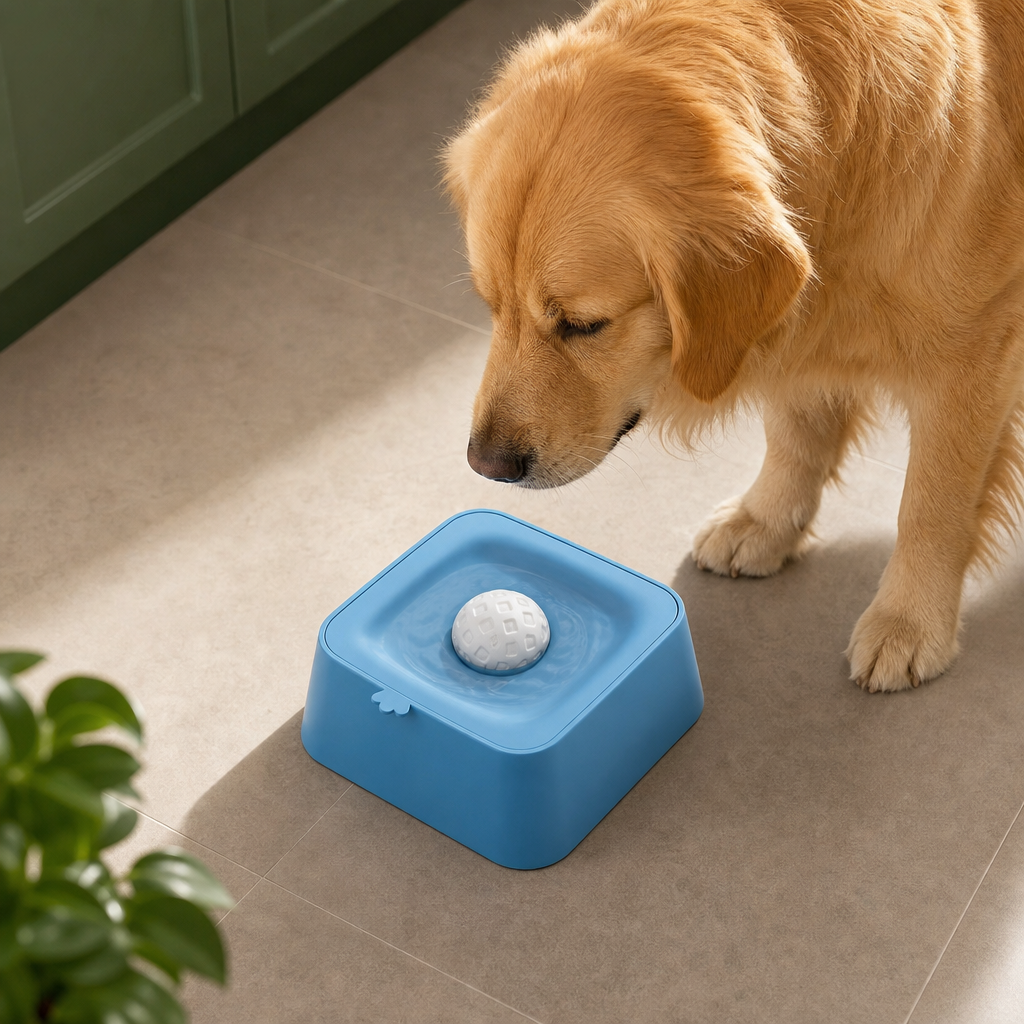
Water is a separate category. A slow feeder bowl is not automatically a slow water bowl. Some anti-spill drinking bowls use floating discs or controlled openings, while food mazes use raised ridges. If your dog gulps water and then coughs, look for a drinking-specific design rather than assuming a dog feeding bowls to slow eating product will solve water gulping.
7. Durability and daily handling: match the bowl to your dog’s habits
Think about how your dog behaves after the food is gone. Some dogs walk away. Others paw, chew, lick aggressively, or carry lightweight bowls around. That behavior should guide the material choice.
Choose ceramic if your dog is not a bowl chewer, you value a heavier feel, and the bowl will stay in one feeding spot. Choose stainless if bite resistance and long-term toughness are priorities. Choose PP if you want a lightweight, lower-cost slow eating bowl dog option for travel, cats, puppies, or gentle eaters.
Neither of our compared bowls uses power or automation, which is a plus for simple daily feeding. There are no batteries to manage and no moving parts that can jam. For many households, a manual feeder for dogs is the most reliable way to slow a meal.
Quick-reference table
| Factor | What to look for | Best choice for | Watch out for |
|---|---|---|---|
| Material | Ceramic, stainless steel, or PP plastic with a smooth feeding surface | Ceramic for weight, stainless for durability, PP for budget handling | Chipped ceramic, chew-damaged plastic, rough surfaces |
| Size | Bowl diameter and channel spacing that match muzzle size | Small bowls for puppies, cats, and small dogs; wider bowls for medium dogs | Deep bowls that short-nosed dogs cannot reach |
| Maze depth | Low to moderate ridges with reachable grooves | Most fast eaters needing steady slow feed control | Overly deep mazes that trap food |
| Stability | Heavy base, anti-slip design, anti-tip shape, or square footprint | Dogs that push bowls while eating | Light bowls on slick floors |
| Cleaning | Rounded channels reachable with a sponge or brush | Wet food, mixed food, oily meals | Narrow grooves that hold residue |
| Price | $8–$18 budget, $19–$35 midrange, $36–$70 premium | Matching spend to material and durability | Paying premium prices for a maze your dog cannot use |
Concrete price expectations
Budget: $8–$18. Expect lightweight PP plastic bowls, simple maze shapes, and compact sizing. This tier is good for trying a slow feeder, feeding cats or puppies, or keeping a backup travel bowl. The $15.99 Square PP Slow Feeder Dog & Cat Bowl fits here with its PP build, square anti-spill shape, 230 g item weight, and dog-and-cat compatibility.
Midrange: $19–$35. This is the sweet spot for many owners. You can expect better everyday materials, more stable designs, and slow-feeder patterns that feel more durable. The $20.99 18 cm Stainless Steel Slow Feeder Dog Bowl lands at the lower end of this tier while offering stainless steel options, anti-slip and anti-tip design features, and multiple pattern choices.
Premium: $36–$70. This tier is where heavier ceramic slow feeders, decorative finishes, larger formats, and more substantial bases typically sit. Pay premium prices when the bowl solves a real problem: your dog pushes lighter bowls, you want a kitchen-friendly ceramic look, or you need a larger slow feeder bowl with a stable footprint. Do not pay extra just for a more complicated maze.
Common mistakes to avoid
Buying the deepest maze for the fastest eater
The slowest dog feeder bowl is not always the safest or most useful choice. A very deep maze can frustrate small dogs, short-nosed breeds, seniors, and dogs with dental sensitivity. Start with moderate slowing and adjust feeding routines before moving to extreme puzzle designs.
Ignoring the floor surface
A bowl that behaves well on a rug may skate across tile or laminate. If your dog pushes the bowl while eating, prioritize anti-slip, anti-tip, square, or heavier ceramic designs. Sliding turns dinner into a chase and can encourage gulping once the dog corners the bowl.
Using one bowl for every food texture
Dry kibble, wet food, and water do not behave the same way. A tight puzzle feeder may be fine for kibble but annoying with canned food. Wet meals need smoother, more open channels. Water gulping needs a drinking-specific slow design, not a food maze.
Choosing plastic for a determined chewer
PP plastic can be practical and affordable, but it is not the right answer for every dog. If your dog chews bowls after meals, stainless steel or ceramic is the better direction. Remove the bowl after feeding if your dog treats it like a toy.
Keeping a bowl that is hard to clean
If oily residue stays in the grooves, the bowl is not a good daily feeder. A slow feeder should reduce gulping, choking risk, vomiting episodes, and gas without creating a hygiene chore. Smooth, reachable channels are worth more than decorative complexity.
Bottom line: who should buy a ceramic slow feeder dog bowl?
Choose a ceramic slow feeder dog bowl if you want a stable, attractive, non-lightweight bowl for a dog that eats too quickly but does not chew or drop bowls. Look for moderate maze depth, a broad base, and easy-to-clean rounded channels. For small dogs, cats, puppies, and short-nosed breeds, err on the side of shallower ridges.
If durability matters more than ceramic weight, the $20.99 stainless 18 cm bowl is the stronger everyday recommendation for small to medium dogs. If you want an inexpensive starter slow feeder for dogs and cats, the $15.99 square PP bowl is the better budget route. The right dog slow feeder is not the fanciest one; it is the one that slows meals, stays put, fits your dog’s muzzle, and gets cleaned without a fight.
Related Guides & Products
- dog slow feeder bowls — Top Picks
- Small Slow Feeder Dog Bowl Buyer’s Guide
- How to Use Dog Bowls for Fast Eaters Safely
- Puzzle and Maze Dog Bowl Buyer’s Guide
- Best Slow Feeder Dog Bowl: Stainless vs PP
- Can You Use a Slow Feeder Dog Bowl for Wet Food?
- 18 cm Stainless Steel Slow Feeder Dog Bowl Review
- Square PP Bowl for Dogs to Slow Eating Review
- Slow Water Bowl Dog Buyer’s Guide
- 18 cm Stainless Steel Slow Feeder Dog Bowl
- Square PP Slow Feeder Dog & Cat Bowl
Frequently Asked Questions
Are ceramic slow feeders good for fast eaters?
Yes, when the maze is shallow enough for the dog to reach food and the bowl is stable. Ceramic is especially useful for dogs that push lightweight bowls, but it is not ideal for dogs that chew or drop bowls.
Is stainless steel better than ceramic?
Stainless steel is usually better for durability and bite resistance. Ceramic is better when you want more weight and a kitchen-friendly look. For rough eaters, stainless is the safer daily-use choice.
What size slow feeder should small dogs use?
Small dogs usually do best with compact bowls and low-to-moderate ridges. An 18 cm slow feeder format is appropriate for cats, puppies, and many small to medium dogs.
Can slow feeder bowls help with vomiting?
They can help dogs eat more slowly, which may reduce gulping, air swallowing, and post-meal upset for some dogs. Use a moderate maze and spread food evenly through the channels.
Are PP plastic slow feeders worth buying?
PP slow feeders are worth buying for budget use, travel, cats, puppies, and gentle eaters. They are not the best choice for dogs that chew bowls or owners who prefer heavier materials.
What should I spend on a slow feeder?
Expect $8–$18 for budget plastic bowls, $19–$35 for stronger everyday bowls, and $36–$70 for premium ceramic or heavy designs. Buy based on fit, stability, and cleaning ease, not maze complexity alone.