TL;DR: Most fountain noise comes from four places: water sitting too low, a pump pulling air, hair or slime in the impeller, or hard-water scale narrowing the flow path. Unplug the fountain, refill it, reseat the pump and nozzle, then clean the impeller and tubing before replacing filters or worn pump parts.
A cat water fountain making noise is usually not broken. In everyday use, rattling, humming, splashing, gurgling, and grinding are often signs that the fountain needs water, the pump is not seated flat, the filter is clogged, or mineral scale has built up around the pump and spout. Work through the steps below in order; they move from the fastest checks to the deeper maintenance that fixes most noisy cat drinking fountain problems.
Tools and supplies
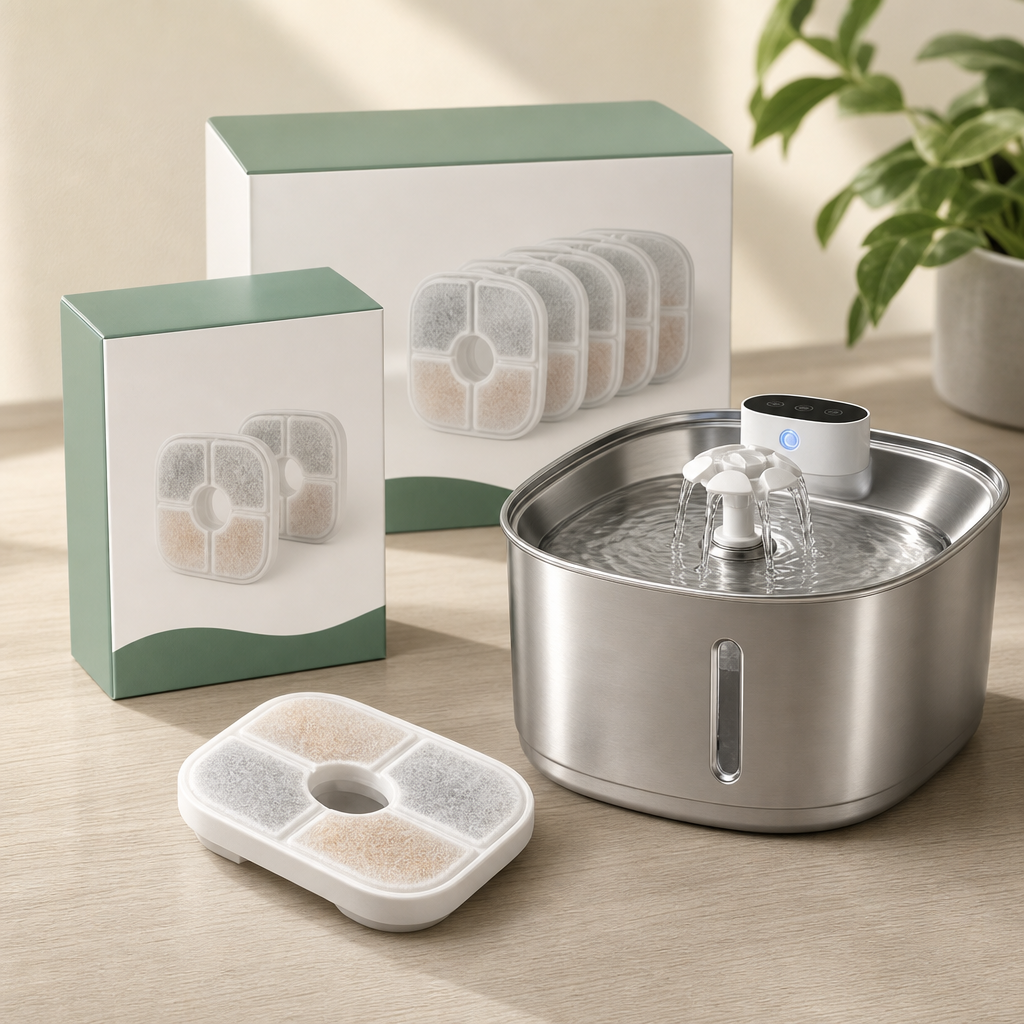
- Clean towel or drying mat
- Small cleaning brush or bottle brush
- Soft toothbrush for pump crevices
- Cotton swabs for the impeller cavity
- Mild dish soap
- White vinegar for mineral scale
- Fresh filter or filter chip, if due
- Clean water for rinsing and refilling
Step 1: Identify the noise before taking it apart
Listen for the sound type and location. A loud hum usually starts at the pump. A slurping or gulping sound usually means the pump is drawing air because the water level is low. A sharp rattle often comes from a loose lid, nozzle, or pump touching the wall of the reservoir. Splashing usually means the stream is dropping too far or hitting the bowl at the wrong angle. Grinding points to hair, grit, or scale inside the pump.
Do this check while the fountain is on a level floor or counter. Uneven placement can make a cat pet water fountain vibrate against tile, wood, or a feeding mat, which makes a small pump sound much louder at night. If the fountain is near a wall, pull it out an inch or two so the housing is not transferring vibration into the wall.
Step 2: Refill the reservoir to stop air noise
Turn the fountain off, remove the lid if needed, and refill the tank to a healthy operating level. Restart it and watch the stream for 30 seconds. If the noise changes from slurping to a steady low hum, the pump was pulling air. This is the most common quick fix for a kitty water fountain that suddenly gets louder overnight.
Low water is especially easy to miss in a multi-pet home because cats and dogs may drink more than expected, and evaporation adds up in warm rooms. A fountain water cat setup should have enough water above the pump intake so the pump never gulps air between refills. If your cat avoids still water and relies on a feline water fountain, make water-level checks part of your daily feeding routine.
Step 3: Reseat the pump, lid, and nozzle
Unplug the fountain or switch it off. Remove the top, lift out the pump, and place it back so its suction cups sit flat and the outlet lines up with the tube or nozzle. Reinstall the lid and spout without forcing them. A slightly twisted pump can vibrate against the basin, and a misaligned nozzle can turn a quiet water drinking fountain cats use happily into a splashing, rattling distraction.
If the fountain has more than one nozzle option, test each one after cleaning and refilling. A bubbler-style top usually sounds different from a falling stream. For a cat bubbler fountain in a bedroom, the quietest setup is usually the one that keeps water moving without a long drop into the bowl. If the stream still splashes, reduce the drop distance by confirming the top piece is fully seated and the fountain is filled high enough.
Step 4: Clean the pump impeller and intake
Remove the pump cover and pull out the small impeller if the pump design allows it. Rinse the parts under running water, then use a soft toothbrush or cotton swab to clear hair, biofilm, and grit from the impeller well. Do not scrub with anything abrasive. Reassemble the pump and make sure the cover clicks or slides back into place securely.
This step matters because the impeller is the moving part that circulates water. When cat hair wraps around it or slime builds up in the cavity, the pump has to work harder and often gets louder. For a deeper visual routine, follow our cat water fountain parts cleaning guide, especially if the reservoir feels slick or the tubing has cloudy buildup.
Step 5: Remove scale from the water path
Hard-water scale narrows the pump outlet, spout, and tubing. That restriction can cause gurgling, pulsing flow, or a rougher pump tone. Soak removable hard parts in a diluted white-vinegar solution, then brush the seams, corners, intake slots, and nozzle openings. Rinse thoroughly until there is no vinegar smell before refilling the fountain.
Pay close attention to hidden edges: under the lid, around the pump seat, inside tube bends, and along the basin seam. These are the areas that tend to grow sticky first and collect mineral deposits. Stainless basins are generally easier to wipe smooth than textured plastic, but every cat stainless steel drinking fountain still needs scale removal if your tap water is hard. If material choice is part of your long-term maintenance problem, our stainless steel vs. plastic fountain guide explains the cleaning trade-offs.
Step 6: Rinse or replace the filter
Turn the fountain off, remove the filter, and rinse it until loose carbon dust or trapped debris is gone. If the filter is swollen, slimy, sour-smelling, torn, or slowing the flow after rinsing, replace it. A clogged filter can make a cat drinking fountain louder because the pump is trying to pull water through a restricted path.
Do not run a fountain indefinitely on an old filter just to save cost. A tired filter can reduce flow, hold odor, and make the pump cycle noisier. Keep the correct replacement type on hand so maintenance does not get delayed. For timing and installation details, use our cat water fountain filter replacement guide.
Step 7: Check for vibration against the surface
After cleaning and refilling, place the fountain on a flat, stable surface and run it for a full minute. If it hums loudly only when sitting on the floor, add a thin waterproof mat underneath or move it to a heavier surface. The goal is to stop the fountain body from acting like a speaker.
Also check that the power cord, charging cable, or nearby objects are not touching the housing. A cable lightly tapping the reservoir can sound like pump rattle. If the fountain is cordless, make sure the control module or removable sections are fully seated after charging and cleaning. For a water fountain for a cat used near a bed, vibration control can be as important as pump cleaning.
Step 8: Adjust the flow for your cat and the room
If the fountain offers different nozzles or flow patterns, choose the quieter one that your cat still likes. Some cats prefer a visible stream; others prefer a gentle bubbling surface. A cats fountain drinker should attract drinking without creating a waterfall sound that keeps people awake.
When a cat refuses the fountain after you reduce the flow, move the unit away from the food bowl and litter box, refresh the water, and give the cat a day or two to test it. Cats that dislike sudden noise may avoid the fountain after a loud grinding episode, even after it is fixed. Our guide to why a cat will not drink from a water fountain covers placement and reintroduction steps.
Step 9: Test the pump after maintenance
Run the fountain with fresh water after every cleaning session. Look for a steady stream, no visible air bubbles at the intake, and no rattling from the lid. If the pump runs quietly in a bowl of water but gets noisy only inside the fountain, the problem is alignment, water level, nozzle fit, or vibration. If the pump is noisy even when submerged by itself, the pump is dirty, scaled, or worn.
Never run the pump dry to test it. Dry running can turn a simple low-water noise into permanent pump wear. If your home loses power often or you travel overnight, choose routines and equipment that keep water available between checks. A larger reservoir and clean filter path help stabilize flow, but the pump still needs regular inspection.
Frequency guide
Daily: Check water level, top off with fresh water, and look for hair around the intake. This is the fastest way to prevent air slurping and protect the pump.
Every 2 to 3 days: Rinse the basin and lid if your cat sheds heavily, eats wet food nearby, or drops kibble into the water. Wipe any slick areas before they become sticky biofilm.
Weekly: Disassemble the fountain, wash the basin, clean the pump exterior, brush the nozzle, and rinse the filter. This weekly reset keeps most feline drinking fountain noise from building up.
Monthly: Open the pump housing and clean the impeller cavity. Descale the tube, nozzle, and pump intake if you see white crust or the flow starts pulsing.
After travel or a power interruption: Empty, rinse, and restart with fresh water. If the fountain sat warm and still, treat it like a full cleaning day before offering it again.
When to replace parts
Replace the filter when rinsing no longer restores flow, when it smells stale, when it looks slimy, or when the filter media is damaged. Filter replacement is normal maintenance for any filtered cat water fountain stainless or plastic design.
Replace the pump when it remains loud after impeller cleaning, descaling, proper submersion, and reseating. A worn pump may grind, buzz, or fail to restart consistently after cleaning. If a pump has a warranty period, use it before buying another pump.
Replace tubing or nozzles when they stay cloudy, cracked, loose, or scaled after soaking and brushing. Loose water-path parts can introduce air and cause gurgling even when the pump is fine.
Replace the basin or lid if cracks, warped edges, or damaged locking points keep the fountain from seating correctly. A warped top can turn normal flow into splash noise and can leave corners that trap grime.
Related guides and fountains
If you are still comparing the best cat drinking fountain options, start with our best cat water fountains roundup and our quiet cat water fountain buying guide. For maintenance-focused shoppers, a removable design is worth prioritizing because the pump, basin, filter area, and nozzle all need regular access.
Related models include the 3.2L Stainless Steel Cordless Cat Water Fountain at $66.99, which uses a stainless steel basin, rechargeable cordless power with Type-C charging, an included filter element, detachable cleaning parts, a water pump, cleaning brush, and two nozzle options. Another option is the 3L Automatic Filtered Cat & Dog Water Fountain at $31.99, with automatic circulating flow, removable cleaning design, automatic filtration, and standard or upgraded versions including an upgraded option with anti-dry-burn protection and light.
Related Guides & Products
- pet-supplies — Top Picks
- How to Choose a Cat Water Fountain
- How to Clean Cat Water Fountain Parts
- Stainless Steel Cat Water Fountain vs Plastic
- 3.2L Stainless Steel Cat Water Fountain Review
- 3L Automatic Cat Water Fountain Review
- Are Cat Water Fountains Worth It? Maintenance Guide
- Best Quiet Cat Water Fountain Buying Guide
- Cat Water Fountain Filter Replacement: When and How
- Stainless Steel Cat Water Fountain Buying Guide
- Why Your Cat Won’t Drink From Water Fountain
- 3.2L Stainless Steel Cordless Cat Water Fountain
- 3L Automatic Filtered Cat & Dog Water Fountain
Frequently Asked Questions
Why is my fountain suddenly loud?
The most common causes are low water, a pump pulling air, a clogged filter, or hair in the impeller. Refill first, then reseat and clean the pump.
Is pump humming normal?
A soft hum is normal for many fountains. Loud buzzing, grinding, rattling, or slurping means the pump, water level, filter, or housing needs attention.
Can hard water make it noisy?
Yes. Mineral scale can narrow the pump intake, tubing, and nozzle, which can create gurgling, pulsing flow, or a rougher pump sound.
How often should I clean the pump?
Clean the pump exterior weekly and open the impeller cavity about monthly, or sooner if flow slows, noise increases, or hair collects near the intake.
When should I replace the filter?
Replace it when it smells stale, feels slimy, is torn, or no longer restores normal flow after rinsing. A clogged filter can increase pump noise.
Why does the fountain splash at night?
The water level may be low, the nozzle may be misaligned, or the stream may be dropping too far. Refill, reseat the top, and test a gentler nozzle.