TL;DR: If your cat won’t drink from water fountain, troubleshoot the basics first: placement, water freshness, pump noise, bowl texture, flow height, and cleaning. Most refusals come from stress around a new object, stale or oddly scented water, vibration, tight whisker space, or mineral buildup. Introduce the fountain slowly, keep a backup bowl out, and clean high-contact parts on a predictable schedule.
A cat water fountain can help cats that ignore still water, but it can also backfire if the sound, smell, flow pattern, or location feels wrong. Use this guide as a practical reset for any cat bubbler fountain, cat drinking fountain, kitty water fountain, or feline water fountain that your cat is avoiding.
Tools and supplies
- Mild unscented dish soap
- Soft sponge or microfiber cloth
- Small cleaning brush for pump openings, spouts, corners, and tubing
- Clean towel for drying parts
- Fresh filter cartridge or filter element
- White vinegar for mineral scale, used sparingly and rinsed thoroughly
- Backup water bowl
- Notebook or phone reminder for cleaning and filter dates
Step 1: Keep the old water bowl in place
Do not remove your cat’s regular bowl the day you introduce a fountain water cat setup. A sudden switch can make a cautious cat avoid both the new fountain and the old drinking area. Put the fountain nearby, fill both with fresh water, and let your cat choose.
For the first several days, treat the feline drinking fountain as an extra water source, not the only source. This is especially important for senior cats, timid cats, multi-cat homes, and cats that already have a favorite drinking spot. If your cat drinks from the bowl but not the fountain, that still gives you useful information: the problem is probably the fountain’s placement, sound, smell, flow, or bowl shape, not thirst.
Step 2: Move the fountain away from food, litter, and foot traffic
Many cats dislike drinking next to food, litter boxes, laundry machines, dog bowls, or busy walkways. Place the water fountain for a cat in a quiet, open area where the cat can see the room and leave easily. Avoid corners where another pet can trap the cat while drinking.
If the fountain sits on a slick floor, put it on a stable mat so it cannot rattle or slide. A cat that hears buzzing against tile may decide the entire cats fountain drinker is unsafe. Try two or three locations over a week, but do not move it several times per day. Cats often need consistency before they investigate.
Step 3: Make the first flow gentle
A strong bubbling stream can look fun to people and threatening to cats. Start with the quietest, lowest, or most open flow your fountain allows. If there are nozzle options, begin with the simpler flow pattern before trying a higher spout. The goal is to make the water easy to approach without splashing the cat’s face or whiskers.
Watch your cat’s body language. Sniffing, pawing at the basin, leaning in and backing up, or drinking only after the pump is off usually means the flow is too active or too noisy. If your cat prefers faucet water, a visible stream may help later, but begin with a calmer setting first.
Step 4: Remove plastic, factory, and filter odors
A new cat pet water fountain can carry odors from packaging, plastic parts, silicone seals, or a dry filter. Wash removable parts with mild unscented soap, rinse until the water runs clean, and soak the filter according to the fountain’s instructions before use. Never use strongly scented cleaners; cats notice fragrance long after people stop smelling it.
If the water smells stale after one day, empty the reservoir, rinse the basin, and check whether the filter is properly seated. A filter that is dry, clogged, or installed loosely can reduce circulation and make the water taste flat. For a deeper filter schedule, follow a dedicated cat water fountain filter replacement routine so the filter is changed before it becomes a source of odor.
Step 5: Reduce pump noise and vibration
Pump noise is one of the most common reasons a cat won’t drink from water fountain. First, fill the reservoir to the proper level. A low water level makes many small pumps louder because the pump pulls air along with water. Second, make sure the pump is fully seated and not touching the basin wall in a way that transfers vibration.
Unplug or power down the fountain before handling the pump. Remove the pump cover if the design allows it, rinse away hair or grit, and brush around the intake. Reassemble the pump carefully so the cover clicks or sits flush. If the unit still hums, move it from a hollow counter or metal tray to a heavier, flatter surface. Bedrooms are the hardest test; if the sound bothers you at night, it may bother your cat too.
Step 6: Clean the basin, pump, spout, and hidden corners
Biofilm is the slick coating that forms on wet surfaces. It can develop in the water tank, pump cover, spout, filter tray, tubing, and seams. Cats may refuse the fountain before you see anything obvious because biofilm changes the smell and feel of the water.
Disassemble every removable part. Wash the basin with a soft sponge, then use a small brush on corners, nozzle openings, pump intake slots, and any narrow channels. Rinse thoroughly and dry parts before refilling. If your fountain has a stainless basin, avoid abrasive pads that can scratch the surface. For a more detailed parts-by-parts method, use this cat water fountain cleaning guide whenever the fountain feels slippery, smells off, or has slowed flow.
Step 7: Deal with hard-water scale
White or chalky buildup is mineral scale, and it is common in areas with hard tap water. Scale can narrow pump openings, roughen spouts, and make water flow unevenly. If your cat used to drink from the fountain and suddenly stopped, inspect the pump and spout for mineral deposits.
For light scale, soak affected removable parts in a diluted white vinegar solution, scrub gently with a small brush, then rinse several times. Do not leave vinegar scent behind. If the fountain still smells like vinegar to you, it will smell much stronger to a cat. In hard-water homes, filtered water may slow scale buildup, but the fountain still needs regular cleaning.
Step 8: Check whisker comfort and drinking posture
Some cats dislike narrow bowls, high spouts, or deep basins that force their whiskers against the sides. A good water drinking fountain cats can use comfortably should let the cat drink without pressing its face into a tight opening. Watch whether your cat paws water out of the fountain, drinks from the edge only, or avoids a narrow central area.
Raise or lower the fountain location only if your cat seems physically uncomfortable. Kittens, older cats, and cats with arthritis may prefer a lower, easy-entry basin. Large cats may prefer a wider drinking surface. The best cat drinking fountain for a particular cat is not always the one with the most dramatic stream; it is the one the cat will approach repeatedly without hesitation.
Step 9: Make water fresher without overcomplicating it
Refill with fresh water daily, even if the reservoir still looks partly full. Circulation helps, but it does not make old water new. Hair, dust, saliva, and food particles still enter the basin. In multi-pet homes, water gets dirty faster, especially when dogs also use the same fountain.
If your cat drinks more from a glass or faucet than from the fountain, compare the water itself. Use the same source water in both places for a few days. If the cat drinks the bowl water but avoids the fountain water, the issue is the fountain. If the cat avoids both, the water source, bowl location, or household stress may be the bigger factor.
Step 10: Plan for power outages and time away
A cat drinking fountain should not be the only water plan when you are away from home. Leave at least one backup bowl of fresh water in a separate location. This protects your cat if the pump stops, the reservoir runs low, a filter clogs, or power is interrupted.
Before a trip, clean the fountain, replace a filter that is near the end of its useful life, fill the reservoir, and test the flow after reassembly. Ask the pet sitter to check actual water movement, not just the water level. A full tank with a stalled pump can still become stale, especially in warm rooms.
Frequency guide for cleaning and checks
Daily: Top off or refresh the water, check that the pump is moving water, and remove visible hair or food bits. Wipe splashes around the base so the area does not become sticky.
Every few days: Rinse the basin and inspect the spout and filter area. In homes with several pets, long-haired cats, or dusty floors, do this more often.
Weekly: Fully disassemble removable parts and wash the basin, pump cover, spout, filter tray, and any tubing or channels. This is the most important habit for preventing slime, odor, and slow flow.
Monthly: Inspect the pump more closely, check for scale, look at cord or charging contacts where applicable, and review whether the filter is still performing well. If your area has hard water, descale before buildup becomes thick.
When to replace filters, pumps, and worn parts
Replace the filter when water flow or smell changes
Replace the filter when the water smells stale, flow slows after cleaning, the filter looks discolored, or your cat stops drinking after previously using the fountain. Do not try to stretch a dirty filter indefinitely; an old filter can become the reason the fountain smells wrong.
Replace the pump when cleaning no longer fixes noise or flow
A pump should move water steadily after the intake is cleaned and the fountain is filled correctly. Replace the pump if it rattles, grinds, stalls, overheats, or runs weakly even after you remove hair and mineral scale. A noisy pump can ruin sleep and train a cat to avoid the fountain.
Replace cracked, cloudy, or scratched parts
Replace basins, lids, nozzles, or seals that are cracked, warped, deeply scratched, or difficult to clean. Scratches and seams can hold residue. Stainless steel surfaces generally resist odor better than many plastics, but any material can become unpleasant if damaged or neglected. If you are deciding between materials, compare a stainless cat water fountain with plastic designs based on cleaning access, basin shape, and how many small corners can trap grime.
Related fountains and guides
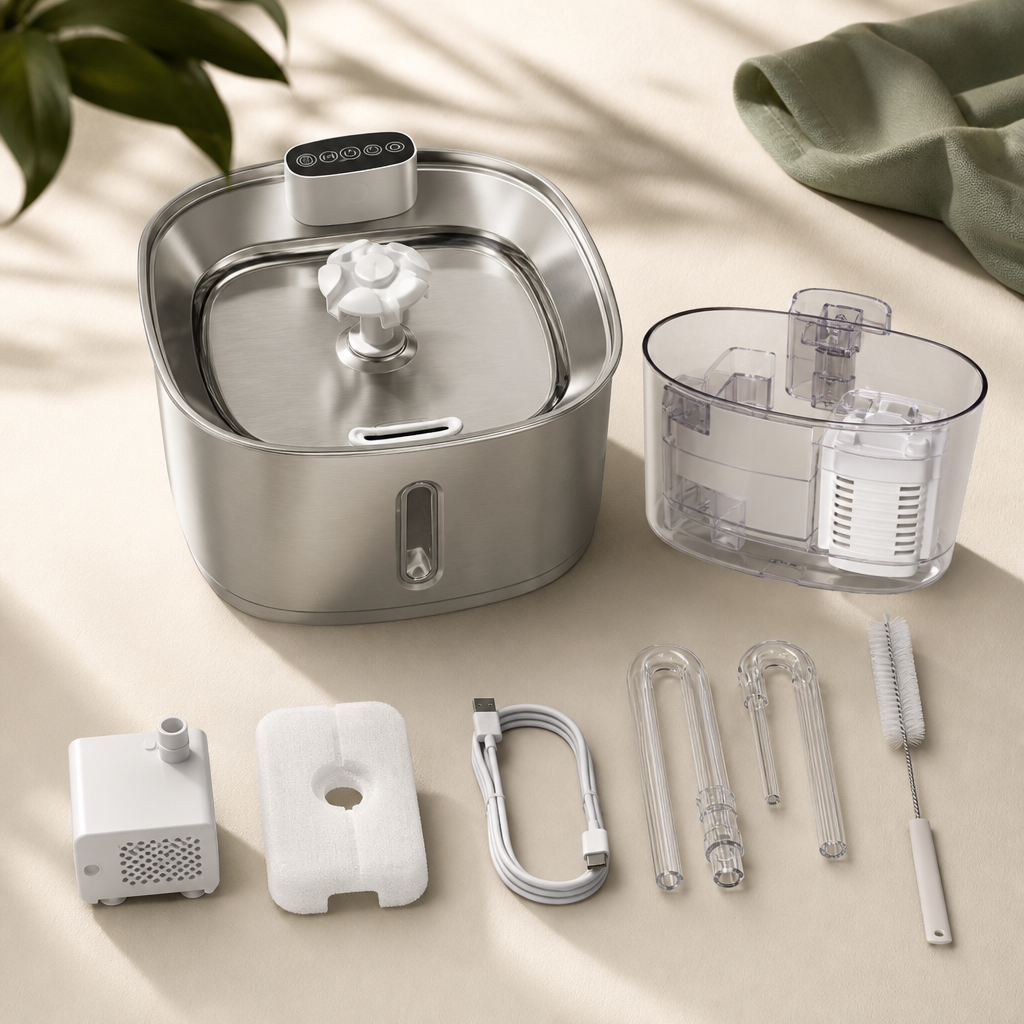
For a cordless stainless steel cat water fountain, the 3.2L Stainless Steel Cordless Cat Water Fountain is a $66.99 option with a stainless steel basin, 3.2 L capacity, rechargeable cordless design, Type-C charging cable, removable parts, included filter element, water pump, cleaning brush, and two nozzles.
For a lower-cost automatic filtered setup, the 3L Automatic Filtered Cat & Dog Water Fountain is $31.99 with a 3 L capacity, automatic circulating flow, removable design, automatic filtration, no app requirement, and standard or upgraded versions including an option with anti-dry-burn protection and light.
Whichever fountain you use, the maintenance principles are the same: keep water fresh, keep the pump quiet and submerged, scrub hidden wet areas, change filters before they sour, and always leave a backup bowl when your cat depends on a fountain.
Related Guides & Products
- pet-supplies — Top Picks
- How to Choose a Cat Water Fountain
- How to Clean Cat Water Fountain Parts
- Stainless Steel Cat Water Fountain vs Plastic
- 3.2L Stainless Steel Cat Water Fountain Review
- 3L Automatic Cat Water Fountain Review
- Are Cat Water Fountains Worth It? Maintenance Guide
- Best Quiet Cat Water Fountain Buying Guide
- Cat Water Fountain Filter Replacement: When and How
- Stainless Steel Cat Water Fountain Buying Guide
- 3.2L Stainless Steel Cordless Cat Water Fountain
- 3L Automatic Filtered Cat & Dog Water Fountain
Frequently Asked Questions
Why is my cat scared of the fountain?
The sound, vibration, moving water, new smell, or placement may feel unsafe. Keep the old bowl available, lower the flow, quiet the pump, and let your cat investigate without pressure.
Should I turn the fountain off at first?
Yes, for some cats. Let the cat sniff and drink from the still basin first, then turn on the lowest flow once the fountain no longer seems new or threatening.
How often should I clean it?
Refresh water daily, rinse high-contact areas every few days, and fully disassemble and wash removable parts weekly. Clean more often in multi-pet homes or with hard water.
Can a dirty filter make cats stop drinking?
Yes. A dirty or poorly seated filter can create odor, stale taste, and weak flow. Replace it when water smells off, looks dirty, or flow slows after cleaning.
Do cats prefer stainless steel fountains?
Many cats do well with stainless steel because it resists lingering odors and is easy to wipe clean. Shape, noise, flow, and cleaning access still matter just as much.
Is a backup bowl still necessary?
Yes. Keep a separate bowl available in case the pump stops, the fountain runs low, a filter clogs, or power is interrupted while you are away.