TL;DR: The Stainless Steel Floating Cat & Dog Water Bowl is a smart pick if you want a cat water bowl that feels sturdier than plastic and is less prone to splashing or tipping. Its stainless basin, floating drinking plate, 1.2 L and 3.2 L sizes, and 760 g weight make it practical for cats, small dogs, and multi-pet homes. It is not a fountain, and the floating plate adds one extra part to wash.
Verdict: a sturdy, low-mess cat water bowl with a practical floating plate
The Stainless Steel Floating Cat & Dog Water Bowl is a good buy for pet owners who want a cleaner, more stable drinking setup without moving to an electric fountain. At $32.99, it sits in the practical middle ground between a basic open dish and a powered waterer: you get a stainless steel basin, a floating drinking plate to slow splash and gulping, two useful capacity choices, and a more substantial 760 g build than many lightweight plastic bowls.
For a cat water bowl, the main appeal is control. Cats that paw at water, dogs that nose into a bowl too aggressively, and households tired of puddles around a shallow dish should benefit from the floating plate design. The plate limits how much open water is exposed at once, which helps reduce sloshing when the bowl is nudged. It also makes the bowl less inviting as a play basin for cats that like to scoop or splash.
This is also a strong option if you specifically want a cat water bowl stainless steel design because plastic bowls have started to smell, scratch, or feel harder to keep fresh. Stainless steel is the right material direction for owners who care about odor resistance and daily cleaning. The trade-off is that stainless can show water spots after washing, especially if you air-dry it, and the floating plate needs attention during cleaning rather than a quick rinse of only the basin.
Who it is for
This bowl makes the most sense for cats that drink from a dish but create mess around it, pets that tip or shove lightweight bowls, and homes that need a bigger water reserve than a tiny saucer-style bowl can provide. The 1.2 L option is the more compact pick for one cat or a cat-plus-small-dog setup. The 3.2 L option is better for multi-cat households, cats and dogs sharing a station, or owners who do not want to refill as often during the day.
It is also a good fit for anyone moving away from plastic. A stainless steel cat water bowl is generally easier to keep odor-neutral than a scratched plastic bowl, and this model’s basin gives it a more durable, utility-first feel. If your main problem is filling cat water bowl stations without splashing, placement and fill level matter too; our less-mess setup guide for filling a cat water bowl covers the simple adjustments that help reduce drips before the bowl ever reaches the floor.
It is not the best choice for cats that strongly prefer a wide, fully open water surface, or for owners who want flowing water to encourage reluctant drinkers. If your cat only drinks from a faucet or moving fountain, this non-electric bowl will not mimic that motion. It can still be worth trying for spill control, but its main job is cleaner still-water drinking, not active water circulation.
How we evaluate this bowl
We evaluate pet bowls by comparing verified specs, materials, build choices, value, and likely real-world use, then update our recommendations as owner feedback arrives. For this review, the important facts are straightforward: the bowl uses a stainless steel basin, includes a floating drinking plate, comes in 1.2 L and 3.2 L capacity options, weighs 760 g, and is intended for both cats and dogs. We also consider how those design choices solve common owner problems: low water interest, tipping, plastic odor, splashing from shallow rims, visible water residue, and limited capacity in multi-pet homes.
Key specs and design observations
Stainless steel basin
The stainless steel basin is the biggest reason to choose this over a cheap plastic dish. Stainless steel does not have the same soft, scratch-prone feel as plastic, and it is less likely to hold onto stale odors when cleaned regularly. That matters for cats because many are picky about smell. If a cat avoids a bowl after a few days of use, odor, residue, and water freshness are often part of the issue.
The natural stainless finish is the most utilitarian choice and the one we would pick for long-term practicality. Blue, white, and black finishes give you more style flexibility, but darker or glossier finishes can make dried mineral spots easier to notice. If visible water marks bother you, towel-drying after washing is the better habit than letting the bowl air-dry on the counter.
Floating drinking plate
The floating drinking plate is the feature that separates this from a regular metal cat water bowl. Instead of exposing the full water surface, the plate rises with the water and leaves a controlled drinking area. That helps with splash-prone pets and with bowls that get shoved across the floor. It also slows down enthusiastic drinkers because they cannot plunge their muzzle into a deep open pool.
For cats that paw at water, this can be a meaningful improvement. They still have access to water, but less of it is available to scoop out at once. For dogs, the benefit is similar: less muzzle-driven slosh, especially if the bowl is placed in a kitchen, laundry room, crate area, or near a pet feeding mat.
The honest downside is that a floating plate is another surface that touches water every day. It needs to be removed and washed so film does not build up around the edges or underside. If you want the absolute fastest cleaning routine, a one-piece stainless bowl is simpler. If you want cleaner floors, the extra part is a reasonable trade-off.
Two capacity options: 1.2 L and 3.2 L
The 1.2 L size is the better everyday choice for one-cat homes, apartments, and tighter feeding corners. It provides more useful volume than a tiny decorative saucer while staying manageable to lift, rinse, and refill. The 3.2 L size is the one to consider for multiple cats, a cat-and-dog household, or warmer rooms where water disappears faster.
Capacity matters because many owners underestimate how quickly a shared bowl gets low. A shallow bowl can look fine in the morning and be depleted or dirty by afternoon, especially in a multi-cat home. The 3.2 L option gives you more buffer, though it will naturally take more floor space and feel bulkier when full.
760 g weight and non-electric simplicity
At 760 g before water, this bowl has a more grounded feel than flimsy plastic dishes. Add water, and it becomes harder for a cat to casually bat aside or flip. It is not immune to determined pets, but the added mass helps address one of the most common complaints about water bowls: they slide, tip, and leave a wet feeding area.
The non-electric design is another strength. There is no pump to clean, no cord to route, and no filter schedule to manage. That makes it easier to place anywhere and safer for owners who do not want electronics near a pet’s water station. The trade-off is that it does not aerate or circulate water, so owners still need to refresh the bowl daily.
Finish and motif choices
The bowl comes in natural stainless, blue, white, and black, with elephant, bone, and dolphin top motif options. These decorative choices are secondary to performance, but they help if the water station sits in a visible kitchen or living area. The bone motif leans more dog-friendly visually, while the elephant and dolphin designs feel more neutral and playful.
If your priority is spill control, do not choose based only on the motif. Choose size first, then finish. The functional value comes from the stainless basin, floating plate, weight, and capacity—not the top decoration.
What it solves well
For cats that do not drink enough, this bowl helps most by improving the drinking station rather than by creating movement. Stainless steel avoids the odor issues that can make plastic bowls unappealing, and the cleaner, contained surface may be less off-putting than a messy shallow dish. It is not a magic hydration fix, but it removes some common barriers: stale plastic smell, dirty edges, low volume, and surrounding puddles.
For homes dealing with tipped bowls, the combination of 760 g weight and water volume is useful. A full 3.2 L version becomes notably more stable than a lightweight dish. For owners dealing with splash, the floating plate is the real answer. It reduces the amount of exposed water and makes it harder for pets to create a wave with one nose bump or paw swipe.
For multi-cat households, the 3.2 L option is the standout. Multiple cats often need more than one water point, but a higher-capacity central bowl can reduce refill stress. If you are building a full water station, our broader best cat water bowls roundup is useful for deciding whether this no-spill design should be your main bowl or one of several stations around the home.
Honest drawbacks
The first drawback is that this is not a fountain. If your cat is drawn to moving water, dripping faucets, or fountain flow, the floating plate will not provide that same stimulus. It may keep the area cleaner, but it will not create motion or sound to attract a reluctant drinker.
The second drawback is cleaning complexity compared with a plain bowl. A basic stainless bowl has one main surface. This one has a basin plus a floating plate, which means more edges and contact points to wash. Owners who skip that step may see residue develop faster around the plate than they would in an open one-piece bowl.
The third drawback is water spotting. Stainless steel looks clean and professional, but mineral marks can show after washing, especially in hard-water homes. The natural stainless version will be forgiving, but not invisible. White may hide some spotting better from a distance, while black can make dried water marks stand out.
The fourth drawback is size management. The 3.2 L version is the right pick for capacity, but a larger filled bowl is heavier to move and needs more floor space. If you have a narrow feeding nook or place bowls on a raised stand, the 1.2 L size may be the more realistic choice.
How it compares with related bowl styles
Compared with a plain open stainless bowl, this model is better for splash control and tip resistance but slower to clean. Compared with a plastic no-spill bowl, it has the material advantage: stainless steel is the better long-term pick for owners who dislike plastic odor or staining. Compared with an electric fountain, it is simpler and easier to place, but it does not circulate water.
It also makes a different promise than a flower water bowl for cats. Flower-style bowls and flower water for cats setups are often chosen because they look cute or mimic a fountain-like drinking point, but they are not always the best answer for spill-prone pets. If you are deciding between cute presentation and floor protection, our flower water bowl for cats comparison explains where decorative designs help and where a floating no-spill plate is more practical.
If the main household problem is a pet that shoves bowls, paws at water, or floods the mat, this stainless floating bowl belongs on the shortlist of metal cat water bowl alternatives for spill-prone pets. It is not the cheapest dish, but the $32.99 price is reasonable for a stainless, weighted, multi-size no-spill design that can serve both cats and dogs.
Best size and finish to buy
For one cat, we would start with the 1.2 L size unless you are away for long workdays or your cat shares with a dog. For two or more cats, the 3.2 L size is the better value because it directly addresses the capacity problem that small bowls create. In either size, the natural stainless finish is the safest practical pick because it matches the material and should age more gracefully than color-forward options.
Choose blue, white, or black if the bowl will sit in a visible space and you want it to coordinate with your home. Choose the motif based on taste, not expected performance. Elephant, bone, and dolphin tops are decorative differences, while the floating plate and stainless basin are the functional reasons to buy.
Bottom line
The Stainless Steel Floating Cat & Dog Water Bowl is a sensible upgrade for owners who want a cleaner, sturdier cat water bowl without committing to an electric fountain. Its stainless steel basin helps with odor and hygiene concerns, the floating plate addresses splashing, the 760 g weight improves stability, and the 1.2 L and 3.2 L options cover both single-pet and multi-pet homes. Buy it for spill control, material quality, and capacity. Skip it if your cat needs moving water or if you want the fastest possible one-piece cleaning routine.
Our Picks
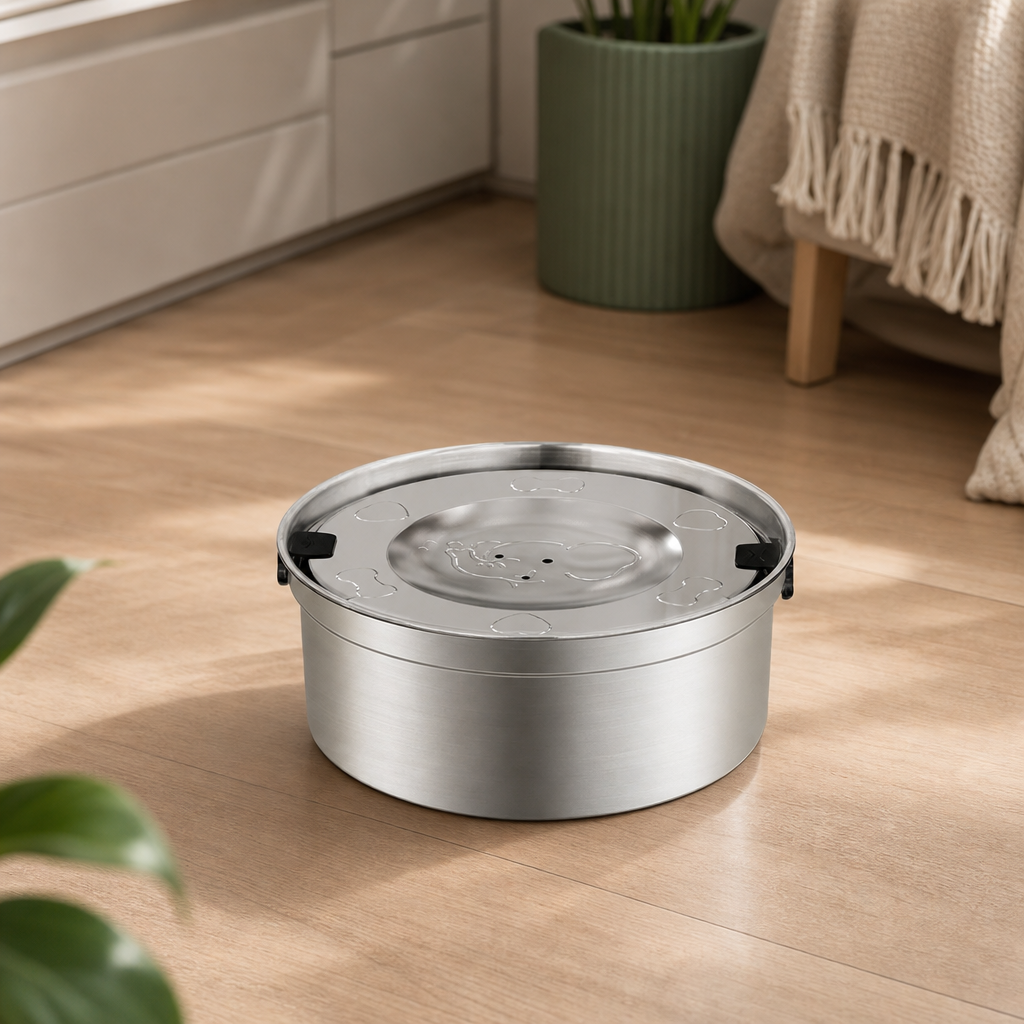
#1 Stainless Steel Floating Cat & Dog Water Bowl — $32.99
Best for: Splash-prone cats and multi-pet homes
- Stainless steel basin avoids plastic odor and is easy to rinse clean.
- Floating drinking plate helps limit splashing and exposed water surface.
- 1.2 L and 3.2 L capacity options suit single pets or multi-pet homes.
- The floating plate adds an extra part that needs regular cleaning.
- Stainless steel can show water spots if it is not wiped dry.
Material: Stainless steelCapacity Options: 1.2 L, 3.2 LProduct Weight: 760 gFinish Options: Natural stainless, blue, white, black
Related Guides & Products
- cat water bowls — Top Picks
- Metal Cat Water Bowl Alternatives for Spills
- Filling Cat Water Bowl: Less-Mess Setup Guide
- Flower Water Bowl for Cats: Cute vs Spill Control
- Stainless Steel Floating Cat & Dog Water Bowl
Frequently Asked Questions
Is this cat water bowl stainless steel?
Yes. It uses a stainless steel basin, which is a better choice than plastic if you want less odor retention and a more durable daily water bowl.
Which size should I choose?
Choose 1.2 L for one cat or a compact space. Choose 3.2 L for multiple cats, cat-and-dog households, or fewer refills during the day.
Does the floating plate stop spills?
It helps reduce splashing and sloshing by limiting the exposed water surface. It will not stop every determined pet, but it is better controlled than a shallow open bowl.
Is it good for cats that drink little?
It can help by offering a cleaner stainless surface and fresher-feeling setup, but it does not create moving water like a fountain.
Is it easy to clean?
It is straightforward, but not as fast as a one-piece bowl. The stainless basin and floating plate should both be washed regularly.
Will stainless steel show water spots?
Yes, it can show mineral spots after washing, especially in hard-water homes. Towel-drying helps keep the finish looking cleaner.