TL;DR: Most adults should use a water flosser once daily, ideally before brushing at night. Use a gentle setting at first, aim along the gumline, and empty and air-dry the tank after each session. Braces and food-trap areas may need extra rinsing after meals. Clean the tank weekly, descale monthly if needed, and replace worn nozzles, seals, or loose tips promptly.
A water flosser is easiest to keep up with when it becomes a short, repeatable daily habit. For most adults, the right answer to how often to use a water flosser is once per day. That is frequent enough to flush food debris from between teeth and around the gumline without turning the routine into a chore.
Use it as a supplement to brushing and regular flossing, not as a reason to skip all other oral care. The same basic routine applies whether you call it water picking, use a dental irrigator, or have heard people compare it with a Waterpik Aquarius water flosser; the maintenance steps below are about the device category, not one brand. For broader oral-care setup advice, see our best oral care guide.
Tools and supplies
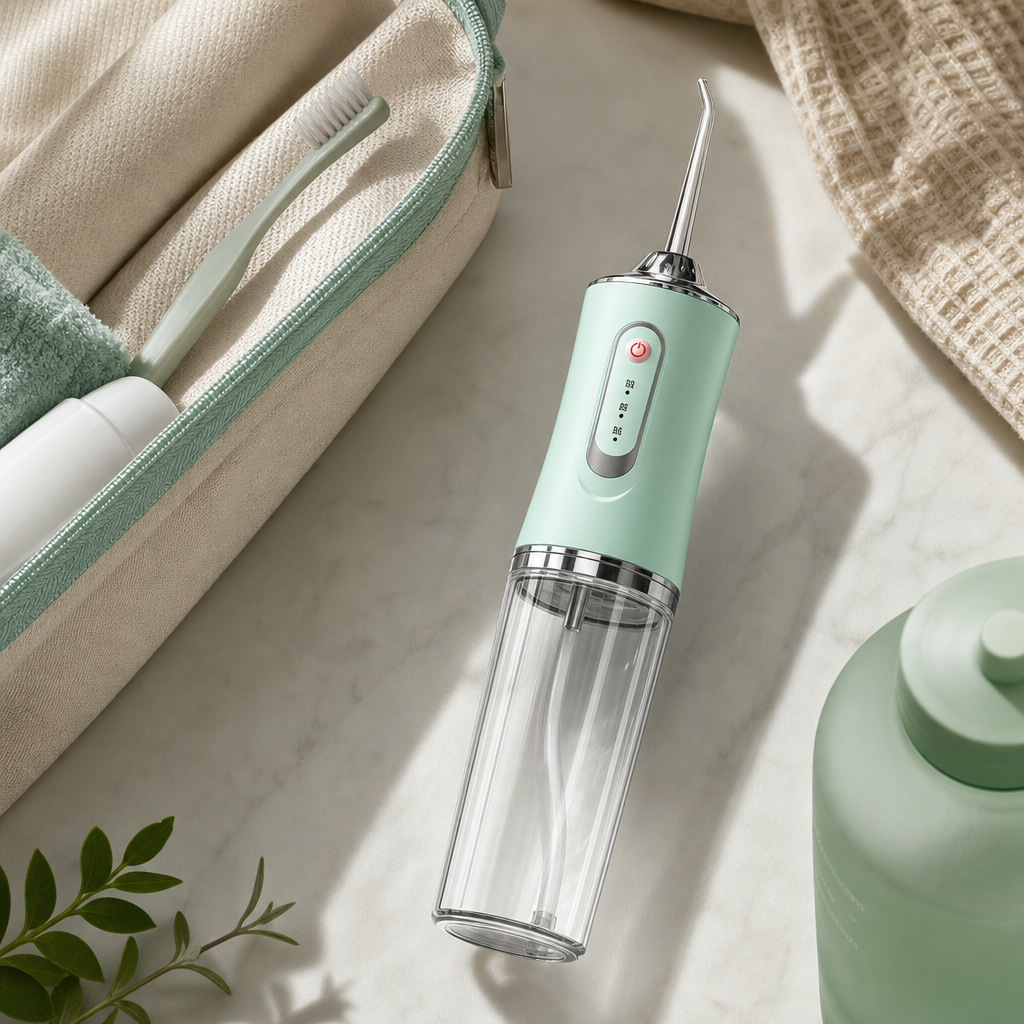
- Water flosser or oral irrigator
- Clean, lukewarm water
- Your regular nozzle tip
- Specialty nozzle, if used for braces or targeted cleaning
- Soft cloth or towel
- Mild dish soap for external cleaning
- Small cup for soaking removable tips
- White vinegar for occasional mineral-scale cleaning
Step 1: Use it once daily for routine cleaning
Use a water flosser once a day if your main goal is routine plaque disruption and food-debris removal. Night is the most practical time because it clears out what has collected during the day before you brush and sleep. Fill the tank with lukewarm water, attach the tip firmly, lean over the sink, and start with the lowest comfortable setting.
Aim for consistency before intensity. A daily low-to-medium setting used well is more useful than an occasional blast on high. Move slowly enough that the water jet has time to rinse the gumline, the spaces between teeth, and the back molars where food commonly hides.
Step 2: Add short extra sessions when food gets trapped
If you regularly get food stuck between teeth, around crowns, behind molars, or near orthodontic hardware, you can use a short extra rinse after meals. This does not need to be a full cleaning session. Fill enough water for the problem areas, use a comfortable setting, and rinse only the spots where debris collects.
This is especially helpful for people who struggle with toothpick or string-floss access. Do not keep increasing pressure just because a piece of food is stubborn. Pause, adjust the angle, and approach the space from the cheek side and tongue side. If you wear braces, follow a more specific routine like our water flosser for braces guide, because brackets and wires need a slower, more deliberate pass.
Step 3: Set pressure by comfort, not by maximum power
Start every new device, new tip, or new cleaning area on the lowest setting. Raise the pressure one level at a time only if the water stream feels too weak to remove debris. The correct setting should feel like a firm rinse, not a sting. If your gums feel sore after use, reduce the pressure and slow your movement rather than pressing the tip closer.
For sensitive gums, keep the tip slightly away from the gum tissue and trace the gumline instead of driving the jet directly into one point. Lukewarm water is usually more comfortable than cold water. If you are trying to balance comfort with cleaning power, our sensitive-gums water flosser comfort guide explains how to adjust angle, timing, and pressure without irritating tissue.
Step 4: Follow the same path every time
A repeatable route prevents missed spots. Start with the upper outside teeth on one side, move tooth by tooth to the other side, then repeat on the lower outside teeth. Next, clean the inside surfaces facing the tongue and palate. Pause briefly between teeth and spend extra time around tight contacts, back molars, and any food-trap areas.
Keep your lips partly closed around the tip to reduce splashing, but let water flow out into the sink. Hold the nozzle at roughly a right angle to the teeth for standard gumline cleaning. For spaces between teeth, angle the stream slightly into the gap, pause for a second, then continue. Avoid forcing the tip under the gumline.
Step 5: Use targeted care for tonsil-stone routines
A tonsil stone water flosser routine should be gentler and less aggressive than tooth cleaning. Use the lowest setting, stay in front of a mirror, and aim near the tonsil crypt area rather than stabbing the tissue with the tip. Short, controlled bursts are better than a continuous hard stream. Stop if the area feels painful or starts bleeding.
For many adults, tonsil-focused rinsing is not a daily necessity. Use it only when you are managing debris or odor-prone pockets, and keep the pressure low. If you want a dedicated technique, follow our safe water flosser for tonsil stones how-to before trying a stronger setting. This is one area where “more pressure” is not better maintenance.
Step 6: Empty the tank after every use
After each session, pour out leftover water. Do not store a water flosser with water sitting in the tank, especially if it lives in a warm bathroom. Standing water encourages odor, residue, and film inside the tank. Run the unit for a second after emptying to clear water from the internal channel and nozzle.
Remove the tip if your device allows it, rinse the tip under running water, and place it somewhere it can air-dry. Wipe the handle and exterior with a soft cloth. If water collects around the tank seam, charging port cover, or nozzle socket, dry those areas before storing. This simple habit helps prevent the common complaints of musty smell, mildew, and slippery buildup.
Step 7: Clean the tank weekly
Once a week, remove the tank if the design allows it. Wash it with warm water and a small amount of mild dish soap, rinse thoroughly, and let it air-dry before reassembly. For fixed tanks, add warm soapy water, shake gently with the cap closed, empty, and rinse several times until no soap remains.
Do not scrub with harsh abrasives inside the tank. A soft cloth is safer for exterior surfaces and seals. If the lid, cap, or fill door has grooves, wipe them carefully because toothpaste mist and bathroom dust can collect there. Weekly cleaning is also a good time to check that the nozzle locks firmly and the tank gasket sits flat.
Step 8: Descale monthly in hard-water areas
If you see cloudy residue, weaker flow, or white mineral film, descale the water path. Fill the tank with a mixture of warm water and a small amount of white vinegar, run part of the mixture through the device, let it sit briefly, then run the rest through. Follow with at least one full tank of clean water to rinse out the vinegar taste and smell.
Monthly descaling is a practical rhythm in hard-water homes. If your water is soft and the stream stays strong, you may only need it occasionally. Never use bleach or strong cleaners in the water path. They can leave residue and may damage seals, internal tubing, or the pump components that create the water jet.
Frequency guide by situation
- General adult oral care: Use once daily, preferably at night before brushing.
- Food trapped between teeth: Use once daily plus short spot-rinses after meals when needed.
- Braces or aligner attachments: Use once daily, with quick rinses after meals if food catches around brackets or attachments.
- Sensitive gums: Use once daily on the lowest comfortable setting; shorten sessions if tissue feels irritated.
- Tonsil-stone care: Use only as needed, on the gentlest setting, with controlled aiming.
- Travel: Use daily if you can clean and dry the tank; if drying is difficult, empty it fully and leave parts open to air as soon as possible.
When to replace nozzles and parts
Replace a standard nozzle every three to six months, or sooner if the tip looks worn, cracked, discolored, or loose. Replace specialty tips on the same schedule unless the manufacturer of your specific tip gives a shorter interval. A worn tip can spray unevenly, feel sharper on the gums, or fail to lock securely into the handle.
Replace the tank gasket or seal if you notice persistent leaking after the tank is seated correctly and the gasket has been cleaned. Replace a nozzle socket, tip, or handle assembly if the tip wiggles during use. Do not keep using a loose tip; it can pop out under pressure and make cleaning inconsistent.
Consider replacing the entire unit when the pump becomes weak after cleaning and descaling, the tank or body cracks, charging becomes unreliable, or water enters areas that should stay sealed. A cordless water flosser should hold enough charge for your normal routine; if it no longer gets through regular use even after a full charge, battery age may be the issue.
Troubleshooting common problems
If the pressure feels too strong
Lower the setting, use lukewarm water, and increase the distance between the nozzle and gum tissue. Keep the stream moving. Holding pressure in one spot is what usually causes irritation.
If the pressure feels too weak
Check that the tank has enough water, the tip is locked in place, and the inlet area is not blocked. Run a descaling cycle if flow has gradually weakened. Also check whether the battery needs charging on a cordless water flosser.
If the tank runs out too quickly
Use a more efficient path. Clean by quadrant, pause the unit while repositioning, and avoid letting water run while you look for the next area. Larger tanks reduce refills, but technique matters too.
If the unit leaks
Remove and reseat the tank. Wipe the gasket and tank edge, then check for hairline cracks around the fill door and base. Make sure the nozzle is fully clicked into place before turning the pump on.
If the body smells musty
Empty the tank after each use, run the pump briefly to clear leftover water, and store the tank open when possible. Wash the tank weekly and descale if mineral film is visible.
Related water flossers and guides
If you want a portable water flosser with a larger-tank option, the Portable Cordless Water Flosser with IPX7 Waterproofing is an adult cordless dental flosser with an IPX7 waterproof body, built-in rechargeable battery, piston pump, three cleaning modes or three-level adjustment depending on variant, more than 30 days of runtime, and large-tank variants over 400 mL. It weighs 347 g and starts at $29.99.
For a lighter home-use oral irrigator, the A8 Portable Cordless Water Flosser with IPX6 Waterproofing weighs 250 g net, uses a piston pump, has IPX6 waterproof protection, a built-in rechargeable battery, more than 15 days of runtime, and an under-300 mL tank. It starts at $24.99 and fits adults who want a compact, budget-minded portable water flosser.
For targeted oral cleaning around tonsil-stone-prone areas, the T956 Portable Oral Irrigator for Tonsil Stone Cleaning is an adult portable oral irrigator in a handheld 500 g format. Its design is focused on tonsil-stone cleaning, is fragrance-free, and can also be useful around braces. It starts at $36.99.
Related Guides & Products
- oral-care — Top Picks
- Best Portable Water Flosser Guide for Travel
- How to Use a Water Flosser for Braces
- Water Flosser for Sensitive Gums: Comfort Guide
- Water Flosser for Tonsil Stones: Safe How-To
- Waterpik Water Flosser vs Cordless Picks
- Which Dental Irrigator Should You Buy?
- Cordless Water Flosser Review: IPX7 Portable Pick
- T956 Oral Irrigator Review for Tonsil Stones
- A8 Portable Oral Irrigator Review: Budget Pick
- T956 Portable Oral Irrigator for Tonsil Stone Cleaning
- Portable Cordless Water Flosser with IPX7 Waterproofing
- A8 Portable Cordless Water Flosser with IPX6 Waterproofing
Frequently Asked Questions
Can I use a water flosser twice daily?
Yes, if your gums tolerate it. Use once daily for routine care, then add a short gentle session after meals only when food gets trapped.
Should I water floss before or after brushing?
Use it before brushing at night. Rinsing first clears loose debris so brushing can better contact tooth surfaces and the gumline.
Is daily use too much for sensitive gums?
Daily use is usually fine when the pressure is low and the water is lukewarm. If tissue feels sore, reduce pressure and shorten the session.
How often should I clean the tank?
Empty it after every use, rinse and air-dry daily, and wash the tank with mild soap about once a week.
When should I replace a nozzle tip?
Replace most nozzle tips every three to six months, or sooner if the tip cracks, discolors, sprays unevenly, or feels loose.
Can a water flosser help with braces?
Yes. It can rinse food from around brackets and wires, especially after meals. Use a controlled path and avoid excessive pressure.
This article is for general information only and is not medical or dental advice. Consult a licensed dentist or doctor for any health concern.