TL;DR: Yes, you can use diluted mouthwash in a water flosser if the liquid is thin, non-oily, and rinsed out afterward. Use a mild alcohol-free rinse when possible, dilute it with clean water, run it through briefly, then flush the tank, hose path, and nozzle with plain water. Do not use sticky, oily, abrasive, or whitening liquids in the device.
Using mouthwash in water flosser cleaning can be helpful when you want a fresher feel after removing food from between teeth, around braces, or near the gumline. The key is to treat mouthwash as a diluted rinse, not as a replacement for water or daily mechanical cleaning. A water flosser, dental irrigator, or oral irrigator works by moving liquid under pressure through a small nozzle. Anything that is too thick, sticky, oily, or harsh can leave residue, clog the nozzle, irritate gums, or make the tank harder to clean.
This guide keeps the process practical: what to use, how to dilute it, how to clean the device afterward, how often to do it, and when to replace nozzles or seals. If you are still deciding which device type fits your routine, our broader oral-care buying guide explains where a portable water flosser, cordless water flosser, dental flosser, and other tools fit in a daily routine.
Tools and Supplies
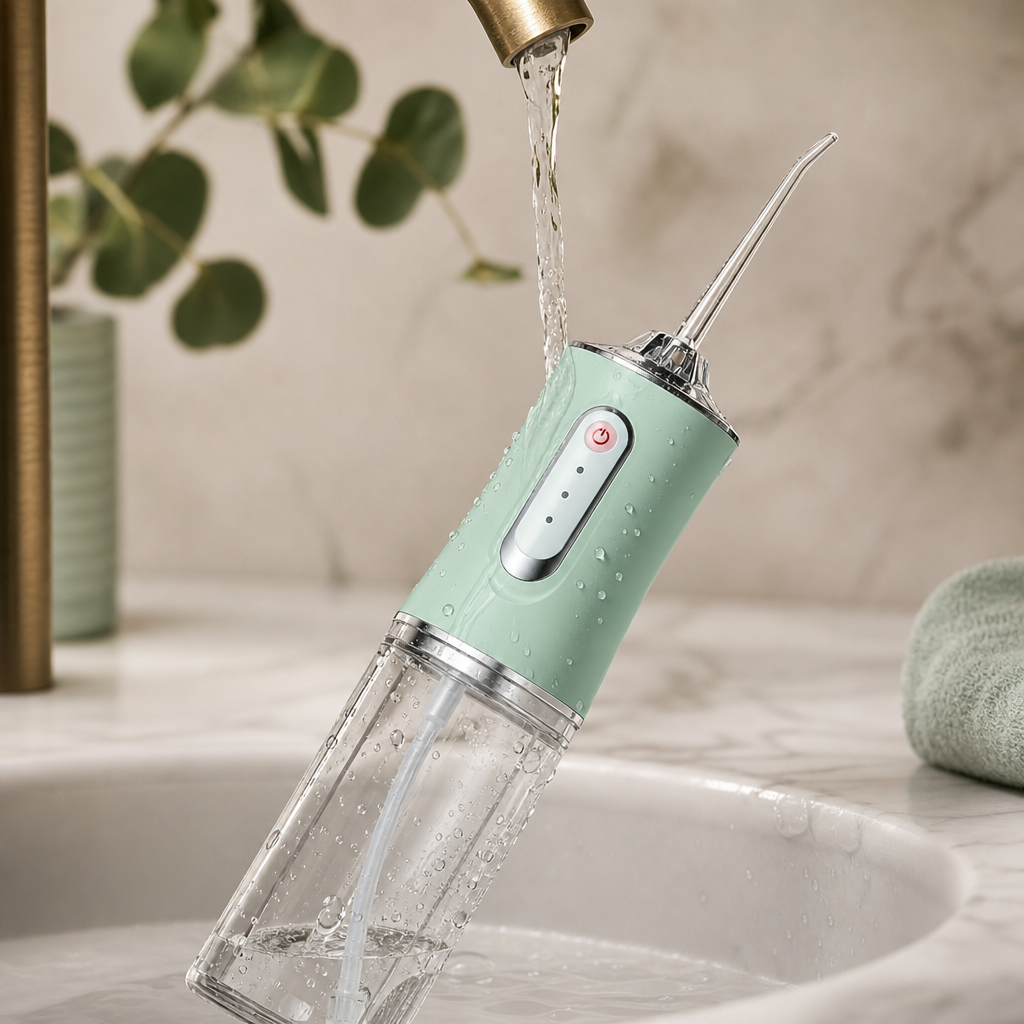
- Water flosser, dental irrigator, or oral irrigator
- Clean lukewarm water
- Mild liquid mouthwash, preferably alcohol-free
- Measuring cup or cap for dilution
- Clean towel
- Small soft brush or cotton swab for tank edges and nozzle seats
- White vinegar for occasional descaling
- Replacement nozzle tips when the current tip is worn, loose, cracked, or shared
Step 1: Check the Mouthwash Before It Goes in the Tank
Use only a thin liquid mouthwash that pours like water. A standard breath-freshening or fluoride rinse is the easiest type to flush through a water flosser. Avoid concentrated essential-oil blends, thick herbal rinses, foaming liquids, whitening gels, abrasive powders, salt crystals that have not fully dissolved, and any rinse that leaves a sticky film in the cup. Those materials can collect in the tank seam, nozzle channel, or pump path.
If the rinse has a strong burn in your mouth, it may feel more intense when delivered by a narrow water jet. That matters for people with sensitive gums, recent dental work, mouth ulcers, or irritation from braces. For comfort-first technique, use the lowest setting and follow the same gentle approach covered in our water flosser comfort guide for sensitive gums.
If you own a Waterpik water flosser, the same practical rule applies: use a thin diluted rinse, then flush the unit with plain water. This guide is not limited to one brand; it applies to most countertop and portable water flosser designs that use a tank, pump, and interchangeable nozzle.
Step 2: Dilute the Mouthwash With Water
Do not fill the entire reservoir with straight mouthwash for routine use. A diluted mix is easier on the pump path, easier to rinse away, and usually more comfortable on the gums. Start with one part mouthwash to three parts clean water. If your gums are sensitive, use an even weaker mix. If you are mainly looking for a fresh finish after regular water picking, you can use a small amount of mouthwash in a mostly full tank of water.
Use lukewarm water rather than hot water. Hot water can be uncomfortable in the mouth and may stress plastic components over time. Cold water is safe, but many people find it sharper against the gumline. Mix the liquid before pouring it into the tank so concentrated mouthwash does not sit directly against one area of the reservoir.
For a small-tank portable water flosser, a diluted mix also helps you avoid wasting rinse. If the tank runs out before you finish both arches, refill with plain water rather than adding more concentrated mouthwash. The cleaning action comes from the water jet and your technique; the mouthwash is only a supplemental rinse.
Step 3: Fill the Tank Without Overfilling
Remove the tank or open the fill port according to your device design. Pour the diluted mixture in slowly and stop before the tank is completely maxed out. Leaving a small air gap helps reduce spills when you close the cap, especially on a cordless water flosser that is tilted during use. Wipe the outside dry before turning the unit on so your grip stays secure.
Check that the fill cap is fully seated and that the tank is locked into the body. Many leak complaints come from a cap that is not snapped shut, a tank that is slightly misaligned, or a seal with trapped debris. If the nozzle feels loose, remove it and click it back into place before starting. A loose tip can spray unpredictably and make the pressure feel weaker than it actually is.
If your main frustration is cleaning food around brackets and wires, use the right angle and pressure before blaming the liquid. A flosser for braces works best when the stream is aimed along the gumline and around bracket edges, not blasted straight into the tissue. Our braces water-flossing guide walks through that technique in more detail.
Step 4: Start on the Lowest Comfortable Setting
Lean over the sink, place the nozzle in your mouth, close your lips lightly around it, and then turn the unit on. Start low. If the pressure is too strong, it can sting the gums and cause you to rush. If it is too weak, it may leave food behind between teeth or around orthodontic hardware. Increase gradually only after the stream feels controlled.
Trace the gumline one tooth at a time. Pause briefly between teeth where food commonly lodges. For braces, spend extra time around brackets, wires, and the back molars. For a general dental irrigator routine, work from the back teeth toward the front, then repeat on the inside surfaces. Let the liquid fall out into the sink instead of swallowing the rinse.
Do not aim a strong stream deep into periodontal pockets, extraction sites, or irritated tissue unless your dental professional has shown you how. Gentle water picking is useful for dislodging debris, but pressure is not a substitute for careful brushing, interdental cleaning, or professional care.
Step 5: Use Extra Caution Near the Tonsils
A water flosser for tonsil stones needs a much gentler technique than tooth cleaning. The tonsil area is soft, reactive tissue, and a strong jet can trigger gagging or irritation. If you are using a tonsil stone water flosser or oral irrigator for that area, use plain water first and keep pressure low. Mouthwash can feel harsh near the throat, especially if it contains alcohol or strong flavoring.
If you do use a diluted rinse near the tonsils, make it very weak and keep the nozzle away from direct contact with tissue. Aim around the tonsil crypt area rather than pressing into it. Short pulses are easier to control than a long continuous blast. For a safer technique sequence, see our water flosser guide for tonsil stones.
When comparing waterpik and tonsil stones advice online, focus less on brand names and more on pressure control, nozzle distance, and hygiene. A water flosser for tonsil stones should prioritize low-force rinsing and thorough device cleaning afterward.
Step 6: Empty the Tank Immediately After Use
Do not let leftover diluted mouthwash sit in the reservoir. Empty the tank as soon as you finish. Mouthwash residue can dry along seams, under the fill cap, and inside nozzle channels. That residue can contribute to odors, sticky buildup, moldy-looking film, and inconsistent spray.
After emptying, refill the tank with clean lukewarm water. Run the unit over the sink until the tank is empty or until the stream no longer smells like mouthwash. This flushing step is the most important maintenance habit when you put anything besides water into the device. It also helps prevent a sour smell in a portable water flosser that spends time in a toiletry bag or bathroom drawer.
Remove the nozzle and rinse it separately under running water. Shake out excess water from the tank and nozzle, then leave the pieces open to air-dry. Closing a damp tank right away traps moisture and makes the body harder to keep fresh.
Step 7: Clean the Tank, Nozzle Seat, and Seals Weekly
Once a week, give the device a more careful cleaning. Remove the tank if your model allows it. Rinse the tank with warm water, wipe the inside surfaces with a clean soft brush or cloth, and pay attention to corners where film can collect. Clean around the nozzle seat with a cotton swab or soft brush. This is where dried mouthwash, minerals, and toothpaste splatter often build up.
Inspect the rubber seals and fill cap. A seal that is twisted, dirty, or not seated evenly can cause leaks. Clean the area gently and press the seal back into its groove if it has shifted. Do not scrape seals with sharp tools; a nicked seal can leak even when the tank is properly attached.
For mineral buildup, run a mild vinegar-and-water rinse through the device occasionally, then flush thoroughly with plain water. Do not leave vinegar sitting in the tank for long periods, and do not mix vinegar with mouthwash or other cleaners. The goal is simple descaling, not chemical cleaning.
Step 8: Manage Pressure, Noise, and Travel Use
Pressure problems are often technique problems. If the stream feels too strong, lower the setting, soften your grip, and keep the tip moving. If it feels too weak, check the tank level, nozzle connection, battery charge, and any visible clogging at the tip. A partially clogged nozzle can make the stream uneven or noisy.
For travel, empty and dry the tank before packing. Remove the nozzle if the design allows, and keep it in a clean case or bag. Do not pack a device with mouthwash still in the tank; pressure changes and movement can force liquid through the cap or nozzle. If travel convenience is your priority, our portable water flosser travel guide covers what to look for in size, tank design, and battery setup.
Noise can increase when the tank is nearly empty, the nozzle is not seated firmly, or air is moving through the pump path. Refill the tank, reseat the tip, and run a short plain-water cycle. If the sound changes suddenly along with weak flow, inspect for clogs or a damaged tip.
How Often to Use Mouthwash in the Device
Plain water is the best daily default. Use the water flosser once a day if it helps you remove food debris between teeth, around braces, or along the gumline. Add diluted mouthwash only when you want a fresher finish or when your dental routine specifically calls for a rinse. For many users, a few times per week is enough.
If your gums feel tender, reduce the mouthwash concentration or switch back to water only. If you notice dryness, burning, or lingering irritation, stop using mouthwash in the tank and use it separately as a normal swish instead. The water jet does not need mouthwash to do its main job; proper aim and steady movement matter more.
For tonsil stone use, keep mouthwash use occasional and very diluted. Plain water is usually more comfortable near the throat. For braces, diluted mouthwash can be a useful final pass after food debris is cleared, but it should not replace brushing around brackets.
When to Replace Nozzles, Seals, and Other Parts
Replace the nozzle when the tip is cracked, bent, stained, rough at the end, loose in the handle, or producing a distorted spray. Also replace it if it has been dropped on an unclean surface and cannot be cleaned confidently. Do not share nozzle tips between people. A shared body is fine only when each person uses a separate tip.
Replace seals or caps when cleaning no longer stops leaking, when the rubber looks flattened or torn, or when the tank will not hold a reliable seal. If the tank itself is cracked, replace the tank or the unit rather than trying to patch it. A leaking tank can make pressure inconsistent and can allow moisture into places that should stay dry.
Consider replacing the device when battery runtime no longer supports your normal routine, when the pump output stays weak after cleaning and charging, when the charging port or body is damaged, or when the unit develops persistent odor even after thorough cleaning. A water flosser should be easy to rinse, dry, and keep sanitary. If maintenance becomes constant, replacement is usually the cleaner choice.
Common Mistakes to Avoid
- Using straight mouthwash every day: It can be harsh on gums and leaves more residue inside the device.
- Skipping the plain-water flush: This is the fastest way to create odor, film, and clogging.
- Using thick or oily rinses: These can coat the tank and nozzle path.
- Overfilling the tank: It increases spills and makes cordless use messier.
- Starting on high pressure: Strong pressure can irritate gums and make technique sloppy.
- Storing the unit wet and closed: Trapped moisture encourages buildup and musty smells.
Related
Portable Cordless Water Flosser with IPX7 Waterproofing — $29.99. This adult cordless water flosser has an IPX7 waterproof body, built-in rechargeable battery, piston pump, three cleaning modes or three-level adjustment depending on variant, and large-tank variants over 400 mL. Tankless three-mode variants include four nozzle tips.
A8 Portable Cordless Water Flosser with IPX6 Waterproofing — $24.99. This adult home-use oral irrigator uses a piston pump, IPX6 waterproof protection, built-in rechargeable battery, an under-300 mL tank, and a lightweight 250 g body with multiple nozzle bundle options.
T956 Portable Oral Irrigator for Tonsil Stone Cleaning — $36.99. This adult portable oral irrigator is built for targeted oral cleaning, including tonsil-stone-focused use, braces-adjacent cleaning, and handheld use in a fragrance-free white English-version configuration.
Related Guides & Products
- oral-care — Top Picks
- Best Portable Water Flosser Guide for Travel
- How to Use a Water Flosser for Braces
- Water Flosser for Sensitive Gums: Comfort Guide
- Water Flosser for Tonsil Stones: Safe How-To
- Waterpik Water Flosser vs Cordless Picks
- Which Dental Irrigator Should You Buy?
- Cordless Water Flosser Review: IPX7 Portable Pick
- T956 Oral Irrigator Review for Tonsil Stones
- A8 Portable Oral Irrigator Review: Budget Pick
- How Often to Use a Water Flosser: Daily Care Guide
- T956 Portable Oral Irrigator for Tonsil Stone Cleaning
- Portable Cordless Water Flosser with IPX7 Waterproofing
- A8 Portable Cordless Water Flosser with IPX6 Waterproofing
Frequently Asked Questions
Can mouthwash damage a water flosser?
Diluted thin mouthwash is generally manageable when flushed out afterward. Thick, oily, sticky, or abrasive liquids are the bigger problem because they can leave residue, clog the nozzle, or make the tank harder to clean.
Should I use mouthwash or water first?
Use water first for the main cleaning pass. If you want a fresher finish, use diluted mouthwash briefly afterward, then run plain water through the device to clear the tank and nozzle path.
Is alcohol-free mouthwash better for this?
Yes. Alcohol-free mouthwash is usually more comfortable when delivered by a water jet, especially for sensitive gums, braces irritation, or dry mouth. It also tends to feel less harsh near the gumline.
Can I use mouthwash for tonsil stones?
Use caution. Plain water on low pressure is usually more comfortable near the tonsils. If you use mouthwash, dilute it heavily, use short controlled pulses, and avoid pressing the nozzle into soft tissue.
Why does my tank smell after mouthwash?
Residue is likely drying inside the tank, cap, nozzle, or pump path. Empty the tank immediately after use, run a full plain-water flush, rinse the nozzle separately, and let all parts air-dry open.
How often should I replace the nozzle?
Replace the nozzle when it is cracked, bent, stained, rough, loose, or spraying unevenly. Also use separate nozzles for different people and replace any tip that cannot be cleaned confidently.
This article is for general information only and is not medical or dental advice. Consult a licensed dentist or doctor for any health concern.