TL;DR: Rinse the fountain daily, fully wash the basin and pump parts weekly, descale monthly if you have hard water, and replace the cat water filter on a steady schedule before it looks clogged. Keep water above the pump intake, clean hidden corners with a small brush, and replace worn seals, noisy pumps, cracked basins, or slimy tubing promptly.
A cat water fountain works only as well as its cleaning routine. Moving water can encourage cats that ignore a still bowl, but the same circulation also sends hair, saliva, dust, and minerals through the basin, pump, tubing, nozzle, and cat water filter. A practical schedule keeps the water fresher, protects the pump, and prevents the sticky biofilm and scale that make many fountains unpleasant after a few weeks.
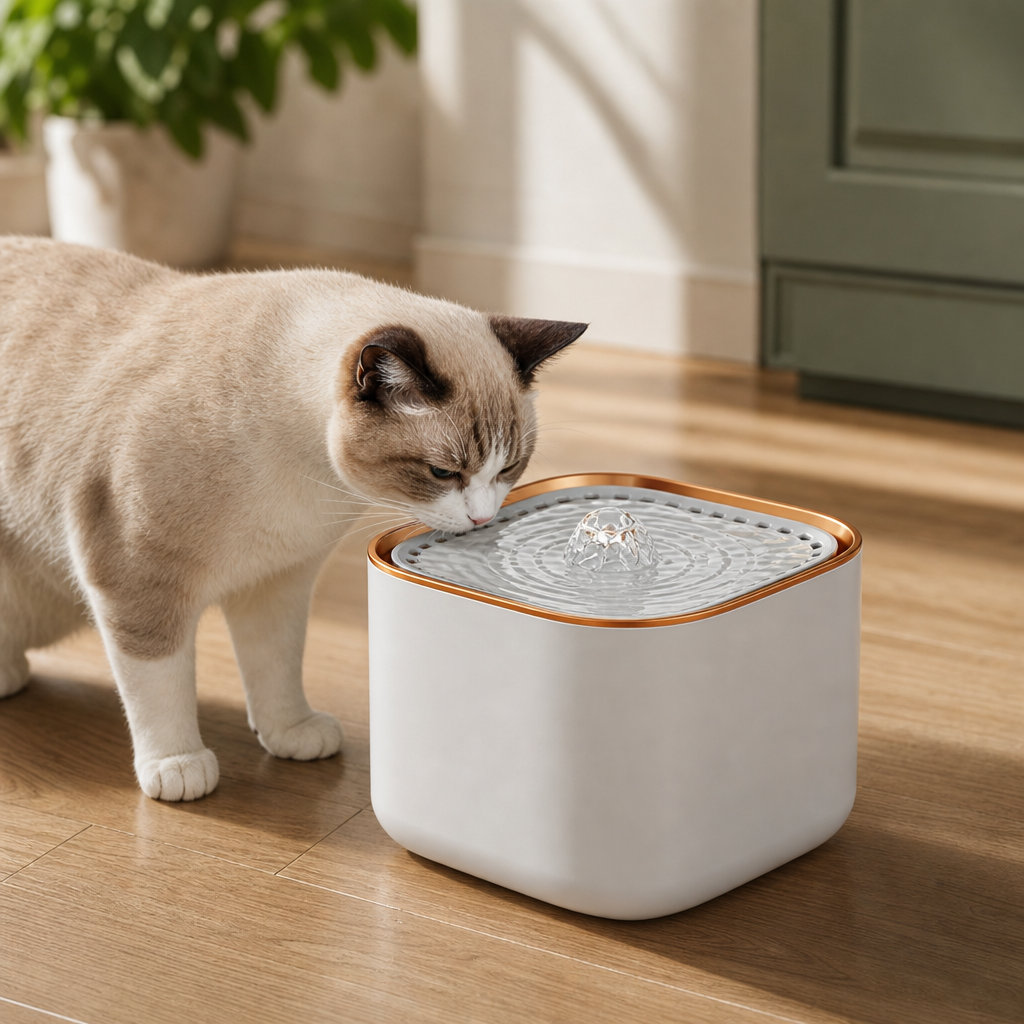
Use this guide for a typical cat drinking fountain, cat bubbler fountain, kitty water fountain, or feline water fountain, including stainless steel and plastic designs. If you are still comparing capacity, power type, and bowl material, start with our guide on how to choose a cat water fountain, then use the routine below to keep it running cleanly.
Tools and supplies
- Mild, unscented dish soap
- Warm water
- Soft sponge or microfiber cloth
- Small bottle brush or the fountain’s included cleaning brush
- Soft toothbrush for corners, pump cover, and nozzle openings
- White vinegar for mineral scale
- Clean towel or drying rack
- Fresh replacement cat water filter
- Optional: cotton swabs for tight pump slots and tube ends
Step 1: Unplug, power down, and empty the fountain
Turn the fountain off before touching the pump, control module, charging port, or any powered part. If the unit is cordless or rechargeable, power it down and move the control module away from the sink before washing the basin. Pour out all remaining water instead of topping it off over and over. Old water carries saliva, food crumbs, hair, and minerals that keep circulating through the cat pet water fountain.
Check the water level before you empty it. If the level has been dropping below the pump intake, the pump may pull air, vibrate, and sound louder at night. A noisy fountain water cat setup is often not a failed pump; it is often low water, trapped hair, scale, or an air pocket. If noise is the main issue, use this routine first, then compare symptoms with our cat water fountain noise fixes.
Step 2: Take apart every removable piece
Remove the lid, basin, pump cover, nozzle, spout, tubing, prefilter screen, and cat water filter. Do not wash the filter as if it were a permanent part; most fountain filters are consumables. Once they trap debris and odor, rinsing only removes loose surface material. It does not restore the internal media.
Separate the pump from the basin if the design allows it. Pull off the front cover and impeller cap carefully, then remove the impeller if it comes out without force. Hair frequently wraps around this small rotating part. That hair can slow water flow, create rattling, and make a cat water fountain seem weaker even when the basin is clean.
Keep small parts in one bowl or on a towel so they do not roll into the drain. This matters with two-nozzle designs and compact feline drinking fountain parts, where a missing tube, gasket, or nozzle can interrupt flow.
Step 3: Wash the basin, lid, nozzles, and tubing
Wash the basin and removable plastic or stainless pieces with warm water and a small amount of mild dish soap. Use a soft sponge on broad surfaces and a brush on seams, corners, spouts, and the tube that carries water back to the drinking area. Sticky film usually forms first in these low-visibility spots, not on the open floor of the basin.
For a stainless steel cat water fountain, use a nonabrasive sponge. Stainless steel is a strong choice for resisting odor and surface staining, but harsh scrub pads can leave scratches that make later cleaning harder. For plastic parts, avoid rough scrubbing for the same reason. Scratched plastic can hold residue and may become cloudy or tacky faster.
Rinse thoroughly until there is no soap scent. Cats are sensitive to odor, and a strong soap smell can make a water drinking fountain cats previously used become less appealing. If your cat suddenly stops drinking from the fountain after cleaning, scent residue is one of the first things to correct. For deeper part-by-part cleaning details, follow our companion guide on how to clean cat water fountain parts.
Step 4: Clean the pump and impeller gently
The pump is the part most likely to cause noise, weak flow, or sudden stoppage. Remove hair from the intake slots, pump cover, impeller well, and any small channel where water enters the motor housing. Use a soft toothbrush, bottle brush, or cotton swab. Do not dig into the pump with metal tools.
Rinse the impeller and pump cover under running water. If the impeller is magnetic, wipe away dark residue and mineral grit before reinstalling it. Make sure it spins freely when seated. A pump that looks clean outside can still chatter if the impeller chamber contains hair or scale.
After cleaning, reassemble the pump parts in the same order. If water flow is weak after reassembly, turn the pump off, remove the cover, and reseat the impeller. Also confirm that the tube is pushed fully onto the outlet. A loose tube can make the fountain splash, pulse, or circulate poorly.
Step 5: Descale mineral buildup monthly
White crust, cloudy film, and rough patches are usually mineral scale from hard water. Scale narrows water paths, roughens surfaces, and can make the pump work harder. Once a month, soak washable non-electrical parts in a mix of white vinegar and warm water for 15 to 30 minutes. Then scrub gently, rinse thoroughly, and dry.
Do not soak powered control modules, charging contacts, or any component that the manual identifies as non-washable. For a cordless or rechargeable fountain, keep the charging area dry and clean it only with a barely damp cloth when needed. Let all parts dry before reconnecting power.
If scale returns quickly, use filtered water in the basin. That does not replace the cat water filter inside the fountain, but it can reduce mineral deposits and slow buildup in tubing and pump channels.
Step 6: Replace the cat water filter on schedule
A cat water filter should be replaced before it becomes dark, slimy, misshapen, sour-smelling, or visibly clogged. The right interval depends on the number of pets, shedding level, water hardness, fountain size, and how often the basin is washed. In a one-cat home with regular weekly cleaning, many owners use a replacement rhythm of about every two to four weeks. Multi-cat homes, heavy shedders, and dusty rooms often need a shorter interval.
Before installing a fresh filter, rinse it under cool water until loose carbon dust or packing residue runs clear. Then seat it flat in the filter tray or slot so water flows through the media instead of around it. If the filter is crooked, the fountain may still circulate, but filtration will be less effective.
Do not stretch filter life to save money if the water starts smelling stale or the flow drops soon after cleaning. A clogged filter can restrict circulation and make the pump louder. For more detailed timing by household type, see our guide to cat water fountain filter replacement.
Step 7: Refill with fresh water and restart correctly
Reassemble the basin, pump, tube, filter, lid, and nozzle. Fill the reservoir to the recommended level before turning the fountain on. Starting the pump dry or with too little water can create noise and shorten pump life. This is especially important before bed, before leaving for work, or before a short trip.
Once the fountain is running, watch the water path for one minute. The stream should be steady, not sputtering. If the flow pulses, check for trapped air, a loose tube, a clogged nozzle, or a filter that is not seated correctly. If the fountain splashes, lower the flow if adjustable or try the alternate nozzle if the design includes more than one drinking outlet.
Place the fountain away from the litter box and away from food crumbs. Many cats prefer water that is not right next to food, and distance from litter helps keep dust out of the basin. A stable floor position also reduces vibration noise, especially for a stainless water fountain for cats sitting on tile or wood.
Step 8: Use a realistic cleaning frequency
Daily: quick refresh
Top off with fresh water, remove visible hair, and check that the pump intake stays covered. Wipe the drinking surface if you see food flecks or saliva film. This quick habit helps prevent the common complaint that the fountain feels slimy between full washes.
Every 2 to 3 days: light rinse when needed
If your cat sheds heavily, eats wet food, or dips a paw in the water, empty and rinse the basin more often. A cat fountain drinker used by multiple pets may need this midweek rinse even if the full teardown happens weekly.
Weekly: full wash
Disassemble the fountain, wash the basin, clean the pump cover and impeller area, scrub nozzles and tubing, and rinse all soap away. Weekly cleaning is the baseline for most cat drinking fountain setups.
Monthly: descale and inspect
Remove mineral buildup with a vinegar soak for washable parts, inspect the pump for noise or weak flow, and check seals, tubes, and plastic clips for wear. In hard-water homes, descaling may need to happen more often.
When to replace filters, pumps, tubing, and the fountain
Replace the filter when it looks clogged, smells stale, has visible slime, collapses, sheds particles, or no longer improves water clarity after a full cleaning. Replace tubing when it turns cloudy, stiff, cracked, or remains slippery after washing. Replace gaskets or seals when the fountain leaks, rattles, or no longer seats tightly.
Replace the pump when cleaning no longer restores steady flow, when the impeller rattles after reseating, or when the motor stops reliably starting. If a pump has been run dry repeatedly, it may become louder even after a careful cleaning. Pump strain is often preventable by keeping the reservoir filled and the intake clear.
Replace the whole fountain when the basin cracks, the powered module becomes unreliable, the drinking surfaces stay slimy after proper washing, or the design is too hard to disassemble often enough. The best cat drinking fountain for daily life is not just the one your cat likes; it is the one you can actually keep clean.
Maintenance tips for common problems
If your cat will not drink from the fountain
Rinse away all soap scent, try a gentler nozzle, move the fountain away from food and litter, and leave a familiar water bowl nearby during the transition. Some cats need several days to accept moving water, especially if the stream splashes or the pump hums.
If the fountain gets slimy fast
Shorten the wash interval, replace the filter sooner, and scrub all hidden water paths. Biofilm returns quickly when tubing, pump covers, or nozzle interiors are skipped.
If the pump is loud at night
Raise the water level, clean the impeller, check for trapped air, and set the fountain on a flat, stable surface. A soft mat under the fountain can reduce vibration, but it should stay dry and washable.
If you worry about outages or travel
Start with a full reservoir, clean the pump before leaving, and confirm that the water path runs steadily after reassembly. For longer absences, arrange a person to check water level and flow. A fountain is helpful, but it should not be the only water source when no one can inspect it.
Related fountains and filters we compared
For shoppers who want a removable stainless basin and cordless placement, the 3.2L Stainless Steel Cordless Cat Water Fountain is a 3.2-liter cat stainless steel drinking fountain with a rechargeable design, Type-C charging, automatic circulating water, an included filter element, a water pump, two nozzles, and a cleaning brush. Replacement filter cartridge options are available in 2-box and 5-box packs. Price: $66.99.
For a lower-cost automatic filtered option, the 3L Automatic Filtered Cat & Dog Water Fountain has a 3-liter capacity, removable design, automatic filtration, standard and upgraded versions, and a 6-piece replacement filter chip option. It is suitable for cats and dogs and does not require app support. Price: $31.99.
If you are comparing a stainless cat water fountain, a plastic kitty water fountain, or a larger water fountain for a cat household with multiple pets, our best cat water fountains roundup explains the main trade-offs in capacity, material, filtration, and power style.
Related Guides & Products
- pet-supplies — Top Picks
- How to Choose a Cat Water Fountain
- How to Clean Cat Water Fountain Parts
- Stainless Steel Cat Water Fountain vs Plastic
- 3.2L Stainless Steel Cat Water Fountain Review
- 3L Automatic Cat Water Fountain Review
- Are Cat Water Fountains Worth It? Maintenance Guide
- Best Quiet Cat Water Fountain Buying Guide
- Cat Water Fountain Filter Replacement: When and How
- Stainless Steel Cat Water Fountain Buying Guide
- Why Your Cat Won’t Drink From Water Fountain
- Cat Water Fountain Making Noise: Quick Fixes
- Best Cat Water Fountain for Multiple Cats
- Best Stainless Steel Cat Water Fountain Guide
- 3.2L Stainless Steel Cordless Cat Water Fountain
- 3L Automatic Filtered Cat & Dog Water Fountain
Frequently Asked Questions
How often should I replace a cat water filter?
For many homes, every two to four weeks is a practical rhythm. Replace it sooner if you have multiple pets, heavy shedding, hard water, odor, slime, or reduced flow.
Can I wash and reuse a fountain filter?
Rinse a new filter before use, but do not treat it as permanent. Once the media traps odor, hair, and debris, rinsing cannot fully restore filtration.
Why does my fountain feel slimy?
Slime is usually biofilm from saliva, food residue, and standing residue in corners. Wash the basin weekly and scrub tubing, nozzles, and pump covers.
How do I reduce pump noise?
Keep water above the pump intake, clean hair from the impeller, reseat the tubing, remove air pockets, and place the fountain on a stable surface.
Is vinegar safe for descaling fountain parts?
White vinegar works well on washable non-electrical parts. Soak, scrub gently, rinse thoroughly, and keep powered modules and charging contacts away from soaking water.
Should I use filtered water in the fountain?
Filtered water can reduce mineral buildup, especially in hard-water homes. It does not replace the fountain’s internal filter or regular cleaning schedule.