TL;DR: The best packing cubes for cruise organization are the ones you assign by access level: embarkation essentials, daily clothing, evening wear, shoes, laundry, and toiletries. Pack flat items in larger cubes, small items in smaller cubes, and dirty or damp pieces in separate pouches. For duffels, stack cubes vertically; for suitcases, build a stable bottom layer first.
Packing cubes for cruise travel solve two common problems at once: a messy suitcase and wasted space in a small cabin. The goal is not to cram every item into the tightest possible bundle. The goal is to make your luggage easy to open, easy to unpack, and easy to repack when the trip ends. Use this guide for packing cubes, package cubes, luggage packing cubes, and packing cubes in luggage whether you are using a carry-on, checked suitcase, weekender duffel, or garment bag.
If you are still deciding what cube sizes belong in your kit, start with our researched best packing cubes comparison, then use the layouts below to make the set work harder. These methods also work if you already own Peak Design packing cubes or Eagle Creek packing cubes; the layout matters more than the logo.
Tools and materials
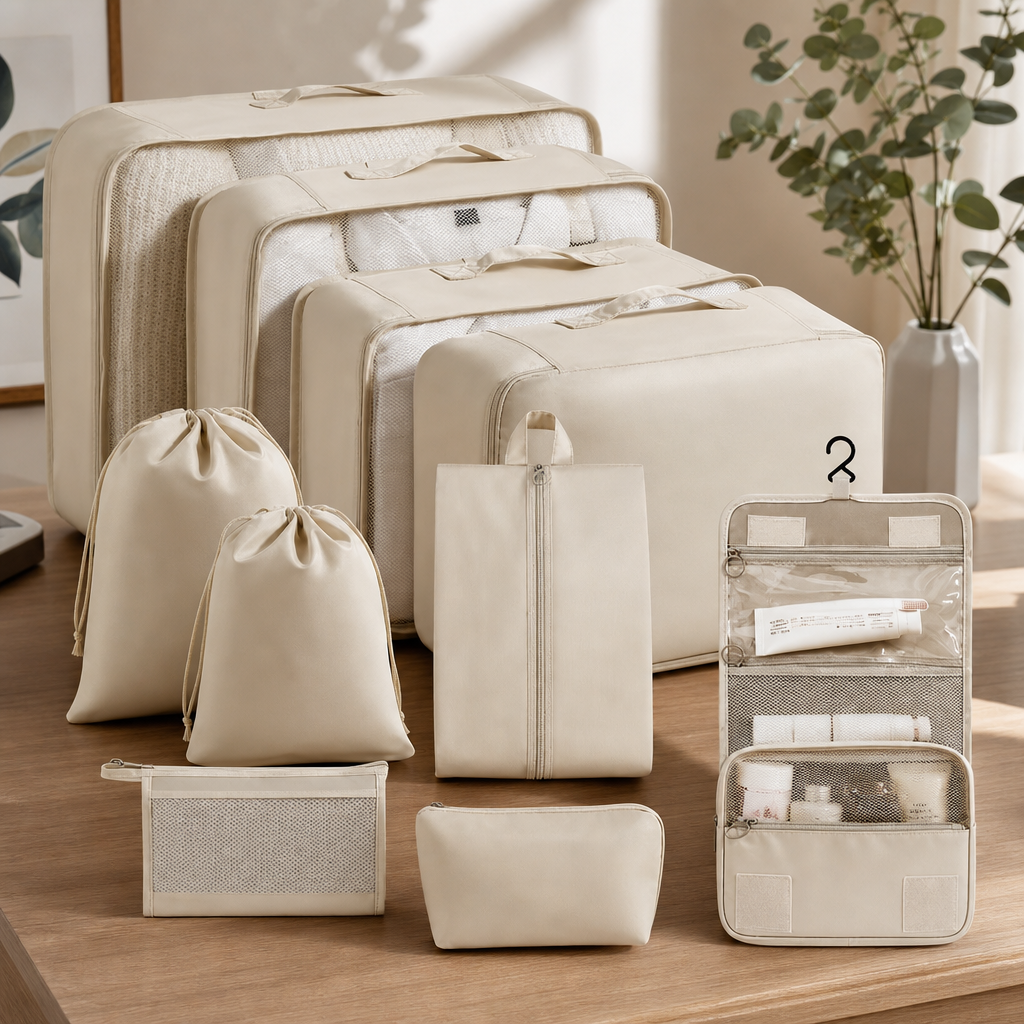
- 3 to 6 packing cubes in mixed sizes
- 1 slim pouch for toiletries or cosmetics
- 1 shoe bag or shoe cube
- 1 laundry bag or spare drawstring pouch
- 1 flat surface for sorting clothes
- Optional: compression packing cubes for bulky casual clothing
Step 1: Sort by access, not by outfit
Start by dividing everything into access groups. Make one group for first-day items, one for daytime clothing, one for evening clothing, one for underwear and socks, one for swimwear or gym wear, one for toiletries, and one for shoes. This is more useful on a cruise than packing complete outfits together because cruise days change quickly: breakfast, excursion, pool, dinner, and show seating may all require different clothing.
Put embarkation-day needs in the cube you can reach first. That usually means a change of shirt, swimwear, underwear, medication-adjacent personal items, sunscreen, and anything you want before your checked bag reaches the cabin. Keep this cube near the top of the suitcase or at the end of a duffel opening. If you are traveling with only a carry-on, use the same order and follow the placement tips in our guide to using packing cubes for carry-on luggage.
Use small cubes for underwear, socks, bras, and sanitary items. Use medium cubes for shirts, shorts, lightweight pants, and sleepwear. Use the largest cube only for items that stay relatively flat: folded dresses, sweaters, jeans, or family-shared items. Good packing cubes make categories visible and movable, so you should never have to dig through the entire suitcase to find one clean T-shirt.
Step 2: Build a cruise cabin layout before you zip the bag
A cruise cabin has limited drawer and shelf space, so pack cubes as if they will become mini drawers. The best layout is one cube per cabin zone. Put sleepwear and underwear in one cube, daytime clothes in another, dinner clothes in another, and swim or fitness items in a fourth. When you arrive, lift the cubes directly into drawers or onto shelves instead of unpacking every folded item.
For two travelers sharing one suitcase, assign colors or sides. One person gets the left half of the case or the darker cubes; the other gets the right half or lighter cubes. If you are packing for a family, give each traveler a small essentials cube and use larger shared cubes for bulk items like swimwear, pajamas, or casual shirts. This prevents the common cruise problem where one person’s socks and another person’s dinner clothes end up in the same pile.
Keep the toiletries pouch separate from clothing cubes. Even when a pouch uses water-resistant or waterproof travel fabric, bottles can loosen under pressure. Place liquids upright when possible, cap them tightly, and slide the pouch into a corner where it will not be crushed by shoes or hardcover items.
Step 3: Pack a duffel so cubes stand upright
Duffels are flexible, which is helpful in a car trunk or overhead bin but frustrating when loose clothes collapse into the center. Use packing cubes for travel as stiffening blocks. Set the heaviest cube on the bottom, usually pants, sweatshirts, or folded casual wear. Stand medium cubes upright like file folders along the length of the bag. Slide the underwear cube, toiletry pouch, and laundry pouch into the gaps at the ends.
Do not stack everything horizontally in a duffel unless the opening is very wide. A horizontal stack forces you to remove every layer to reach the bottom. A vertical file layout lets you pull one cube without disturbing the rest. If your duffel has a shoe tunnel or end pocket, use it for footwear only. If it does not, put the shoe cube at one end with soles facing away from clothing.
Compression packing cubes can help in duffels because soft-sided bags bulge easily. Use packing cubes that compress for fleece, T-shirts, casual shorts, leggings, and other forgiving fabrics. Avoid compressing structured dresses, linen, suit jackets, or anything with delicate trim. The best compression packing cubes are useful when they reduce puff, not when they turn every garment into a wrinkled brick.
Step 4: Fold dresses around a soft core
For dresses, create a soft core instead of folding each dress into a tight square. Lay the dress face down, smooth the shoulders, and fold the sides inward just enough to match the width of a medium or large cube. Place a rolled T-shirt, scarf, or soft pajama top across the waist area. Fold the skirt upward over the soft core, then fold the top down. This reduces hard crease lines across the bodice and skirt.
Pack the dress cube flat near the top of the suitcase. Do not put shoes, toiletry bags, hair tools, or heavy electronics on top of it. If you are packing several dinner outfits, alternate fabric direction so seams and waistbands do not all stack in the same place. A garment packing cube works best when the clothing has room to lie flat inside the cube rather than being forced into a small organizer.
For formal cruise nights, use one cube only for evening wear and accessories. Place belts, soft wraps, and non-fragile accessories along the edges. Keep jewelry in a separate small pouch, not loose in the cube, so it does not snag fabric. When you reach the cabin, open the cube immediately and hang wrinkle-prone pieces while the rest of your cubes stay closed.
Step 5: Isolate shoes and sole contact
Shoes need their own system because soles carry grit, moisture, and odor. Put each pair heel-to-toe in a shoe cube or shoe bag. If space is tight, fill the inside of clean shoes with socks, belts, or small soft items. Never put cosmetics, underwear, or light-colored fabric directly against shoe soles.
Place shoes along the wheel end of a rolling suitcase or at the bottom of a duffel. This keeps weight low and prevents the bag from tipping. For cruises, plan around actual use: one walking pair, one dinner pair, and one sandal or pool shoe pair is usually more manageable than several specialty pairs. If you need more ideas for keeping footwear from dirtying clothes, use our researched guide to shoe packing cube ideas for cleaner luggage as a checklist before you load the bag.
After beach days or rainy excursions, let shoes air out before putting them back into the cube. If they must go in damp, separate them from clothing and open the shoe cube as soon as you return to the cabin. Do not trap damp shoes in a sealed suitcase overnight.
Step 6: Use compression only where it helps
Compression is not automatically better. Standard luggage cubes for packing are best for organization, speed, and clean separation. Compression packing cubes are best for bulky, soft, low-wrinkle items. Use them for sweatshirts, knits, activewear, pajamas, children’s clothes, and casual layers. Skip compression for dresses, pressed shirts, blazers, structured pants, hats, and anything that needs to hold shape.
When closing compression zippers, press evenly across the cube with one hand while guiding the zipper with the other. Stop if fabric catches. Do not pull the zipper around a packed corner by force; that is how seams, zipper teeth, and pull tabs fail. The practical test is simple: if the compressed cube becomes hard, lumpy, or bowed, remove one or two items and close it again.
Online searches for the best rated packing cubes, top rated packing cubes, best packing cubes compression options, or compression packing cubes best picks can be useful for narrowing choices, but the packing method still decides how well the bag works. A moderately filled cube with a clear purpose usually performs better than an overstuffed cube with no category.
Step 7: Load cubes into luggage in weight order
For a rolling suitcase, put the heaviest cubes near the wheels: jeans, shoes, sweaters, and toiletry pouches. Put medium-weight clothing in the center. Put dresses, shirts, and first-day essentials near the top. This keeps the suitcase balanced and reduces crushing. If the suitcase has one deep side and one shallow lid side, use the deep side for cube stacks and the lid side for flat items, sandals, or laundry bags.
For a clamshell suitcase, treat each half as a zone. One half can hold clothing cubes; the other can hold shoes, toiletries, accessories, and laundry. Use the suitcase straps over the cubes, not under them, so the cubes stay seated when the bag is opened upright. If you use packing cubes in luggage with mesh or fabric panels, face the most identifiable side upward so you can spot the right cube quickly.
For a cruise, finish by placing the embarkation cube last. You should be able to unzip the bag, grab that cube, and close the bag again without exposing everything else. This one habit prevents most cabin-floor explosions on the first afternoon.
Step 8: Maintain cubes during the trip
Once aboard, give every cube a job and keep that job consistent. Clean underwear returns to the underwear cube. Worn clothing goes into the laundry bag. Damp swimwear dries before it enters any cube. Toiletries stay in the toiletry pouch. Shoes stay isolated. The system fails only when categories start mixing.
Use the empty suitcase as overflow storage if the cabin has limited drawers. Keep less-used cubes in the suitcase under the bed, and keep daily cubes in drawers or on shelves. Every two or three days, reset the cubes: refold loose items, move dirty pieces to laundry, and check that damp items are not trapped. This takes only a few minutes and keeps the cabin from turning into a pile of clothing.
On the final night, pack in reverse order. Laundry and shoes go in first, heavy clothing next, clean remaining clothing after that, and the next-day outfit on top. Keep documents, medication, chargers, and disembarkation clothing outside the checked bag if your luggage will be collected overnight.
Frequency guidance
Before every trip, inspect cube seams, zipper movement, and fabric corners. Wipe interiors if toiletries, cosmetics, or shoes were stored inside on the previous trip. After each cruise or long trip, empty every cube completely, shake out lint and sand, and air the cubes before folding them for storage.
During travel, reset the system every two to three days. On beach or excursion-heavy trips, check shoe and laundry cubes daily for moisture. At home, store cubes uncompressed and fully dry. Foldable cubes can be flattened, but do not store them under heavy items that permanently crease the zipper track or deform corners.
When to replace parts
Replace a cube when the zipper skips teeth, separates after closing, or requires force on normal loads. Replace it when seams open at stress points, when fabric corners thin enough to show light, or when odor remains after airing and cleaning. Replace shoe cubes sooner if sole grit has worn through the lining or if moisture has damaged the fabric.
Retire a toiletry pouch if the lining peels, corners leak residue, or zipper pulls become unreliable. For compression packing cubes, replace them when the compression zipper no longer tracks smoothly or the cube stays distorted even when empty. A worn cube can still be used for closet storage, but it should not be trusted for a cruise itinerary where repacking has to be fast.
Related
For a lightweight, foldable option, the Foldable Polyester Travel Packing Cube Set costs $33.99 and uses polyester twill-style fabric in cube-style organizers. It comes in 7-piece, 8-piece, 9-piece, 10-piece, and 11-piece configurations, with color options including beige, gray, pink, black, navy, and lake blue.
For more variant choices, the Twill Travel Packing Cube Organizer Set costs $31.99 and uses twill cloth with waterproof travel fabric. It includes regular, makeup, digital, toiletry, drawstring, and three-compartment shoe-box variants across 7-piece through 11-piece set types, with solid colors and patterned options.
Related Guides & Products
- Best Packing Cubes — Top Picks
- Best Compression Packing Cubes Buyer’s Guide
- How to Use Packing Cubes for Carry On Luggage
- What to Look for in a Packing Cube Set
- Cute Packing Cubes for Easier, Tidier Travel
- Shoe Packing Cube Ideas for Cleaner Luggage
- Foldable Polyester Packing Cubes Review
- Best Packing Cubes: Two Budget Sets Compared
- Packing Cubes for Travel: Twill Organizer Review
- Foldable Polyester Travel Packing Cube Set
- Twill Travel Packing Cube Organizer Set
Frequently Asked Questions
How many cubes for a cruise?
Most travelers do well with four to six cubes: one for underwear, one for daytime clothes, one for evening wear, one for swim or activewear, plus separate shoe and laundry storage.
Are compression cubes good for cruises?
Yes, but use them selectively. They work best for soft casual clothing, pajamas, knits, and kids’ clothes. Avoid compressing dresses, blazers, linen, or pressed shirts.
How should shoes fit in luggage?
Pack shoes heel-to-toe in a shoe cube or bag, then place them near the wheel end of a suitcase or the bottom end of a duffel.
Should cubes be unpacked onboard?
Usually, yes. Move cubes directly into drawers or onto shelves. They act like mini drawers and keep the cabin neater throughout the cruise.
How do I prevent cube odor?
Keep damp items out, air cubes after each trip, isolate shoes, and move worn clothing into a laundry bag instead of mixing it with clean clothes.