TL;DR: Choose a dental water jet by matching the water stream to your main problem: braces, tight tooth gaps, sensitive gums, travel, or tonsil-stone care. Prioritize adjustable pressure, a tank size that fits your routine, waterproofing that suits bathroom use, secure nozzles, and realistic battery life. Most good portable options cost $25–$45; premium countertop systems typically run $60–$120.
A dental water jet is best understood as a targeted rinsing tool, not a total replacement for brushing or traditional floss. It uses a focused stream of water to flush food debris from tight tooth gaps, around braces, along the gumline, and, with extra care, near tonsil-stone-prone areas. The right choice depends less on flashy claims and more on six practical details: pressure control, tank size, waterproofing, nozzle stability, battery life, and how easy the body is to keep clean.
In our broader oral-care recommendations, we compare portable oral irrigators by the things that actually affect daily use: whether the stream is controllable, whether the tank forces constant refills, whether the device is comfortable to hold, and whether the design makes sense for a small bathroom or travel bag. If you are comparing a Waterpik water flosser—whether countertop Aquarius, cordless, or for tonsil stones—the same buying rules apply: choose the format and pressure behavior that fit your mouth, not just the biggest name.
Quick-reference picks and decision table
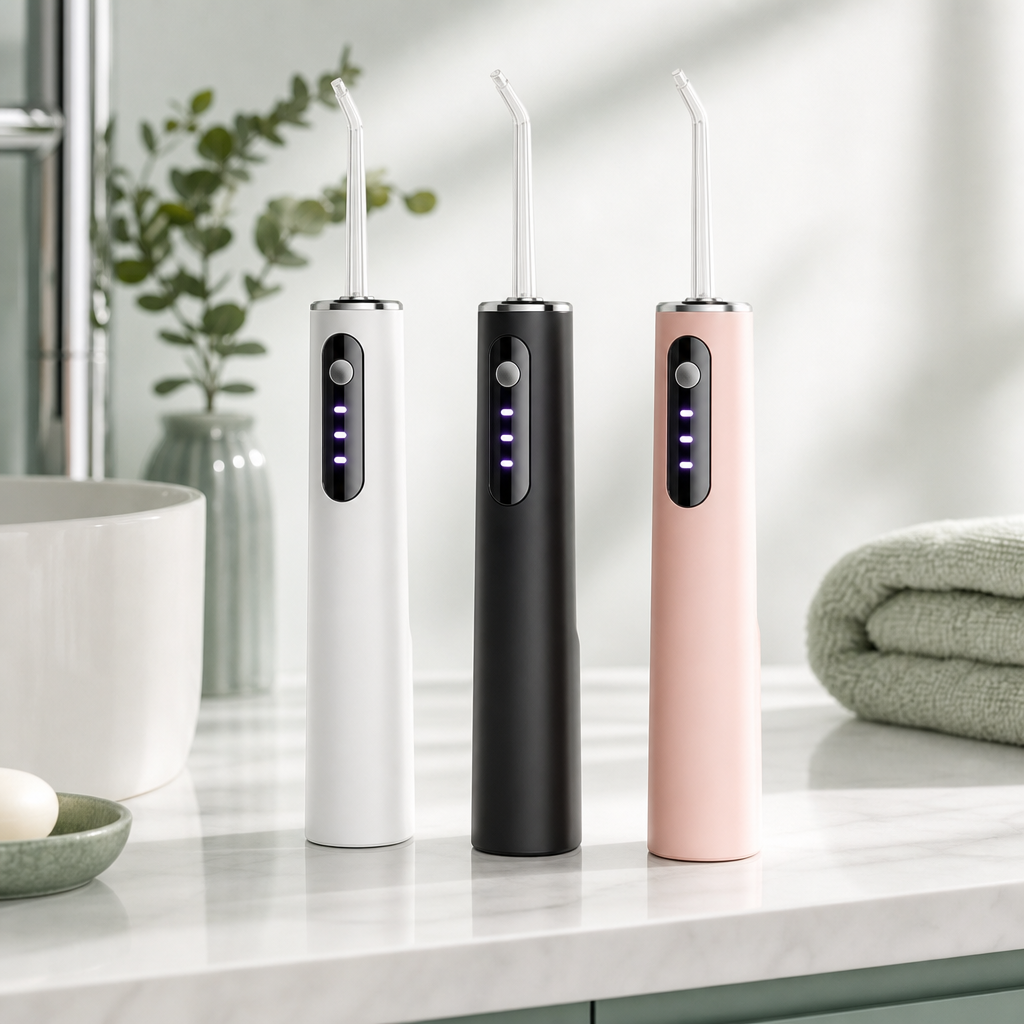
| Need | What to look for | Product example | Why it fits |
|---|---|---|---|
| Lowest-cost portable dental flosser | Light body, rechargeable battery, basic water resistance | A8 Portable Cordless Water Flosser, $24.99 | At 250 g net weight with IPX6 waterproofing and more than 15 days of runtime, it is a practical budget pick for adult home use and short trips. |
| Better tank capacity and daily convenience | Long runtime, larger-tank option, multiple cleaning modes | Portable Cordless Water Flosser with IPX7 Waterproofing, $29.99 | Its IPX7 body, piston pump, more than 30 days of runtime, and more than 400 mL capacity on large-tank variants make it easier for full-mouth cleaning. |
| Tonsil-stone-focused rinsing | Targeted handheld stream, adult use, controlled positioning | T956 Portable Oral Irrigator, $36.99 | The 500 g handheld format is built around targeted oral cleaning and a tonsil-stone-focused use case. |
| Braces and appliance cleanup | Multiple modes, stable nozzle, enough tank volume | IPX7 cordless model or A8 | Both use a portable cordless format, useful when food catches around brackets and wires. |
1. Cleaning target: teeth, braces, or tonsil stones
Start with the job you need the dental water jet to do. Tight tooth gaps and gumline debris call for a narrow, steady stream that you can guide slowly between teeth. Braces need even more control because food gets trapped around brackets, under wires, and near molar bands. If braces are the main problem, prioritize a cordless water flosser with multiple modes and enough tank capacity to finish a full pass without rushing; our guide to using a water flosser for braces explains the angle and sequence that make water picking more effective around hardware.
Tonsil-stone use is different. A tonsil stone water flosser should be treated as a gentle, targeted rinsing tool, not a pressure washer for the throat. The T956 Portable Oral Irrigator for Tonsil Stone Cleaning is the most purpose-specific option here because its feature set centers on targeted oral cleaning and tonsil-stone-focused use. Its 500 g weight gives it more heft than the lightest travel units, which can be a plus when you want steady hand positioning. For a water flosser for tonsil stones, control and patience matter more than maximum force.
2. Pressure control and gum comfort
The most common frustration is simple: the stream is too strong and irritates the gums, or too weak and leaves debris behind. That is why pressure control matters more than raw power. A useful oral irrigator should let you start low, trace the gumline, and increase only when your mouth tolerates it. If you have sensitive gums, gum recession, recent dental work, or a history of bleeding, avoid jumping straight to the most aggressive setting.
The Portable Cordless Water Flosser with IPX7 Waterproofing offers three cleaning modes or three-level adjustment depending on variant, which is exactly the kind of range most adults should look for. The A8 also uses a piston pump water flow and a cordless handheld design, making it a reasonable entry point, but its smaller under-300 mL tank means you may refill more often during a slower, low-pressure routine. A good dental irrigator should make gentle cleaning feel possible, not force you into an all-or-nothing spray.
3. Tank capacity and refill rhythm
Tank size directly affects whether you will use the device every day. A small tank is easier to pack and keeps the handle lighter, but it can interrupt a full cleaning session. If you are mainly clearing one or two trouble spots after meals, a compact tank is fine. If you are cleaning the full gumline, braces, and back molars, a larger tank is worth the extra bulk.
The A8 keeps weight low at 250 g net with a water tank under 300 mL, which makes sense for travel, small bathrooms, and quick maintenance. By contrast, the Portable Cordless Water Flosser with IPX7 Waterproofing includes large-tank variants with more than 400 mL capacity, a better match for users who dislike stopping mid-session. Its tankless three-mode variants also include four nozzle tips, which can be useful if multiple adults need separate tips or if you want a spare ready.
How to judge it: choose under-300 mL if portability is your top priority, and move above 400 mL if you want fewer refills for braces, full-mouth gumline work, or longer water picking sessions.
4. Waterproofing, leaks, and nozzle security
Bathroom electronics live around wet counters, wet hands, and quick rinses, so waterproofing is not a minor spec. IPX6 protection, as found on the A8, is appropriate for splash-heavy bathroom use. IPX7, as found on the larger cordless model, gives stronger water-resistance headroom for a device that will be rinsed frequently and handled near sinks and showers. Neither rating excuses sloppy maintenance, but both are meaningful design cues.
Leakage and loose nozzles are usually more annoying than people expect. A leaky body wastes tank volume, makes the handle slippery, and can turn a two-minute routine into cleanup. A loose nozzle makes aiming harder, especially around braces or tonsil pockets. Before buying any portable water flosser, look for a design with interchangeable nozzles that seat firmly and a tank interface that closes cleanly. After use, empty the tank, run a short burst of clean water if you used anything other than water, and let the device dry open when possible.
5. Battery life, charging, and travel weight
For travel, battery life and weight are as important as cleaning power. A portable water flosser that dies mid-trip is the kind of product people stop using. The A8 has a built-in rechargeable battery rated at 500–800 mAh with more than 15 days of runtime, and its 250 g net weight makes it the easiest of these three to justify in a toiletry bag. The IPX7 cordless model steps up to a built-in rechargeable battery rated at 1200 mAh–2000 mAh with more than 30 days of runtime, while still staying manageable at 347 g.
The T956 weighs 500 g, so it is less of an ultralight travel pick and more of a targeted home-and-trip oral irrigator for adults who specifically care about tonsil-stone rinsing. If you want one device for travel, braces, and general gumline cleaning, the IPX7 cordless option is the most balanced on paper. If price and weight matter most, the A8 is the leaner choice.
6. Cleaning upkeep, mold resistance, and noise expectations
Any dental water jet can become unpleasant if water sits in the tank or residue collects around the nozzle port. Mold risk is mostly about habits and design: empty the tank, detach or open what can dry safely, and store the device upright in a ventilated area. A fragrance-free product, like the T956, is also preferable for users who do not want scented materials near the mouth.
Noise is harder to judge from specs alone, but pump type and construction give clues. The A8 and IPX7 cordless model both use piston pumps, a common design for portable water flossers because it can create pulsed flow from a compact body. Expect a noticeable bathroom-device sound rather than silence. If noise sensitivity is a major concern, choose a model with multiple modes so you are not forced to use the strongest setting late at night.
Common mistakes to avoid
Buying only for maximum force. Stronger is not automatically cleaner. A stream that makes your gums flinch will make you rush, skip areas, or stop using the device. Adjustable modes are more valuable than brute pressure.
Ignoring tank size. A small tank is convenient until you are refilling twice to clean braces. Match capacity to the length of your routine, not just the size of your sink.
Using a tonsil tool like a tooth tool. Tonsil tissue is not enamel. For tonsil-stone care, use careful positioning and a gentle stream. A purpose-focused option like the T956 makes more sense than treating every dental water jet as interchangeable.
Letting water sit in the reservoir. This is the fast track to odor and buildup. Empty, rinse, and dry the tank after use, especially in humid bathrooms.
Forgetting nozzle fit. A wobbly tip makes precise cleaning difficult around braces, implants, and back molars. Replace or reseat nozzles when the connection feels loose.
Overpacking features for travel. A premium countertop dental irrigator can be excellent at home but awkward in a suitcase. For travel, weight, charging interval, and leak resistance matter more.
Price expectations: what you get at each tier
Budget: $20–$30. This is where compact cordless basics live. Expect rechargeable batteries, smaller tanks, and fewer refinements. The A8 Portable Cordless Water Flosser at $24.99 fits this tier well: IPX6 waterproofing, a 500–800 mAh battery, more than 15 days of runtime, under-300 mL tank capacity, and a light 250 g net weight. It is the sensible pick when you want a low-cost portable dental flosser for adults and do not mind refilling during longer sessions.
Midrange: $30–$50. This is the sweet spot for most portable buyers. You should expect better waterproofing, longer runtime, mode choices, and more useful tank configurations. At $29.99, the IPX7 cordless model sits at the low end of midrange while offering more than 30 days of runtime, a 1200 mAh–2000 mAh battery range, three cleaning modes or three-level adjustment depending on variant, and more than 400 mL capacity on large-tank variants. At $36.99, the T956 costs more because it is more specialized for targeted oral cleaning and tonsil-stone-focused use.
Premium: $60–$120. Premium options usually include larger countertop reservoirs, broader pressure adjustment, heavier bases, and more accessories. They can be the best water flosser choice for a family bathroom or for users who want long uninterrupted sessions, but they are less convenient for travel and small sinks. If you need a flosser for braces at home and never pack it, premium can make sense. If you want a cordless water flosser for daily portability, the $25–$45 range is usually the better value.
Bottom line: Choose the A8 if you want the cheapest credible portable oral irrigator. Choose the IPX7 cordless model if you want the best balance of waterproofing, runtime, modes, and tank flexibility. Choose the T956 if your priority is a water flosser for tonsil stones and careful targeted rinsing rather than general full-mouth speed.
Related Guides & Products
- oral-care — Top Picks
- Best Portable Water Flosser Guide for Travel
- How to Use a Water Flosser for Braces
- Water Flosser for Sensitive Gums: Comfort Guide
- Water Flosser for Tonsil Stones: Safe How-To
- Waterpik Water Flosser vs Cordless Picks
- Which Dental Irrigator Should You Buy?
- Cordless Water Flosser Review: IPX7 Portable Pick
- T956 Oral Irrigator Review for Tonsil Stones
- A8 Portable Oral Irrigator Review: Budget Pick
- How Often to Use a Water Flosser: Daily Care Guide
- Can You Use Mouthwash in Water Flosser?
- Water Flosser vs Floss: Which Cleans Better?
- Best Portable Water Flosser for Travel and Small Baths
- T956 Portable Oral Irrigator for Tonsil Stone Cleaning
- Portable Cordless Water Flosser with IPX7 Waterproofing
- A8 Portable Cordless Water Flosser with IPX6 Waterproofing
Frequently Asked Questions
Is a dental water jet worth it?
Yes, if food often sticks between teeth, around braces, or along the gumline. It is especially useful as a daily supplement to brushing and flossing, not a replacement for a toothbrush.
Which model is best for travel?
The A8 is the easiest travel pick because it weighs 250 g net, has a rechargeable battery, IPX6 waterproofing, and more than 15 days of runtime.
What tank size should I choose?
Choose under 300 mL for quick rinsing and travel. Choose more than 400 mL if you clean braces, back molars, or the full gumline and dislike refilling.
Can it help clean around braces?
Yes. A cordless water flosser with multiple modes can flush food around brackets and wires. Use a controlled angle and start with a gentler setting.
Can I use it for tonsil stones?
Yes, but use a gentle, targeted stream and careful positioning. The T956 is the most purpose-focused option here for adult tonsil-stone cleaning.
How much should I spend?
Expect $20–$30 for budget cordless models, $30–$50 for better portable options, and $60–$120 for premium countertop systems.
This article is for general information only and is not medical or dental advice. Consult a licensed healthcare professional for any health concern.