TL;DR: String floss still does the best job scraping tight tooth-to-tooth contact points. A water flosser is better at rinsing loose food, cleaning around braces, and reaching gumline areas that are awkward with thread. For most adults, the strongest routine is both: floss for contact points, then use a cordless oral irrigator for flushing debris and comfort-focused daily cleanup.
The core trade-off: scraping versus rinsing
The honest answer in the water flosser vs floss debate is that they clean in different ways. String floss is a physical scraper. It slides between teeth, hugs the side of each tooth, and disrupts sticky buildup at the contact point where two teeth touch. A water flosser, also called an oral irrigator or dental irrigator, uses a directed stream of water to flush food debris and loosen material along the gumline, around orthodontic hardware, and in spots that are hard to reach with your fingers.
That design difference matters. If your main problem is tight contacts between teeth, string floss has the edge because the filament can wipe the tooth surface directly. If your problem is rice, meat fibers, or leafy food stuck around brackets, wires, bridges, or the back molars, a water flosser is usually easier and more comfortable. People shopping for the best water flosser are often solving very practical problems: food trapped around braces, pressure that feels too aggressive on the gums, small tanks that force mid-session refills, travel batteries that quit too soon, or bodies that are annoying to rinse and dry.
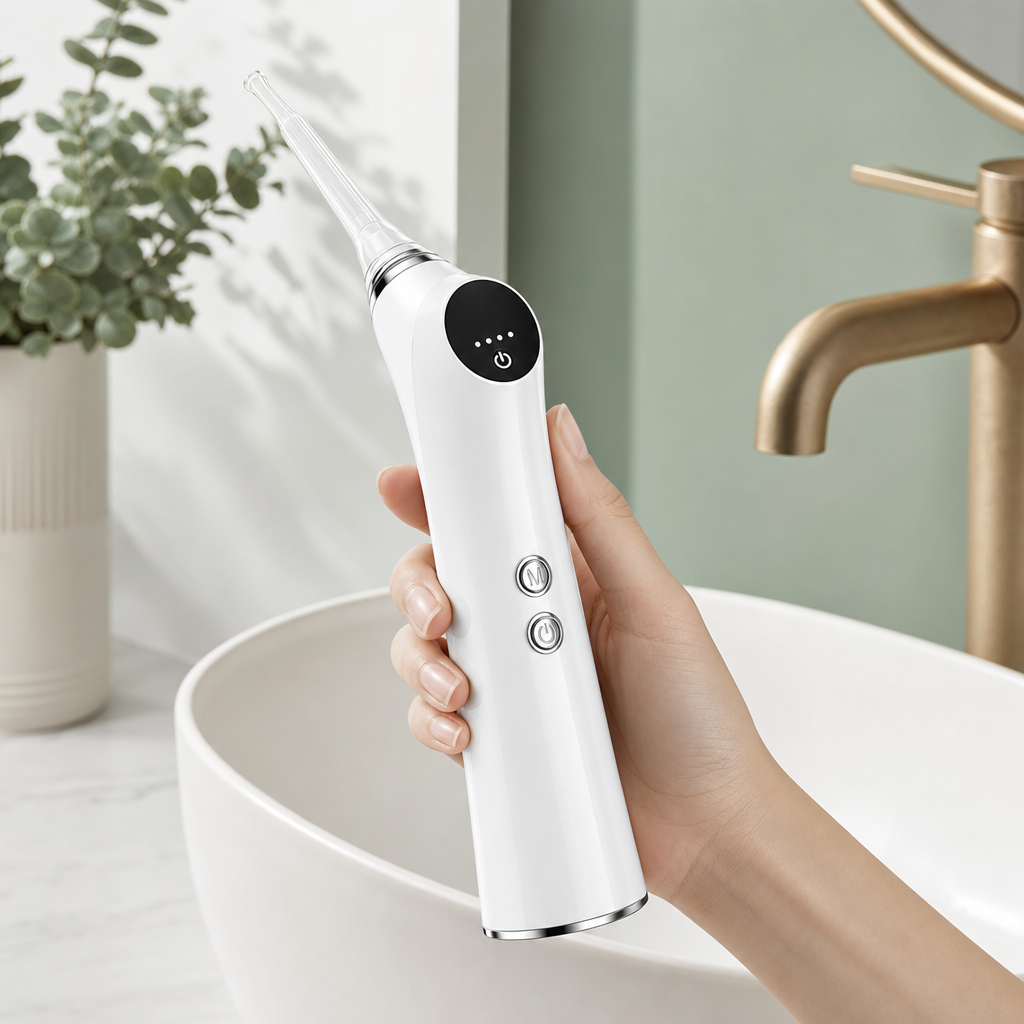
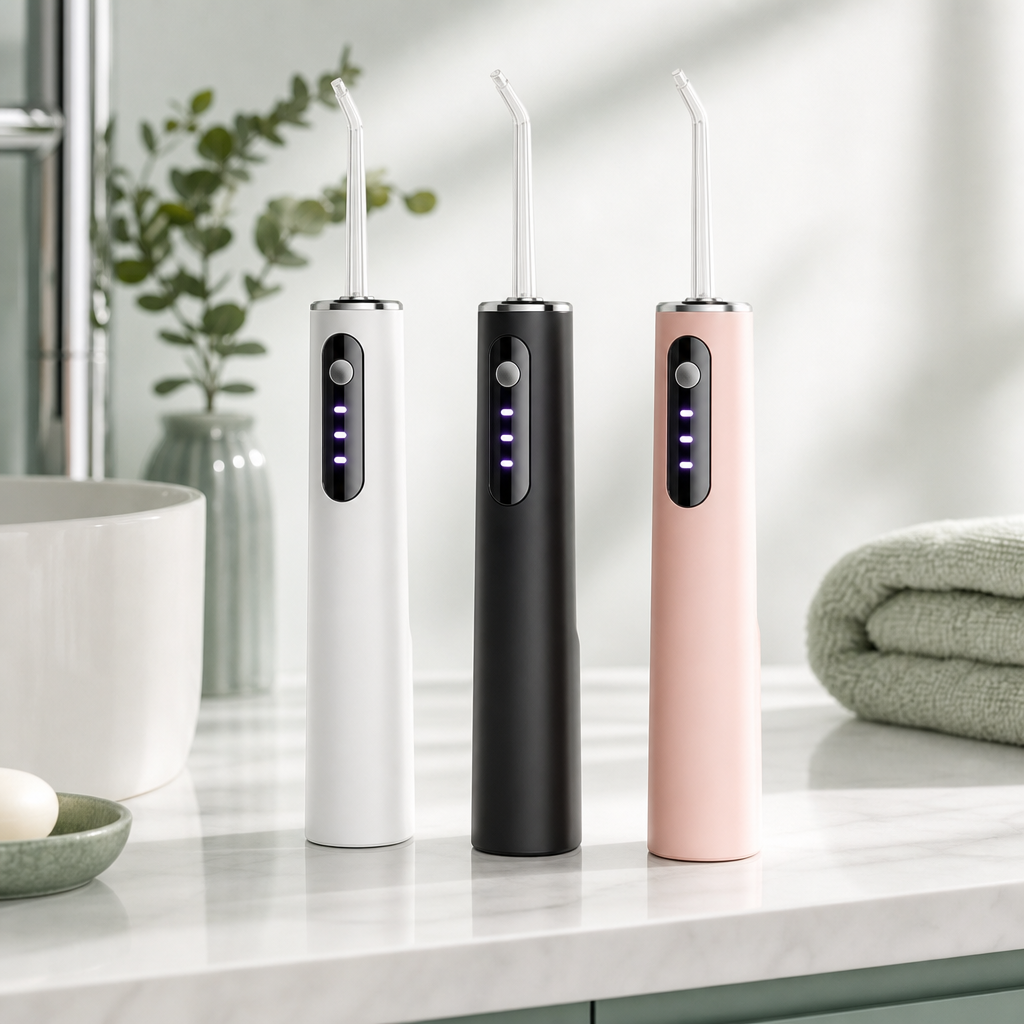
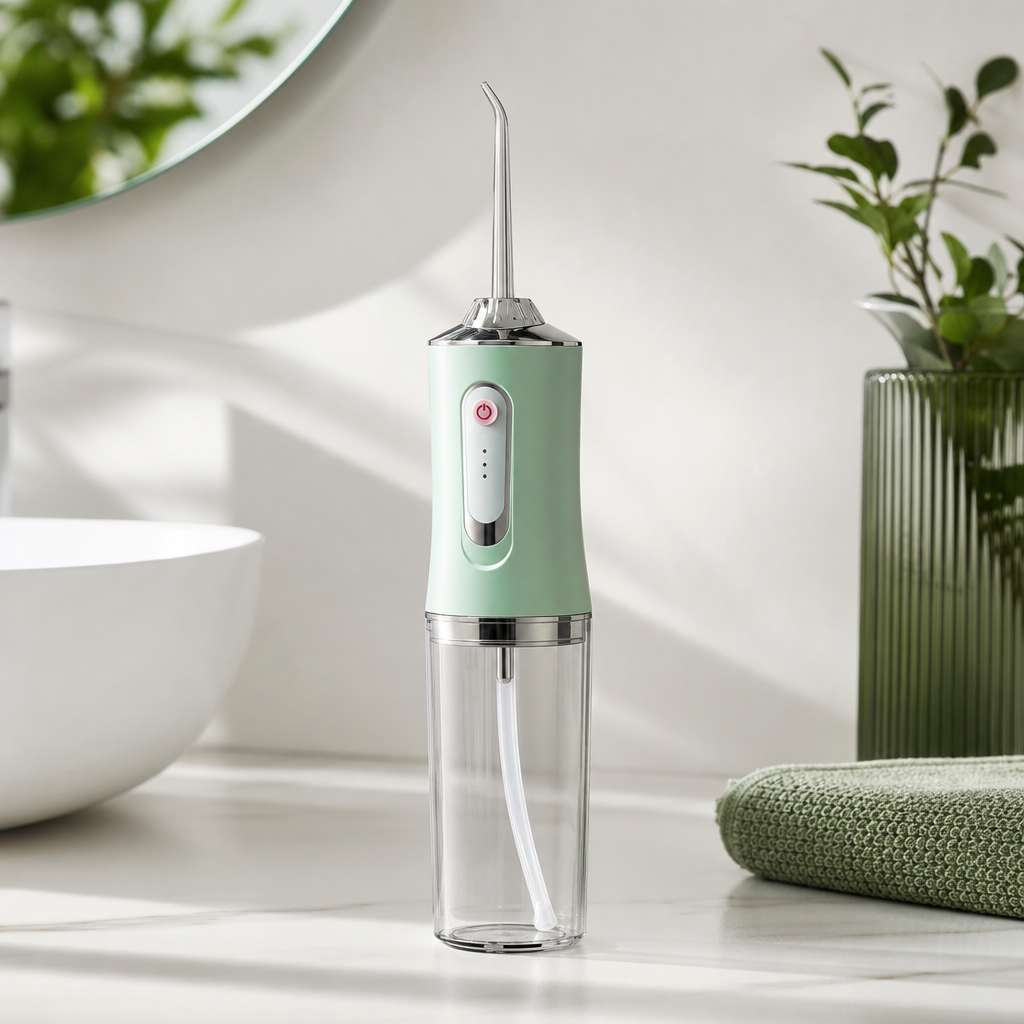
Among our picks, the $29.99 Portable Cordless Water Flosser with IPX7 waterproofing is the best all-around water-flossing choice because it combines a 347 g cordless body, a built-in rechargeable battery rated for more than 30 days of runtime, three cleaning modes or three-level adjustment depending on the variant, and large-tank variants above 400 mL. The $24.99 A8 Portable Cordless Water Flosser is the lighter budget pick at 250 g net weight, with IPX6 protection and more than 15 days of runtime. The $36.99 T956 Portable Oral Irrigator is the more specialized tool, built around targeted adult oral cleaning and tonsil-stone-focused use.
Side-by-side comparison
| Tool | Price | Size / capacity | Material / design | Key specs | Warranty / support |
|---|---|---|---|---|---|
| String floss | Typically $2-$8 per pack | Pocket-size spool or single-use picks | Thin disposable filament, often waxed or textured; manual scraping action | Best for tight tooth contacts; no battery, no tank, no charging; requires hand control and technique | Retailer return policy |
| Portable Cordless Water Flosser with IPX7 Waterproofing | $29.99 | 347 g; large-tank variants hold more than 400 mL | Portable cordless waterproof body; interchangeable nozzle tips on tankless three-mode variants | IPX7 waterproof rating; built-in rechargeable battery; 1200mAh-2000mAh battery capacity; more than 30 days of runtime; piston pump; three cleaning modes or three-level S2 adjustment depending on variant; white, black, pink, S2 white, and S2 pink options | Store warranty |
| A8 Portable Cordless Water Flosser | $24.99 | 250 g net weight; 330 g gross weight; under-300 mL water tank | Cordless handheld body with IPX6 waterproof protection; interchangeable nozzle bundle options | Model A8; Weitu brand; built-in rechargeable battery; 500-800 mAh battery capacity; more than 15 days of runtime; piston pump; adult home use; white, green, pink, and black painted options | — |
| T956 Portable Oral Irrigator for Tonsil Stone Cleaning | $36.99 | 500 g | Portable handheld oral irrigator; white English-version configuration; fragrance-free | Model T956; adult use; targeted oral cleaning; tonsil-stone-focused use case; useful around braces; cleaning function; Guangdong, China origin; barcode 656 | — |
Cleaning performance: contact points, braces, and back teeth
For pure tooth-to-tooth cleaning, string floss remains the more direct tool. It can curve around each tooth in a C-shape and wipe the surface. That is the part a water jet cannot perfectly duplicate, even when the pressure feels strong. If your dentist keeps pointing to buildup between two crowded teeth, keep string floss in the routine.
Where a water flosser earns its place is debris removal. The water stream can rinse under wires, around brackets, along the gumline, and behind the last molars without forcing your hands deep into your mouth. That is why a cordless water flosser is especially useful for adults with braces or fixed dental work. If you are dealing with brackets, our guide on how to use a water flosser for braces walks through angle and sequence, but the short version is simple: aim along the gumline and around each bracket rather than blasting straight into the gums.
Compared with a countertop waterpik water flosser, portable models trade tank size and raw countertop stability for easier storage and travel. A Waterpik Aquarius water flosser has the familiar countertop format many shoppers know, but it is not the easiest thing to pack. These three picks are handheld oral irrigators, so they fit better into a travel or small-bathroom routine. For shoppers comparing a cordless water flosser and Waterpik options, the main question is not brand name; it is whether you want a portable body or a larger stationary unit.
Comfort and pressure control
Pressure is the make-or-break issue for sensitive gums. Too much force can feel sharp and discouraging; too little force leaves food behind. The IPX7 cordless pick has the most flexible control set of our three product picks because it comes in variants with three cleaning modes or three-level S2 adjustment. That makes it the safer first choice if you want one device for daily gumline rinsing, braces cleanup, and occasional heavier debris removal.
The A8 also uses a piston pump water flow, but its specs emphasize a smaller, lighter body rather than a larger tank or longer runtime. It is the better fit if you want an inexpensive portable water flosser that is easier to hold. At 250 g net weight, it is noticeably lighter on paper than the 347 g IPX7 model and the 500 g T956. That matters if grip fatigue is part of why you avoid water picking.
The T956 is different. It is not trying to be the broadest daily dental flosser replacement. Its strongest use case is targeted oral cleaning, especially as a water flosser for tonsil stones. Shoppers often search for Waterpik and tonsil stones or Waterpik for tonsil stones because they want a rinsing tool that can reach the tonsil area without using hard picks. The T956’s tonsil-stone-focused design makes it the more purpose-built choice for that job, while the other two are better general daily water flossers.
Tank size, battery life, and travel convenience
Tank capacity sounds boring until you have to refill halfway through your mouth. The IPX7 cordless model has the clear advantage here when you choose a large-tank variant: more than 400 mL gives you more continuous rinsing time before a refill. That is useful for braces, because each bracket and wire section adds cleaning time. Its built-in rechargeable battery is rated for more than 30 days of runtime, and the 1200mAh-2000mAh battery capacity gives it the best travel profile of these picks.
The A8 makes a different trade-off. Its under-300 mL tank is smaller, so it is less ideal if you want to clean braces, gumline, and back teeth in one uninterrupted pass. But its lower weight and more-than-15-day runtime still make sense for short trips, gym bags, and small bathrooms. At $24.99, it is also the least expensive of the three water-flosser picks.
The T956 weighs 500 g, so it is not the lightest option here. The upside is its targeted handheld format for adult oral cleaning, especially when the job is focused rather than whole-mouth daily rinsing. If you mainly want a tonsil stone water flosser, weight may matter less than control and aiming.
Waterproofing, nozzles, and cleaning upkeep
A wet bathroom tool needs a body that can tolerate splashes and rinsing. The IPX7 model has the strongest waterproof rating in this comparison. The A8 has IPX6 protection, which is still appropriate for a cordless oral-care appliance used around sinks. The T956 specs emphasize the portable handheld format and fragrance-free configuration rather than a waterproof rating, so it is best judged as a targeted oral irrigator rather than a shower-friendly daily tool.
Nozzle fit is another real-world concern. A loose tip can make a session messy and imprecise, especially when you are trying to clean around braces or the tonsil area. The IPX7 tankless three-mode variants include four nozzle tips, while the A8 comes with interchangeable nozzle or nozzles in the selected quantity. Whatever model you choose, push the tip fully into place before filling the tank and aim over the sink until you know the spray pattern.
For mold prevention and general cleanliness, the routine is straightforward: empty the tank, run clean water through the pump after use, leave openings exposed to air, and avoid storing the device sealed while wet. If you use mouthwash, dilute and rinse afterward so residue does not dry inside the water path. None of these habits is glamorous, but they help prevent the sour smell and buildup that make people abandon otherwise useful water flossers.
Choose a water flosser if
Choose a water flosser if your biggest issue is food debris rather than tight contact scraping. It is the better tool for braces, gumline rinsing, back molars, and gentle cleanup when your fingers cannot maneuver string floss comfortably. It also makes sense if you are building a more complete oral-care setup and want an appliance you will actually use every day.
Choose the $29.99 IPX7 cordless model if you want the best balance of tank size, runtime, waterproofing, and pressure flexibility. It is our top all-around pick for adults because the specs solve the most common complaints: more than 400 mL capacity on large-tank variants, more than 30 days of runtime, IPX7 waterproofing, and adjustable cleaning modes.
Choose the $24.99 A8 if price, weight, and portability matter most. It is the better budget dental irrigator for short sessions and travel, especially if you do not mind a smaller under-300 mL tank. Choose the $36.99 T956 if you specifically want a water flosser for tonsil stones or targeted adult oral cleaning rather than a general-purpose daily flosser.
Choose string floss if
Choose string floss if your main goal is removing plaque from tight tooth contacts. It is cheap, tiny, silent, and never needs charging. It also gives direct tactile feedback: you can feel the floss pass through a contact and wrap around the tooth. For people with naturally tight teeth and no braces, a $2-$8 pack of string floss may solve the most important cleaning task with less gear on the counter.
The downside is technique. String floss is easy to rush, and many people snap it into the gums or skip the back teeth because it is awkward. It also struggles around brackets and wires. A burst flosser or pulsed water stream can feel more satisfying for visible debris, but that does not make it a full replacement for the scraping action of thread.
Bottom line: which cleans better?
If we have to pick one for cleaning tooth surfaces between tight contacts, string floss cleans better. If we are judging everyday practicality for food stuck between teeth, around braces, and along hard-to-reach gumline areas, a water flosser is often the tool people use more consistently. The best routine is not water flosser vs floss as an either-or decision. It is string floss for contact points plus a portable water flosser for rinsing where thread is awkward.
For most adults buying one of these picks, start with the IPX7 cordless model. It has the best spec mix: strong waterproofing, the longest stated runtime, a higher-capacity tank option, and adjustable cleaning modes. Pick the A8 to save money and weight. Pick the T956 when the priority is tonsil-stone-focused cleaning. That keeps the comparison fair: floss wins the scrape test, water flossers win the rinse-and-reach test, and the right choice depends on what is actually getting stuck in your mouth.
Our Picks
Related Guides & Products
- oral-care — Top Picks
- Best Portable Water Flosser Guide for Travel
- How to Use a Water Flosser for Braces
- Water Flosser for Sensitive Gums: Comfort Guide
- Water Flosser for Tonsil Stones: Safe How-To
- Waterpik Water Flosser vs Cordless Picks
- Which Dental Irrigator Should You Buy?
- Cordless Water Flosser Review: IPX7 Portable Pick
- T956 Oral Irrigator Review for Tonsil Stones
- A8 Portable Oral Irrigator Review: Budget Pick
- How Often to Use a Water Flosser: Daily Care Guide
- Can You Use Mouthwash in Water Flosser?
- T956 Portable Oral Irrigator for Tonsil Stone Cleaning
- Portable Cordless Water Flosser with IPX7 Waterproofing
- A8 Portable Cordless Water Flosser with IPX6 Waterproofing
Frequently Asked Questions
Can a water flosser replace floss?
Not completely. A water flosser is excellent for rinsing debris and cleaning around braces, but string floss is still better at scraping tight tooth-to-tooth contact points.
Which pick is best for braces?
The IPX7 cordless water flosser is the strongest all-around choice for braces because it offers adjustable modes, more than 30 days of runtime, and large-tank variants above 400 mL.
Which model is best for travel?
The A8 is the easiest travel choice if you prioritize weight and price. It weighs 250 g net and runs for more than 15 days per charge.
Which is best for tonsil stones?
The T956 is the most targeted option for tonsil-stone-focused cleaning. It is a portable adult oral irrigator designed for precise oral cleaning rather than general daily flossing only.
Do larger tanks matter?
Yes. A larger tank reduces refills during longer sessions, especially for braces. The IPX7 cordless model’s large-tank variants hold more than 400 mL.
Is stronger pressure always better?
No. Excessive pressure can feel uncomfortable on sensitive gums, while weak flow may leave debris behind. Adjustable modes are useful because they let you start gentler and increase as needed.
This article is for general information only and is not medical or dental advice. Consult a licensed dentist or doctor for any health concern.