TL;DR: The 18 cm Stainless Steel Slow Feeder Dog Bowl is a good pick for cats, puppies, and small to medium dogs that inhale kibble. Its stainless feeding surface, shallow small-bowl format, anti-slip base, and anti-tip design make it more practical than many deep plastic maze bowls. It is not ideal for large dogs, very determined chewers, or owners who want automation.
Verdict: a practical stainless slow feeder for smaller pets
The 18 cm Stainless Steel Slow Feeder Dog Bowl is a simple, low-tech answer to a common problem: a dog that eats too fast, coughs, gulps air, vomits after meals, or seems uncomfortable and gassy after inhaling dinner. At $20.99, it sits in a reasonable price range for a stainless slow feeder dog bowl, especially for owners who want to move away from plastic but do not need an electronic feeder.
This is a small 18 cm slow feeder pet bowl with a 150 g body, a stainless steel feeding surface, and a raised puzzle pattern that breaks up the food area. It comes in bone, dog paw, bear paw, and fishbone pattern options, and the stainless options include 304 stainless steel and 201 stainless steel. The design is intentionally basic: no batteries, no app, no timer, no automatic feeding. For many dogs, that is a strength. It is a dog feeding bowl slow enough to interrupt gulping without adding the maintenance burden of a powered feeder.
Our bottom line: this is best for cats, puppies, and small to medium dogs that need a slower meal pace from a sturdier, easier-to-rinse surface than typical plastic puzzle bowls. It is not the slowest dog feeder bowl for every pet, and it is not sized for large breeds, but it hits a useful middle ground for everyday dry food or controlled wet-food portions.
Who it is for
This slow eating dog bowl is a smart fit if your pet pushes food straight into its mouth with almost no chewing. The raised puzzle design creates small channels and obstacles, so the animal has to work around the pattern rather than vacuuming up the entire serving. That makes it useful as a bowl for dogs to slow eating, especially for puppies that are still learning meal manners and smaller dogs that get too excited at feeding time.
The 18 cm size is the key buying detail. This is a small slow feeder bowl, so it makes the most sense for cats, puppies, and small to medium dogs. If you are deciding whether the diameter and obstacle height will work for your pet’s face shape, our small slow feeder dog bowl buyer’s guide walks through the fit issues that matter most for little dogs and short-snouted breeds. A shallow, compact puzzle bowl is often more usable for a small dog than a huge maze feeder with walls so deep that the dog cannot reach the food comfortably.
It is also a good pick for owners bothered by plastic odor or chewing damage. Stainless steel generally resists retained smells better than plastic and is harder for most small pets to gnaw apart. If you have been using plastic dog feeding bowls to slow eating and noticing old food smells, oily residue, or chew marks, this stainless option is the more durable direction.
Who should skip it
Large dogs should look elsewhere. An 18 cm bowl is compact, and a bigger dog may crowd the bowl, flip it, or finish too quickly because the usable feeding area is not large enough for its portion size. The 150 g weight keeps the bowl light and easy to handle, but it also means a strong, persistent dog may still be able to shove it around despite the anti-slip bowl design.
It is also not the right choice if you want scheduled feeding while you are away from home. This is not an automatic feeder. It is a slow feeder for dog bowl use at mealtime, not a timer-based system. If your main goal is portion release at specific times, this bowl will not replace an automatic feeder.
Finally, if your dog needs an extreme challenge, this may be too moderate. The small stainless design helps slow eating, but the practical, accessible pattern is not as mentally demanding as some larger and deeper puzzle feeders for dogs. That accessibility is good for short-nose dogs and puppies, but ultra-fast adult dogs may need a larger or more complex slow feed setup.
How we evaluate slow feeder bowls
We evaluate slow feeder bowls by comparing verified specs, materials, build choices, value, sizing, and likely real-world use. We look at how the bowl design addresses common owner complaints: pets choking or vomiting from fast eating, bowls sliding across the floor, maze walls that are too deep, plastic that smells or gets chewed, and grooves that trap grease. We also update recommendations as owner feedback trends emerge over time.
For broader context, we compare this model against other designs in our best dog slow feeder bowls roundup, including stainless, PP plastic, silicone-style mats, compact feeders, and puzzle-shaped bowls. The goal is not to crown the most complicated bowl. It is to match the bowl to the dog: size, snout shape, eating speed, food type, and cleaning habits all matter.
Key feature: stainless steel feeding surface
The biggest reason to choose this bowl over a budget plastic dog slow feeder is the stainless steel feeding surface. Stainless steel is a strong everyday material for pet bowls because it does not have the soft, chewable feel of plastic and is less prone to holding food smells. For owners dealing with oily residue from wet food or strong kibble odors, that matters. A slow eating dog bowl stainless design is simply easier to live with if you rinse it right after meals and wash it regularly.
The bowl is available in 304 stainless steel and 201 stainless steel options. For most pet owners, 304 stainless steel is the more desirable choice because it is commonly used in food-contact kitchenware and has stronger corrosion resistance than 201 stainless steel. The 201 option can still make sense for budget-focused everyday dry feeding, but if you are buying once and want the more robust stainless choice, the 304 version is the one we would prioritize.
The stainless build also addresses a real chewing concern. Some dogs treat plastic slow feeders like toys, especially when bits of food remain in the grooves. A metal surface is less inviting to chew and more resistant to that kind of damage. It will not make the bowl indestructible, and determined dogs can still be rough on any feeder, but stainless is a better match for pets that have already scarred or gnawed plastic bowls.
Key feature: puzzle design that slows without overcomplicating meals
The raised slow-feeder puzzle design is the point of the product. Instead of presenting one open food pile, the bowl divides the meal around a patterned interior. The available pattern options—bone, dog paw, bear paw, and fishbone—are not just decorative; each creates obstacles that require the pet to nose or lick food from smaller spaces.
That helps with the core problem: dogs eating too fast and then coughing, gagging, vomiting, or swallowing air. A dog eating bowl slow design cannot guarantee that a pet will never choke or vomit, but it can reduce the speed of access to food. For dogs that inhale kibble in seconds, even a moderate obstacle pattern can make meals more controlled.
Just as important, this bowl does not appear overly deep for its intended users. Some maze bowls frustrate puppies, cats, and short-nosed dogs because the channels are so tall and narrow that food becomes hard to reach. This compact stainless bowl is aimed at smaller pets, so the format is more approachable than oversized puzzle feeders. If your dog is new to slow feed bowls, our guide on how to use dog bowls for fast eaters safely explains why you should start with a manageable design and watch for frustration during the first few meals.
Key feature: small 18 cm format
The 18 cm size is both a strength and a limitation. For cats, puppies, and small to medium dogs, it keeps the feeding area compact and easy to access. A large bowl can let small pets step into it, spin it, or chase food around a wide surface. This smaller diameter keeps the meal centered and makes the bowl easier to place in a crate area, kitchen corner, or feeding station.
The compact size also makes cleaning less of a chore. Slow feeder bowls can be annoying because every ridge creates another place for food oils to collect. A smaller stainless bowl is easier to rinse thoroughly than a large, deep plastic maze. That is especially helpful if you use damp kibble, toppers, canned food, or fresh food. The bowl’s no-power design also means there are no electronic parts to avoid when washing.
For medium dogs, portion size is the deciding factor. If your dog eats modest meals and has a narrower muzzle, this may work well. If your medium dog eats a large serving, the 18 cm surface could feel cramped and may not slow the meal enough. In that case, a larger slow feeder bowl would be a better fit than overfilling this one.
Key feature: anti-slip and anti-tip everyday design
Sliding is one of the most common complaints with a dog bowl to slow eating stainless steel model. Stainless bowls can be slick on hard floors, and fast eaters often push the bowl as they work around the puzzle. This model includes an anti-slip bowl design and an anti-tip everyday bowl design, which are important practical details for tile, laminate, and hardwood kitchens.
At 150 g, though, it is still a lightweight bowl. The anti-slip design should help with normal eating, but it is not a heavy anchor. A strong dog that paws aggressively or rams the bowl with its nose may still move it. For those pets, placing the bowl on a grippy feeding mat is a sensible upgrade. For cats, puppies, and smaller dogs, the anti-slip and anti-tip features are better matched to the expected force level.
The anti-tip design also matters for wet food. Slow feeders can become messy when a pet drags soft food up the sides or tips the bowl while licking. A stable base reduces spills and helps keep the puzzle area usable through the meal.
Cleaning and wet-food practicality
Any slow feeder has more cleaning work than a plain bowl. The raised pattern creates corners where kibble dust, saliva, and food oils can collect. The advantage here is the stainless surface: it is smoother and less odor-retentive than plastic, so regular washing should be easier. For dry kibble, a quick rinse after meals and a more thorough wash daily is a practical routine. For wet food, wash promptly so residue does not dry into the grooves.
This is where stainless has a clear everyday advantage. Plastic maze bowls can hold onto greasy smells, especially if they are scratched by teeth or scrubbers. Stainless is less likely to develop those odor-holding micro-scratches. If your pet eats canned food or mixed meals, read our guide to whether you can use a slow feeder dog bowl for wet food before choosing a pattern. Shallower, easier-to-rinse ridges are usually better for soft food than deep, narrow mazes.
Honest drawbacks
The first drawback is capacity and fit. This is an 18 cm small bowl, not a universal feeder. It is suitable for cats, puppies, and small to medium dogs, but it is too compact for many large breeds and may not suit dogs with very large muzzles. Buying too small can create frustration rather than healthier eating.
The second drawback is that stainless can be noisier than plastic. Kibble clicking against metal is normal, and a dog that works the puzzle aggressively may make more noise than it would with a PP plastic bowl. If your feeding area is near a bedroom or office, that may matter.
The third drawback is that the anti-slip feature has limits. The bowl is only 150 g, so it remains easy for owners to pick up but easier for a forceful pet to move. If your dog already pushes bowls across the kitchen, expect to pair it with a mat.
The fourth drawback is cleaning effort. Stainless helps, but the puzzle shape still needs attention. Owners who want the absolute easiest cleanup may prefer a plain stainless bowl, while owners who need slow feeding should accept that every slow feeder bowl requires more washing around ridges and channels.
The fifth drawback is that it is not automated. That is obvious from the no-power design, but it matters if your schedule requires timed meals. This is a feeder for dogs at supervised mealtime, not a device for remote portion control.
Comparison: stainless bowl vs square PP sibling
The closest sibling product is the Square PP Slow Feeder Dog & Cat Bowl, a $15.99 PP plastic bowl with an anti-spill square shape, black and blue color options, and a 230 g item weight. It is less expensive and heavier than the 18 cm stainless bowl, and its square shape may feel steadier for some pets. It is also dog and cat compatible and requires no electronics.
The stainless bowl is the better choice if your top concerns are plastic odor, chewing, and long-term surface durability. It costs about $5 more, but that premium buys a metal feeding surface and the option to choose 304 stainless steel. It also has multiple interior pattern options, which gives you more flexibility if you prefer a bone, paw, bear paw, or fishbone layout.
The Square PP bowl is the better value pick if price is the priority and your dog is not a chewer. PP plastic can work well for many pets, and the square anti-spill format is practical. But for owners specifically searching for a slow eating dog bowl stainless option, or a dog bowl to slow eating stainless steel because plastic has been disappointing, the 18 cm stainless model is the clearer recommendation.
Final recommendation
Buy the 18 cm Stainless Steel Slow Feeder Dog Bowl if you have a cat, puppy, or small to medium dog that eats too quickly and you want a durable, non-electric slow feeder with a stainless feeding surface. The design directly addresses the biggest everyday pain points: gulping, sliding, tipping, plastic odor, chewing, and hard-to-clean food residue. It is not perfect for large dogs or extreme power eaters, but for smaller pets it is a well-priced, sensible slow feeder dog bowl at $20.99.
Choose the 304 stainless option if you want the stronger stainless choice for long-term feeding. Add a grippy mat if your pet is a determined bowl-pusher. And if your dog has a short nose or gets frustrated easily, start with smaller portions and observe the first few meals. Used with the right pet, this bowl slow feeder is a practical upgrade from a plain dish and a cleaner alternative to many plastic puzzle feeders.
Our Picks
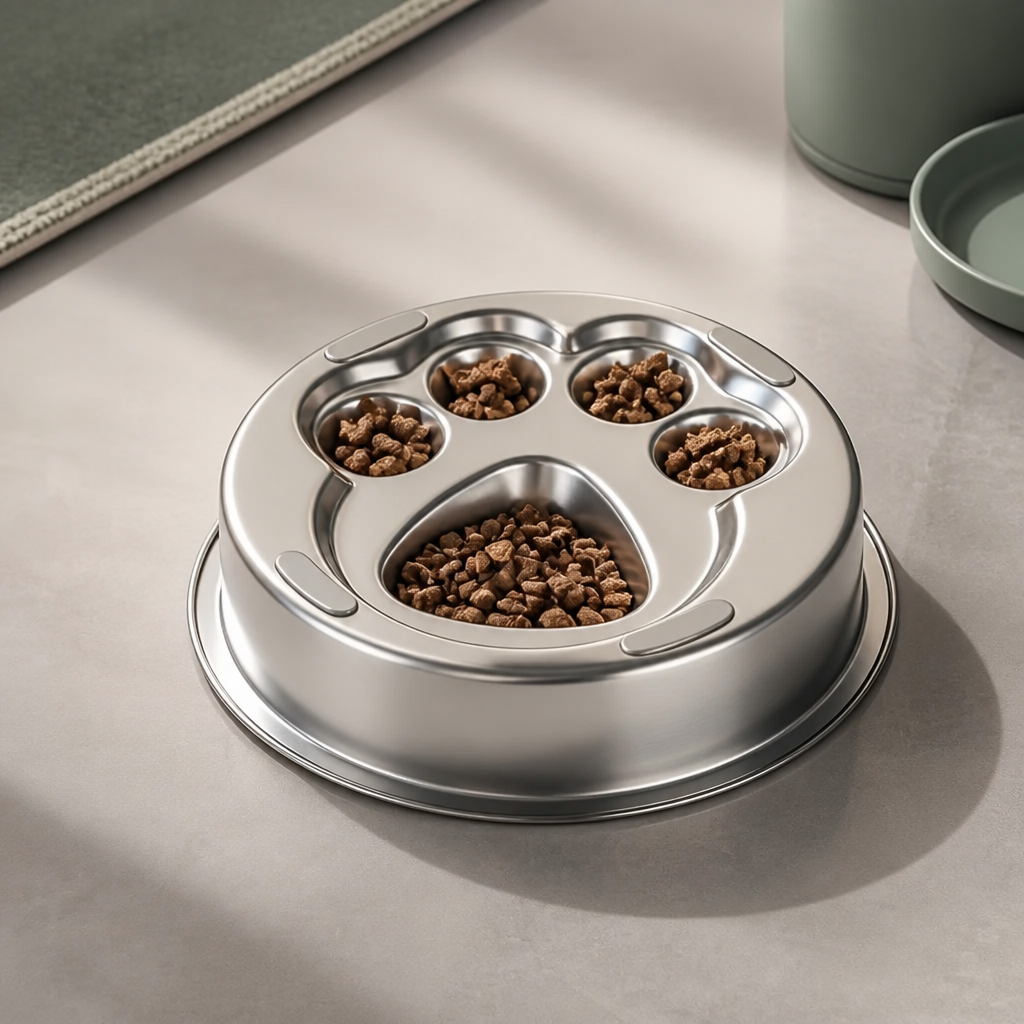
#1 18 cm Stainless Steel Slow Feeder Dog Bowl — $20.99
Best for: Small fast-eating dogs
- Stainless steel construction avoids the plastic feel and odor concerns of many slow feeders.
- Raised puzzle patterns help turn fast meals into slower, more controlled feeding.
- Anti-slip, anti-tip design helps the bowl stay steadier during mealtime.
- The 18 cm small size is not intended for large dogs.
- Raised slow-feeder patterns take more rinsing than a plain flat bowl.
Product Type: Slow feeder pet bowlMaterial: Stainless steelStainless Steel Options: 304 stainless steel; 201 stainless steelSize: 18 cm small
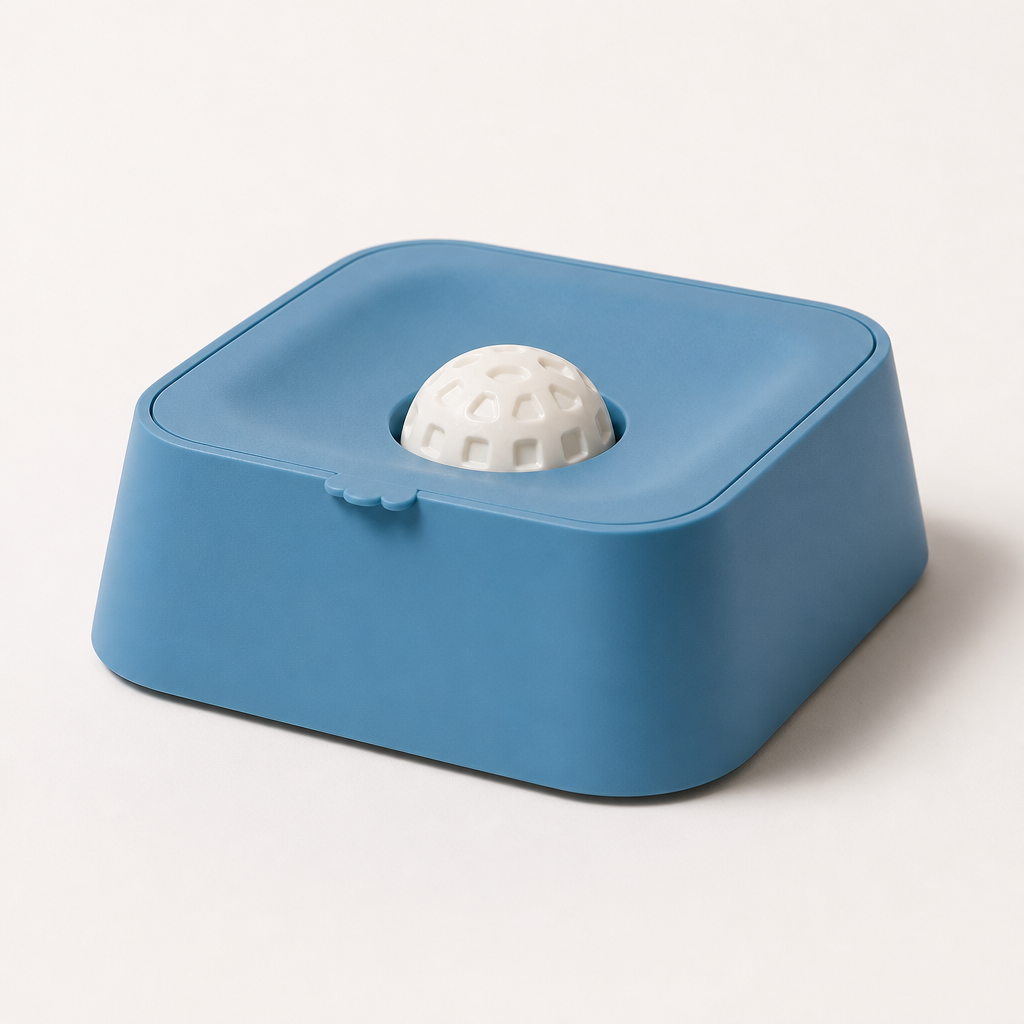
#2 Square PP Slow Feeder Dog & Cat Bowl — $15.99
Best for: Fast-eating dogs and everyday pet meals
- Slow-feed licking surface helps pace pets that eat too quickly.
- PP construction keeps the bowl lightweight at 230 g.
- Square anti-spill design works for both cats and dogs.
- PP plastic is less bite-resistant than stainless steel or ceramic.
- Slow-feed surfaces require more careful cleaning than a plain bowl.
Product Type: Slow feeder pet bowl / anti-spill drinking bowlModel: PB052Material: PP plasticSuitable For: Dogs and cats
Related Guides & Products
- dog slow feeder bowls — Top Picks
- Small Slow Feeder Dog Bowl Buyer’s Guide
- How to Use Dog Bowls for Fast Eaters Safely
- Puzzle and Maze Dog Bowl Buyer’s Guide
- Best Slow Feeder Dog Bowl: Stainless vs PP
- Can You Use a Slow Feeder Dog Bowl for Wet Food?
- 18 cm Stainless Steel Slow Feeder Dog Bowl
- Square PP Slow Feeder Dog & Cat Bowl
Frequently Asked Questions
Is this bowl good for puppies?
Yes. The 18 cm size is intended for cats, puppies, and small to medium dogs, making it a practical starter slow feeder for young pets.
Does it work with wet food?
Yes, but wash it promptly. The stainless surface helps with cleanup, while the puzzle grooves can still hold soft food residue.
Is 304 stainless better than 201?
For most pet owners, 304 stainless steel is the preferred option because it offers stronger corrosion resistance for food-contact use.
Will it stop my dog from choking?
It can slow access to food, which may reduce gulping, coughing, and vomiting risk, but meals should still be supervised.
Is it suitable for large dogs?
No. The 18 cm format is best for cats, puppies, and small to medium dogs, not large breeds with big portions.
Does it need batteries?
No. This is a no-power, non-automatic slow feeder bowl with no electronics, timer, or app controls.