TL;DR: Yes, you can use a slow feeder dog bowl for wet food if the grooves are shallow enough for your dog’s muzzle, the bowl stays put, and you clean it promptly after each meal. Spread wet food thinly instead of packing it deep, supervise short-nosed or small dogs, and replace bowls that are chewed, cracked, slippery, rusty, or permanently odorous.
Tools and supplies
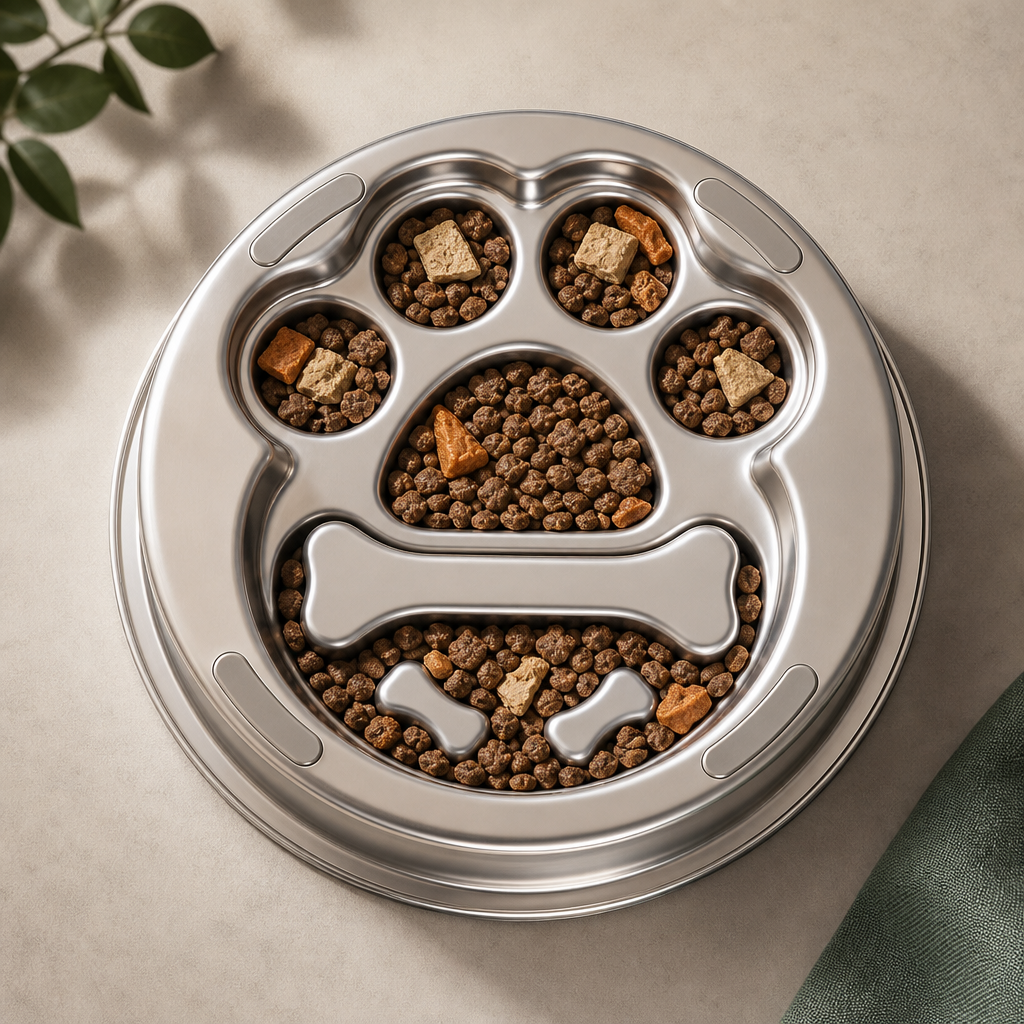
- Slow feeder dog bowl with reachable grooves
- Wet dog food, softened kibble, or a wet-and-dry mix
- Warm water
- Mild dish soap
- Soft bottle brush or small dish brush
- Non-abrasive sponge
- Clean towel or drying rack
- Optional: silicone mat or towel under the bowl for extra grip
Step 1: Confirm the bowl is safe for wet food
A slow feeder dog bowl for wet food works best when the ridges slow your dog down without trapping food so deeply that your dog has to strain. Wet food sticks to corners, so the maze should be reachable from several angles. Before serving a full meal, press a small spoonful into the grooves and check whether your dog can lick it out with normal tongue movement.
For puppies, small dogs, senior dogs, and short-nosed dogs, choose a shallower pattern over a very deep puzzle. A slow eating bowl dog setup should make eating calmer, not frustrating. If your dog gives up, paws aggressively, bites the ridges, or rubs their nose hard against the bowl, the pattern is too difficult for wet food. For size and muzzle-fit considerations, use our small slow feeder dog bowl guide before choosing a bowl.
Step 2: Start with a thin layer of wet food
Do not pack wet food tightly into the maze. Spoon the meal into the bowl, then spread it in a thin layer across the raised pattern. The goal is to create short licking paths, not deep food pockets. Thick piles can turn a dog feeding bowl slow setup into a choking hazard if your dog gulps clumps from one open area.
For the first few meals, use a smaller portion than usual and watch the full feeding session. If your dog normally eats too fast and then coughs, gags, vomits, or becomes gassy, the slower pace can help reduce gulping. Still, the transition should be gradual. A bowl for dogs to slow eating should extend the meal without making the dog anxious or forcing them to inhale around obstacles.
Step 3: Adjust texture before changing bowls
Wet food texture matters as much as bowl design. Pâté-style food spreads easily but can coat narrow grooves. Chunky food may lodge between ridges. If food is sticking, loosen it with a spoonful of warm water and mix until it smears smoothly. If it is too runny, it may slide into one corner and defeat the slow feed effect.
For softened kibble, let the kibble absorb water before placing it in the slow feeder. Hard kibble floating in liquid can move around too freely, while half-soft kibble can clump. A dog eating bowl slow routine is most effective when the food stays distributed across the maze and your dog has to lick or nudge small amounts loose.
Step 4: Keep the bowl from sliding
A slipping bowl can turn a calm meal into a pushing match. Place the bowl on a flat floor, away from chair legs, cabinet bases, or wall corners where your dog may pin it and gulp from one side. If the bowl still moves, set it on a clean silicone mat, rubber-backed placemat, or folded towel.
Check the underside before each meal. Water, oil, and food residue can reduce grip even on an anti-slip base. Wipe both the floor and the bottom of the bowl dry. If your dog shoves the bowl across the room, do not chase it or hold it in place with your hand near their mouth. Reset the bowl between meals and work on calmer feeding habits. For broader safety habits around dog feeding bowls to slow eating, see our guide on using dog bowls for fast eaters safely.
Step 5: Watch muzzle access and breathing
During the first week, observe how your dog reaches food in each section. A slow feeder for dog bowl use should allow the dog to lick, pause, and reposition naturally. If your dog has a short muzzle, missing teeth, dental pain, or a flat face, deep ridges can block access. Signs of poor fit include repeated snorting, scraping the gums, tilting the head excessively, pawing at the bowl, or leaving food behind in the same tight pockets.
If the bowl is too deep, try three adjustments before abandoning slow feeding: spread the food thinner, add a little warm water, and serve a smaller portion. If those changes do not help, use a shallower slow feeder bowl or a flatter lick-style surface for wet meals. The slowest dog feeder bowl is not automatically the best bowl; the best option is the one your dog can use comfortably while eating at a safer pace.
Step 6: Clean the bowl immediately after wet food
Wet food leaves oils and protein residue that dry quickly inside grooves. Clean the bowl after every wet meal. Rinse first with warm water to loosen soft food. Add mild dish soap, then scrub along each ridge with a soft brush. Use a small brush for corners where a sponge cannot reach. Rinse until the surface no longer feels slick.
Do not rely on a quick rinse. A bowl slow feeder design has more edges than a plain bowl, so oily residue can remain even when the surface looks clean. Smell the bowl after washing. If it still smells like old food, wash it again and pay attention to the underside of ridges and the inner corners. Dry the bowl fully before storing or refilling it, because damp grooves can hold odor.
Step 7: Remove stuck-on residue without damaging the bowl
If wet food dries in the maze, soak the bowl in warm, soapy water for 10 to 15 minutes, then scrub with a non-abrasive brush. Avoid sharp tools, steel wool, or aggressive scraping, especially on plastic bowls, because scratches can trap more residue later. For stainless steel, use a soft sponge or brush and follow the direction of the surface instead of scouring in circles.
For stubborn oily film, wash twice: first to remove visible food, second to remove slick residue. Rinse thoroughly between washes. If the bowl has a persistent odor, let it air-dry completely after cleaning and reassess before the next meal. Plastic can hold smells more easily than stainless steel, especially if it has been chewed or scratched.
Step 8: Use the right feeding frequency
Use a dog slow feeder whenever fast eating is a recurring problem, especially for dogs that cough, gag, vomit shortly after meals, or swallow a lot of air. For many dogs, that means every regular meal. For dogs that eat calmly most of the time, use the slow feeder for higher-value wet food, wet-and-dry mixes, or meals that trigger gulping.
Clean after every wet meal. For dry kibble, wash the bowl at least daily if it is used for full meals, and sooner if saliva or crumbs collect in the grooves. Deep-clean weekly by soaking, brushing every channel, rinsing well, and drying completely. Inspect grip, cracks, chewing marks, and odor during that weekly cleaning.
Step 9: Rotate feeding methods if your dog gets frustrated
Puzzle feeders for dogs should reduce speed without turning dinner into a stressful task. If your dog becomes frantic, barks at the bowl, bites the maze, or refuses food, alternate with an easier feeder for dogs or a plain bowl while you retrain the habit. You can also place only part of the meal in the slow feeder and serve the rest normally.
As your dog learns, increase the amount in the slow feeder. Keep sessions calm and predictable. Do not use a difficult slow feeder as a punishment for eating too fast. The purpose of a slow eating dog bowl is to guide pacing through bowl design, not to make food inaccessible.
When to replace the bowl or parts
Replace plastic bowls with chew damage
Replace a plastic slow feeder when you see bite marks, cracks, rough scratches, or peeled edges. Chewed plastic can become harder to clean and may hold odors. If your dog is a strong chewer or repeatedly bites the ridges to reach food, move to a more durable material or a shallower design that does not trigger chewing.
Replace bowls that keep smelling after cleaning
If a bowl smells sour, greasy, or like old food after thorough washing and full drying, replace it. Persistent odor usually means residue is trapped in scratches, seams, or hard-to-reach grooves. This is especially important for wet food because oils cling to maze patterns more than dry kibble dust.
Replace bowls that slide or tip too easily
If the anti-slip base no longer grips, the bowl rocks on a flat floor, or your dog can tip it during normal eating, replace it or use a more stable feeding setup. A sliding dog feeding bowl slow design can increase gulping because the dog may rush before the bowl moves again.
Replace metal bowls with corrosion or sharp edges
For stainless steel, replace the bowl if you find rust spots, pitting, bent edges, or sharp areas in the maze. A dog bowl to slow eating stainless steel design should feel smooth wherever your dog’s tongue and nose contact it. Do not keep using a damaged metal bowl for wet food.
Related slow feeder options
For a compact slow eating dog bowl stainless option, the 18 cm Stainless Steel Slow Feeder Dog Bowl uses a stainless steel feeding surface, an anti-slip and anti-tip everyday bowl design, and a small 18 cm format suited to cats, puppies, and small to medium dogs. It comes in 304 stainless steel and 201 stainless steel options, weighs 150 g, and costs $20.99.
For a lightweight PP plastic option, the Square PP Slow Feeder Dog & Cat Bowl is a compact square slow feeder pet bowl and anti-spill drinking bowl for dogs and cats. It has a 230 g PP build, black and blue color options, no electronics, and costs $15.99. For a broader comparison of vetted bowl types, see our best dog slow feeder bowls roundup.
Related Guides & Products
- dog slow feeder bowls — Top Picks
- Small Slow Feeder Dog Bowl Buyer’s Guide
- How to Use Dog Bowls for Fast Eaters Safely
- Puzzle and Maze Dog Bowl Buyer’s Guide
- Best Slow Feeder Dog Bowl: Stainless vs PP
- 18 cm Stainless Steel Slow Feeder Dog Bowl
- Square PP Slow Feeder Dog & Cat Bowl
Frequently Asked Questions
Can wet food go in a slow feeder?
Yes. Spread wet food thinly across reachable grooves, supervise the first meals, and clean the bowl immediately after feeding to prevent oily residue.
Are deep maze bowls good for small dogs?
Not always. Small dogs, puppies, seniors, and short-nosed dogs often do better with shallow ridges they can reach without scraping their nose or gums.
How often should I wash it?
Wash after every wet meal. For dry kibble, wash at least daily if used for full meals, and deep-clean the grooves weekly.
Why does the bowl still smell?
Odor usually comes from trapped oil, scratched plastic, or food residue in tight grooves. Rewash thoroughly and replace the bowl if the smell remains.
What if my dog pushes the bowl?
Use a flat feeding spot, dry the underside, and place a silicone mat or towel beneath it. Replace the bowl if it still slides or tips easily.
When should I stop using one?
Stop if your dog panics, bites the maze, cannot reach food, coughs repeatedly, or the bowl develops cracks, sharp edges, corrosion, or lasting odor.