TL;DR: A good kitty spout fountain should make moving water easy for your cat and low-maintenance for you. Prioritize a 3 L or larger tank, a removable design, easy-to-buy filters, and a material you can clean thoroughly. Choose stainless steel if hygiene and odor control matter most; choose a simpler automatic fountain if budget and basic filtered circulation are your top priorities.
A kitty spout fountain solves a real problem: many cats ignore still bowls but investigate moving water. A spout, bubbling outlet, or circulating stream can make drinking more interesting, especially for cats that hover near faucets or paw at their water bowl. The right cat water fountain is not just about looking cute on the floor, though. It has to hold enough water, stay easy to clean, avoid pump hassles, and use filters you will actually replace.
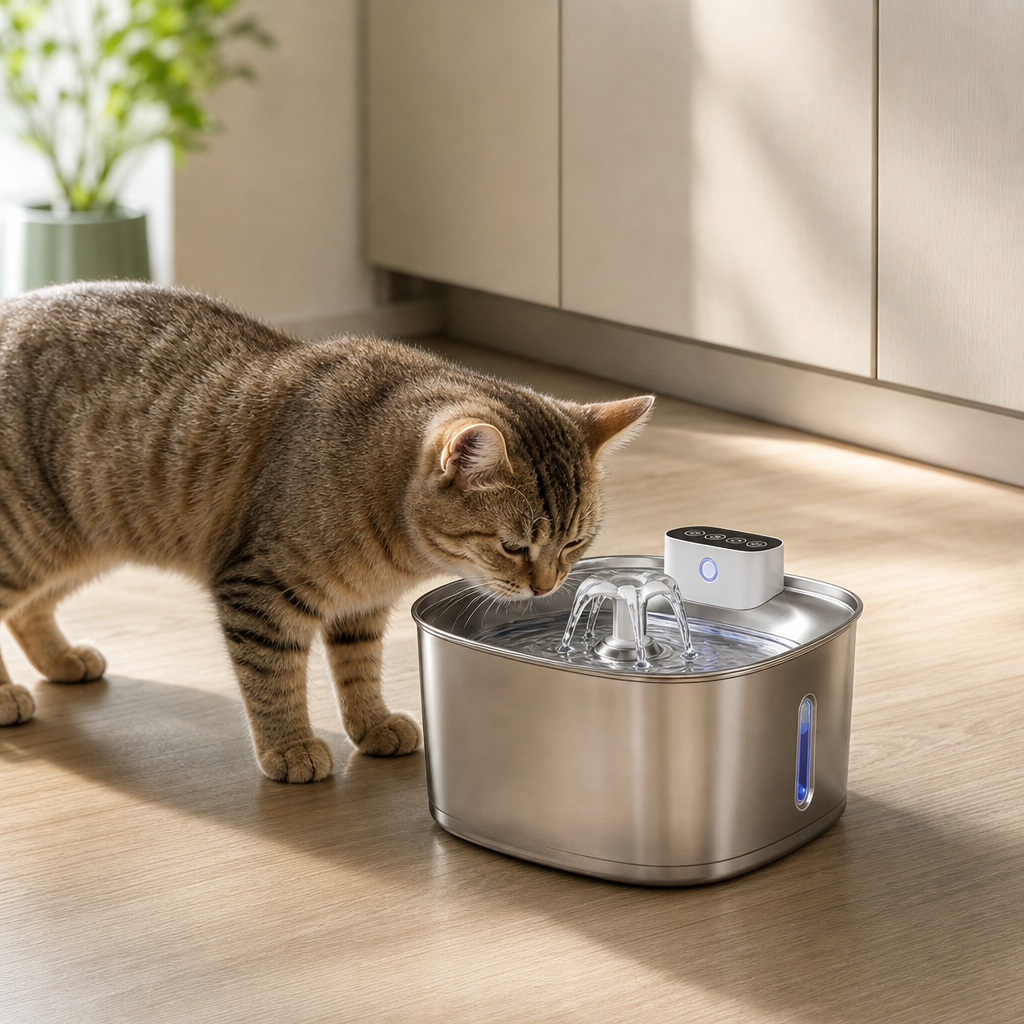
We researched and compared the specs and design trade-offs that matter most for a feline drinking fountain, including two practical options in the BridgePicks lineup: the 3.2L Stainless Steel Cordless Cat Water Fountain at $66.99 and the 3L Automatic Filtered Cat & Dog Water Fountain at $31.99. For a broader look at picks by home setup, see our best cat water fountains roundup.
Quick-reference table
| Factor | How to judge it | Best practical choice |
|---|---|---|
| Capacity | Look for about 3 L or more for most cats and small multi-pet homes. | 3 L to 3.2 L is a useful everyday range. |
| Flow style | Choose a visible stream or bubbler if your cat avoids still water. | A spout or circulating outlet with nozzle options. |
| Material | Pick surfaces that resist odor and wipe clean easily. | Stainless steel basin for hygiene-focused buyers. |
| Power | Match the fountain to outlet placement and outage concerns. | Rechargeable cordless if flexibility matters. |
| Filtration | Check replacement filter availability and package options. | Models with filter cartridges sold in multi-packs. |
| Cleaning | Avoid designs with hidden channels and awkward corners. | Removable basin, pump access, and included brush. |
| Price | Balance material, power design, and filter costs. | $30–$70 covers most strong household options. |
Capacity: size the tank to your cat and your schedule
Capacity is the first spec to check because a tiny reservoir creates two problems: you refill it constantly, and the pump is more likely to run low if you miss a day. For most homes, a kitty water fountain around 3 L is the practical starting point. It gives one cat more breathing room than a small novelty fountain and can also work for cats and small dogs sharing a water station.
The 3L Automatic Filtered Cat & Dog Water Fountain has a 3 L capacity, which is a sensible budget-to-mid household size. The 3.2L Stainless Steel Cordless Cat Water Fountain steps slightly higher at 3.2 L, which gives a little more buffer without becoming bulky. That small difference matters if you are away during a long workday or if your cat drinks more when the water is moving.
How to judge it: choose 3 L or more for one or two cats, especially if you do not want to refill daily. If you have multiple cats, a dog sharing the station, or a cat with a strong preference for fresh-looking water, prioritize the larger usable basin and easy visual access to the water level. A larger fountain water cat setup is only helpful if you can still lift, rinse, and reassemble it without frustration.
Flow style: pick a spout or bubbler your cat will trust
The whole point of a cat bubbler fountain or spout fountain is to make water feel fresher and more interesting than a bowl. Some cats like a gentle bubbling surface; others prefer a clear falling stream. A cat that stares at faucets usually responds better to a visible spout, while a cautious cat may prefer a softer circulating flow.
The 3.2L stainless model includes two nozzles, which is a meaningful design advantage because it lets you adjust the drinking experience without replacing the fountain. If your cat rejects one outlet style, the second nozzle gives you another way to present moving water. The 3L automatic model uses automatic circulating flow with a filtered drinking setup, a straightforward approach for cats and dogs that simply need water kept in motion.
How to judge it: think about your cat’s current habits. Faucet watcher? Choose a kitty spout fountain with a visible stream. Bowl pawer? A cat drinking fountain with circulating surface movement may be enough. Nervous around new objects? Start with a gentler flow, place the fountain where the old bowl was, and keep a familiar still bowl nearby during the transition. If your cat initially refuses the fountain, the issue is often location, sound, or smell—not the idea of moving water itself.
Material: stainless steel is easier to keep fresh
Material affects cleaning, odor, and how long the fountain feels pleasant to use. A cat stainless steel drinking fountain has a clear advantage in the basin area because stainless steel is smooth, durable, and less likely to hold smells than textured or scratched surfaces. That matters for cats, which can be extremely sensitive to scent. If the water area gets slimy or retains detergent odor, a picky cat may walk away.
The 3.2L Stainless Steel Cordless Cat Water Fountain uses a stainless steel basin, making it the stronger pick for buyers focused on hygiene and long-term cleanability. The stainless basin also pairs well with the included cleaning brush and removable design. For shoppers comparing a cat water fountain stainless setup against other styles, our stainless steel vs plastic fountain guide breaks down the trade-offs in more detail.
How to judge it: prioritize the material your cat drinks from, not just the outer shell. A stainless water fountain for cats is especially appealing if you have hard water, a cat prone to chin irritation, or a household that struggles with lingering fountain odors. If price is the main constraint, a simpler filtered model can still be a good buy, but you should be more disciplined about rinsing, wiping, and replacing filters on schedule.
Power and placement: cordless designs solve real household problems
Power design is easy to overlook until you try to place the fountain. A corded cat pet water fountain needs a safe outlet location, a route where pets will not chew or drag the cord, and a spot where splashes will not reach plugs. A rechargeable cordless fountain gives you more placement freedom: hallway, bedroom, kitchen corner, or a sunny room where your cat already spends time.
The 3.2L stainless model has a rechargeable cordless design and includes a Type-C charging cable. That is the better fit if you are worried about outlet placement, short-term power interruptions, or leaving water available while you are out. It is also useful in homes where the best cat drinking location is not near an outlet. The 3L automatic fountain keeps things simpler, with no app required and an upgraded version that adds anti-dry-burn protection and a light.
How to judge it: decide where the fountain should live before you buy. If the only available outlet puts the fountain in a noisy, cramped, or low-traffic area, your cat may ignore it. For bedrooms, avoid placing any fountain directly against a wall or nightstand, where vibration can seem louder. For travel days or long workdays, a cordless rechargeable model adds practical flexibility, though you still need to keep the reservoir filled and the pump clean.
Filtration: replacement cost matters as much as the first filter
A water drinking fountain cats use every day depends on filter maintenance. Filters help catch hair and particles, but they are not a substitute for washing the basin and pump area. The best setup is one where replacement filters are easy to buy in sensible quantities, because an obscure filter size can turn a good fountain into a drawer ornament.
The 3.2L stainless model includes a filter element and has 2-box and 5-box filter cartridge options. The 3L automatic model has automatic filtration and offers a 6-piece replacement filter chip option. Those multi-pack paths are important because filter costs add up over months of use. If you are comparing a budget cat water fountain with a more expensive stainless steel cat drinking fountain, factor in filter availability before focusing only on the purchase price.
How to judge it: check whether replacement filters are sold for the exact model, then estimate whether you will realistically keep them stocked. Multi-packs are usually the safer choice for households that forget reorders. If the fountain starts to look cloudy, smells stale, or collects hair quickly, replace the filter and clean the pump path rather than just topping off the water.
Cleaning access: removable parts prevent slime and scale
The most common reason people give up on a feline water fountain is not the cat—it is cleaning. Water reservoirs, pump covers, tube paths, and spout channels can develop mineral scale and a slick biofilm if they are only rinsed casually. Hard-to-reach corners make the problem worse, especially around the pump intake and nozzle.
Both BridgePicks options use removable designs, which is exactly what you want. The 3.2L stainless model is detachable for cleaning and includes a cleaning brush, a useful small tool for nozzle openings and pump-area crevices. The 3L automatic fountain is also removable for cleaning, which helps keep a lower-cost fountain from becoming a maintenance headache. For step-by-step upkeep, follow our guide to cleaning cat water fountain parts.
How to judge it: look for a basin you can fully remove, a pump you can access, and nozzles or spouts that do not trap residue. If you cannot quickly rinse the parts at the sink, you will clean it less often. A good stainless cat water fountain or automatic filtered model should make the weekly wash feel routine, not like disassembling a small appliance.
Noise control: manage the pump, water level, and surface contact
Many buyers worry that a pump will disturb sleep. Without relying on unverifiable sound claims, the practical way to judge quiet potential is to look at the design and your setup. Pumps usually become more noticeable when water runs low, the pump housing is dirty, the fountain sits on a resonant surface, or the stream splashes too far.
The 3L automatic fountain’s upgraded version includes anti-dry-burn protection, which is useful because low-water operation is one of the situations that can stress a pump. The 3.2L cordless model’s 3.2 L capacity also helps by giving the pump more water reserve between refills. Two nozzle options can help you choose a flow that is less splashy in a bedroom or office.
How to judge it: keep the water level comfortably above the pump intake, clean hair from the pump area, and place the fountain on a stable mat rather than a hollow cabinet or thin metal stand. If your cat water fountain making noise becomes a recurring issue, address water level and pump cleaning before replacing the whole unit. A quiet setup is usually the result of good maintenance plus smart placement.
Concrete price expectations
Budget tier: $20 to $40. This range covers basic automatic filtered fountains, usually around 2 L to 3 L, with simple circulating flow and removable parts. The 3L Automatic Filtered Cat & Dog Water Fountain at $31.99 sits squarely here and is the best value choice if you want a straightforward cat drinking fountain for cats and dogs without app features. It also offers multiple style finishes and standard or upgraded versions, so you can keep the price low or pay a bit more for anti-dry-burn protection and a light.
Mid tier: $40 to $80. This is the sweet spot for better materials, larger basins, and more flexible power. The 3.2L Stainless Steel Cordless Cat Water Fountain at $66.99 is the stronger mid-tier pick because it combines a stainless steel basin, rechargeable cordless operation, Type-C charging, two nozzles, a removable design, and an included filter element. If you want a stainless steel cat water fountain without paying premium smart-fountain prices, this is the range to shop.
Premium tier: $80 to $150+. Premium fountains may add larger housings, more elaborate flow controls, smart features, or specialty filtration. Those extras can be worthwhile in some homes, but they are not automatically better for a cat. A premium fountain still fails if filters are hard to buy, the pump path is annoying to clean, or the flow scares your cat. For most households, a well-designed $30 to $70 fountain is the better buy than an overcomplicated model.
Common mistakes to avoid
Buying for looks instead of cleaning access
A sculptural fountain is a bad purchase if you dread washing it. Prioritize removable parts, pump access, and simple water paths. Slime and scale form fastest in hidden corners, so the easiest fountain to clean is often the one you will keep using.
Ignoring replacement filters
The initial price is only part of the cost. A low-cost fountain becomes expensive if filters are hard to find or sold in awkward quantities. Models with 2-box, 5-box, or 6-piece replacement options are easier to maintain over time.
Placing the fountain where the cat feels trapped
A water fountain for a cat should sit somewhere calm, visible, and away from the litter box. Avoid tight corners where another pet can ambush the cat. If your cat is hesitant, place the fountain near the old bowl location first.
Letting the pump run low
Low water can increase pump stress and make the fountain more noticeable. A 3 L or 3.2 L capacity gives you more margin, but it does not remove the need to refill. Check the reservoir daily until you know your cat’s drinking pattern.
Switching too abruptly
Some cats need time to accept a new cats fountain drinker. Keep the old bowl available for several days, run the fountain consistently, and avoid washing it with strongly scented soap. Familiar placement and neutral smell help the cat build trust.
Which kitty spout fountain should you buy?
Choose the 3.2L Stainless Steel Cordless Cat Water Fountain if you want the cleaner-feeling stainless basin, cordless placement, Type-C charging, two nozzle options, and a slightly larger 3.2 L tank. It is the better choice for hygiene-focused buyers, picky cats that may need a different spout style, and homes where outlet placement is inconvenient.
Choose the 3L Automatic Filtered Cat & Dog Water Fountain if you want a lower-cost automatic filtered setup with a practical 3 L capacity, removable cleaning design, multiple color finishes, and no app requirement. At $31.99, it is the more economical way to try a cat bubbler fountain or automatic feline drinking fountain without jumping into a higher price tier.
For most shoppers, the best cat drinking fountain is the one that your cat will approach and you will maintain. If you want the most durable-feeling, hygiene-forward option, go stainless and cordless. If you want a simple, affordable cat pet water fountain that keeps water moving and filtered, the 3 L automatic model is the sensible budget pick.
Related Guides & Products
- pet-supplies — Top Picks
- How to Choose a Cat Water Fountain
- How to Clean Cat Water Fountain Parts
- Stainless Steel Cat Water Fountain vs Plastic
- 3.2L Stainless Steel Cat Water Fountain Review
- 3L Automatic Cat Water Fountain Review
- Are Cat Water Fountains Worth It? Maintenance Guide
- Best Quiet Cat Water Fountain Buying Guide
- Cat Water Fountain Filter Replacement: When and How
- Stainless Steel Cat Water Fountain Buying Guide
- Why Your Cat Won’t Drink From Water Fountain
- Cat Water Fountain Making Noise: Quick Fixes
- Best Cat Water Fountain for Multiple Cats
- Best Stainless Steel Cat Water Fountain Guide
- How to Clean a Cat Water Filter and Fountain
- Best Cat Water Fountain: Stainless vs Plastic Picks
- 3.2L Stainless Steel Cordless Cat Water Fountain
- 3L Automatic Filtered Cat & Dog Water Fountain
Frequently Asked Questions
Is a spout fountain better than a bowl?
For many cats, yes. Moving water can feel fresher and more interesting than still water, especially for cats that watch faucets or paw at their bowl. A fountain still needs regular cleaning and filter changes.
What capacity should I choose?
A 3 L fountain is a practical starting point for most homes. A 3.2 L model gives a little more reserve, which helps if you work long days or have more than one pet drinking from it.
Is stainless steel worth it?
Stainless steel is worth choosing if hygiene, odor control, and easy wiping matter most. A stainless basin is especially appealing for picky cats and homes dealing with hard-water residue.
How do I reduce fountain noise?
Keep the water level above the pump intake, clean hair from the pump area, and place the fountain on a stable mat. Low water and dirty pump parts are common reasons fountains get louder.
How much should I spend?
Expect $20 to $40 for a basic automatic filtered fountain, $40 to $80 for better materials or cordless designs, and $80 to $150+ for premium features. Most homes do well around $30 to $70.
Do cat fountains need apps?
No. A good cat fountain does not need an app to be useful. Capacity, cleanability, stable flow, filter availability, and smart placement matter more for everyday drinking.