TL;DR: The best slow water bowl dog setup is stable, shallow enough for your dog’s muzzle, easy to scrub, and made from a material that fits your pet’s habits. Choose stainless steel for odor resistance and durability, PP plastic for a lighter low-cost option, and avoid maze designs that are too deep for puppies, cats, or short-nosed dogs.
A good slow water bowl dog setup solves two related problems: drinking or eating too fast, and making a mess while doing it. Fast gulping can lead to coughing, spit-up, vomiting, or gassy discomfort, especially in dogs that inhale meals or crowd the bowl with their whole muzzle. The right bowl slows access without turning dinner into a frustrating puzzle your dog cannot actually use.
For many homes, the best choice is not the most complicated design. It is the bowl that matches your dog’s muzzle length, food type, chewing habits, and cleaning routine. If you are comparing broader options, our vetted slow feeder dog bowl roundup is a useful next stop after you understand the buying factors below.
| Factor | What to look for | Best fit |
|---|---|---|
| Primary problem | Anti-spill for water, maze ridges for food, or both | Dogs that gulp, cough, or push bowls around |
| Material | Stainless steel for odor resistance; PP plastic for light weight | Chewers, puppies, cats, small to medium dogs |
| Maze depth | Ridges that slow access without blocking the muzzle | Short-nosed dogs and puppies need shallower patterns |
| Stability | Anti-slip base, low profile, anti-tip shape | Pets that shove the bowl while eating |
| Size | Bowl diameter and portion capacity that match the pet | Cats, puppies, and small to medium dogs |
| Cleaning | Smooth surfaces and reachable grooves | Wet food, oily kibble, and daily use |
| Price | $8-$16 budget, $17-$30 midrange, $31-$60 premium | Buy by material and fit, not decoration alone |
1. Match the bowl to the actual problem
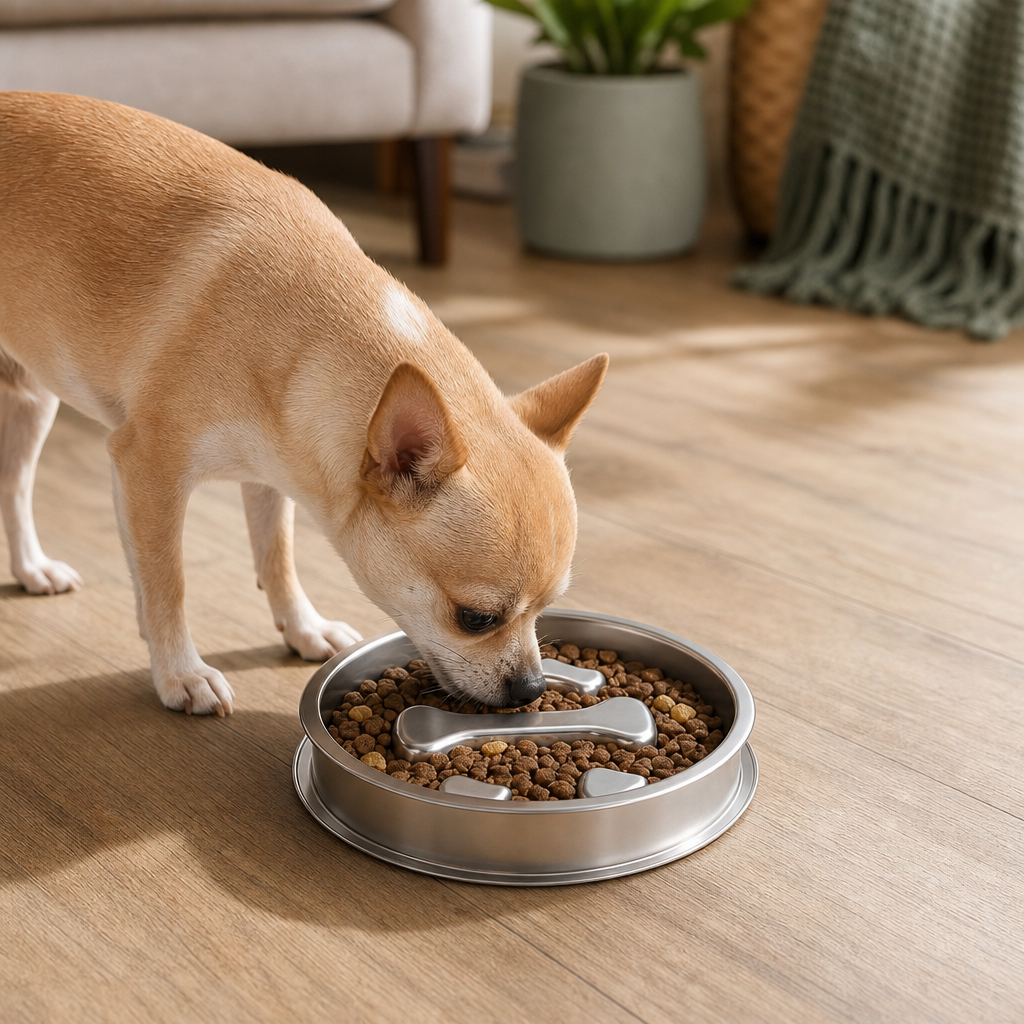
How to judge it: decide whether your dog needs slower drinking, slower eating, less spilling, or all three. A slow feeder dog bowl uses ridges, raised patterns, or maze channels to make a dog work around the surface instead of taking huge mouthfuls. An anti-spill drinking bowl typically controls access to water and reduces sloshing. Some bowls, including square PP designs, can serve as a bowl for dogs to slow eating while also helping contain mess.
If your dog coughs after drinking but eats normally, prioritize an anti-spill or controlled-access water design. If your dog eats kibble like a vacuum and then vomits, a dog feeding bowl slow design with puzzle ridges is more appropriate. If both happen, look for a moderate slow feeder bowl that is stable, easy to clean, and not too deep. The goal is slower, calmer feeding—not a contest to find the slowest dog feeder bowl no matter how hard it is to use.
The Square PP Slow Feeder Dog & Cat Bowl is a compact PP plastic option with an anti-spill square shape, a 230 g item weight, and black or blue color choices. It makes sense for buyers who want a lightweight slow eating bowl dog option for everyday kibble or water control without electronics.
2. Choose the right material for odor, chewing, and daily wear
How to judge it: match the material to your dog’s mouth habits and your tolerance for upkeep. Stainless steel is the safer bet for owners worried about plastic odor, staining, and long-term surface wear. It also tends to feel more substantial even when the bowl itself is small. PP plastic is lighter and usually cheaper, which works well for travel, backup bowls, cats, and dogs that are not aggressive chewers.
A dog bowl to slow eating stainless steel design is especially appealing if your pet eats oily kibble, wet food, or mixed meals. Stainless does not hold smells the way some plastics can, and a smooth feeding surface is easier to rinse clean. The 18 cm Stainless Steel Slow Feeder Dog Bowl uses a stainless feeding surface, comes in 304 and 201 stainless steel options, weighs 150 g, and is sized for cats, puppies, and small to medium dogs. Its small 18 cm format makes it a practical slow eating dog bowl stainless option for smaller pets rather than large-breed gulpers.
PP plastic still has a place. It keeps cost down, reduces weight, and can be shaped into square anti-spill forms. For dogs that chew bowl edges, though, stainless steel is the better direction. For puppies that are still teething, supervise any plastic feeder and remove it when the meal is done.
3. Check maze depth against your dog’s muzzle
How to judge it: look at the height and spacing of the ridges, then picture your dog’s nose actually reaching the food. The most common slow feeder mistake is buying a dramatic maze that looks effective but is too deep for a puppy, cat, senior dog, or short-nosed breed. If the muzzle cannot reach the bottom, the dog may paw at the bowl, tip it, give up, or become frantic.
For short-nosed dogs, choose low to moderate ridges with wide channels. For long-nosed dogs that truly inhale food, a tighter puzzle feeder for dogs can work, but it should still allow the tongue and lips to reach each section. A slow feed design should add seconds and calmness, not stress. If you are new to these bowls, begin with a simpler pattern such as paw, bone, fishbone, or other raised shapes before moving to more complex maze feeders.
The stainless 18 cm bowl’s pattern choices—bone, dog paw, bear paw, and fishbone—are useful because they let you choose the style of obstruction without moving into an overly complex maze. That matters for small pets and dogs that are switching from a normal bowl for the first time.
4. Prioritize anti-slip and anti-tip stability
How to judge it: place stability ahead of looks if your dog pushes the bowl across the floor. A feeder for dogs is only useful if it stays where you put it. Sliding bowls train some dogs to chase the meal, which increases excitement and can make gulping worse. Look for anti-slip bases, a low profile, square corners that resist rolling, or an anti-tip everyday bowl design.
The 18 cm stainless model includes an anti-slip bowl design and anti-tip everyday bowl construction, which helps offset its light 150 g weight. The Square PP bowl uses a compact square form, which can be easier to keep in place than a round lightweight bowl for some pets because the corners resist rotation. For tile, laminate, or polished floors, pair the bowl with a washable mat if your dog is strong enough to shove it.
Do not assume heavier is always better. A very heavy bowl can still skid if the bottom is smooth, and a lightweight bowl can work well if the base grips. Watch your dog’s first few meals: if the bowl travels more than a few inches, improve traction before blaming the slow feeder design.
5. Size the bowl to the pet, not just the portion
How to judge it: consider diameter, bowl height, muzzle width, and meal volume together. A small dog eating a small portion from a huge maze may spend the whole meal chasing pieces around empty channels. A medium dog in a bowl that is too small may not be slowed evenly and may crowd the ridges with its teeth.
The 18 cm stainless steel slow feeder is best understood as a small-format bowl for cats, puppies, and small to medium dogs. It is not the right size class for a large dog with a broad muzzle and a large meal. The Square PP bowl arrives in a 19 × 19 × 7 cm kraft box and has a compact square footprint, making it a reasonable everyday size for dogs and cats where counter storage and floor space matter.
If you are buying specifically for a puppy or compact breed, our small slow feeder dog bowl buyer’s guide goes deeper on proportions. In general, the food should spread across the ridges in a thin layer instead of piling above them. If kibble sits above the maze, the dog can still grab large mouthfuls and the slow feeder loses much of its benefit.
6. Make cleaning part of the buying decision
How to judge it: inspect whether a sponge or brush can reach every groove. Slow feeder bowls naturally create more corners than a plain bowl, so cleaning convenience matters. Oily residue, softened kibble, and wet food can cling to narrow channels. If those channels are too tight, the bowl becomes annoying to maintain and may develop lingering smells.
Stainless steel has the advantage here for many owners because the surface is smooth and odor-resistant. Plastic can be easy to rinse when new, but scratches from teeth or abrasive scrubbing can make it harder to keep fresh over time. For wet food, choose wider channels and avoid very narrow, deep mazes. A slow feeder for dog bowl use should be cleaned after each meal, especially with canned food, fresh food, or kibble mixed with broth.
If your dog eats wet meals, start with a simple ridge pattern and use a small dish brush. The same advice applies to anti-spill water bowls: rinse daily, wipe the surfaces that contact the mouth, and do not let slime build up around floating or recessed areas.
7. Keep the routine simple and safe
How to judge it: favor bowls that fit your normal feeding routine without batteries, apps, or complicated parts. Both featured bowls are non-electric, which is a plus for reliability. No power means there is less to break, no charging routine, and no electronic parts near water or food.
Introduce any dog slow feeder gradually. Add part of the meal to the new bowl and part to a normal bowl for the first few feedings if your dog is nervous. Watch for signs of frustration: hard pawing, biting the ridges, flipping the bowl, or walking away. For dogs with a history of choking, vomiting, or bloat concerns, slower feeding can be one helpful tool, but it should be paired with calm mealtimes and appropriate portions. Our guide on using dog bowls for fast eaters safely covers pacing habits beyond the bowl itself.
Common mistakes to avoid
Buying the deepest maze first. A harder puzzle is not automatically better. If the maze is too deep, small dogs and short-nosed breeds may fail to reach the food and become stressed.
Ignoring plastic chewing. PP plastic is useful and affordable, but it is not ideal for dogs that bite bowl edges. Choose stainless steel if your dog tends to chew household items.
Using one bowl for every food texture. Dry kibble moves differently than wet food. Narrow grooves can trap canned food and oily residue, so wet meals need wider channels and more careful cleaning.
Letting the bowl slide. A dog eating bowl slow design loses value if it skids across the room. Check the floor surface and add a mat when needed.
Choosing by color alone. Black, blue, paw, bone, and fishbone patterns are nice, but the real decision is material, size, ridge depth, and stability.
Expecting instant perfection. Some dogs need a few meals to learn a bowl slow feeder pattern. Start simple, supervise the transition, and adjust if the dog paws or bites the bowl.
Concrete price expectations
Budget: $8-$16. Expect lightweight plastic or PP slow feeder bowls, simple anti-spill shapes, and compact sizing. This tier is good for cats, puppies, travel bowls, and first-time buyers. The Square PP Slow Feeder Dog & Cat Bowl at $15.99 sits at the top of this budget range and offers a lightweight 230 g PP build with dog and cat compatibility.
Midrange: $17-$30. This is the sweet spot for many owners. You can find stainless steel, better anti-slip features, more thoughtful ridge patterns, and everyday durability. The 18 cm Stainless Steel Slow Feeder Dog Bowl at $20.99 is a strong example: stainless feeding surface, anti-slip and anti-tip design, small-pet sizing, and multiple pattern options without electronics.
Premium: $31-$60. Premium slow feeder bowl prices usually reflect larger sizing, heavier construction, specialty materials, elevated bases, or more complex anti-spill systems. This tier makes sense for larger dogs, multi-dog homes, or owners who want a more furniture-like feeding station. Do not pay premium prices just for decoration; the bowl still needs the right maze depth and easy cleaning.
For most small to medium dogs, a $16-$25 bowl is enough. Spend more when you need a larger footprint, stronger non-slip performance, or a material upgrade. Spend less when you are trying a slow feed routine for the first time and your dog is not a chewer.
Bottom line
The best slow water bowl dog choice is the one your pet can use calmly every day. Pick stainless steel if odor resistance, cleaning, and chew durability matter most. Pick PP plastic if you want an affordable, lightweight anti-spill or slow eating dog bowl for a dog or cat that does not chew. Keep the maze shallow enough for the muzzle, make sure the base stays put, and choose a size that spreads the meal across the ridges. A practical slow feeder bowl should reduce gulping without turning feeding into frustration.
Related Guides & Products
- dog slow feeder bowls — Top Picks
- Small Slow Feeder Dog Bowl Buyer’s Guide
- How to Use Dog Bowls for Fast Eaters Safely
- Puzzle and Maze Dog Bowl Buyer’s Guide
- Best Slow Feeder Dog Bowl: Stainless vs PP
- Can You Use a Slow Feeder Dog Bowl for Wet Food?
- 18 cm Stainless Steel Slow Feeder Dog Bowl Review
- Square PP Bowl for Dogs to Slow Eating Review
- 18 cm Stainless Steel Slow Feeder Dog Bowl
- Square PP Slow Feeder Dog & Cat Bowl
Frequently Asked Questions
What is a slow water bowl dog setup?
It is a bowl setup designed to reduce gulping, spilling, or overly fast eating. Some designs focus on water control, while slow feeder bowls use ridges or maze patterns to slow access to food.
Is stainless steel better than PP plastic?
Stainless steel is better for odor resistance, cleaning, and dogs that may chew. PP plastic is lighter, usually less expensive, and works well for pets that are gentle with bowls.
Can puppies use slow feeder bowls?
Yes, if the bowl is small and the maze is shallow enough. Puppies should not struggle to reach food, and they should be supervised while learning the new pattern.
Why does my dog push the bowl around?
The bowl may be too light, the floor may be slick, or the maze may be frustrating. Choose anti-slip or anti-tip designs and consider using a washable mat underneath.
Are deep maze bowls good for short-nosed dogs?
Usually not. Short-nosed dogs need lower ridges and wider channels so they can reach food comfortably without pawing, biting, or tipping the bowl.
How much should I spend?
Budget bowls run about $8-$16, midrange bowls $17-$30, and premium options $31-$60. Most small to medium dogs do well in the $16-$25 range.