TL;DR: The Catit Flower Fountain is a popular choice, but the right cat fountain depends on material, capacity, filtration, and noise. This guide breaks down what to look for, mistakes to avoid, and price expectations. We highlight two well-vetted options: a premium 3.2L stainless steel cordless fountain ($67) and a budget-friendly 3L automatic filtered fountain ($32).
If you’re searching for the best cat water fountain, the Catit Flower Fountain likely caught your eye. Cats are instinctively drawn to moving water, and a fountain encourages drinking, which supports kidney and urinary health. But before you buy, it’s worth understanding what separates a fountain that stays clean, quiet, and reliable from one that ends up collecting dust. We’ve researched and compared dozens of models, including the popular Catit design, and evaluated all the factors that make a difference — from material and filtration to noise and maintenance. Here’s what to look for, plus two solid alternatives we vetted that solve many of the common pain points.
Material Matters: Stainless Steel vs. Plastic
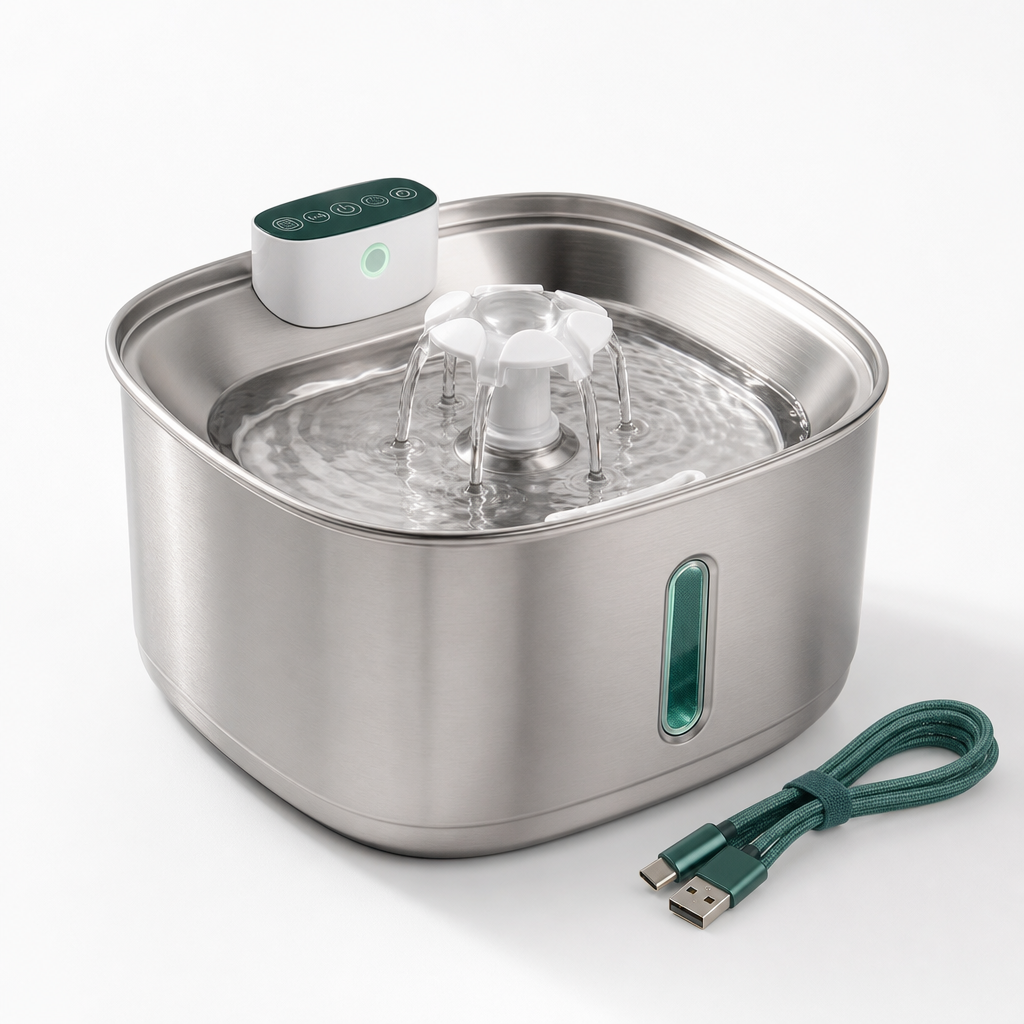
The fountain’s basin material directly affects hygiene and longevity. Plastic is common, but it’s prone to micro-scratches that trap bacteria and can lead to biofilm buildup; some cats even develop chin acne from plastic. Stainless steel, on the other hand, resists scratches, doesn’t leach chemicals, and is far easier to sanitize. If you’re upgrading from a plastic Catit model, consider the 3.2L Stainless Steel Cordless Cat Water Fountain — a premium pick at $66.99 that swaps the plastic basin for a hygienic stainless steel one. For a deeper dive, see our stainless steel vs. plastic guide.
Capacity and Size: How Much Water Do You Need?
Capacity determines how often you refill. A single cat may be fine with 1.5–2 liters, but multi-pet households or small dogs need 3 liters or more to avoid daily top-ups. Both of our picks deliver: the 3.2L stainless steel model supports cats and small dogs, while the 3L Automatic Filtered Cat & Dog Water Fountain offers a 3-liter capacity in a compact footprint. Larger basins also keep water cooler and more oxygenated, which cats prefer. If your cat isn’t drinking enough, a fountain with adequate capacity might be the solution.
Filtration Systems and Replacement Costs
Filters trap hair, debris, and odors, but they’re a recurring expense. Before you buy, check not just whether a filter is included but how much replacements cost and how easy they are to find. The 3.2L stainless steel fountain comes with a filter element, and you can grab 2-box or 5-box packs for uninterrupted use. The 3L automatic model has a 6-piece replacement chip option. In contrast, proprietary filters for some brands can be pricey and hard to stock. For a full breakdown, read our filter replacement guide.
Noise Level: Keeping the Peace at Home
A loud pump can scare cats and annoy you, especially in quiet rooms. The pump’s design matters: submerged pumps tend to run quieter, while external ones often vibrate. Our stainless steel pick uses a rechargeable cordless pump engineered for near-silent operation — no humming to disturb sleep. The upgraded 3L automatic fountain includes anti-dry-burn protection, which helps the pump run smoothly and quietly. If you’re dealing with a noisy unit, our quick fixes for fountain noise can help, but starting with a quiet-design fountain is better.
Ease of Cleaning and Maintenance
A fountain that’s tricky to disassemble will get cleaned less often — and that’s when slime and scaling set in. Always look for removable basins, dishwasher-safe parts, and minimal crevices. Both of our vetted models are fully detachable for cleaning, and the stainless steel version even includes a dedicated cleaning brush. For best results, follow a weekly routine: we detail the process in our how to clean cat water fountain parts guide. Consistent maintenance is what makes fountains worth it long-term.
Power Supply: Corded Convenience vs. Cordless Freedom
Most fountains plug into a wall outlet, which is fine unless you need placement away from sockets or worry about power outages. The 3.2L stainless steel model breaks the mold with a cordless rechargeable design — it runs on a battery charged via the included Type-C cable, so you can place it anywhere. That also means it keeps flowing during a blackout. The 3L automatic fountain is corded, which is standard in its budget tier. If flexibility matters, going cordless is a game-changer, especially in multi-level homes or near busy areas.
Flow Design and Cat Preferences
Cats have individual preferences: some like a gentle stream, others are intrigued by bubbles or a falling water jet. The classic Catit flower offers multiple flow settings through interchangeable nozzles. Our stainless steel pick follows suit with two nozzle options to customize the stream. The 3L automatic fountain provides a steady circulating flow that works for most cats. If you’re unsure, start with a model that offers adjustable flow — it increases the odds that your feline will drink from it. For multi-cat homes, a fountain with multiple flow patterns can cater to different tastes.
Common Mistakes to Avoid
Skipping these steps leads to buyer’s remorse:
- Ignoring filter costs. A cheap fountain can become expensive if proprietary filters cost as much as the unit itself.
- Choosing the wrong capacity. Too small means daily refills; too large wastes counter space.
- Not cleaning weekly. Even the best fountain turns into a bacteria brew if neglected.
- Placing it next to food or litter. Cats instinctively avoid water near those zones.
- Giving up too soon. Some cats need time to adjust; use acclimation tips before returning the fountain.
What You Can Expect to Pay
Cat water fountains span three price tiers:
- Budget (under $35): Basic plastic models like our 3L Automatic Filtered Fountain at $31.99. They circulate water and filter it, but lack premium materials or cordless operation.
- Mid-range ($35–$60): Many Catit Flower Fountains fall here, offering fun designs and multiple flow options in plastic construction.
- Premium ($60+): Stainless steel basins, cordless batteries, and larger capacities. Our top pick, the 3.2L Stainless Steel Cordless Cat Water Fountain at $66.99, represents the best blend of hygiene, quiet operation, and placement freedom.
Quick Reference: Our Top Cat Fountain Picks
| Product | Price | Material | Capacity | Power | Best For |
|---|---|---|---|---|---|
| 3.2L Stainless Steel Cordless | $66.99 | Stainless Steel | 3.2 L | Cordless rechargeable (Type-C) | Multi-pet homes seeking quiet, clean, portable option |
| 3L Automatic Filtered Fountain | $31.99 | Plastic (multiple finishes) | 3 L | Corded electric | Budget-conscious buyers wanting simple auto-circulation |
No matter which fountain you choose, regular maintenance and the right placement will keep your cat hydrated and healthy. Browse our full roundup of best cat water fountains or check out our dedicated stainless steel buying guide for more options.
Related Guides & Products
- pet-supplies — Top Picks
- How to Choose a Cat Water Fountain
- How to Clean Cat Water Fountain Parts
- Stainless Steel Cat Water Fountain vs Plastic
- 3.2L Stainless Steel Cat Water Fountain Review
- 3L Automatic Cat Water Fountain Review
- Are Cat Water Fountains Worth It? Maintenance Guide
- Best Quiet Cat Water Fountain Buying Guide
- Cat Water Fountain Filter Replacement: When and How
- Stainless Steel Cat Water Fountain Buying Guide
- Why Your Cat Won’t Drink From Water Fountain
- Cat Water Fountain Making Noise: Quick Fixes
- Best Cat Water Fountain for Multiple Cats
- Best Stainless Steel Cat Water Fountain Guide
- How to Clean a Cat Water Filter and Fountain
- Best Cat Water Fountain: Stainless vs Plastic Picks
- Kitty Spout Fountain Buyer’s Guide
- Wonder Creature Pet Fountain Buyer’s Guide
- Pet Drinking Fountain Buyer’s Guide | Cat & Dog Water Fountains
- 3.2L Stainless Steel Cordless Cat Water Fountain
- 3L Automatic Filtered Cat & Dog Water Fountain
Frequently Asked Questions
Is stainless steel better than plastic?
Stainless steel resists bacteria buildup and scratches better than plastic, making it more hygienic and easier to clean. It’s the preferred choice if your main concerns are long-term cleanliness and durability.
How often should I replace the filter?
Most manufacturers recommend replacing the filter every 2–4 weeks. Check the specific model’s guidelines and always keep spare filters on hand to maintain water quality and pump performance.
Can I run a cat fountain without a filter?
Technically yes, but it’s not recommended. Filters remove debris, hair, and odors, and help keep the pump from clogging. Without one, you’ll need to change the water more frequently.
How do I get my cat to use the fountain?
Place it away from food and litter boxes, start with still water while it’s off, then gradually turn it on. Some cats need days to adjust. Patience and positive reinforcement help.
Why does my fountain get slimy?
That’s biofilm — a buildup of bacteria from your cat’s saliva and organic matter. Regular weekly cleaning, using filtered water, and replacing the filter on schedule will keep slime at bay.