TL;DR: Fast eating can cause choking, vomiting, and bloat. A slow feeder dog bowl with a puzzle maze extends mealtime. Stainless steel models resist odors and are easy to sanitize, while lightweight PP bowls are portable and budget-friendly. We evaluated a 18 cm stainless bowl ($20.99) and a square PP bowl ($15.99) to help you pick the safest, easiest-to-clean option.
If your dog inhales kibble in seconds, a slow feeder bowl is a straightforward fix. The Outward Hound Fun Feeder Slo Bowl is a popular name, but after comparing materials and designs we found that stainless steel and polypropylene (PP) rivals can deliver the same slowing power with less odor, better hygiene, and a lower price tag. In this guide we walk through the five key factors to weigh before you buy, plus the most common mistakes that send people back to a standard bowl.
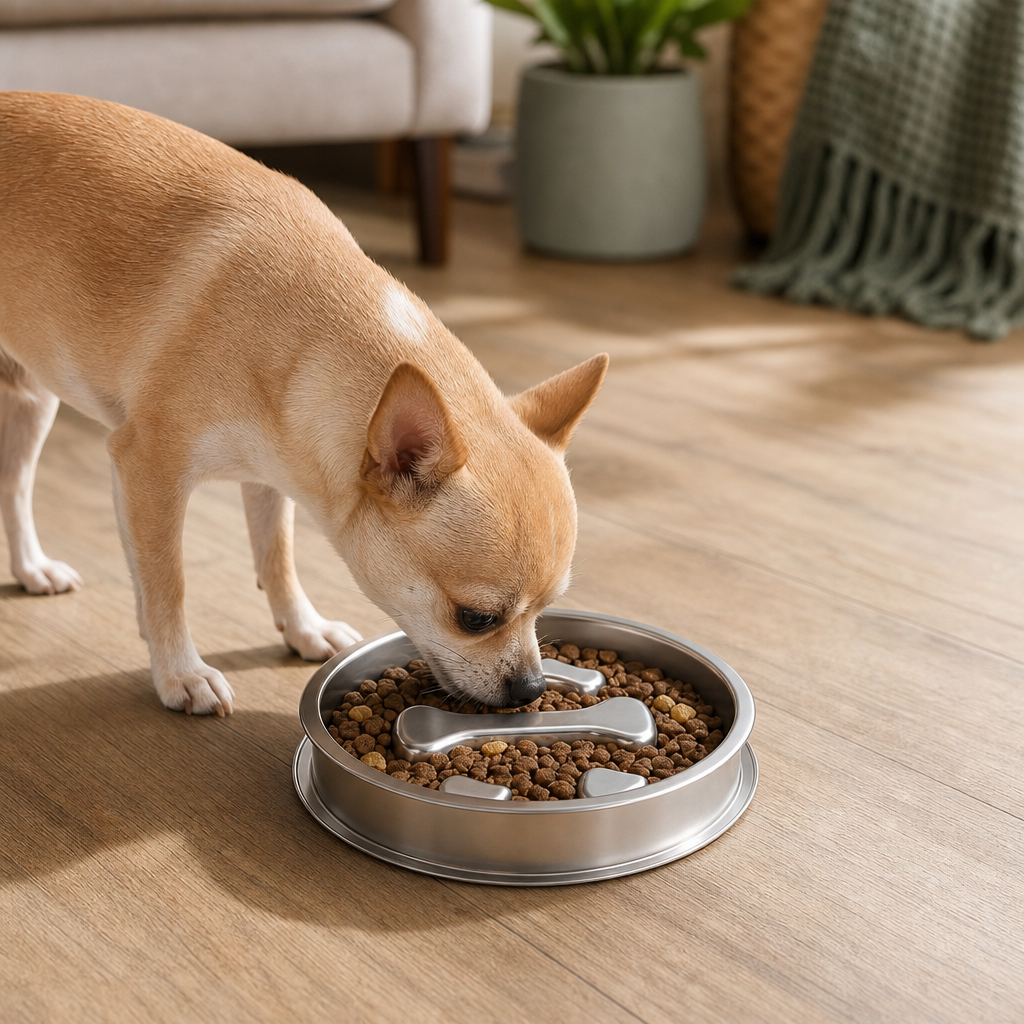
Below we compare two bowls we vetted from our full slow-feeder lineup: an 18 cm stainless steel slow feeder bowl ($20.99) and a square PP slow feeder dog & cat bowl ($15.99). Both are human-powered puzzle bowls—no electronics, no batteries—that force your dog to navigate ridges for every bite.
Quick-Reference Comparison
| Feature | 18 cm Stainless Steel Bowl | Square PP Bowl |
|---|---|---|
| Material | 304 or 201 stainless steel | PP plastic (black or blue) |
| Size | 18 cm diameter; 150 g | 19 × 19 × 7 cm; 230 g |
| Best for | Cats, puppies, small to medium dogs | Dogs and cats; all sizes (capacity‑dependent) |
| Maze patterns | Bone, dog paw, bear paw, fishbone | Raised square labyrinth |
| Anti‑slip | Yes — anti‑tip base | Yes — square shape resists sliding |
| Dishwasher safe | Yes (stainless steel) | Top‑rack safe (PP) |
| Price | $20.99 | $15.99 |
1. Material: Stainless Steel vs PP Plastic
The bowl material dictates hygiene, durability, and how your dog reacts to it. We compared stainless steel and PP options in depth, and the take‑away is clear: stainless steel holds almost no odor, resists bacterial build‑up, and can be sanitized with boiling water or a dishwasher without degradation. Our 18 cm model comes in 304 and 201 stainless steel grades; both are non‑porous and won’t leach into food. For dogs that tend to bury or nudge the bowl, stainless withstands scratching better than plain plastic.
PP plastic bowls, like the square model we evaluated, are lightweight and cost less. Modern PP is BPA‑free and generally considered food‑safe, but it can retain faint smells over time, especially with wet food. Abrasive scrubbers can micro‑scratch the surface, creating niches for biofilm. If you choose a plastic slow feeder, wash it after every meal and avoid steel‑wool pads.
2. Size and Who It Fits
An 18 cm stainless slow feeder is built for cats, puppies, and small to medium dogs. The shallow dish and moderate ridges don’t strain short snouts, so small‑breed owners often find it a sweet spot. For larger dogs this bowl still works as a meal‑pacer, but you may need to refill or pair it with a second bowl to serve a full portion. The square PP bowl has a 19 × 19 cm footprint, which holds a comparable volume; its labyrinth covers the entire floor, so a medium dog can eat a full meal without refills.
Common mistake: picking a bowl with a maze so deep that flat‑faced (brachycephalic) dogs can’t reach the food. If your dog is a Pug, Bulldog, or Persian cat, look for a bowl with raised but shallow ridges, like the fishbone pattern on our stainless model. The bone and paw patterns are similarly low‑profile.
3. Maze Design and Challenge Level
Maze complexity controls eating speed. A pattern with tight curves and narrow channels forces a dog to lick and nibble, which can extend a meal from 30 seconds to 5‑10 minutes. The stainless bowl comes in four patterns—bone, dog paw, bear paw, fishbone—each with a different difficulty. The fishbone pattern, with its radiating spines, tends to be the toughest; the bear paw, with broader ridges, is beginner‑friendly. The square PP bowl uses a single raised square‑within‑square labyrinth that works for both kibble and wet food; its walls are moderately tall, so it’s challenging enough for most fast eaters without frustrating determined seniors.
If your dog has never used a puzzle feeder, start with a simpler pattern and supervise the first few sessions. Some dogs will try to knock the bowl over; both of our picks have anti‑slip measures, but a heavier bowl is naturally harder to tip.
4. Stability and Anti‑Slip Features
A bowl that slides across the floor can cause spills, scratches, and a flustered dog. The 18 cm stainless bowl has a wide, slightly flared base that acts as an anti‑tip ring. On tile or hardwood it stays put during normal eating, though a determined dog can still shove it. The square PP bowl’s flat‑bottomed, square shape resists sliding better than round plastic bowls because the corners dig in subtly. For extreme pushers, place the bowl on a silicone mat or in a corner to anchor it further.
Weight also helps stability. The stainless steel bowl weighs 150 g, which is light but heavier than many plastic bowls of similar size. The PP bowl weighs 230 g, and the extra mass along with its square footprint gives it an edge on slippery floors.
5. Ease of Cleaning and Daily Upkeep
If cleaning is a chore, you’ll dread using the bowl. Stainless steel is the gold standard here: it doesn’t absorb grease, so a quick scrub with soap and hot water removes kibble oils and saliva residue. It’s dishwasher safe, and you can even pour boiling water over it for a deep clean. PP plastic can go in the top rack of most dishwashers, but hand‑washing with a soft brush is gentler and helps prevent micro‑scratches. Avoid abrasive powders and steel wool on plastic.
The labyrinth ridges themselves need attention. Use a dedicated bottle brush or a pet‑safe silicon scrubber to reach between spines. Some owners rinse the bowl immediately after a meal to prevent dried‑on crud; both of our reviewed bowls have smooth‑edged ridges that don’t trap particles excessively, but the stainless model’s non‑stick character makes rinse‑and‑scrub faster. For more on wet food, see can you use a slow feeder bowl for wet food?
6. Price Tiers and What to Expect
Slow feeder bowls fall into three rough price bands:
- Budget (under $15): Basic PP bowls with simple mazes. Prone to sliding, and may lack BPA‑free certifications. Suitable as a first tester.
- Mid‑range ($15–$25): Quality PP or entry‑level stainless steel. Our square PP bowl ($15.99) and 201‑grade stainless bowl fit here. You get better anti‑slip design, food‑grade materials, and sometimes multiple patterns.
- Premium (over $25): Heavy‑gauge 304 stainless, double‑walled construction, extra‑tall mazes for determined gobblers, or designer ceramic. These bowls often last a lifetime and resist even the most aggressive chewers.
In our research, the best value sits in the mid‑range. Spending $16 to $21 gets you a bowl with genuine puzzle geometry, sturdy build, and materials that won’t degrade after a few months of daily use.
Common Mistakes to Avoid
- Choosing a bowl that’s too small. A bowl sized for a Chihuahua won’t hold enough kibble for a Labrador. Check dimensions against your dog’s portion size.
- Ignoring maze depth. Deep, narrow grooves can frustrate short‑nosed dogs. If your dog gives up, the bowl is too hard.
- Skipping the anti‑slip check. Even a great bowl is useless if it scoots across the floor. Look for rubber feet, weighted rings, or a square shape.
- Assuming all plastics are alike. Cheap blends can smell, crack, or harbor bacteria. Stick with food‑grade PP or upgrade to stainless.
- Not supervising the first meals. Observe how your dog interacts with the maze; some need a simpler pattern to start.
- Forgetting to clean the grooves. Rinse after every use and deep‑clean weekly to prevent slime and odors.
A slow feeder bowl transforms mealtime from a two‑second gulp to a nourishing routine. The 18 cm stainless steel bowl is our top pick for everyday hygiene and small‑dog friendliness, while the square PP bowl offers a lighter, budget‑conscious entry point that still stands up to a hungry pet. Whichever you choose, match the pattern to your dog’s patience and never skip the rinse.
Related Guides & Products
- dog slow feeder bowls — Top Picks
- Small Slow Feeder Dog Bowl Buyer’s Guide
- How to Use Dog Bowls for Fast Eaters Safely
- Puzzle and Maze Dog Bowl Buyer’s Guide
- Best Slow Feeder Dog Bowl: Stainless vs PP
- Can You Use a Slow Feeder Dog Bowl for Wet Food?
- 18 cm Stainless Steel Slow Feeder Dog Bowl Review
- Square PP Bowl for Dogs to Slow Eating Review
- Slow Water Bowl Dog Buyer’s Guide
- Ceramic Slow Feeder Dog Bowl Buyer’s Guide
- Slow Eating Dog Bowl for Small Dogs: Buyer’s Guide
- Puppy Slow Feeder Buyer’s Guide
- Anko Pet Slow Feed Bowl () Reviews
- Slow Feeder Dog Bowl Buyer’s Guide
- 18 cm Stainless Steel Slow Feeder Dog Bowl
- Square PP Slow Feeder Dog & Cat Bowl
Frequently Asked Questions
Can a slow feeder bowl help with dog bloat?
Slowing food intake can reduce air swallowing and lower the risk of bloat (GDV), but it is not a guaranteed safeguard. Supervise meals, especially for deep‑chested breeds.
Is stainless steel better than plastic for a slow feeder?
Stainless steel resists odors, bacteria, and scratches. It’s dishwasher‑safe and non‑porous. Plastic is lighter and cheaper but may hold smells over time.
How do I clean the ridges inside a slow feeder bowl?
Use a soft bottle brush or pet‑safe scrubber with warm, soapy water. Avoid abrasive pads on plastic. Stainless bowls tolerate boiling water for deep cleaning.
What pattern is best for a dog that eats very fast?
Choose a complex pattern with tight curves, like the fishbone maze. For beginners, a simpler paw or bone pattern works well and keeps them engaged.
Can I use a slow feeder bowl for wet food?
Yes, both stainless and PP bowls handle wet food. The maze slows licking; just clean the bowl thoroughly after each use to prevent residue buildup.