TL;DR: The best puppy slow feeder is shallow enough for a small muzzle, stable enough not to skate across the floor, and easy enough to clean after wet or oily food. For most puppies, start with a small PP bowl around $12 to $18 or a stainless steel slow eating dog bowl around $18 to $30. Avoid overly deep mazes that turn meals into frustration.
A good puppy slow feeder should solve one problem without creating three more. The goal is to slow a fast eater that gulps kibble, coughs, vomits, or gets gassy after meals, while still letting a small or short-nosed puppy reach the food comfortably. In our research and product comparisons, the best slow feeder dog bowl for a puppy is not automatically the most complicated maze. It is the bowl with the right size, shallow channels, safe material, grippy base, and cleaning routine.
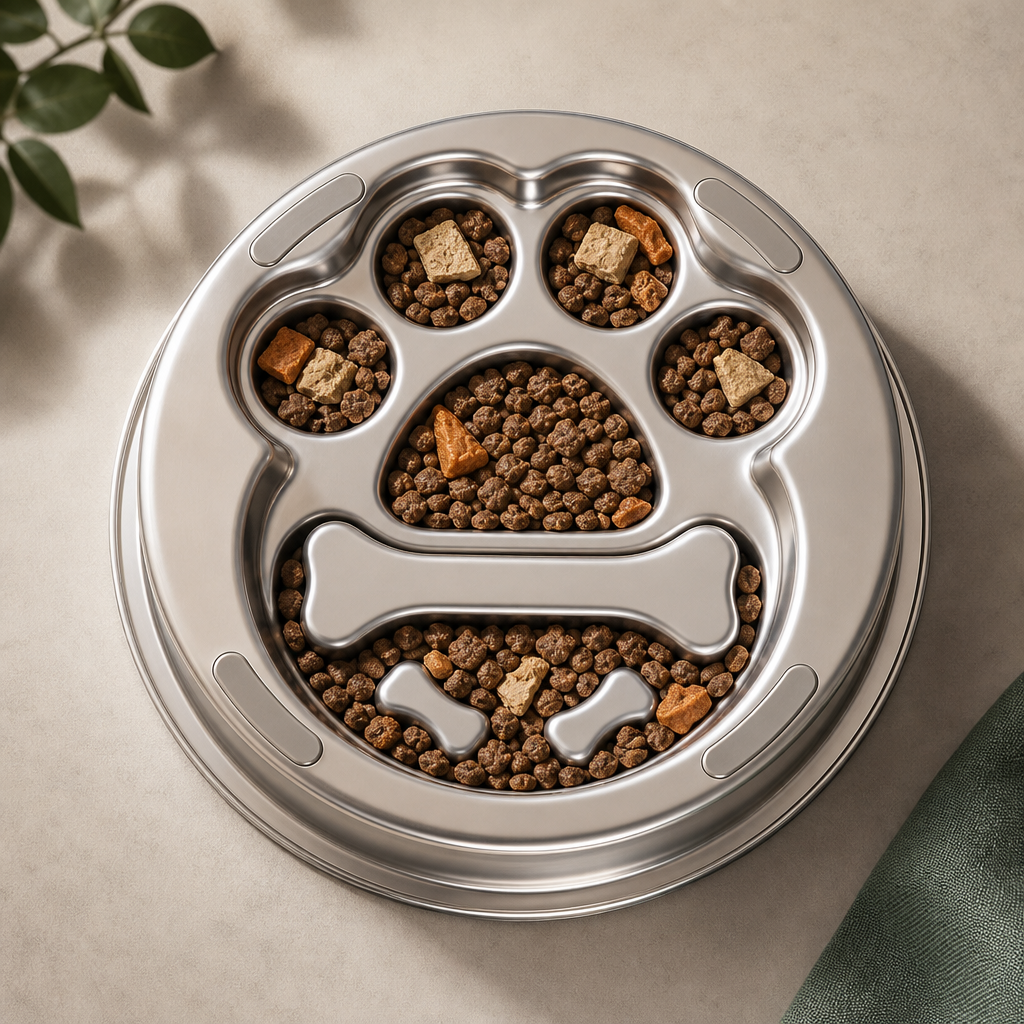
For a compact stainless option, the 18 cm Stainless Steel Slow Feeder Dog Bowl is a small 150 g bowl designed for cats, puppies, and small to medium dogs, with a stainless feeding surface, anti-slip design, anti-tip everyday shape, and bone, paw, bear paw, or fishbone pattern choices. If you want a lightweight plastic slow feeder, the Square PP Slow Feeder Dog & Cat Bowl is a 230 g PP bowl with an anti-spill square shape, black or blue color options, and no electronics to manage. Both are simple, non-automatic dog feeding bowls to slow eating, but they suit different puppies and households.
Quick-reference table: what to check before buying
| Factor | What to look for | Best choice for most puppies |
|---|---|---|
| Size | Small footprint, low enough sides, portion-appropriate capacity | An 18 to 19 cm bowl for small puppies and small breeds |
| Maze depth | Channels that slow eating without trapping food out of reach | Shallow to moderate ridges, not extreme puzzle walls |
| Material | Odor resistance, chew resistance, easy cleaning | Stainless steel for durability; PP for lower cost and light weight |
| Stability | Anti-slip base, anti-tip shape, enough weight to stay put | Anti-slip designs for puppies that push bowls while eating |
| Cleaning | Smooth surfaces and grooves you can reach with a brush | Simple patterns over very tight, deep mazes |
| Food type | Kibble, wet food, toppers, or water use | Kibble for easiest use; wet food only if grooves clean easily |
| Price | Good material and design without overbuying | $12 to $30 for most puppy slow feeder bowls |
1. Size: match the bowl to a puppy mouth, not an adult appetite
The first buying decision is physical size. A dog eating bowl slow design only works if the puppy can actually reach the food. Oversized bowls can spread kibble too far apart, encourage pawing, and make short meals feel like a hunt. Undersized bowls can crowd food into corners and cause frustration.
For many puppies and small breeds, a compact bowl around 18 to 19 cm is the sweet spot. The 18 cm Stainless Steel Slow Feeder Dog Bowl is specifically a small-format bowl for cats, puppies, and small to medium dogs. The Square PP Slow Feeder Dog & Cat Bowl ships in a 19 × 19 × 7 cm retail box, which puts it in the compact category rather than the large-breed feeder category.
If your puppy is under a few months old, has a flat face, or eats a small measured portion, prioritize reach over maximum slowing. You want a bowl for dogs to slow eating, not a puzzle so large that the puppy gives up, paws food out, or starts guarding the bowl. For a deeper look at compact sizing, see our small slow feeder dog bowl buyer’s guide.
2. Maze depth: slow eating without blocking access
The maze is the part that turns a regular feeder for dogs into a slow feeder. Ridges, islands, paw shapes, bones, fishbones, and square channels force the puppy to lick and nose food out in smaller bites. That pacing can reduce gulping and make meals calmer for puppies that otherwise inhale kibble, choke, burp, vomit, or swallow too much air.
For puppies, however, deeper is not always better. The slowest dog feeder bowl in a catalog may be too difficult for a small muzzle or a short-nosed breed. A good puppy slow feeder should make the meal take longer, but your puppy should still be able to reach most pieces with its tongue rather than digging hard with teeth or paws.
The stainless 18 cm bowl uses a slow-feeder puzzle design with multiple pattern options, which is useful if you want the same basic bowl format with a different obstacle layout. The Square PP bowl uses a square anti-spill shape and slow-feeding structure, a practical layout for small spaces and pets that nudge bowls around. For puppies new to puzzle feeders for dogs, start with an easier pattern and increase difficulty later if meals are still disappearing too quickly.
3. Material: stainless steel vs PP plastic
Material matters because puppies chew, lick aggressively, and leave oily residue behind. Stainless steel is the stronger long-term pick for households worried about odor, chewing, and surface wear. A dog bowl to slow eating stainless steel design is also a good choice when you feed smellier food or rotate between kibble and wet toppers. The 18 cm stainless bowl comes in 304 stainless steel and 201 stainless steel options, with a stainless feeding surface and no power or automation.
PP plastic is a sensible budget material when you want something light, affordable, and easy to move. The Square PP Slow Feeder Dog & Cat Bowl is made from PP plastic, weighs 230 g, and works for dogs and cats. PP can be a good first slow feed bowl for a puppy, especially if you are still learning whether your dog prefers a square layout or a round bowl. If your puppy is a determined chewer, supervise meals and remove any bowl after eating rather than leaving it down as a chew toy.
For most homes, choose stainless if your top concerns are odor control, bite resistance, and long-term durability. Choose PP if your priorities are lower price, light weight, and a compact anti-spill shape. We break down this trade-off further in our stainless vs PP slow feeder comparison.
4. Stability: stop the bowl from becoming a floor hockey puck
A puppy that eats fast often pushes the bowl at the same time. If the base slides, the dog may chase it across the kitchen, spill food, or get more excited. Stability is especially important on tile, laminate, and sealed wood floors.
Look for an anti-slip base, an anti-tip bowl profile, or a shape that resists rolling. The 18 cm Stainless Steel Slow Feeder Dog Bowl has both anti-slip and anti-tip everyday-bowl design features. That matters for puppies that plant their nose into the feeder and shove forward. The Square PP bowl uses an anti-spill square shape, which gives it a broader stance than a narrow round dish and helps keep food contained during normal use.
Weight also affects stability, but heavier is not always better for puppies. A very heavy ceramic slow eating bowl dog design may stay put, but it can be awkward to move and risky if dropped. A 150 g stainless bowl is easy to pick up and wash; a 230 g PP bowl has a bit more mass while staying lightweight. If your puppy is a serious bowl pusher, put the slow feeder on a washable mat rather than buying an oversized adult bowl.
5. Cleaning: choose grooves you can actually wash
Slow feeders work because they add grooves, but those same grooves can trap saliva, food dust, and oil. That is the biggest day-to-day complaint with many dog feeding bowl slow designs. If the maze is too tight for a sponge or brush, residue builds up quickly, especially with canned food, fresh food, or kibble coated in fish oil.
When judging any slow feeder bowl, look at the width of the channels and the smoothness of the feeding surface. Stainless steel generally wipes cleaner and holds less odor than plastic. PP is still practical, but it needs routine washing and careful inspection if oily food sits in the corners. Pattern choice matters too: a bone or paw pattern can be easier to scrub than a very dense labyrinth.
For puppies eating wet food or toppers, choose a design with accessible grooves and rinse it soon after the meal. If you are trying soft food in a slow feeder, our guide to using a slow feeder dog bowl for wet food explains which bowl shapes are easiest to live with.
6. Food type and feeding routine: slow feed safely
A slow feeder for dog bowl use is not only about hardware. The routine matters. Start by serving the puppy’s normal measured portion in the new bowl. Watch the first few meals to confirm that the dog is licking and nosing food out calmly, not biting the ridges, flipping the bowl, or becoming frantic.
Kibble is the easiest food for most slow feeder bowls. Small kibble rolls into the channels and creates a steady pace. Large kibble may bridge over ridges and reduce the effect, while very tiny kibble can get trapped in sharp corners. Wet food can work, but only if the grooves are not too deep and you clean promptly.
Do not use a slow feeder as a substitute for basic feeding management. Puppies that gulp because they are competing with other pets may need separate meal spaces. Puppies that vomit repeatedly, cough frequently, or show a swollen belly after eating need closer attention from their caregiver. For practical setup tips, including how to introduce slower meals without frustration, read our guide on how to use dog bowls for fast eaters safely.
7. Design details: patterns, shape, and no-electronics simplicity
Simple is usually better for a puppy. Neither of the compared bowls uses automatic feeding or electronics, which keeps cleaning easier and removes cords, batteries, timers, and mechanical parts from the puppy’s eating area. For a daily dog slow feeder, that is a real advantage.
Pattern and shape influence how the dog interacts with the bowl. The stainless bowl offers bone, dog paw, bear paw, and fishbone patterns, so you can choose a look that still keeps food broken into smaller zones. The Square PP bowl comes in black or blue and has a square format that fits neatly against a wall or in a feeding station.
For puppies that are easily frustrated, avoid very tall center posts and narrow wells. For puppies that eat too fast but stay calm, a moderate puzzle feeder is enough. For puppies that flip bowls, prioritize anti-tip design before you prioritize a more complex maze.
Common mistakes when buying a puppy slow feeder
Buying the most complicated maze first. A slow eating dog bowl should slow the meal, not turn every breakfast into a battle. Start moderate, especially for small puppies and short-nosed dogs.
Ignoring material because the bowl looks cute. Cute patterns are fine, but stainless steel and PP behave differently. Stainless is the better pick for odor resistance and chew-prone homes; PP is better when price and light weight matter more.
Leaving the bowl down all day. Slow feeders are meal tools, not chew toys. Pick the bowl up after eating, wash it, and store it until the next meal.
Choosing an adult-size feeder for a small puppy. A huge bowl may look like better value, but the ridges can be too far apart and the food can spread beyond easy reach.
Forgetting the floor surface. If the bowl slides, your puppy may eat faster, not slower. Anti-slip and anti-tip details are worth paying for.
Using wet food in narrow grooves without cleaning right away. Oil and residue build up fast. Choose accessible channels if wet meals are part of your routine.
Concrete price expectations
Budget: $8 to $16. Expect basic plastic or PP slow feeder bowls, often lightweight and simple. This tier makes sense for a first puppy slow feeder, travel bowl, or backup feeder. The Square PP Slow Feeder Dog & Cat Bowl at $15.99 sits at the upper end of the budget tier and gives you a compact square shape, PP build, dog-and-cat compatibility, and anti-spill design.
Mid-range: $17 to $30. This is the best tier for most puppy owners. You can find stainless steel slow eating dog bowl options, better anti-slip bases, sturdier designs, and easier cleaning surfaces. The 18 cm Stainless Steel Slow Feeder Dog Bowl at $20.99 is a strong mid-range pick because it combines a small puppy-friendly format, stainless feeding surface, anti-slip design, anti-tip shape, and multiple puzzle patterns.
Premium: $31 to $60. Premium slow feeder bowl designs usually bring heavier materials, decorative ceramic bodies, larger sizes, or specialized feeding systems. They can be worth it for a permanent adult-dog setup, but many puppies outgrow their first bowl. Unless your puppy already has a clear size and feeding style, most buyers should stay in the $12 to $30 range and upgrade later.
Our bottom-line recommendation
For most puppies, choose a small to medium slow feeder bowl with shallow-to-moderate ridges, a stable base, and a material that matches your cleaning tolerance. If your puppy eats fast, pushes bowls, and you want better odor resistance, the 18 cm stainless model is the better everyday pick. If you want a lower-cost, lightweight starter bowl for dogs and cats, the square PP model is the better value.
Do not chase the slowest dog feeder bowl unless your puppy truly needs that level of difficulty. The right puppy slow feeder should make meals calmer, cleaner, and safer while still letting a young dog enjoy eating.
Related Guides & Products
- dog slow feeder bowls — Top Picks
- Small Slow Feeder Dog Bowl Buyer’s Guide
- How to Use Dog Bowls for Fast Eaters Safely
- Puzzle and Maze Dog Bowl Buyer’s Guide
- Best Slow Feeder Dog Bowl: Stainless vs PP
- Can You Use a Slow Feeder Dog Bowl for Wet Food?
- 18 cm Stainless Steel Slow Feeder Dog Bowl Review
- Square PP Bowl for Dogs to Slow Eating Review
- Slow Water Bowl Dog Buyer’s Guide
- Ceramic Slow Feeder Dog Bowl Buyer’s Guide
- Slow Eating Dog Bowl for Small Dogs: Buyer’s Guide
- 18 cm Stainless Steel Slow Feeder Dog Bowl
- Square PP Slow Feeder Dog & Cat Bowl
Frequently Asked Questions
What size puppy slow feeder is best?
Most puppies do well with a compact bowl around 18 to 19 cm, as long as the ridges are low enough for the puppy to reach food comfortably.
Is stainless steel better than PP plastic?
Stainless steel is better for odor resistance, chew resistance, and long-term durability. PP plastic is lighter and usually less expensive, making it a practical starter choice.
Can short-nosed puppies use slow feeders?
Yes, but choose shallow or moderate grooves. Avoid deep maze bowls that force a short-nosed puppy to dig, bite, or paw food out aggressively.
Should I use wet food in one?
You can use wet food if the grooves are accessible and you wash the bowl soon after eating. Smooth stainless surfaces are usually easier to clean.
How much should I spend?
Plan on $8 to $16 for budget PP bowls, $17 to $30 for better stainless or anti-slip designs, and $31 to $60 for premium materials or larger formats.