TL;DR: For most small dogs, pick a compact slow feeder with shallow-to-moderate ridges, a stable base, and easy-clean grooves. Stainless steel is the better long-term choice for odor control and chew resistance; PP plastic costs less and can work well for lighter eaters. Expect to pay $8-$17 for budget plastic, $18-$30 for stronger everyday bowls, and $31-$60+ for premium ceramic or specialty designs.
A good slow eating dog bowl for small dogs should do two things at once: slow the meal without turning dinner into a frustrating puzzle, and stay put while a small dog noses around the ridges. Fast eating can lead to gagging, vomiting, and gas, but the wrong slow feeder can create its own problems: grooves that are too deep for a short muzzle, plastic that holds odor, or a slippery base that skates across the kitchen floor.
We evaluate slow feeders by size, ridge depth, material, stability, cleaning effort, and value. If you are comparing broader options, our vetted slow feeder dog bowl roundup is a useful place to start. For small dogs specifically, the sweet spot is usually a compact bowl with a controlled maze pattern, not the biggest or most complicated puzzle feeders for dogs.
Quick-reference table
| Factor | What to look for | Best fit | Watch out for |
|---|---|---|---|
| Size | Compact diameter and reachable ridges | Toy breeds, puppies, cats, small dogs | Oversized bowls that let kibble spread too far |
| Maze depth | Shallow to moderate channels | Short-snouted dogs and cautious eaters | Deep towers that block access |
| Material | Stainless steel or durable PP plastic | Stainless for odor control; PP for lower cost | Soft plastic that chews easily or holds smell |
| Stability | Anti-slip and anti-tip design | Dogs that push bowls while eating | Light bowls on slick tile or wood floors |
| Cleaning | Wide grooves and smooth surfaces | Wet food, oily kibble, daily washing | Narrow crevices that trap residue |
| Price | $8-$17 budget, $18-$30 mid, $31-$60+ premium | Most homes land in the $15-$25 range | Paying more for complexity your dog cannot use |
1. Size: choose a bowl your small dog can actually reach
For a small dog, size is not just about portion capacity. A slow feeder dog bowl has raised ridges, channels, or puzzle shapes that make the dog work around obstacles. If the bowl is too wide, kibble spreads into distant corners; if the ridges are too tall, a puppy or short-nosed breed may struggle to reach the food. That is when a dog eating bowl slow design becomes frustrating instead of helpful.
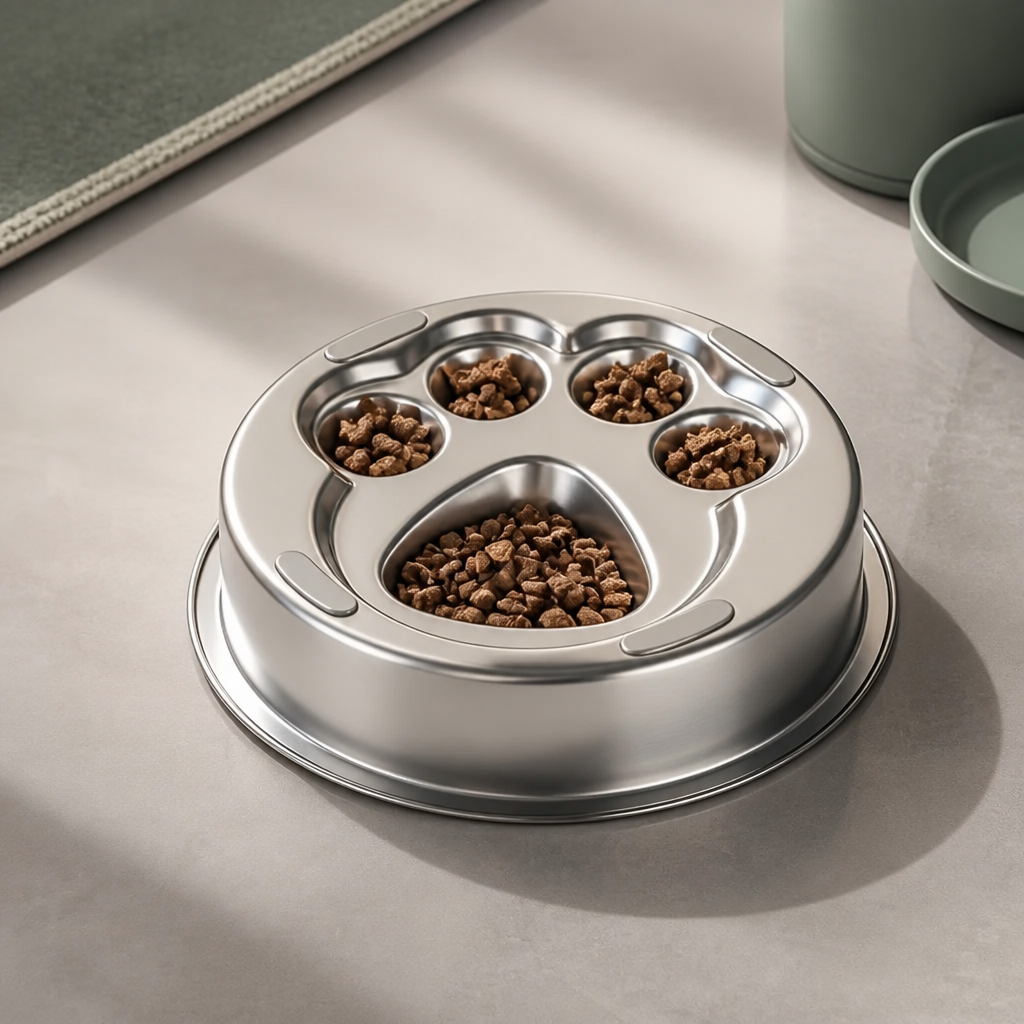
An 18 cm bowl is a practical small format for puppies, cats, and small dogs. The 18 cm Stainless Steel Slow Feeder Dog Bowl uses a compact 18 cm footprint and weighs 150 g, making it easy to move for cleaning while still giving small pets a dedicated feeding surface. It is also suitable for cats, puppies, and small to medium dogs, which makes it a flexible pick for multi-pet homes.
For a square layout, the Square PP Slow Feeder Dog & Cat Bowl comes in a 19 × 19 × 7 cm retail package and weighs 230 g. Its square shape is useful if your dog tends to chase kibble around a round bowl, and the anti-spill form can help contain mess around the feeding area.
2. Maze depth: slower is not always better
The goal is a slower meal, not the slowest dog feeder bowl at any cost. Very deep maze structures can be too difficult for small dogs, senior dogs, puppies, and brachycephalic breeds with shorter muzzles. If your dog gives up, paws aggressively, or flips the bowl, the maze is probably too demanding.
Look for a slow feed pattern that breaks up the food without hiding it. Bone, paw, bear paw, and fishbone patterns, like the options on the stainless 18 cm bowl, create obstacles while keeping the feeding surface understandable. These designs are better for everyday use than extreme puzzle feeders for dogs when your priority is safer, calmer meals.
A dog feeding bowl slow enough for a fast eater should spread kibble into channels and force smaller bites. For wet food, the grooves should still be accessible with a tongue, not packed into tight pockets. If you regularly serve canned food or softened kibble, use a bowl with smoother, wider channels and follow our guidance on using a slow feeder dog bowl for wet food so residue does not build up.
3. Material: stainless steel vs PP plastic
Material matters more with slow feeders than with plain bowls because the ridges create more surface area for saliva, oil, and food residue. A dog bowl to slow eating stainless steel is typically the better choice for owners worried about odor, staining, and chewing. Stainless steel also has a smooth feeding surface, which helps with daily cleaning.
The 18 cm stainless bowl comes in 304 stainless steel and 201 stainless steel options. For most owners, 304 stainless steel is the stronger long-term preference because it is widely used in kitchenware and pet feeding products for its corrosion resistance. The bowl has no electronics and no automatic feeding mechanism, so there are no batteries, cords, or moving parts to manage.
PP plastic is the value pick. The Square PP Slow Feeder Dog & Cat Bowl uses a lightweight PP build, comes in black or blue, and works for dogs and cats. At $15.99, it is a sensible entry-level slow eating bowl dog owners can try before moving to stainless or ceramic. PP is also easy to lift and rinse, but determined chewers should be supervised because any plastic bowl can become a chew target.
4. Stability: stop the bowl from sliding across the floor
Many small dogs eat with surprising force. They push with the muzzle, brace with their paws, and shove the bowl across tile or wood. A slow feeder for dog bowl use needs grip because the maze requires more contact than a plain bowl. If the base slides, the dog may eat faster out of frustration or start tipping the bowl to defeat the puzzle.
Prioritize anti-slip and anti-tip designs. The stainless 18 cm model has an anti-slip bowl design and an anti-tip everyday shape, which directly addresses the common problem of pets pushing the bowl while eating. The Square PP bowl uses an anti-spill square shape, which can also help contain food and water movement better than a narrow round bowl.
Placement helps too. Put the bowl on a flat surface, not a raised edge or uneven mat. For dogs that gulp aggressively, start with a smaller portion spread through the maze, then refill if needed. That gives the dog a calmer first pass and reduces the urge to bulldoze the feeder. Our guide on how to use dog bowls for fast eaters safely covers portioning and supervision habits that make a slow feeder more effective.
5. Cleaning: wide grooves beat complicated crevices
The easiest slow feeder bowl is the one you will actually wash after every meal. Deep, narrow grooves can trap oil from kibble, wet food residue, and saliva. Over time, that residue creates odor and makes the bowl unpleasant for both the dog and the owner. This is one reason stainless steel remains a strong choice for a slow eating dog bowl stainless setup.
When judging cleaning effort, look at the shape of the maze. Rounded ridges and open channels are easier to scrub than sharp corners and tiny pockets. A stainless steel feeding surface is especially practical for daily rinsing. PP plastic can also be easy to clean when the pattern is simple, but owners should pay attention to scratches, because roughened plastic surfaces can hold grime more easily.
If you feed wet food, choose a bowl slow feeder with fewer tight turns. For dry kibble, more ridges can be useful because the pieces move around the obstacles. For wet food, the same ridges can become paste traps. A good compromise is a moderate puzzle pattern with enough open space for a sponge or dish brush to reach the bottom of each groove.
6. Food style: match the feeder to kibble, wet food, and water
Most dog feeding bowls to slow eating are built around kibble, but many small dogs eat mixed meals. Small kibble works well in shallower channels because it disperses evenly. Large kibble in a small feeder can bridge over the ridges and make the bowl less effective. Wet food works best when smeared thinly into accessible channels rather than packed deep into the maze.
The Square PP bowl has a slow feeder pet bowl and anti-spill drinking bowl design, so it is especially relevant for homes that want one compact feeder for food control and mess reduction. It is not an electronic feeder, which is a plus if you want a simple feeder for dogs that can be washed and reused without setup.
For water gulping, a dedicated slow water bowl can be better than a food maze, because water behaves differently than kibble. Food ridges may splash or trap liquid in awkward pockets. If your main problem is drinking too fast rather than eating too fast, compare water-specific designs instead of assuming every slow feeder bowl will solve both problems equally well.
Concrete price expectations
Slow feeders are not expensive compared with vet bills or automatic feeders, but prices vary by material and construction. For small dogs, most worthwhile options fall between $12 and $30.
- Budget: $8-$17. Expect PP plastic or basic molded plastic designs. These are good for trying a slow feed routine, travel bowls, puppies, and light eaters. The Square PP Slow Feeder Dog & Cat Bowl at $15.99 fits this tier well, with a compact square format, 230 g weight, black or blue color options, and no electronics.
- Mid-range: $18-$30. This is the best tier for most households. You can expect better materials, more stable shapes, and easier cleaning. The 18 cm Stainless Steel Slow Feeder Dog Bowl at $20.99 sits in this range and is the stronger pick if you want stainless steel, pattern options, an anti-slip design, and a compact bowl for small dogs or puppies.
- Premium: $31-$60+. Premium slow feeders usually include heavier ceramic bodies, more elaborate puzzle structures, elevated bases, decorative finishes, or specialty designs. They can be worthwhile for design-conscious kitchens or dogs that need extra stability, but a small dog does not automatically need a premium bowl.
Our recommendation: start in the $15-$25 range unless you already know your dog needs a heavier ceramic bowl or a special medical feeding setup. For odor control and durability, spend the extra few dollars on stainless. For a first slow eating dog bowl, PP plastic is a reasonable low-risk trial.
Common mistakes to avoid
Buying the most complicated maze. A deeper puzzle is not automatically safer. Small dogs need reachable food channels, especially short-nosed breeds and puppies.
Ignoring the base. If the bowl slides, your dog may push, paw, or flip it. Anti-slip and anti-tip features are not extras; they are core buying criteria.
Choosing plastic for a heavy chewer. PP plastic is affordable and useful, but persistent chewers are better matched with stainless steel or ceramic-style alternatives.
Using wet food in tiny crevices. Wet food in deep grooves can leave oily residue. Pick open channels and clean the bowl after each meal.
Oversizing the bowl. A large slow feeder can make a small dog stretch too far and may reduce the slowing effect if food spreads unevenly.
Expecting automation. The stainless and PP bowls here are simple, no-power feeders. That is ideal for daily reliability, but they do not dispense meals on a schedule.
Skipping supervision at first. Watch the first few meals. Your dog should slow down, breathe normally, and remain interested without becoming frantic.
Which slow feeder should most small-dog owners buy?
If you want the best everyday balance, choose the 18 cm Stainless Steel Slow Feeder Dog Bowl. At $20.99, it lands in the practical mid-range, uses a stainless steel feeding surface, offers 304 and 201 stainless options, and has a compact 18 cm format suited to cats, puppies, and small to medium dogs. Its anti-slip and anti-tip design addresses one of the biggest real-world frustrations with a dog slow feeder: bowl movement during meals.
If price is the priority, choose the Square PP Slow Feeder Dog & Cat Bowl. At $15.99, it is the better budget pick for owners who want a compact PP slow feeder, a square anti-spill shape, and dog-and-cat compatibility. It is also a good starter bowl for dogs to slow eating before investing in stainless.
For most small dogs, the right answer is not the biggest, heaviest, or most complex dog feeding bowl slow design. It is a reachable, stable, easy-clean slow feeder that makes meals calmer every day.
Related Guides & Products
- dog slow feeder bowls — Top Picks
- Small Slow Feeder Dog Bowl Buyer’s Guide
- How to Use Dog Bowls for Fast Eaters Safely
- Puzzle and Maze Dog Bowl Buyer’s Guide
- Best Slow Feeder Dog Bowl: Stainless vs PP
- Can You Use a Slow Feeder Dog Bowl for Wet Food?
- 18 cm Stainless Steel Slow Feeder Dog Bowl Review
- Square PP Bowl for Dogs to Slow Eating Review
- Slow Water Bowl Dog Buyer’s Guide
- Ceramic Slow Feeder Dog Bowl Buyer’s Guide
- 18 cm Stainless Steel Slow Feeder Dog Bowl
- Square PP Slow Feeder Dog & Cat Bowl
Frequently Asked Questions
What size slow feeder suits small dogs?
A compact bowl around the small-dog range is best. The 18 cm stainless model is a practical size for puppies, cats, and small to medium dogs without forcing a small dog to stretch too far.
Is stainless steel better than PP plastic?
Stainless steel is better for odor control, chew resistance, and long-term daily use. PP plastic is lighter and less expensive, making it a good starter choice for gentle eaters or multi-pet homes.
Can short-nosed dogs use slow feeders?
Yes, but choose shallow-to-moderate ridges. Very deep maze bowls can make food hard to reach and may frustrate short-nosed dogs, puppies, and seniors.
How much should I spend?
Budget plastic bowls usually cost $8-$17, solid everyday bowls run $18-$30, and premium ceramic or specialty designs often cost $31-$60 or more. Most small-dog owners should start around $15-$25.
Can I use wet food in one?
Yes, if the grooves are wide enough to clean thoroughly. Avoid tiny, deep crevices with wet food because residue and oil can build up after meals.
Do slow feeder bowls need power?
No. The stainless and PP options here are manual bowls with no electronics, cords, batteries, or automatic feeding parts.