TL;DR: Slow feeder bowls combat fast eating that can lead to choking, vomiting, and bloat. When vetting bowls, prioritize material safety (stainless steel wins on hygiene), maze depth (shallow for small dogs), a non‑slip base, and easy‑clean crevices. Budget plastics start around $15; premium stainless steel runs $20 and up. Our picks: an 18 cm stainless steel bone‑pattern bowl and a square PP bowl for cats and dogs.
A slow feeder dog bowl is the simplest fix for a dog that inhales meals in seconds. By turning a flat bowl into a puzzle, these bowls protect against choking, gagging, regurgitation, and the dangerous bloat that can send a deep‑chested breed to the emergency vet. We vetted dozens of slow feeders to find options that hold up, stay put, and clean up without a fight. Below we break down exactly what to look for, including our two top recommendations—one stainless steel and one polypropylene—and call out the mistakes that leave owners scrubbing or replacing a bowl too soon.
Quick‑Reference Table: Slow Feeder Dog Bowl Factors
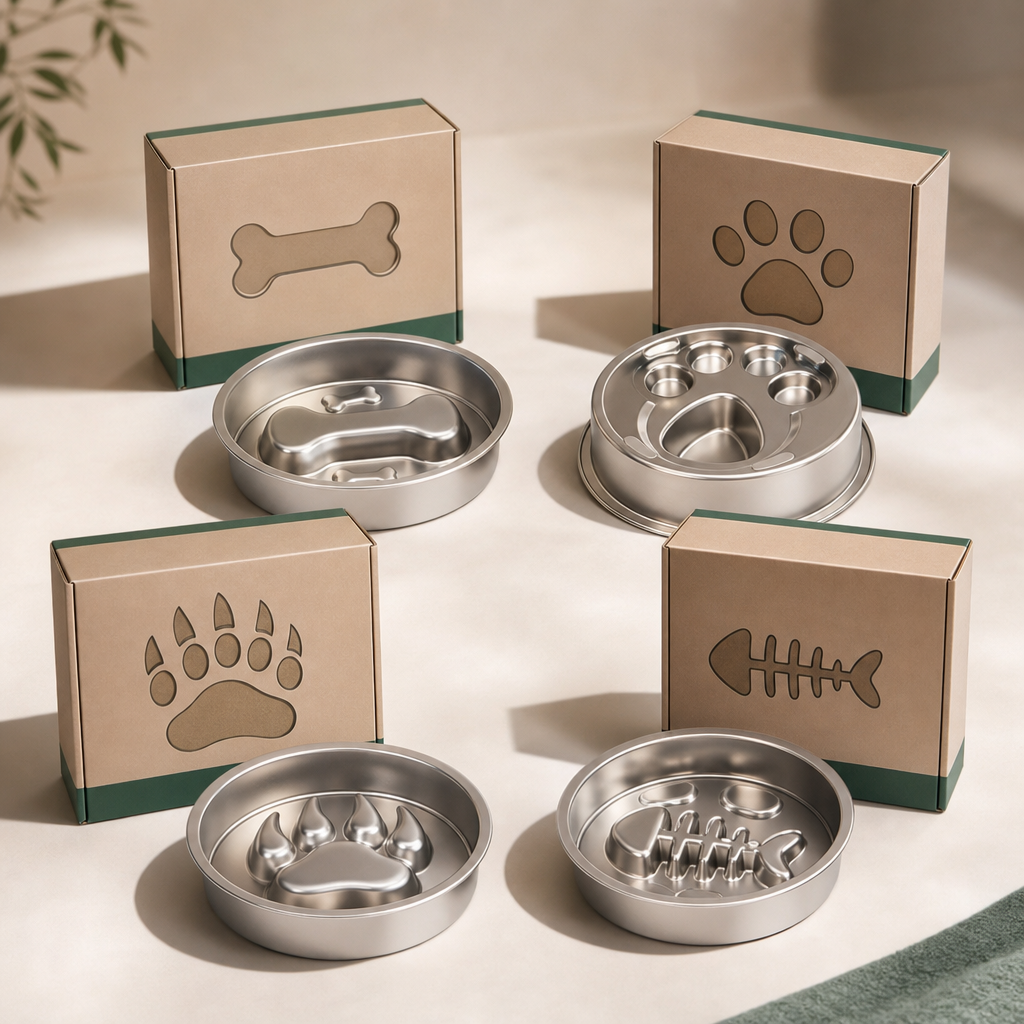
| Factor | Key Considerations | Our Pick |
|---|---|---|
| Material | Stainless steel for durability & hygiene; PP for budget & lighter weight | 18 cm Stainless Steel Bowl |
| Design Complexity | Shallow ridges for flat‑faced breeds; deeper mazes for determined speed eaters | Square PP Bowl |
| Size & Breed Suitability | 18 cm for small to medium dogs; larger diameters for big dogs | 18 cm Stainless Steel Bowl (cats, puppies, small/medium dogs) |
| Non‑Slip Base | Anti‑skid ring or mat to stop pushing | Both models feature anti‑slip bases |
| Ease of Cleaning | Smooth, rounded ridges without tight corners | Stainless steel (dishwasher‑friendly & odor‑resistant) |
1. Material: Stainless Steel vs. Plastic
The bowl material determines odor resistance, durability, and how much your dog may try to chew the bowl itself. Stainless steel, particularly 304‑grade, is the gold standard. It resists rust, won’t absorb odors, and stands up to a determined eater without cracking. The 18 cm slow feeder we vetted offers an option between 201 and 304 stainless steel; for daily wet food or a dog that leaves drool puddles, we recommend the 304 grade for its superior corrosion resistance. Plastic (polypropylene or PP) bowls cost less and weigh very little, but they can retain smells over time and should be retired if you see chew marks. Our square PP pick is a no‑frills budget choice at $15.99—fine for gentle cats and dogs, but avoid if your pet is a heavy chewer. For a deeper dive into material differences, see our direct stainless vs. PP comparison.
2. Design & Maze Complexity
The pattern inside the bowl is what actually slows the meal. Too simple, and a sharp dog will gulp around it; too complex, and a short‑snouted breed like a Pug or a tiny puppy may give up. Look for rounded ridges and a pattern height that forces the dog to lick around and between the obstacles without causing frustration. The stainless steel model we researched uses raised bone, paw, or fishbone shapes—all wide enough for a tongue but tight enough to add seconds. The PP bowl relies on a square layout with internal dividers that create a mild puzzle. If your dog needs more of a challenge, our puzzle and maze dog bowl buyer’s guide walks through everything from simple spirals to advanced brain‑teaser bowls.
3. Size & Breed Fit
Measure your dog’s muzzle length and width before shopping. An 18‑cm (7‑inch) bowl works for cats, puppies, and small to medium dogs up to about 30 pounds. Larger dogs need more surface area so the maze isn’t packed into a tiny circle that’s impossible to navigate. The stainless steel bowl is explicitly designed for small‑to‑medium dogs and weighs only 150 g, making it easy to handle. If you’re outfitting a Great Dane, scale up. Meanwhile, flat‑faced breeds like Bulldogs do best with shallow, wide ridges; a pattern too deep will just frustrate them. For more on that, see our guide to small slow feeder bowls and our buyer’s guide for small dogs.
4. Non‑Slip & Anti‑Tip Features
A slow feeder that slides across the floor defeats its own purpose and can tip, spilling food and water. Both bowls we researched include anti‑slip elements. The stainless steel model has an anti‑slip base combined with an anti‑tip design; the square PP bowl’s broader footprint acts as a passive stabilizer. For excitable eaters, a bowl with a heavy‑gauge steel body or a grippy silicone ring on the bottom will stay put best. If your dog still pushes the bowl, pair it with a silicone mat that covers a larger area.
5. Ease of Cleaning
Leftover saliva and food residue inside narrow ridges breed bacteria fast. Stainless steel wipes clean easily and is dishwasher safe, and its non‑porous surface doesn’t harbor odors. The PP bowl can be hand‑washed or placed on the top rack of a dishwasher, but sharp corners around the dividers may require a brush. Avoid designs with undercut ridges where gunk hides. If you serve wet food, read our specific guidance on using a slow feeder bowl for wet food—it changes the cleanup routine enough to be worth a separate look.
Common Mistakes
- Buying a bowl that’s too deep. If your dog has a short muzzle, choose a shallow pattern; otherwise, leftover food in the bottom leads to mealtime frustration.
- Ignoring material safety. Cheap plastics may contain BPA or other additives. Stick to food‑grade PP or stainless steel.
- Skipping the non‑slip check. Even a well‑designed maze is useless if the bowl migrates across the kitchen and tips over.
- Not measuring for dishwasher fit. If you rely on a dishwasher, confirm the bowl’s dimensions fit your rack—some tall silicone models don’t.
- Assuming one size works for all pets. A large‑breed slow feeder can intimidate a cat, and a cat‑sized maze won’t slow a Labrador.
Price Expectations & Tiers
A slow feeder bowl costs between about $10 and $35. What you get at each level:
- Budget ($10–$20): Simple PP plastic bowls, often with a basic labyrinth. Our square PP model at $15.99 falls here—effective but not fancy.
- Mid‑range ($20–$25): Stainless steel bowls with multiple pattern choices, anti‑slip bases, and a sturdier build. The $20.99 18 cm stainless steel bowl is a solid mid‑range pick.
- Premium ($25–$35+): Larger stainless steel or heavy ceramic bowls, sometimes with micro‑textures or elaborate puzzle shapes, often from recognized pet brands.
You can read how all these options stack up in our full best dog slow feeder bowls roundup, which includes picks for every budget and breed.
Related Guides & Products
- dog slow feeder bowls — Top Picks
- Small Slow Feeder Dog Bowl Buyer’s Guide
- How to Use Dog Bowls for Fast Eaters Safely
- Puzzle and Maze Dog Bowl Buyer’s Guide
- Best Slow Feeder Dog Bowl: Stainless vs PP
- Can You Use a Slow Feeder Dog Bowl for Wet Food?
- 18 cm Stainless Steel Slow Feeder Dog Bowl Review
- Square PP Bowl for Dogs to Slow Eating Review
- Slow Water Bowl Dog Buyer’s Guide
- Ceramic Slow Feeder Dog Bowl Buyer’s Guide
- Slow Eating Dog Bowl for Small Dogs: Buyer’s Guide
- Puppy Slow Feeder Buyer’s Guide
- Anko Pet Slow Feed Bowl () Reviews
- 18 cm Stainless Steel Slow Feeder Dog Bowl
- Square PP Slow Feeder Dog & Cat Bowl
Frequently Asked Questions
How does a slow feeder bowl stop dog choking?
The raised patterns force your dog to eat around them instead of grabbing large mouthfuls. Smaller bites reduce the risk of gagging, choking, or inhaling food into the airway.
Is stainless steel better than plastic for slow feeders?
Yes, stainless steel is more hygienic, resists odors, and stands up to chewing. Plastic is cheaper and lighter but can retain smells and scratch over time, allowing bacteria to grow.
Can I use a slow feeder for wet food?
You can, but cleanup takes more effort. Wet food clings to crevices. Rinse immediately after use and use a brush for tight corners. Stainless steel bowls handle wet food best.
What size slow feeder is right for my dog?
Measure your dog’s muzzle. Small and medium dogs do well with an 18 cm bowl; large breeds need a larger diameter so the maze isn’t too cramped. Short‑nosed breeds need a shallow pattern.
Why does my dog still eat fast with a slow bowl?
The maze may be too simple for a determined eater. Try a bowl with tighter ridges or a more complex puzzle design. Also check that the bowl is stable and not sliding.