TL;DR: A dog interactive feeder slows fast eating through raised ridges or maze patterns. Stainless steel offers durability and easy sanitation; PP plastic is lighter and budget-friendly. Focus on snout fit, puzzle depth, and a non-slip base. Our vetted picks are an 18 cm stainless steel slow feeder bowl ($20.99) and a square PP slow feeder bowl ($15.99). Match the bowl to your dog’s size and eating speed, not just price.
Fast eating is a common trigger for choking, gagging, vomiting, and bloat in dogs. A dog interactive feeder disrupts the gulping pattern by forcing a dog to navigate around obstacles, lick between ridges, or pick food from small pockets. After comparing dozens of designs, we narrowed our vetted picks to two practical options: an 18 cm stainless steel slow feeder bowl ($20.99) and a square PP slow feeder dog & cat bowl ($15.99). Both are simple, unpowered bowls that fit daily use. For the full field, see our roundup of the best dog slow feeder bowls.
Quick Reference: Two Vetted Picks at a Glance
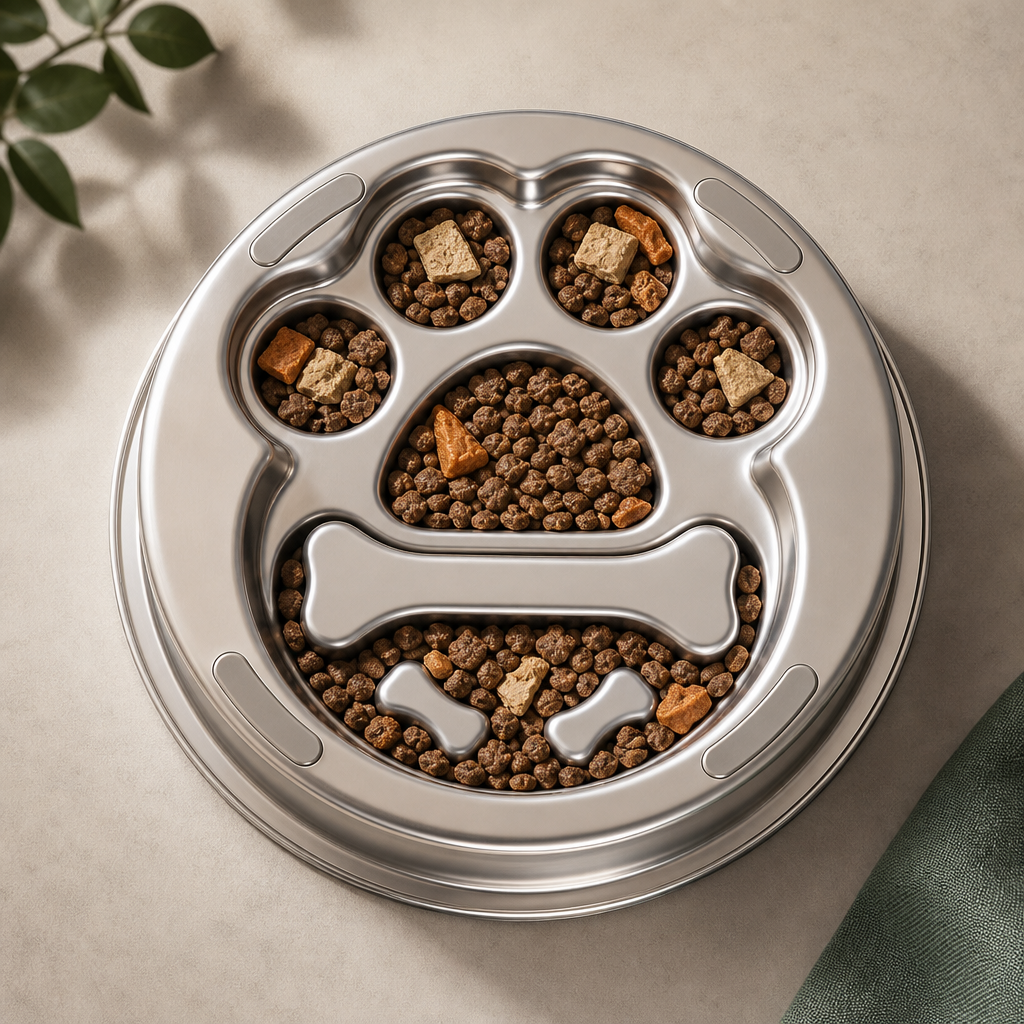
| Product | Material | Size / Weight | Best For | Price |
|---|---|---|---|---|
| 18 cm Stainless Steel Slow Feeder Dog Bowl | 304 or 201 stainless steel | 18 cm small; 150 g | Cats, puppies, small to medium dogs | $20.99 |
| Square PP Slow Feeder Dog & Cat Bowl | PP plastic | 19 × 19 × 7 cm; 230 g | Dogs and cats | $15.99 |
1. Material: Stainless Steel vs. PP Plastic
Material is the first filter. Stainless steel bowls resist odor, staining, and bacterial buildup better than plastic; they also withstand chewing and dishwasher cycles. Our 18 cm stainless steel slow feeder bowl is available in 304 or 201 stainless steel, with 304 being the higher-grade, more corrosion-resistant option for long-term daily use. PP plastic is lighter, cheaper, and often comes in more compact shapes, but it can absorb smells over time and may not suit aggressive chewers. The square PP slow feeder dog & cat bowl we vetted uses PP plastic, weighs 230 g, and is a budget-friendly choice for dogs and cats. If your dog tends to bite the bowl while eating, stainless steel is the safer long-term pick. If you need a lightweight travel or secondary bowl, PP works well. For households with multiple pets, having one of each covers different needs.
2. Size, Depth, and Snout Fit
The right depth matters as much as the pattern. Deep maze wells frustrate flat-faced breeds, puppies, and small dogs; they may give up or scrape their noses. An 18 cm small bowl is ideal for cats, puppies, and small to medium dogs, as the compact diameter keeps food reachable without burying a short snout. The square PP bowl’s 19 × 19 × 7 cm footprint works for dogs and cats, but check the pocket depth before buying: shallow ridges slow eating without blocking access. Longer-snouted medium dogs can handle deeper patterns, while brachycephalic breeds need a flatter profile. If you’re shopping specifically for smaller mouths, our small slow feeder dog bowl buyer’s guide covers snout-fit details in depth.
3. Puzzle Complexity and Pattern Design
Puzzle feeders for dogs range from gentle spirals to complex multi-chamber grids. Beginners and fast eaters do best with moderate maze density; too extreme and the dog may tip the bowl or abandon meals. The stainless steel slow feeder bowl offers four pattern options—bone, dog paw, bear paw, and fishbone—so you can pick a visual style and slight variation in routing. The PP bowl has an anti-spill square shape with a fixed pattern that slows eating for dogs and cats. Judge complexity by counting the number of separate food pockets and the tightness of the turns; more pockets generally mean slower eating, but also more cleaning. For a deeper comparison of maze vs. simple ridges, see our puzzle and maze dog bowl buyer’s guide.
4. Anti-Slip and Anti-Tip Stability
An interactive feeder that slides across the floor defeats its purpose. Look for a weighted base, rubber feet, or a non-slip ring. The 18 cm stainless steel bowl includes an anti-slip bowl design and anti-tip everyday bowl construction, which helps prevent the bowl from moving while a dog licks around obstacles. The square PP bowl’s flat, wide footprint resists spills, but at 230 g it is light enough that a determined dog may push it; placing it on a mat or against a wall helps. For hard floors, a silicone mat underneath adds grip. If your dog tends to shove the bowl while eating, prioritize a heavier stainless steel option or a bowl with a wide base.
5. Cleaning and Hygiene
Slow feeder bowls trap food residue in crevices, so cleanability matters daily. Stainless steel is the easiest to sanitize; the smooth non-porous surface resists oils and odors and can handle hot water or dishwasher cycles. The 304 stainless steel option in our pick is especially resistant to corrosion. PP plastic bowls are lightweight and easy to rinse, but their grooves can hold oily film and may scratch over time, creating places for bacteria. After each meal, rinse promptly; for stuck-on wet food, use a soft brush. If you feed wet food regularly, the patterns on both bowls can work, but stainless steel cleans faster. Avoid abrasive scrubbers on PP to prevent micro-scratches. A quick rinse after every meal is the easiest way to keep any slow feeder hygienic.
6. Safety, Durability, and Daily Use
Safety comes down to material quality and design stability. Stainless steel bowls with no paint or coating avoid flaking and are chew-resistant; the 304 option adds food-grade corrosion resistance. PP plastic is BPA-free in many modern designs, but aggressive chewers can crack or chip pieces, so replace at the first sign of damage. Both of our picks are unpowered and automatic-feeding free, which means no batteries, timers, or moving parts to fail. For dogs that inhale meals, combining a slow feeder with scheduled portions and calm feeding areas reinforces the habit. Our guide on how to use dog bowls for fast eaters safely walks through placement, portioning, and training cues.
Common Mistakes When Buying a Dog Interactive Feeder
- Choosing a bowl that’s too deep for a short snout, leading to abandoned meals.
- Ignoring the base grip; a sliding bowl creates frustration and mess.
- Focusing only on price; cheap plastic may crack or retain odors.
- Skipping cleaning because the grooves look complicated, which leads to bacterial buildup.
- Buying one size for multiple dogs when one is large and one tiny.
- Assuming all slow feeders work for wet food, kibble, and water; some patterns are too deep for wet food and become soggy.
Before buying, measure your dog’s muzzle length and eating speed. A bowl that slows a Labrador may frustrate a Pug; a bowl that suits a cat may be too small for a large dog.
Price Expectations: Budget, Mid, and Premium Tiers
Dog interactive feeders divide into three practical bands:
- Budget (under $15): Basic PP plastic bowls, often single-pattern, lighter base. Expect 200–250 g weight, limited durability. Our square PP slow feeder dog & cat bowl at $15.99 sits just above budget but delivers anti-spill shape and dog/cat compatibility.
- Mid ($15–$30): Stainless steel options, multiple patterns, better anti-slip bases, and dishwasher-safe surfaces. Our 18 cm stainless steel slow feeder bowl at $20.99 is firmly mid-tier, with 304 or 201 stainless construction and four pattern choices.
- Premium ($30+): Larger stainless or ceramic bowls, extra-thick walls, decorative glazes, or multi-piece sets. Premium isn’t always necessary; many dogs eat safely with a $20 stainless model.
If you want one bowl that lasts years, spending $20–$25 on stainless steel is the best value. Budget PP bowls are fine for cats or occasional use, but they wear faster under daily dog feeding.
Final Word
For most small to medium dogs, the 18 cm stainless steel slow feeder bowl is the best balance of durability, hygiene, and snout-friendly depth. If you need a lighter, budget-friendly bowl for a cat or a secondary feeding station, the square PP slow feeder bowl works well. Match the pattern difficulty to your dog’s eating speed and the material to your cleanup tolerance. A well-chosen dog interactive feeder is a daily tool that reduces gagging and bloat risk without electronics or high cost.
Related Guides & Products
- dog slow feeder bowls — Top Picks
- Small Slow Feeder Dog Bowl Buyer’s Guide
- How to Use Dog Bowls for Fast Eaters Safely
- Puzzle and Maze Dog Bowl Buyer’s Guide
- Best Slow Feeder Dog Bowl: Stainless vs PP
- Can You Use a Slow Feeder Dog Bowl for Wet Food?
- 18 cm Stainless Steel Slow Feeder Dog Bowl Review
- Square PP Bowl for Dogs to Slow Eating Review
- Slow Water Bowl Dog Buyer’s Guide
- Ceramic Slow Feeder Dog Bowl Buyer’s Guide
- Slow Eating Dog Bowl for Small Dogs: Buyer’s Guide
- Puppy Slow Feeder Buyer’s Guide
- Anko Pet Slow Feed Bowl () Reviews
- Slow Feeder Dog Bowl Buyer’s Guide
- Slow Feeder Dog Bowl Guide: Stainless & PP Picks
- Fun Feeder Slo Bowl Buyer’s Guide
- Slow Feeder Buyer’s Guide: Stainless & PP
- Slow Feeder Dog Bowl Buyer’s Guide: Stainless & PP
- Fun Feeder Dog Bowl Buyer’s Guide
- 18 cm Stainless Steel Slow Feeder Dog Bowl
- Square PP Slow Feeder Dog & Cat Bowl
Frequently Asked Questions
What is a dog interactive feeder?
A bowl with raised ridges, maze patterns, or pockets that forces a dog to eat around obstacles, slowing consumption to reduce choking, vomiting, and bloat. It works for dry kibble and some wet foods without electronics.
How do I choose the right size slow feeder?
Match bowl diameter and pocket depth to your dog’s snout length. Small and flat-faced dogs need shallow 18 cm bowls; larger dogs can handle deeper mazes. The bowl should allow easy tongue access without nose scraping.
Can a dog interactive feeder be used for wet food?
Yes, but shallow patterns work better. Deep wells can trap wet food and make cleaning harder. Stainless steel cleans more easily than PP plastic after wet meals. Rinse immediately to prevent residue.
Is stainless steel or PP plastic better for slow feeding?
Stainless steel resists odor, staining, and chewing, and is dishwasher-safe. PP plastic is lighter and cheaper but can absorb smells and scratch over time. Choose stainless for heavy chewers; PP for budget or travel use.
How do I stop a slow feeder bowl from sliding?
Look for a weighted base, rubber feet, or an anti-slip ring. Place the bowl on a silicone mat or against a wall. The 18 cm stainless steel bowl has anti-slip and anti-tip design for added grip.
Will a slow feeder really slow my dog down?
Yes, puzzle ridges and maze patterns force smaller bites and more licking between pieces. The slowdown depends on pattern density and your dog’s persistence; moderate patterns work for most fast eaters.